Authored by: A Caring Mom at Infant Tales
A postpartum headache is a headache that develops after childbirth, often due to hormonal changes, lack of sleep, dehydration, or physical exhaustion. It may feel like a dull ache, throbbing pain, or pressure around your forehead and temples.
While headaches after delivery are common, they aren’t always harmless. Sometimes, a persistent or severe headache can be a warning sign of a serious condition, such as postpartum preeclampsia, even if your pregnancy was healthy.
Understanding what causes postpartum headaches, how to find safe relief, and when to seek medical help can make your recovery easier and help you care for yourself while looking after your newborn.
What Is a Postpartum Headache?
A postpartum headache is a headache that develops after giving birth, particularly during the first six weeks of recovery.
It may feel like pressure around your forehead, throbbing near your temples, or tightness extending into your neck and shoulders.
According to Cleveland Clinic, headaches are common during the postpartum period, with approximately 40% of women experiencing them after childbirth.
Some headaches are mild and improve with rest, while others may be more intense or persistent.
Although headaches are common, severe or unusual symptoms should never be dismissed as normal postpartum discomfort.
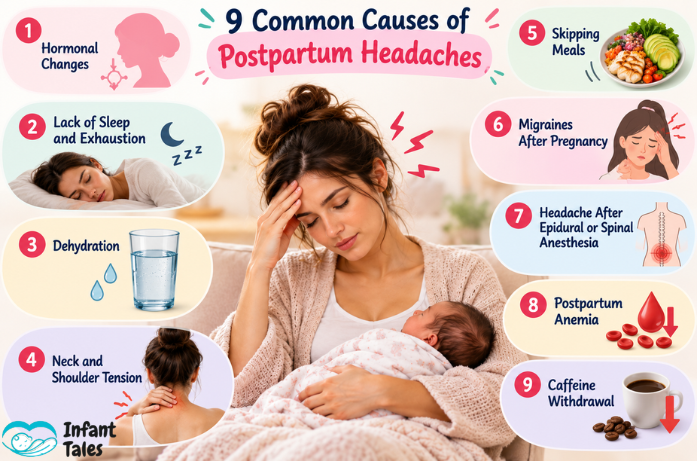
9 Common Causes of Postpartum Headaches
Headaches after childbirth can happen for several reasons, from hormonal changes and sleepless nights to nutritional deficiencies or the effects of anesthesia. Understanding these headache postpartum causes can help you recognize possible triggers and know when to seek medical advice.
1. Hormonal Changes After Delivery
During pregnancy, estrogen and progesterone levels increase to support your growing baby. After delivery, these hormones drop quickly, which can trigger headaches or migraines in some mothers.
You may experience throbbing pain around your temples, sensitivity to light, or a headache similar to those you had before pregnancy.
Hormonal changes are a common reason for a post pregnancy headache, but severe or unusual pain should always be checked by a healthcare professional.
2. Lack of Sleep and Exhaustion
Caring for a newborn often means waking up several times at night for feeding, diaper changes, and comforting. This interrupted sleep can leave you exhausted and increase your chances of developing tension headaches or migraines.
You might notice a dull, heavy feeling around your forehead, especially after a restless night. Physical exhaustion and emotional stress can also make existing headaches feel more intense.
3. Dehydration
It’s easy to forget to drink water when your day revolves around your baby’s needs. However, dehydration can contribute to headaches, dizziness, dry mouth, and fatigue.
Breastfeeding also increases your body’s fluid requirements because water is needed for breast milk production. When you aren’t replacing enough fluids, dehydration may become another headache trigger.
4. Neck and Shoulder Tension
Breastfeeding, bottle-feeding, and carrying your baby for long periods can put extra strain on your neck, shoulders, and upper back.
This muscle tension may cause a dull headache that feels like pressure or a tight band around your head. The discomfort may also spread from the back of your neck toward your forehead, especially after spending a long time in one position.
5. Skipping Meals
Between feeding your newborn and managing household responsibilities, finding time for proper meals can be difficult.
Going too long without eating may trigger headaches, especially if you’re prone to migraines. Irregular eating patterns, combined with sleep deprivation and physical exhaustion, can make headaches more likely during postpartum recovery.
6. Migraines After Pregnancy
Some mothers notice that migraines return after childbirth, particularly if they became less frequent during pregnancy.
Hormonal changes, sleep deprivation, dehydration, and missed meals can all contribute to migraine attacks.
Common symptoms include:
- Throbbing pain, sometimes on one side of the head
- Sensitivity to bright lights or loud sounds
- Nausea or vomiting
- Pain that worsens with movement
- Visual disturbances in some cases
If you develop a new, severe, or unusual migraine-like headache, seek medical advice rather than assuming it’s a migraine. New visual symptoms after delivery also need prompt assessment.
7. Headache After Epidural or Spinal Anesthesia
If you received epidural or spinal anesthesia during labor or a C-section, you may occasionally develop a headache caused by leakage of spinal fluid.
Known as a post-dural puncture headache, it usually becomes worse when sitting or standing and improves when lying down. It may also cause neck stiffness, nausea, or hearing changes.
A medical review available through PubMed Central explains that some cases require an epidural blood patch to help seal the leak and relieve symptoms.
If you notice this headache pattern after delivery, contact your maternity team promptly.
8. Postpartum Anemia
Losing blood during childbirth can sometimes lower your hemoglobin levels, leading to postpartum anemia. This is more likely if you experienced significant blood loss or had low iron levels during pregnancy.
Along with headaches, anemia may cause unusual tiredness, dizziness, weakness, shortness of breath, or a racing heartbeat.
Because fatigue is already common after delivery, these symptoms can be easy to overlook. A healthcare provider may recommend blood tests if postpartum anemia is suspected.
9. Caffeine Withdrawal
If you regularly drank coffee or tea before childbirth but suddenly stopped or reduced your intake, you might experience caffeine withdrawal headaches.
These headaches often feel dull or throbbing and may come with fatigue, irritability, or difficulty concentrating.
Caffeine withdrawal symptoms typically begin within 12–24 hours after reducing or stopping regular caffeine consumption and may last for several days. The severity depends on how much caffeine you previously consumed and how quickly you reduced your intake.
What Does a Postpartum Headache Feel Like?
Different headaches can produce different symptoms.
| Headache type | Common symptoms |
| Tension headache | Dull pressure or tightness around the head |
| Migraine | Throbbing pain, nausea, light sensitivity |
| Hormonal headache | Migraine-like discomfort after hormonal changes |
| Spinal headache | Worse when upright, better when lying down |
| Headache linked to high blood pressure | May be severe or persistent, sometimes with vision changes |
These patterns may offer clues, but they cannot confirm the cause. A serious postpartum headache can sometimes resemble an ordinary migraine.
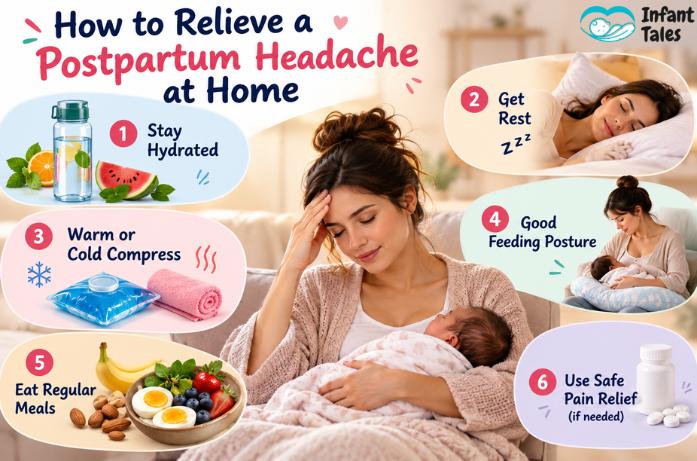
How to Relieve a Postpartum Headache at Home
If your postpartum headache is mild and serious medical causes have been ruled out, a few simple changes to your daily routine may help ease the discomfort. These practical steps can support your recovery while you care for your newborn.
1. Stay Hydrated Throughout the Day
Dehydration can trigger headaches, especially when you’re breastfeeding and your body needs additional fluids to produce milk.
Try drinking water regularly and including water-rich foods like watermelon, oranges, cucumber, and soups in your meals. Keeping a refillable water bottle beside your feeding chair makes it easier to stay hydrated throughout the day. Pale-yellow urine is often a good sign that you’re drinking enough.
2. Get Rest Whenever Possible
Interrupted sleep and physical exhaustion can make headaches more frequent or intense. Although getting a full night’s sleep with a newborn isn’t always possible, short periods of rest may help.
If your head is aching, try lying down in a quiet, dimly lit room, especially if you’re sensitive to light or noise. Ask your partner or a family member to care for your baby while you take a short nap or simply relax without interruptions.
3. Try a Warm or Cold Compress
A warm or cold compress can provide temporary relief, depending on the type of headache you’re experiencing.
If you have throbbing pain or migraine-like symptoms, try placing a cold compress across your forehead or temples. For headaches related to neck and shoulder tension, a warm compress may help relax tight muscles. Wrap the compress in a soft towel and apply it for about 10–15 minutes to avoid irritating your skin.
4. Improve Your Feeding Posture
Breastfeeding, bottle-feeding, and holding your baby for long periods can strain your neck, shoulders, and upper back, sometimes contributing to tension headaches.
Choose a comfortable chair with good back support and use pillows to bring your baby closer instead of bending forward. Keeping your feet supported and changing feeding positions occasionally can also help reduce muscle stiffness and discomfort.
5. Eat Regular, Nutritious Meals
Skipping meals can trigger headaches, especially if you’re already dealing with sleep deprivation and postpartum exhaustion.
Try eating balanced meals that include protein, whole grains, healthy fats, and iron-rich foods such as eggs, lentils, leafy vegetables, and nuts. Keeping easy snacks like yogurt, bananas, boiled eggs, or peanut butter toast nearby can help you avoid long gaps between meals when your day gets busy.
6. Choose Pain Relief Medication Carefully
Sometimes, rest and home remedies aren’t enough to relieve a headache. Certain over-the-counter medications may help, but it’s important to choose them carefully during postpartum recovery.
Acetaminophen (paracetamol) and ibuprofen are generally considered compatible with breastfeeding for many mothers. However, the safest medication depends on your medical history, other medicines, and the cause of your headache.
Always check with your healthcare provider or pharmacist before taking medication, and avoid using painkillers frequently without medical advice, as overuse can sometimes cause additional headaches.
Important: These home remedies are suitable for mild headaches after serious causes have been ruled out. If your headache is sudden, severe, persistent, or worsening, or occurs with blurred vision, weakness, or high blood pressure, seek urgent medical attention rather than relying on home treatment.
When Is a Postpartum Headache Dangerous?
Most postpartum headaches are not emergencies, but some can indicate serious conditions.
One important example is postpartum preeclampsia, which involves high blood pressure after childbirth.
It can develop even if your blood pressure remained normal throughout pregnancy, and it may appear up to six weeks after delivery.
According to the Centers for Disease Control and Prevention (CDC), a headache that doesn’t go away or becomes worse is an urgent maternal warning sign.
Seek emergency medical care if you experience:
- A sudden, extremely severe headache
- Blurred vision, vision loss, or flashing lights
- Seizures, confusion, fainting, or difficulty speaking
- Weakness or numbness on one side of your body
- A severe headache with chest pain or shortness of breath
- A headache with fever and a stiff neck
- A severe or persistent headache with blood pressure of 160/110 mmHg or higher
A postpartum blood pressure reading of 140/90 mmHg or higher also requires prompt medical assessment.
Contact your healthcare provider promptly for a new, persistent, worsening, or unusual headache, even without these emergency symptoms.
Don’t wait for your routine postpartum appointment if something feels seriously wrong.
Can Breastfeeding Cause Postpartum Headaches?
Breastfeeding itself doesn’t usually cause headaches, but dehydration, poor posture, missed meals, and interrupted sleep during nursing can trigger them.
Using supportive pillows, drinking enough water, eating regularly, and getting rest may help reduce discomfort.
However, if you experience a severe, persistent, or worsening postnatal headache, contact your healthcare provider to rule out serious medical conditions.
How Long Do Postpartum Headaches Last?
The duration of a postpartum headache depends on its cause. Mild tension headaches may disappear within a few hours, while migraines can last several hours or even days.
Hormonal headaches often become less frequent as your body adjusts after childbirth. However, headaches related to epidural or spinal anesthesia may need medical treatment.
If your headache keeps returning, gets worse, or affects your daily activities, consult your healthcare provider to identify the cause and get appropriate treatment.
A Simple Headache Tracker for New Moms
When you’re caring for a newborn, remembering headache patterns can be difficult.
Keeping a small record may help your healthcare provider understand what’s happening.
| What to track | Example |
| Time | Morning after waking |
| Location | Forehead and temples |
| Pain level | 5 out of 10 |
| Possible trigger | Poor sleep or missed meal |
| Other symptoms | Nausea or dizziness |
| What helped | Rest or prescribed medication |
If you’ve been advised to monitor your blood pressure, record those readings too.
This tracker is helpful for routine discussions, but don’t delay medical care to collect information if you experience warning signs.
Frequently Asked Questions
1. Is it normal to have headaches after giving birth?
Yes, mild headaches are common due to hormonal changes, dehydration, poor sleep, and tension. Severe or persistent headaches need medical attention.
2. Can postpartum headaches happen two weeks after delivery?
Yes, headaches can occur weeks after childbirth. New or worsening headaches should be checked by a doctor.
3. Can low iron cause headaches after pregnancy?
Yes, postpartum anemia can cause headaches, dizziness, weakness, and fatigue.
4. Can I take headache medicine while breastfeeding?
Acetaminophen and ibuprofen are generally considered safe during breastfeeding. Consult your healthcare provider before taking medication.
5. When should I worry about a headache postpartum?
Seek urgent medical care for severe headaches, vision changes, confusion, or weakness. Persistent or worsening headaches also need medical evaluation.
Final Thoughts
Recovering from childbirth isn’t always easy, especially when sleepless nights, hormonal changes, and newborn care leave you exhausted. A postpartum headache may improve with proper rest, hydration, regular meals, and simple self-care.
However, severe, persistent, or unusual headaches should never be ignored, as they can sometimes signal a serious medical condition. Knowing when to seek help is just as important as finding relief.
Remember, your recovery matters too. Take care of your body, listen to its signals, and don’t hesitate to ask for support. A healthy, cared-for mom is important for both you and your baby.
At Infant Tales, we believe caring for a newborn also means caring for the mother who is recovering, learning, and giving so much every day.
Medical Disclaimer
This article is for general educational purposes only and does not replace professional medical advice, diagnosis, or treatment. Consult a qualified healthcare professional about headaches after childbirth, especially when symptoms are severe, persistent, or unusual.