Written with love by a caring mom at Infant Tales
Becoming a parent for the first time is one of the sweetest and hardest changes in life. I still remember bringing my baby home and feeling two things at once: deep love and deep worry. I wanted to do everything right, but I quickly learned that parenting does not come with perfect answers.
If you are searching for tips for new parents, you are likely in that tender stage where everything feels new. You want to care for your baby well, and you want to feel more confident in your role. That love and effort already mean so much.
The truth is, no one feels fully ready at the beginning. Parenting is something you learn slowly, day by day, through feeding, cuddling, resting, and simply being there. These first time parent tips are here to make things feel easier, calmer, and more manageable.
To keep this simple and easy to read, I have shared 20 practical tips in a warm and gentle way. Each one comes from real early parenting moments that many moms quietly go through.
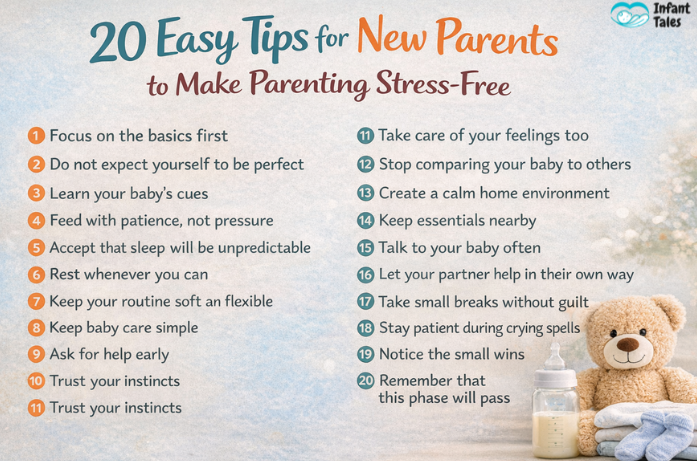
20 Easy Tips for New Parents to Make Parenting Stress-Free
1. Focus on the basics first
In the beginning, it can feel like you need to learn everything at once. Feeding, burping, diaper changes, sleep, and bathing can all feel like a lot in one day.
What helped me most was remembering that babies need only a few basic things first: milk, sleep, warmth, comfort, and love. When I focused on those needs, everything felt less overwhelming.
2. Do not expect yourself to be perfect
I used to question myself over small things. Was my baby sleeping enough? Was I holding her correctly? Was I doing something wrong without knowing it?
But babies do not need perfect parents. They need parents who are loving, gentle, and willing to learn. Some days will feel smooth, and some will not, and that is completely normal.
3. Learn your baby’s cues
Your baby cannot speak, but they still communicate all the time. Over the days, I started noticing that one cry meant hunger, while another meant tiredness or the need to be held.
You may also notice signs like hand sucking, rubbing eyes, or turning the head to the side. These little signals make newborn care easier because they help you respond before your baby becomes too upset.
4. Feed with patience, not pressure
Feeding can become a big worry for many first-time moms. I remember wondering often if my baby was getting enough milk or if I was doing things the right way.
With time, I learned that feeding works better when it feels calm. If you’re breastfeeding, it’s also helpful to know about breastfeeding foods to avoid. Follow your baby’s hunger signs, feed with patience, and remind yourself that every baby has different feeding patterns.
5. Accept that sleep will be unpredictable
Newborn sleep is rarely simple. In the early weeks, my baby woke many times at night, and I often felt tired before the day had even started.
Later, I understood that this is a normal part of newborn life. Babies wake often because they need food, comfort, and closeness. If you want to understand baby sleep and parenting basics better, you can also explore helpful guidance from Kids Health.
6. Rest whenever you can
This advice sounds small, but it matters a lot. Many parents use every free moment to clean, wash clothes, or catch up on chores, even when they are exhausted.
If you can, choose rest sometimes. Close your eyes, lie down, or simply sit quietly for a few minutes. A rested parent can handle daily baby care with more patience and peace.
7. Keep your routine soft and flexible
Many new parents feel pressure to create a perfect schedule right away. I also thought I needed a strict routine, but that only made me more stressed.
A gentle routine works better in the beginning. Feeding, cuddling, changing, and sleep will slowly form a rhythm, and that natural flow is often enough for both you and your baby.
8. Keep baby care simple
There is so much advice online that parenting can start to feel more complicated than it really is. I once thought I needed many products and perfect systems to take good care of my baby.
But most babies do well with simple things. Clean diapers, soft clothes, safe sleep, regular feeding, and loving attention are often the most important parts of daily care.
9. Ask for help early
It can feel hard to ask for help, especially when you want to prove that you can handle everything on your own. I felt that too, and sometimes I waited too long before speaking up.
But parenting is not meant to be done alone. Let someone hold the baby while you eat, rest, or shower. Support does not make you weak. It helps protect your energy.
10. Trust your instincts
There will always be advice from family, friends, books, and social media. Some of it will help, but some of it may only leave you feeling more confused.
Over time, I learned that my own instincts mattered too. You notice your baby’s mood, comfort, and little changes more than anyone else, and that quiet understanding is valuable.
11. Take care of your feelings too
Becoming a parent is emotional. You may feel happy, tired, sensitive, and unsure all in the same day, and that mix of feelings can feel surprising.
Please remember that this is normal. Your life has changed in a big way, and it takes time for your heart and mind to adjust to this new season.
12. Stop comparing your baby to others
It is easy to hear about babies who sleep longer, feed faster, or reach milestones earlier. I remember comparing my baby without even meaning to, and it only made me more anxious.
Every baby grows in their own way and at their own pace. For trusted developmental guidance, you can also read expert-backed tips from the CDC (Centers for Disease Control and Prevention).
13. Create a calm home environment
Babies can become overstimulated by bright lights, loud voices, and too much activity around them. I noticed my baby settled better when the room felt quiet and gentle.
A calm home does not need to be perfectly silent. Soft voices, slower movements, and peaceful evenings can help your baby feel safe and can also help you feel more settled.
14. Keep essentials nearby
One of the most practical things I did was place baby items where I needed them most. Diapers, wipes, burp cloths, and a spare outfit were always within easy reach.
This small step saved so much energy during long days and sleepless nights. Good preparation makes your baby routine smoother and helps you feel less rushed.
15. Talk to your baby often
Even tiny babies learn from your voice. I used to talk to my baby while feeding her, changing her clothes, or rocking her to sleep, and it became such a sweet part of our day.
Talking, smiling, and singing softly help build connection. According to UNICEF Parenting, early interaction plays a big role in emotional and brain development.
16. Let your partner help in their own way
If you have a partner, it helps to let them build their own bond with the baby. At first, I sometimes wanted everything done my way because I thought that was the best way.
But I learned that babies benefit from feeling loved by both parents, even if care looks a little different. Shared parenting brings more balance and gives both parents confidence.
17. Take small breaks without guilt
You do not need a full day off to feel better. Sometimes even ten quiet minutes can make a big difference when you are tired and emotionally stretched.
Sit with a cup of tea, step outside for fresh air, or simply rest your mind for a while. These short pauses can help you return to your baby with a calmer heart.
18. Stay patient during crying spells
There will be times when your baby cries and you do not know why right away. Those moments can feel hard, especially when you are already tired.
Start by checking the basics like hunger, diaper, burping, temperature, or tiredness, especially if your baby is fussy without an obvious reason. If nothing seems wrong, remember that sometimes babies simply need extra comfort and closeness.
19. Notice the small wins
As new parents, we often focus on what still feels difficult. But there are many small successes in your day that deserve to be noticed.
Maybe your baby fed well today, slept a little better, or calmed down in your arms. These little wins matter because they remind you that you are learning and growing every day.
20. Remember that this phase will pass
The newborn stage can feel long when you are living through it. Tiredness, feeding, and constant care can make the days blend together in a way that feels endless.
But this phase changes faster than it seems. With time, your baby grows, routines become easier, and your confidence becomes stronger. Hard days do not stay the same forever.
Conclusion
Parenthood is not about knowing everything from the start. It is about learning slowly, loving deeply, and showing up every day for your baby in the best way you can.
These tips for new parents are meant to make the early days feel less stressful and more gentle. You do not need to do everything perfectly. You only need to keep learning, keep loving, and keep trusting yourself.
If you are feeling tired, unsure, or emotional, please know that you are not alone. So many moms have stood where you are standing now, quietly wondering if they are enough.
You are enough. Your baby does not need a perfect parent. Your baby needs your warmth, your patience, your voice, your arms, and your love, and that is already something beautiful.
If you found these tips helpful, share this with another new parent who might need support. For more gentle parenting guides and real mom advice, keep visiting Infant Tales we are here for you every step of the way.
FAQs
1. What are the most useful tips for new parents?
Focus on feeding, sleep, diaper care, and bonding first. Keep life simple, follow your baby’s cues, and give yourself time to adjust.
2. How can first-time parents feel more confident?
Confidence grows with daily practice. Watch your baby closely, trust your instincts, and remember that learning is part of parenting.
3. What should a simple newborn routine include?
simple routine usually includes feeding, burping, diaper changes, cuddling, and sleep. Gentle repetition helps babies feel safe and secure.
4. How do I understand my baby’s needs better?
Look for patterns in crying, body movement, hunger signs, and sleepiness. Over time, these small cues become easier to understand.
Disclaimer: This article is based on personal experience and general parenting knowledge. Every baby is different, so always consult your pediatrician or healthcare professional for specific medical or developmental concerns.