
Authored by: A Caring Mom at Infant Tales
Have you ever observed your baby make a crying face, make some dramatic noises, and then smile at you the moment you pay attention to him or her? This may get you wondering if babies fake cry and if it’s something normal.
There are a variety of reasons babies might pretend to cry, including the desire to get attention, the need for comfort, frustration, or just exploring sounds. The development of communication skills in babies means they begin to notice reactions of their parents to their sounds. But this doesn’t mean that babies pretend to cry on purpose because even crying a little bit can be caused by actual needs.
This can be more common among babies as they get older and acquire some social skills. Learning to differentiate between play sounds and real distress will help you understand the needs of your baby better. Let’s look into the reasons, research, and when parents should worry.
Do Babies Fake Cry on Purpose?
Of course, some babies might initiate crying, so that they can draw the caregiver’s attention, but this doesn’t mean they are being dishonest. Babies with their fake cries might simply be communicating, instead of manipulating their parents.
Before a baby learns how to talk, he or she has to use cries, facial expressions, movements, and various sounds, in order to covey needs. As the babies grow older, they start to learn the way the parents are responding to their signals.
For example, your child might begin whining while your hands are full and flash a smile when you look at your baby. Whining doesn’t mean the baby was pretending to cry; he or she may have needed to get your attention.
What Does Research Say About Baby Fake Crying?
Research suggests that some babies may use crying-like sounds to get attention and interact with their parents. A small Japanese study published in Infant Behavior and Development in 2013 explored this behavior by observing two infants during 102 crying episodes.
Researchers noticed that one baby occasionally appeared happy before crying and smiled when her mother responded. This suggested that some crying episodes might be intentional attempts to attract attention rather than signs of distress.
However, the study involved only two babies, so the findings cannot be applied to all infants. You can learn more about the research in Popular Science’s explanation of baby fake crying.
The findings suggest that what parents call baby fake crying may sometimes be an early way of seeking social interaction. Before babies can express themselves through words, making sounds is one of the ways they connect with the people around them.
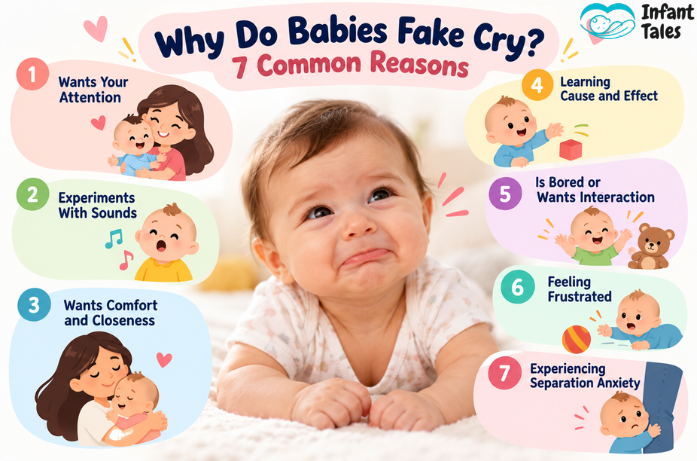
Why Do Babies Fake Cry? 7 Common Reasons
Babies use crying, facial expressions, and sounds to communicate their needs. Sometimes, what looks like baby fake crying is their way of seeking attention, expressing emotions, or exploring their voice.
Here are seven common reasons behind this behavior.
1. Your Baby Wants Your Attention
Babies love interacting with their parents. Your little one may make a crying-like sound while you’re busy and suddenly smile when you look at them. As they grow, they begin learning that certain sounds bring your attention.
This doesn’t mean they’re trying to manipulate you. They may simply want to feel connected. What helps: Respond with a smile, gentle words, or a few minutes of playtime.
2. They’re Experimenting With Different Sounds
As babies develop their communication skills, they begin exploring different sounds, including cooing, squealing, and crying-like noises. Sometimes, these sounds are playful rather than signs of distress.
Your baby may repeat these noises because they enjoy hearing them or watching your reaction. What helps: Copy their playful sounds, talk to them, and encourage simple back-and-forth conversations.
3. Your Baby Wants Comfort and Closeness
Sometimes, your baby may become fussy when you put them down but settle immediately when you pick them up. Even when they’re fed and rested, they may still want physical closeness.
Being held helps babies feel safe and secure, so their crying may reflect a genuine need for comfort. What helps: Offer cuddles, gentle rocking, or soothing words to reassure your little one.
4. They’re Learning Cause and Effect
Babies gradually discover that their actions produce reactions. For example, they may repeatedly drop a toy because they enjoy watching you pick it up.
Similarly, your baby may notice that making a crying-like sound causes you to turn around or come closer. What helps: Encourage this learning through peekaboo, clapping, and other simple interactive games.
5. Your Baby Is Bored or Wants Interaction
As babies become more curious, they enjoy exploring toys, watching faces, and discovering new things. If they’ve been playing in one place for a while, they may start whining because they want something different.
Sometimes, a little interaction or a change of activity is enough to make them happy again. What helps: Try singing, reading a colorful book, or offering an age-appropriate toy.
6. They’re Feeling Frustrated
Babies can become frustrated when they cannot reach a toy, move the way they want, or express their needs. They may begin whining or crying but stop quickly once you help them.
Although this can look like fake crying, their frustration may be real. What helps: Acknowledge their feelings, offer gentle assistance, and encourage them to practice new skills.
7. They’re Experiencing Separation Anxiety
Some babies become upset when their parents leave the room, even briefly. Separation anxiety commonly develops during the second half of the first year as babies become more aware of familiar caregivers.
Your baby may cry when you walk away and calm down when you return. This doesn’t mean they’re pretending; they may genuinely need reassurance. What helps: Practice short separations, play peekaboo, and maintain calm goodbye routines.
At What Age Do Babies Start Fake Crying?
There isn’t a specific age when babies begin fake crying because it isn’t an officially recognized developmental milestone.
However, their communication skills change as they grow.
| Baby’s age | What parents may notice |
| 0–3 months | Crying mainly communicates needs or discomfort. |
| 4–6 months | More cooing, squealing, and playful sounds. |
| 6–9 months | Greater interest in social interaction and caregiver responses. |
| 9–12 months | More intentional gestures and attention-seeking sounds. |
| 12–24 months | Increasing use of gestures, words, and expressive behavior. |
These are general developmental patterns, not fixed stages of fake crying.
A younger baby making dramatic sounds isn’t necessarily pretending, and an older baby’s crying may still reflect genuine feelings.
How Can You Tell Fake Crying From Real Crying?
Sometimes, a fake crying baby may smile between crying-like sounds or become quiet when you give them attention. However, this doesn’t necessarily mean they’re pretending.
Watching your baby’s facial expressions, body language, and other signals can help you understand what they need.
| What You Notice | What It Might Mean |
| Crying-like sounds followed by smiles | Wants attention or interaction. |
| Crying stops when picked up | Needs comfort or closeness. |
| Fussing while reaching for a toy | Frustration or asking for help. |
| Crying with rooting or sucking movements | Hunger. |
| Crying with eye rubbing or yawning | Tiredness. |
| Persistent or unusual crying | Possible discomfort or illness. |
Remember: No single sign can confirm that your baby is fake crying. Even if they settle quickly, their need for comfort or attention may be genuine.
Always check your baby’s needs first. If crying is unusual, persistent, or accompanied by concerning symptoms, contact your pediatrician.
Why Does My Baby Fake Cry Without Tears?
Many parents wonder whether crying without tears means their baby is pretending. However, babies can cry without visible tears, especially during the newborn stage.
Newborns may not produce noticeable tears because their tear production is still developing. Even older babies sometimes make crying sounds without tears, particularly during brief crying episodes.
So, if your baby makes a crying face without tears, it doesn’t necessarily mean they’re fake crying. Pay attention to their behavior and other signs of discomfort.
When to worry: If your baby has fewer wet diapers than usual, a dry mouth, poor feeding, or unusual sleepiness, seek medical advice promptly. These may be signs of dehydration or illness.
How Should Parents Respond When Babies Fake Cry?
When your baby makes crying-like sounds, respond with patience and understanding. Even if the crying seems playful, your little one may be trying to communicate a need.
1. Check Their Needs First
Before assuming your baby is fake crying, check for hunger, tiredness, a wet diaper, or discomfort. Sometimes, a simple need is behind the fussiness.
2. Respond Calmly
If your baby seems comfortable but wants attention, offer a smile, gentle words, or a cuddle. Your calm response helps them feel safe and reassured.
3. Encourage Other Ways to Communicate
Respond when your baby babbles, points, reaches, or makes playful sounds. Naming objects and responding to gestures helps develop early communication skills.
4. Give Positive Attention
Spend time talking, singing, reading, or playing with your baby throughout the day. These small moments strengthen your bond and encourage social interaction.
5. Avoid Scolding or Ignoring Distress
Babies aren’t trying to manipulate you like adults might. Even when crying seems exaggerated, respond gently rather than scolding or deliberately ignoring their distress.
Can Responding to Fake Crying Spoil Your Baby?
Many parents worry that responding to every cry might spoil their baby. However, comforting your baby doesn’t spoil them. Gentle attention and reassurance help babies feel safe and secure.
You don’t need to entertain your baby constantly. When they’re comfortable and happy, encourage independent play while staying attentive.
As your baby grows, introduce gentle boundaries and encourage healthy communication while continuing to respond to their emotional needs.
When Should You Worry About Baby Crying?
Most playful crying-like sounds are harmless when your baby is otherwise healthy and behaving normally.
However, contact your pediatrician if your baby:
- Cries persistently and is difficult to comfort.
- Has a sudden change in their usual crying pattern.
- Refuses feeds or has fewer wet diapers.
- Seems unusually sleepy or less responsive.
- Appears to be in pain.
- Loses previously acquired developmental skills.
Seek urgent medical care for breathing difficulties, blue or gray skin, seizures, or difficulty waking.
Babies younger than three months with a temperature of 100.4°F (38°C) or higher need prompt medical evaluation.
Frequently Asked Questions
1. Do babies fake cry for attention?
Some babies may make crying-like sounds to attract attention. However, this is usually communication rather than deliberate manipulation.
2. Can a 4-month-old baby fake cry?
A 4-month-old may experiment with different sounds, including crying-like noises. This doesn’t necessarily mean they’re intentionally pretending.
3. Why does my baby fake cry and then smile?
Your baby may be enjoying your reaction, experimenting with sounds, or feeling better after receiving attention.
4. Is fake crying a sign of intelligence?
Fake crying isn’t a recognized measure of intelligence, although playful vocalizations and social interactions are part of normal development.
5. Should I ignore my baby when they fake cry?
No. Check your baby’s needs and respond calmly. If they’re comfortable and playing, you can allow them to explore sounds while staying attentive.
Final Thoughts
Sometimes, babies make crying-like sounds to seek attention, explore their voices, or ask for comfort. What seems like playful crying may actually be a normal part of their developing communication and social skills.
As parents, we may not always understand every little cry, but responding with patience and love makes a difference. Pay attention to your baby’s needs, offer reassurance, and remember that even the smallest sounds can be their way of connecting with you.
At Infant Tales, we believe that understanding your baby’s behavior begins with love, patience, and gentle care.
Disclaimer
This article is for educational purposes only and doesn’t replace professional medical advice. Consult your pediatrician if you have concerns about your baby’s crying, health, or development.