
Authored by: A Caring Mom at Infant Tales
Being pregnant is thrilling, however, there is nothing that comes without a question. Is the fetus developing properly? Which food can be consumed during pregnancy? How to get ready for the next check-up with a doctor? It is difficult to keep up with all the information that is being provided by relatives, friends and even on the web.
An informed pregnancy involves the knowledge of physiological processes which happen during pregnancy and the options of prenatal care and consultations with your doctor regarding your own and your baby’s well-being.
There is no need to know everything about pregnancy immediately. You can learn about it gradually at every step of pregnancy.
In this guide you will find out about the different stages of pregnancy, prenatal testing, tips for healthy pregnancy and preparation for the birth.
What Does Having an Informed Pregnancy Really Mean?
Being well-informed during pregnancy entails being aware of how your body functions, comprehending the baby’s growth, and making health decisions based on appropriate medical advice.
Knowing every medical aspect is unnecessary. Instead, it’s important to understand how certain tests, scans, or treatments will benefit you and your child.
If, for instance, your doctor recommends an additional ultrasound, you can always inquire the doctor about the reason for this recommendation.
Moreover, having an informed pregnancy means knowing what pregnancy symptoms are normal and which ones require medical attention.
The aim is very clear: to gain confidence, never hesitate to ask questions, and be involved in one’s pregnancy care.

First Trimester: Understanding Your Early Pregnancy (Weeks 1–13)
The first trimester is when your baby’s major organs begin to develop, and your body goes through many changes. You may feel tired, nauseous, or more emotional than usual.
During these early pregnancy stages, focus on getting the right prenatal care and learning what’s normal for your body.
1. Schedule Your First Prenatal Appointment
After confirming your pregnancy through a home test, it is advisable to reach out to your physician and arrange your first prenatal visit.
Your doctor may want to obtain your health history, evaluate your current health status, and order some blood work, urinalysis, or an early ultrasound. You will also receive information regarding your estimated due date and prenatal vitamins you are required to take.
Tip: Always write down your queries before going to your doctor.
2. Understand Early Pregnancy Symptoms
First-trimester symptoms include morning sickness, tenderness in the breasts, fatigue, and emerging need to urinate frequently. Some mothers will have many symptoms, while others will suffer from fewer or none.
You should adopt a diet consisting of small portions, drink as much liquid as possible, and take as much rest as you need.
At the same time, you should seek medical help in case you experience intense abdominal pain, go through heavy bleeding, faint easily, or vomit so badly that it prevents you from drinking.
3. Learn About Important Prenatal Tests
Your doctor may recommend prenatal screening tests to check for certain health or developmental concerns.
For example, noninvasive prenatal testing (NIPT) can estimate the chance of some chromosomal conditions, but it cannot confirm a diagnosis.
Ask your doctor why each test is recommended, what the results mean, and whether any follow-up testing might be needed.

Second Trimester: Learning About Your Growing Baby (Weeks 14–27)
The second trimester is often a more comfortable stage of pregnancy. Morning sickness may improve, your belly starts growing, and you may feel your baby’s first movements.
It’s also an important time to check your baby’s development and continue regular prenatal visits.
1. Get Your Anatomy Ultrasound
An anatomy ultrasound is usually performed around 18–22 weeks to examine your baby’s developing body.
During the scan, the healthcare professional checks structures such as the brain, heart, spine, and limbs. They may also examine the placenta and amniotic fluid.
Ask your doctor about the results and whether another scan is needed. Remember, an ultrasound cannot identify every possible health condition.
2. Pay Attention to Your Baby’s Movements
You may start feeling your baby move between 16 and 24 weeks. At first, these movements can feel like tiny bubbles or gentle fluttering.
As your pregnancy progresses, you’ll begin recognizing your baby’s usual movement pattern.
If your baby’s movements become noticeably reduced or stop, contact your maternity team immediately. Don’t wait until your next appointment.
3. Ask About Gestational Diabetes Testing
Gestational diabetes is a type of high blood sugar that develops during pregnancy.
Doctors commonly recommend screening between 24 and 28 weeks, although some women may need testing earlier.
It often causes no noticeable symptoms, so screening is important. If your blood sugar is high, your healthcare team can help you manage it through nutrition, monitoring, and medication if needed.
Third Trimester: Preparing for Labor and Birth (Weeks 28–Birth)
The third trimester brings you closer to meeting your baby. You may notice more back discomfort, difficulty sleeping, and stronger baby movements.
This is a good time to focus on pregnancy preparation, understand the signs of labor, and get ready for your hospital visit.
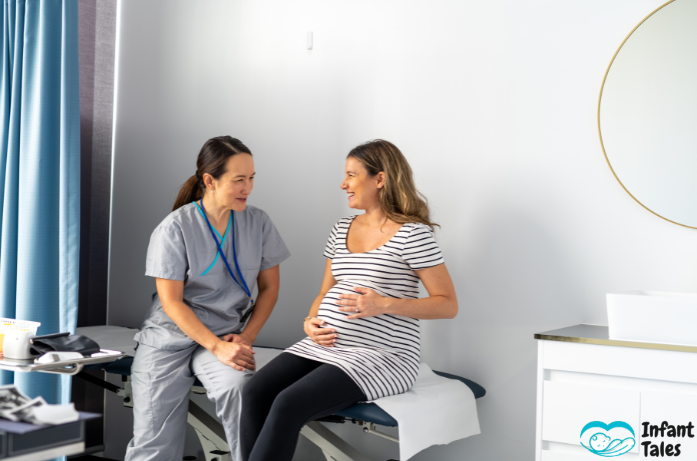
1. Attend Your Regular Pregnancy Checkups
During the final weeks, your prenatal appointments usually become more frequent.
Your doctor may check your blood pressure, monitor your baby’s growth and movements, and discuss your delivery options.
You may also be offered group B strep screening around 36–37 weeks, depending on local guidelines.
Don’t hesitate to ask about your baby’s position, your health, or anything that concerns you.
2. Learn the Early Signs of Labor
Labor may begin with regular contractions that gradually become stronger and closer together. You might also experience lower back pain or your waters breaking.
Unlike true labor contractions, Braxton Hicks contractions are usually irregular and may ease when you rest or change positions.
Ask your doctor when you should go to the hospital. If your waters break, you have vaginal bleeding, or you notice labor symptoms before 37 weeks, contact your maternity team promptly.
3. Prepare a Simple Birth Plan
A birth plan helps your healthcare team understand your preferences for labor and delivery.
You can discuss pain relief options, who you’d like beside you, and your wishes for newborn care.
It’s also helpful to learn about induction and cesarean birth in case they’re medically needed.
Remember, childbirth doesn’t always happen exactly as planned. Staying flexible and communicating with your healthcare team can help you feel more prepared and confident.
How to Make Informed Decisions During Pregnancy
During pregnancy, your doctor may suggest an extra test, ultrasound, or change in your birth plan. It’s normal to feel worried, especially when you weren’t expecting it.
Instead of feeling confused, ask your doctor these simple questions:
- Why do I need this test or treatment?
- How will it help me or my baby?
- Are there any risks?
- Are there other options?
- Do I need to decide right away?
If it’s not an emergency, you can take some time to understand your options or ask for a second opinion.
Remember: Asking questions helps you make informed pregnancy decisions and feel more confident about your care.
Healthy Pregnancy Tips for Every Trimester
Taking care of yourself during pregnancy doesn’t have to be complicated. A few healthy habits can support your baby’s development and help you feel better throughout each trimester.
1. Eat Healthy and Balanced Meals
Include fruits, vegetables, whole grains, dairy products, and protein-rich foods in your daily diet. Nutrients like folate, iron, and calcium are important for your baby’s growth.
Take prenatal vitamins recommended by your doctor, avoid unsafe foods and alcohol, and try smaller meals if you’re struggling with morning sickness.
2. Stay Active and Get Enough Rest
Gentle activities like walking, swimming, or prenatal yoga can help improve your mood, sleep, and overall comfort during pregnancy.
Choose exercises that are safe for your pregnancy and check with your doctor if you’re unsure. Most importantly, listen to your body and rest whenever you feel tired.
3. Take Care of Your Emotional Health
It’s normal to feel excited, nervous, or overwhelmed during pregnancy. Hormonal changes and worries about childbirth can affect your mood.
Spend time doing things you enjoy, talk openly with your loved ones, and don’t hesitate to ask for support. If sadness or anxiety becomes persistent, speak with your healthcare provider.
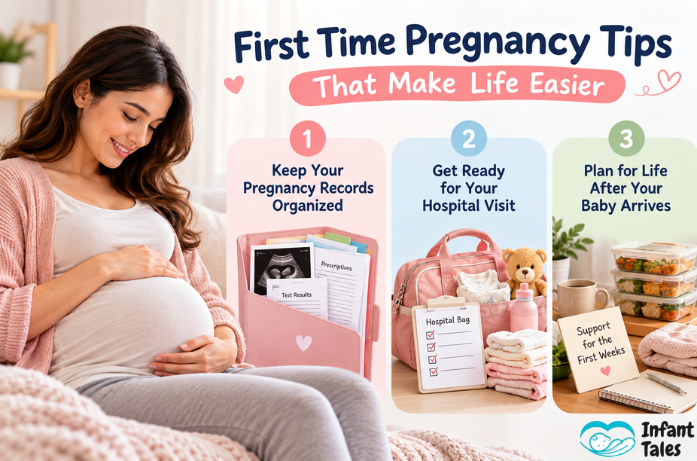
First Time Pregnancy Tips That Make Life Easier
Your first pregnancy comes with lots of new experiences, and it’s easy to focus on shopping for your baby while forgetting a few important preparations.
1. Keep Your Pregnancy Records Organized
Keep your ultrasound reports, blood test results, prescriptions, and appointment details in one folder or on your phone.
Save your doctor’s contact number and emergency maternity helpline, too. Having everything in one place makes medical visits easier, especially when you need quick advice.
2. Get Ready for Your Hospital Visit
Before your due date, learn about your hospital’s admission process, labor ward, and visiting rules.
Pack your hospital bag with essentials for you and your baby. You can also ask about pain relief options, breastfeeding support, and newborn care available after delivery.
3. Plan for Life After Your Baby Arrives
Preparing for childbirth is important, but don’t forget about your recovery afterward.
Arrange some help with cooking, cleaning, and daily chores during the first few weeks. Ask your doctor what to expect from postpartum recovery and when to seek medical attention.
A little planning now can make those early days with your newborn feel less stressful.
Important Pregnancy Questions to Ask Doctor
You don’t need to arrive at every appointment with a long list of questions.
A few thoughtful ones can help you understand your care.
| Pregnancy stage | Questions worth asking |
| First trimester | Which supplements do I need? What symptoms should concern me? |
| Second trimester | Is my baby growing as expected? What should I know about movements? |
| Third trimester | When should I contact the hospital? What delivery options are available? |
| Before birth | What happens if my birth plan changes? What should I expect during recovery? |
One particularly helpful question is: “Is there anything about my health or pregnancy that means I need different advice?”
This helps your provider explain recommendations based on your individual needs.
Pregnancy Warning Signs You Should Never Ignore
While many pregnancy discomforts are harmless, some symptoms require immediate medical attention.
Contact your maternity team urgently or seek emergency care if you experience:
- Heavy vaginal bleeding or severe abdominal pain.
- A severe headache, especially with vision changes.
- Chest pain, breathing difficulties, or fainting.
- Sudden significant swelling of the face or hands.
- Fever of 100.4°F (38°C) or higher.
- Persistent vomiting that prevents you from keeping fluids down.
- Fluid leaking from the vagina or signs of premature labor.
- Reduced or stopped baby movements after you’ve begun recognizing their usual pattern.
Some serious pregnancy-related problems can also develop after childbirth.
The CDC’s urgent maternal warning signs guide explains symptoms that need prompt attention.
You don’t need to identify the cause yourself. If something feels seriously wrong, get medical help.
How to Find Reliable Pregnancy Information Online
One of the biggest challenges for expectant moms is knowing which advice to trust.
A quick search about a common symptom can sometimes lead to frightening stories that have nothing to do with your situation.
Choose reliable medical resources rather than depending entirely on social media or personal experiences.
The American College of Obstetricians and Gynecologists and CDC pregnancy resources provide helpful educational information.
Check whether an article has been medically reviewed and recently updated.
Most importantly, remember that online information cannot replace advice from someone who knows your medical history.
Frequently Asked Questions
1. How can I have an informed pregnancy?
Attend prenatal appointments, understand recommended tests, use reliable resources, and ask your healthcare provider questions about your individual care.
2. What should first-time moms learn about pregnancy?
Focus on prenatal care, nutrition, pregnancy warning signs, baby movements, childbirth options, and postpartum recovery.
3. Can I ask my doctor about alternative treatments?
Yes. You can ask about the benefits, risks, and suitable alternatives before making non-emergency medical decisions.
4. How can I prepare emotionally for childbirth?
Learn about labor, discuss your concerns, choose a supportive birth companion, and consider attending childbirth education classes.
Final Thoughts
Pregnancy is a special journey filled with new experiences, important decisions, and plenty of questions. From your first prenatal visit to preparing for childbirth, every stage brings something new to learn.
Having an informed pregnancy helps you understand your body’s changes, recognize warning signs, and make confident decisions with your healthcare provider.
Remember, you don’t need to have all the answers. Attend your prenatal appointments, ask questions whenever you’re unsure, and take care of your physical and emotional health.
At Infant Tales, we want every mom to feel supported and well-informed throughout her pregnancy. Take things one day at a time, trust reliable medical guidance, and enjoy the little moments as you prepare to welcome your baby.
Medical Disclaimer
This article provides general educational information and is not a substitute for professional medical advice. Always consult your healthcare provider about pregnancy symptoms, screening tests, medications, and individual care decisions.