Written with love by a caring mom at Infant Tales
There’s a moment many of us quietly face as moms, the first time we have to step away from our baby. And if you’ve ever whispered to yourself, Separation Anxiety, you are not being dramatic… you are being a mom. That deep pull in your heart, the hesitation at the door, the second-guessing, it’s all part of the love you feel.
Whether you are returning to work, stepping out for errands, or simply craving a little time to breathe, leaving your baby alone (even for a short while) can feel overwhelming. The emotions are real, and they can be intense. But here’s the gentle truth: you are not alone in feeling this way, and it does get easier with time and the right support.
Let’s walk through this together, slowly and gently.
Why It Feels So Hard to Leave Your Baby Alone
The bond between a mother and her baby is incredibly strong, especially in those early months. Your baby depends on you for everything, comfort, feeding, safety, and love. So when you think about stepping away, even briefly, your heart naturally resists.
It’s Not Just in Your Head
This feeling isn’t weakness. It’s actually rooted in both emotional and biological responses. Your body and mind are wired to stay close to your baby. Hormones like oxytocin strengthen your attachment and make separation feel uncomfortable.
Fear of the Unknown
You may worry:
- Will my baby cry the whole time?
- What if they need me and I’m not there?
- Will someone else understand their needs like I do?
These thoughts are completely normal. Every loving parent has them.
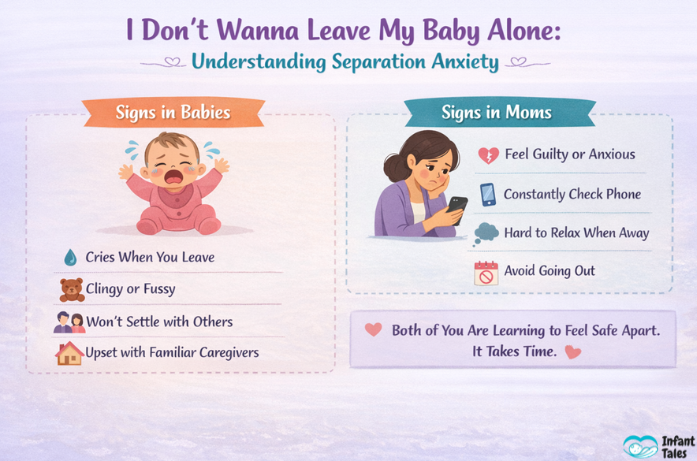
I Don’t Wanna Leave My Baby Alone: Understanding Separation Anxiety
If you keep thinking, it might be linked to separation anxiety, both yours and your baby’s.
What Is Separation Anxiety?
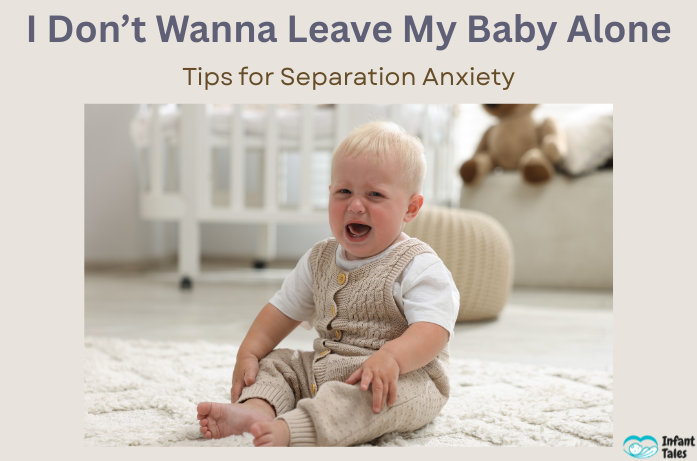
Separation anxiety is a natural stage of development where babies become more aware of their surroundings and feel uneasy when away from their primary caregiver.
It often begins around 6–8 months but can show up earlier in subtle ways.
Signs in Babies
Your baby may:
- Cry when you leave the room
- Become clingy or fussy
- Refuse to settle with others
- Show distress even with familiar caregivers
Signs in Moms
And you might:
- Feel anxious or guilty when leaving
- Constantly check your phone
- Struggle to relax when away
- Delay or avoid going out altogether
Both experiences are valid. You and your baby are learning how to feel safe apart, and that takes time.
Gentle Truth: Leaving Your Baby Alone Doesn’t Mean You are Failing
Let’s pause here for a moment, because this is important. Leaving your baby alone (with a trusted caregiver) does not mean you love them any less, and it does not harm your bond. In fact, short separations can gently help your baby become more secure and adaptable over time.
And for you, it creates space to rest, reset, and return with more patience and presence. You’re not abandoning your baby you are caring for both of your well-being in a healthy, loving way.
How to Start Leaving Your Baby Alone (Without Overwhelm)
You don’t have to go from zero to hours apart in one day. Start small and build gradually.
1. Begin with Short Separations
Step out for just 10–15 minutes at first. Maybe a quick walk outside or a short errand nearby.
This helps both you and your baby adjust gently.
2. Choose Someone You Trust
Leaving your baby alone feels easier when you know they’re in safe, loving hands. It could be your partner, a grandparent, or a close family member.
Trust makes all the difference.
3. Create a Familiar Environment
Keep your baby in a space they know well. Familiar toys, blankets, and routines help them feel secure even when you’re not there.
4. Don’t Sneak Away
It might feel easier to leave quietly, but saying a gentle goodbye actually helps your baby build trust. Keep it calm and simple: “Mama will be back soon.”
Practical Tips to Ease Your Anxiety
Your feelings matter just as much as your baby’s. Here are some ways to support yourself during this transition.
1. Stay Connected (But Not Overwhelmed)
It’s okay to check in, but try not to constantly worry. A quick message or photo update can reassure you without increasing anxiety.
2. Focus on the Purpose
Remind yourself why you’re stepping away. Whether it’s work, self-care, or rest, it matters.
You deserve time too.
3. Practice Deep Breathing
If you feel anxious, pause and take slow, deep breaths. Ground yourself in the present moment.
4. Give Yourself Grace
You might feel emotional the first few times. That’s okay. You’re learning something new, just like your baby.
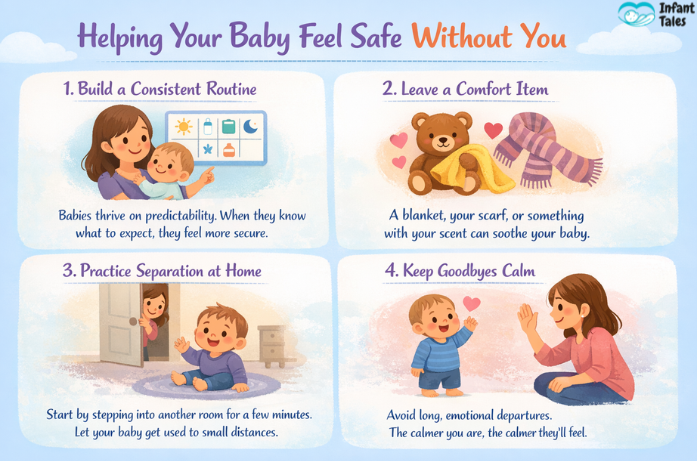
Helping Your Baby Feel Safe Without You
Your baby’s comfort is your biggest concern, and there are gentle ways to support them.
1. Build a Consistent Routine
Babies thrive on predictability. When they know what to expect, they feel more secure.
2. Leave a Comfort Item
A blanket, your scarf, or even something with your scent can soothe your baby.
3. Practice Separation at Home
Start by stepping into another room for a few minutes. Let your baby get used to small distances.
4. Keep Goodbyes Calm
Avoid long, emotional departures. Babies pick up on your energy. The calmer you are, the calmer they’ll feel.
When Leaving Your Baby Alone Feels Impossible
Some days, it might still feel too hard to leave your baby alone, even for a short time. You may find yourself canceling plans, delaying outings, or choosing to stay close because it simply feels more comfortable. And that’s completely okay. Every mom moves at her own pace, and there is no timeline you need to follow. What matters most is that both you and your baby feel safe and ready.
However, if your anxiety feels overwhelming, constant, or starts affecting your daily life, it’s important to reach out for support. Talking to your partner, a trusted friend, or even a healthcare professional can help you process these emotions. You don’t have to handle it all on your own support, reassurance, and guidance can make thi s journey feel much lighter.
Real Mom Truth: You Can Love Your Baby and Still Need Space
This is something many moms struggle to admit.
You can deeply love your baby and still want time for yourself.
You can miss them and enjoy your break at the same time.
Both things can be true.
Taking time for yourself doesn’t take away from your motherhood, it strengthens it.
Building Confidence Over Time
The first time is always the hardest. But slowly, something shifts.
As your baby grows and becomes more independent, reaching milestones like learning to hold bottle on their own, short separations often become easier for both of you.
You start to notice:
- Your baby settles faster
- You feel a little less anxious
- You begin to trust the process
Confidence grows quietly, with each small step.
Final Thoughts: You are Doing Better Than You Think
As your child grows, gains confidence, and begins enjoying simple preschool activities, you’ll see just how much both of you have grown through this journey together.
If you are sitting there thinking, “i don’t wanna leave my baby alone,” just know this it comes from love, not weakness. You are learning, your baby is learning, and together you are slowly finding your own rhythm, one small step at a time.
Trust your instincts and be gentle with yourself. Your presence matters deeply, but so does your well-being. Because a cared-for mom raises a secure, happy baby. And mama… even on the hard days, you are doing an incredible job.
Subscribe to Infant Tales for more comforting tips, real mom experiences, and practical baby care guidance because every mom deserves support, reassurance, and a safe space to grow.
FAQs
1. Is it normal to feel like I don’t wanna leave my baby alone?
Yes, it’s completely normal. Most moms feel this way, especially in the early months. It’s a natural emotional response to the strong bond you share with your baby.
2. At what age can I start leaving my baby with someone else?
You can start whenever you feel ready, even in the early months, as long as your baby is with a trusted caregiver. Start with short periods and gradually increase the time.
3. Will leaving my baby alone affect our bond?
No, it won’t harm your bond. In fact, short separations can help your baby develop independence and feel secure in different environments.
4. What if my baby cries when I leave?
It’s normal for babies to cry during separation at first. With time, consistency, and reassurance, they usually adjust and feel more comfortable.
5. How can I make leaving my baby alone easier for myself?
Start small, trust the caregiver, stay connected with updates, and remind yourself that taking time for yourself is healthy for both you and your baby.
Disclaimer: This content is for informational purposes only and is not a substitute for professional medical advice. Always consult a healthcare professional for any concerns about your baby or your well-being.