
Written with love by a caring mom at Infant Tales
There’s something especially exhausting about nights when your baby waking up every hour feels never-ending. You finally close your eyes, hoping for a little rest… and then your baby stirs again. If you are feeling drained, confused, or even a little worried, please know this, you are not alone.
Many parents go through this phase, even though it can feel isolating in the middle of the night. The good news is that frequent waking usually has simple, temporary reasons. Once you understand what’s happening, it becomes much easier to gently guide your baby (and yourself) toward better sleep.
Let’s walk through this together, mama to mama.
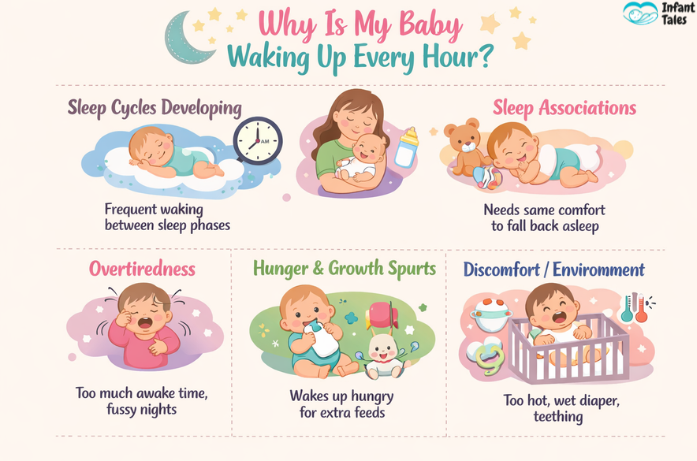
Why Is My Baby Waking Up Every Hour?
When your baby keeps waking up so often, it’s rarely random. There’s almost always a reason behind it, something your little one is trying to communicate in the only way they know how.
1. Sleep Cycles Are Still Developing
Babies have much shorter sleep cycles than adults. While we move through longer, deeper stages of sleep, babies wake more frequently between cycles. Research on infant sleep patterns, like this study from the National Institutes of Health, shows that frequent waking is a normal part of early brain development.
This means your baby waking up every hour could simply be them transitioning between sleep phases and needing a little help settling back down.
It’s completely normal, especially in the first year.
2. Sleep Associations
If your baby falls asleep while feeding, rocking, or being held, they may expect the same comfort every time they wake.
So when they stir between sleep cycles, they look for that familiar comfort again.
This is one of the most common reasons a baby keeps waking up every 30 minutes at night or hourly.
3. Overtiredness
It sounds surprising, but an overtired baby often sleeps worse, not better.
When babies stay awake too long, their bodies release stress hormones, making it harder to settle and stay asleep.
You might notice:
- Frequent night wakings
- Fussiness before sleep
- Short naps during the day
4. Hunger or Growth Spurts
Babies grow rapidly, and during growth spurts, they may wake more often to feed.
If your baby is younger, especially under 6 months, frequent waking could simply mean they’re genuinely hungry.
Trust your instincts here, your baby knows what they need.
5. Developmental Changes
Every new skill your baby learns can affect sleep.
Rolling, crawling, sitting, or even increased awareness can cause sleep disruptions. You may also notice your baby shaking when waking up or making sudden movements, this is often linked to their developing nervous system and is usually harmless.
These phases pass, even if they feel long right now.
6. Discomfort or Environment
Sometimes the cause is simple:
- Too hot or too cold
- Wet diaper
- Teething discomfort
- Noise or light changes
Even small disruptions can wake a sensitive sleeper.
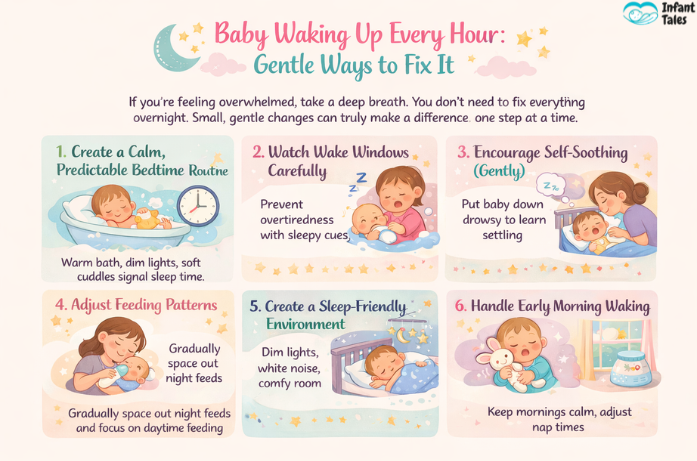
Baby Waking Up Every Hour: Gentle Ways to Fix It
If you’re feeling overwhelmed, take a deep breath. You don’t need to fix everything overnight. Small, gentle changes can truly make a difference, one step at a time.
1. Create a Calm, Predictable Bedtime Routine
Babies feel safe when they know what to expect. A simple bedtime routine like a warm bath, dim lights, and soft cuddles helps signal that it’s time to sleep. These small, repeated moments create a sense of comfort and security.
When you follow the same steps each night, your baby begins to relax more easily. Over time, this consistency can reduce frequent waking and help your baby settle into longer stretches of sleep.
2. Watch Wake Windows Carefully
Timing plays a bigger role in sleep than most parents realize. If your baby stays awake too long, they can become overtired, making it harder for them to fall and stay asleep.
Watch for gentle sleepy cues like eye rubbing, yawning, or turning away. Putting your baby down at the right moment can make a big difference in reducing both hourly waking and early morning wake-ups.
3. Encourage Self-Soothing (Gently)
Helping your baby learn to settle on their own doesn’t mean leaving them to cry. It’s about giving them small opportunities to feel safe while learning this skill.
Try placing your baby down when they’re drowsy but still awake, and give them a moment to settle. With gentle reassurance, they slowly learn how to fall back asleep without needing full assistance every time.
4. Adjust Feeding Patterns
If your baby wakes frequently, it’s worth gently observing whether they’re truly hungry each time. Sometimes, waking becomes a привычка rather than a need for feeding.
You can slowly space out night feeds while ensuring your baby gets full, satisfying feeds during the day. This balanced approach can help break the cycle of waking every hour.
5. Create a Sleep-Friendly Environment
Your baby’s sleep space matters more than you might think. A calm, quiet, and cozy environment helps them stay asleep longer and feel more secure.
Simple changes like dim lighting, white noise, and comfortable room temperature can make a noticeable difference. A consistent sleep setting supports deeper and more restful sleep.
6. Handle Early Morning Waking
If your baby waking up too early has become part of your routine, it may be linked to sleep timing or daytime naps. Even small schedule adjustments can help shift this pattern.
Keep early mornings calm and avoid bright lights right away. With a little patience and consistency, your baby may begin to sleep a bit longer in those early hours.
Is It Normal If My Baby Shakes When Waking Up?
Seeing your baby move suddenly or tremble a little when waking can feel scary.
But in most cases, baby shakes when waking up is completely normal.
These movements can be due to:
- Immature nervous system
- Startle reflex
- Transition between sleep stages
As long as your baby seems alert, feeds well, and behaves normally during the day, there’s usually no cause for concern.
However, if the shaking seems intense, frequent, or unusual, it’s always okay to check with your pediatrician for peace of mind.
When Night Wakings Become a Pattern
If your baby keeps waking frequently night after night, it can turn into a habit.
But habits can be gently reshaped.
Start small:
- Change one thing at a time
- Stay consistent for a few days
- Be patient with progress
Sleep doesn’t improve overnight, but it does improve.
A Gentle Night Plan You Can Try
Here’s a simple approach many moms find helpful:
Step 1: Follow a calming bedtime routine
Step 2: Put baby down drowsy
Step 3: Wait a moment before responding to night wakings
Step 4: Offer comfort without fully waking them
Step 5: Keep night interactions quiet and low-stimulation
This teaches your baby that nighttime is for sleeping, not playing.
What About the Really Tough Nights?
Some nights will still be hard.
Teething, illness, or developmental leaps can temporarily bring back frequent waking. If your baby seems unwell, learn about the signs of baby flu.
On those nights:
- Hold your baby a little longer
- Offer extra comfort
- Let go of strict routines
You’re not creating bad habits, you’re meeting your baby’s needs. And that matters most. According to sleep guidance shared by American Academy of Pediatrics on babies often wake during the night because they are still learning how to connect sleep cycles and self-soothe.
Final Thoughts
If your baby waking up every hour has been leaving you exhausted, please be gentle with yourself. This phase is more common than it feels, and it doesn’t mean you’re doing anything wrong. Your love, patience, and presence are already exactly what your baby needs.
Take it one night at a time, with small, gentle changes and a lot of self-kindness. Better sleep will come, slowly but surely. And until it does, remind yourself you are doing an incredible job, even on the most tiring days.
Explore more gentle parenting tips and baby care guides on Infant Tales because every parent deserves support, understanding, and a little extra encouragement along the way.
FAQs
1. Is it normal for my baby waking up every hour?
Yes, it’s very common, especially in the first year. Babies have shorter sleep cycles and may need help settling back to sleep.
2. Why is my baby waking up too early?
Early waking is often linked to overtiredness, sleep timing, or too much daytime sleep. Small schedule adjustments can help.
3. Why does my baby keep waking up every 30 minutes at night?
This is usually due to sleep associations or difficulty transitioning between sleep cycles.
4. Is baby shaking when waking up normal?
In most cases, yes. It can be due to the startle reflex or developing nervous system and is usually harmless.
5. How can I help my baby sleep longer at night?
Focus on a consistent bedtime routine, proper wake windows, and a calm sleep environment.
Disclaimer: This article is based on personal experience and general parenting knowledge, written by a caring mom at Infant Tales. It is meant for informational and supportive purposes only and should not replace professional medical advice. If you have concerns about your baby’s sleep, health, or unusual symptoms, please consult your pediatrician or a qualified healthcare provider.