
Authored by: A Caring Mom at Infant Tales
Hearing the sounds your newborn makes while sleeping like grunting, snorting or squeaking will make you ask yourself whether everything is alright. If you have observed that your newborn noisy breathing pattern, you do not have to panic. Most of these sounds are common due to the following reasons:
Your newborn noisy breathing pattern is normal as long as your baby is feeding properly, has no problems breathing and his/her skin color is normal. It is important however, to be on the lookout for squeaking, fast breathing and difficulty with feeding.
It is essential to understand newborn breathing sounds to enable you distinguish between normal and abnormal ones.
Is Newborn Noisy Breathing Normal?
Yes, occasional snorting, snuffling, and grunting are common during the newborn stage.
According to Texas Children’s Hospital, babies can make various sounds as their bodies adjust to life outside the womb.
These noises are usually less concerning when your baby:
- Breathes without visible effort
- Feeds and gains weight normally
- Has normal coloring around the lips and tongue
- Wakes and responds as expected
Remember, your baby’s breathing effort matters more than how loud the sound is.
Common Newborn Breathing Sounds and What They Mean
Newborns can make surprisingly different noises, especially during sleep. Here’s what some of the most common sounds may mean.
| Breathing sound | Possible cause | When to worry |
| Snorting or snuffling | Nasal mucus or congestion | Difficulty feeding or breathing |
| Occasional grunting | Gas, digestion, or active sleep | Grunting with every breath |
| High-pitched squeaking | Stridor or laryngomalacia | Persistent or worsening sounds |
| Soft snoring | Nasal congestion | Breathing pauses or difficulty |
| Gurgling after feeding | Milk or saliva | Frequent coughing or choking |
| Wheezing | Narrowed lower airways | Prompt medical assessment needed |
1. Snorting and Snuffling
Does your newborn sometimes sound like a tiny piglet? This usually happens when air passes through narrow nasal passages containing a little mucus.
You may notice snuffling during sleep or feeding. Occasional sounds are generally harmless if your baby seems comfortable.
2. Grunting While Sleeping
Newborns often grunt while stretching, passing gas, or trying to poop. You may also hear soft grunts during active sleep.
However, grunting with every breath, especially alongside rapid breathing or chest retractions, can indicate respiratory distress and needs urgent medical attention.
3. High-Pitched Squeaking
A repeated squeaking sound during inhalation may be stridor, which occurs when airflow is narrowed in the upper airway.
One possible cause is laryngomalacia. Persistent squeaking should be checked by your pediatrician, even if your baby otherwise seems well.
4. Gurgling or Wet Breathing Sounds
Babies sometimes make bubbling or gurgling sounds after feeding because milk or saliva remains in their mouth or throat.
Occasional gurgling may be harmless. However, repeated coughing, choking, or wet-sounding breathing during feeds may indicate a swallowing problem.
Why Does My Newborn Sound Congested but Have No Cold?
Does your newborn sound like they have a blocked nose, even though there’s no cough, fever, or runny nose? This is common during the first few weeks of life.
Newborns have very narrow nasal passages, so even a little mucus or dried nasal secretions can make breathing sound stuffy. Dry indoor air may also thicken mucus, making these sounds more noticeable during sleep or feeding.
If your baby is breathing comfortably and feeding normally, mild congestion is usually harmless. However, if your baby struggles to breathe, cannot feed properly, or develops a fever of 100.4°F (38°C) or higher, seek medical care promptly.
Newborn Noisy Breathing While Sleeping: What’s Normal?
Have you noticed your newborn breathing quickly for a few seconds, slowing down, and then returning to a normal rhythm? This can be surprising, but newborns don’t always breathe as steadily as adults.
During active sleep, babies may twitch, stretch, make soft noises, or breathe irregularly. Some newborns also experience periodic breathing, where they briefly pause for about 5–10 seconds before taking a few faster breaths and returning to their usual rhythm.
These short pauses can be normal when your baby remains comfortable and their skin color doesn’t change. However, prolonged pauses, gasping, or changes in skin color need immediate medical attention.
How Many Breaths Per Minute Are Normal?
A healthy newborn typically takes 30–60 breaths per minute while resting. Their breathing may temporarily become faster during crying, feeding, or movement.
You can check your baby’s breathing rate at home:
- Wait until your baby is calm or sleeping peacefully.
- Watch their chest or tummy rise and fall.
- Count each complete rise and fall as one breath for a full 60 seconds.
Counting for a full minute is helpful because newborn breathing can be irregular.
If your baby’s breathing consistently stays above 60 breaths per minute while resting, contact your pediatrician promptly. Breathing pauses accompanied by blue or gray coloring, limpness, or unresponsiveness are medical emergencies.
What Is Laryngomalacia in Newborns?
Laryngomalacia is a common cause of persistent high-pitched breathing sounds in babies.
It happens when soft tissues above the voice box temporarily fall inward during inhalation, producing a squeaking sound.
According to Cleveland Clinic, most babies with mild laryngomalacia improve naturally as their airways mature, usually by one to two years of age.
However, some babies may experience feeding difficulties, poor weight gain, choking, or breathing problems.
The American Academy of Pediatrics explains that doctors may examine the voice box using a small flexible camera to confirm the condition.
Most babies don’t need surgery, but severe cases may require treatment.
Newborn Breathing Sounds During Feeding: What to Watch
Feeding requires babies to coordinate sucking, swallowing, and breathing.
Occasional snorting may be normal, but repeated coughing, choking, pulling away to catch their breath, or becoming unusually tired during feeding needs medical attention.
Notice whether the sound happens before, during, or after feeding. These details can help your pediatrician understand the problem.
When Should You Worry About Newborn Noisy Breathing?
Most everyday newborn sounds aren’t dangerous, but certain symptoms require immediate attention.
Emergency Warning Signs
Call emergency services immediately if your newborn:
- Has blue, gray, or unusually pale lips or tongue
- Is gasping or struggling severely to breathe
- Has a prolonged breathing pause or any pause with limpness or color changes
- Becomes unresponsive or difficult to wake
- Has severe chest or neck retractions while breathing
Don’t wait for these symptoms to disappear.
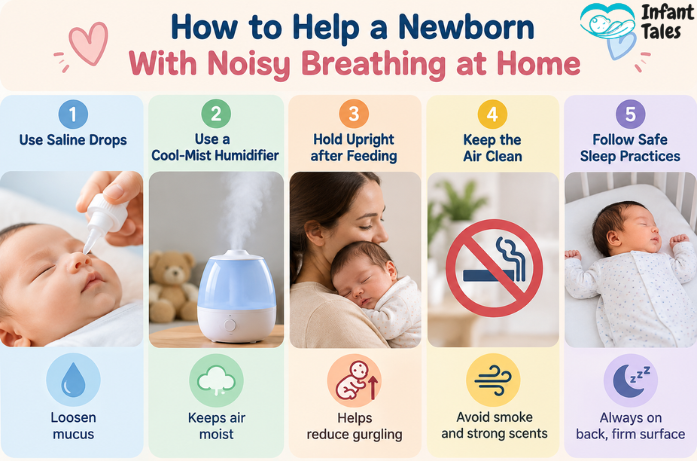
How to Help a Newborn With Noisy Breathing at Home
If your baby is breathing comfortably and only has mild nasal congestion, these simple measures may help.
1. Use Infant Saline Drops
Plain saline drops can soften dried nasal mucus. Follow the product instructions or your pediatrician’s guidance.
If needed, gently remove loosened mucus with an infant nasal aspirator. Avoid excessive suctioning because it can irritate the nose.
2. Try a Cool-Mist Humidifier
A cool-mist humidifier may help keep nasal secretions moist when indoor air is dry.
Clean it regularly and keep it away from your baby’s crib. Avoid hot-steam devices because they can cause burns.
3. Hold Your Baby Upright After Feeding
If your baby gurgles or spits up after milk, holding them upright in your arms for a short time may improve comfort.
When it’s time to sleep, always place your baby flat on their back.
4. Keep the Air Clean
Avoid cigarette smoke, vaping aerosols, incense, and strong fragrances around your newborn.
These irritants can affect sensitive airways.
5. Follow Safe Sleep Practices
Always place your baby on their back on a firm, flat sleep surface.
Never use pillows, wedges, inclined sleepers, or a raised mattress to reduce noisy breathing.
A Simple Breathing Check for Parents
When you hear an unfamiliar breathing sound, check these four things:
- Color: Are your baby’s lips and tongue their usual color?
- Chest movement: Is their chest rising without pulling inward?
- Breathing rate: Are they breathing within the expected resting range?
- Behavior: Are they feeding, waking, and responding normally?
This quick observation cannot replace a medical examination, but it can help you describe your concerns to your pediatrician.
What to Tell Your Pediatrician About Noisy Breathing
Sometimes your newborn may make unusual breathing sounds at home but seem perfectly fine during a doctor’s visit. If your baby is breathing comfortably, recording a short video of the sound and chest movements can help your pediatrician understand what’s happening.
Try to notice when the noisy breathing started, whether the sound occurs while breathing in or out, and if it becomes louder during feeding, crying, or sleeping. Also mention any coughing, choking, feeding difficulties, fewer wet diapers, or poor weight gain.
These details can help your doctor identify possible causes and decide whether further examination is needed. However, never delay emergency medical care to record a video if your baby is struggling to breathe.
Frequently Asked Questions
1. Is it normal for newborns to breathe loudly through their noses?
Yes. Small nasal passages and mucus can make breathing sound louder. Seek medical advice if your baby struggles to breathe or feed.
2. Why does my newborn squeak when breathing in?
Persistent squeaking may be stridor, sometimes caused by laryngomalacia. Your pediatrician should evaluate it.
3. Is newborn grunting while sleeping normal?
Occasional grunting can happen during sleep or digestion. Grunting with every breath requires urgent medical attention.
4. Can reflux cause noisy breathing in newborns?
Reflux may cause gurgling after feeding. Repeated coughing, choking, or breathing difficulty needs medical assessment.
5. How long does newborn noisy breathing last?
Mild nasal sounds often improve as babies grow. Laryngomalacia may take 12–24 months to improve, depending on severity.
Final Thoughts
Hearing your newborn snort, grunt, or squeak can feel worrying, especially when you’re still learning what’s normal for your little one. Thankfully, newborn noisy breathing is often a natural part of early development as your baby’s airways and breathing patterns mature.
The key is to look beyond the sounds. If your baby is breathing comfortably, feeding well, gaining weight, and maintaining normal skin color, occasional noises are usually harmless.
However, persistent high-pitched breathing, difficulty feeding, rapid breathing, or chest retractions should never be ignored. Seek emergency care if your baby has blue or gray lips, severe breathing difficulty, or becomes unresponsive.
Remember, every baby is different, and it’s always okay to ask questions. If you’re unsure about your baby’s breathing, your pediatrician can help identify the cause and guide you on the next steps.
At Infant Tales, we are here to help make those early parenting questions easier to understand, so you can care for your little one with greater confidence.
Medical Disclaimer
This article is for educational purposes only and does not replace professional medical advice. Consult your pediatrician about persistent or unusual breathing sounds. Seek emergency care for severe breathing difficulty, blue or gray coloring, unresponsiveness, or concerning breathing pauses.