Authored by: A Caring Mom at Infant Tales
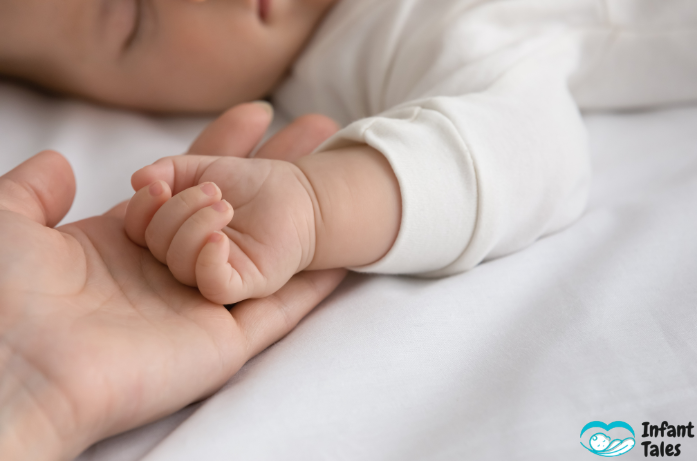
Have you ever held your newborn’s tiny hands and noticed how cold they feel, even when the rest of their body seems warm? It can be a little worrying, especially for new parents who are still learning what is normal for their baby.
Thankfully, newborn cold hands are usually nothing to worry about. A newborn’s blood circulation and ability to regulate body temperature are still developing. Because of this, their little fingers and toes may feel chilly even when their body is comfortably warm.
But how can you tell if your baby is actually cold or simply adjusting to the world outside the womb? The best way is to check their chest or tummy, observe their feeding and behavior, and use a thermometer if they seem unwell. In this article, we’ll explore why newborns have cold hands, simple ways to keep them warm, and the warning signs that mean it’s time to contact your pediatrician.
Why Are Newborns’ Hands Cold?
It’s normal for newborns to have cold hands and feet because their circulation and temperature-control systems are still developing. Here are three common reasons.
1. Immature Blood Circulation
One of the main reasons newborns’ hands are cold is that their circulation is still adjusting after birth.
When your baby feels cool, their body directs more blood toward vital organs, such as the heart and brain. This can leave their tiny fingers and toes feeling chilly, even when their chest is warm.
As your baby grows, their circulation gradually improves.
2. Difficulty Regulating Body Temperature
Newborns lose body heat more quickly than adults because of their small size and relatively large skin surface.
Their bodies also use a special type of fat called brown fat to produce warmth. Since their temperature-control system is still developing, comfortable clothing and a suitable room temperature are important.
3. Exposure to Cooler Air
Sometimes, your baby’s hands feel cold simply because they’re exposed to cooler air.
This can happen during sleep or when they’re in an air-conditioned room. If their chest or tummy feels comfortably warm and they’re feeding normally, there’s usually no need to add extra layers.
Newborn Cold Hands but Warm Body: Is It Normal?
Yes, it’s completely normal for a newborn’s hands and feet to feel cooler than the rest of their body. This usually happens because their blood circulation is still developing.
To check if your baby is warm enough, gently feel their chest, tummy, or the back of their neck instead of their fingers.
If these areas feel comfortably warm and your baby is feeding and behaving normally, there’s usually no reason to worry.
However, if your baby feels unusually hot or cold, seems unwell, or isn’t feeding properly, check their temperature with a digital thermometer and seek medical advice.
Why Does My Newborn Have Cold Hands at Night?
You might notice your baby’s tiny hands feel chilly when you check on them during the night. This is quite common because their hands often remain uncovered while the rest of their body stays warm inside their sleepwear.
Having cold hands and feet in a newborn during sleep doesn’t necessarily mean they’re feeling cold.
Should You Cover Your Baby’s Hands at Night?
Usually, there’s no need to cover your baby’s hands if their chest or tummy feels comfortably warm.
Instead, dress them in suitable sleepwear or a properly fitted baby sleep sack. Avoid loose blankets, hats, and detachable mittens during sleep, as they can pose safety risks.
The Lullaby Trust recommends keeping your baby’s sleeping room around 16–20°C (61–68°F), with clothing adjusted to prevent overheating.
Remember, your baby’s body temperature matters more than how warm their fingers feel.
Why Do Newborn Hands Sometimes Turn Blue or Purple?
It can be worrying to see your newborn’s tiny hands or feet looking slightly blue or purple. However, this can sometimes happen because of a normal newborn condition called acrocyanosis.
It occurs when blood flow to the hands and feet temporarily decreases, particularly when your baby feels cool. It’s common shortly after birth and usually improves as your baby warms up.
However, blue or grey lips, tongue, or central body are not normal and require immediate emergency medical attention, as they may indicate low oxygen levels.
If the discoloration doesn’t improve, affects only one hand, or comes with swelling or other unusual symptoms, contact your pediatrician promptly.
How to Tell If Your Newborn Is Actually Too Cold
Cold fingers alone cannot tell you whether your baby needs extra warmth.
Instead, look at their overall condition.
Check Their Chest or Tummy
Gently feel your baby’s chest or tummy under their clothing.
The skin should feel comfortably warm, not unusually cold, hot, or sweaty.
If their body feels cool, check their clothing and room temperature.
If they appear unwell, measure their temperature rather than relying on touch.
Notice Feeding and Behavior
A comfortable newborn should generally wake for feeds, respond to handling, and feed in their usual pattern.
If your baby suddenly becomes difficult to wake, feeds poorly, or seems unusually quiet, seek medical advice promptly.
These symptoms are more important than cold hands alone.
Use a Digital Thermometer
A thermometer provides more reliable information than touching your baby’s skin.
The NHS recommends using a digital thermometer in the armpit for young children, following the manufacturer’s instructions.
For babies younger than three months, a temperature of 38°C (100.4°F) or higher requires urgent medical assessment.
A temperature below 36°C (96.8°F) can also be concerning, particularly if your baby appears unwell. Recheck an unexpectedly low reading promptly and seek urgent medical advice.
Cold Hands After a Bath: Is It Normal?
Yes. Your baby’s hands may feel cooler after bathing because water evaporating from their skin carries away body heat.
Newborns lose warmth more quickly than older children, so keeping bath time comfortable is important.
A few simple habits can help:
- Keep the bathing area comfortably warm and away from drafts.
- Prepare a soft towel and clean clothes beforehand.
- Use comfortably warm, not hot, bathwater.
- Keep baths brief.
- Dry your baby gently and dress them soon afterward.
If their fingers feel slightly cool but their body is warm and they seem comfortable, there is usually no reason to panic.
Can Air Conditioning Make Newborn Hands Cold?
Yes. Air conditioning can make exposed skin feel cooler, particularly when air blows directly toward your baby.
Try positioning your baby’s crib away from AC vents and direct fan airflow.
Choose clothing based on the actual room temperature rather than the weather outside.
For example, a newborn sleeping in an air-conditioned room during summer may need different sleepwear from one sleeping in a naturally warm room.
Always check their chest or back of the neck before adding more layers.
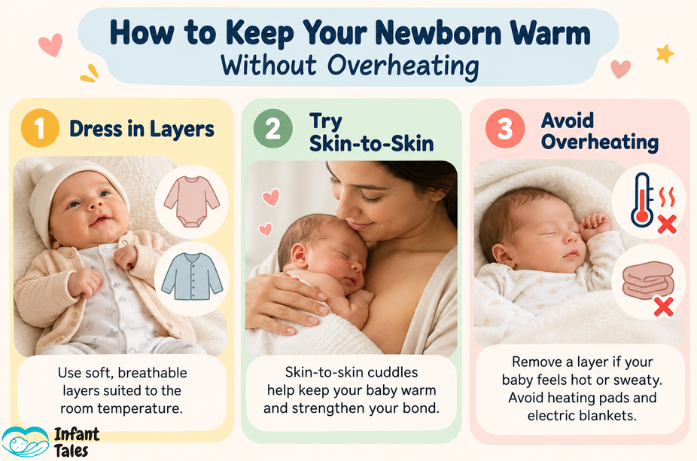
How to Keep Your Newborn Warm Without Overheating
Keeping your baby comfortable doesn’t mean wrapping them in several thick blankets.
Simple adjustments are often enough.
Dress Your Baby in Comfortable Layers
Choose soft, breathable clothing that suits the room temperature.
As a general starting point, newborns may need one more lightweight layer than a comfortably dressed adult.
However, always adjust according to your baby’s body warmth.
Try Skin-to-Skin Contact
Skin-to-skin cuddles can help support your baby’s temperature regulation while strengthening your bond.
Place your baby against your bare chest while you’re fully awake, keeping their face visible and airway clear.
If you become sleepy, return your baby to their own safe sleep space.
Avoid Overheating
Parents sometimes add extra clothes because their newborns’ hands are cold, even when the rest of the body is already warm.
But overheating can be dangerous.
If your baby’s chest feels hot or their neck is sweaty, remove a layer.
Never use heating pads, electric blankets, or hot-water bottles to warm your newborn.
Do Premature Babies Need Extra Attention?
Yes. Premature babies and babies with low birth weight may have more difficulty maintaining a stable body temperature.
They often have less insulating body fat and less mature temperature-control systems.
Although cold hands can still be normal, these babies may need closer temperature monitoring.
Follow the clothing, skin-to-skin care, and temperature-checking instructions provided by your neonatal healthcare team.
If your premature baby has recently come home, ask your pediatrician what temperature range and care routine are appropriate for them.
When Should You Worry About Newborn Cold Hands?
Most cases of newborn cold hands are harmless. However, cold hands accompanied by other unusual symptoms may indicate that your baby needs medical attention.
Contact your pediatrician urgently if your baby has cold hands along with poor feeding, fewer wet diapers than expected, unusual sleepiness, persistent skin discoloration, or an abnormally cold body.
Seek emergency medical help if your newborn develops:
- Blue or grey lips or tongue
- Difficulty breathing or repeated pauses in breathing
- Limpness or difficulty waking
- Severe paleness or mottled skin with signs of illness
- A temperature below 36°C (96.8°F), especially with other concerning symptoms
- A temperature of 38°C (100.4°F) or higher when younger than three months
Don’t wait for several warning signs to appear. If your newborn seems seriously unwell, seek medical care immediately.
Normal Cold Hands vs. Warning Signs
| What you notice | What it may mean |
| Cold hands but warm chest | Usually normal circulation |
| Cool fingers after bathing | Temporary heat loss |
| Cold hands during sleep | Often normal if the body is warm |
| Brief blue hands improving with warmth | May be normal acrocyanosis |
| Cold body with poor feeding | Needs urgent medical assessment |
| Blue lips or breathing difficulty | Medical emergency |
This quick guide can help you recognize common situations, but it doesn’t replace checking your baby’s temperature or seeking medical advice.
When Will My Baby’s Hands Stop Feeling Cold?
There’s no fixed age when your baby’s hands will stop feeling cold. As their blood circulation and ability to control body temperature improve over the first few months, you may notice their little fingers and toes becoming warmer.
But don’t worry if their hands still feel chilly sometimes. Even older babies can have cool hands, especially in a cooler room.
As long as your baby is feeding well, growing normally, and seems comfortable, occasional cold hands are usually nothing to worry about
Frequently Asked Questions
1. Is it normal for a 2-week-old baby to have cold hands?
Yes. Cold hands are common during the first weeks because newborn circulation is still developing. If your baby’s chest is warm and they are feeding normally, it is usually harmless.
2. Why are my newborn’s hands cold but their face is warm?
Different body areas can feel different temperatures. Your baby’s hands may be cooler because of normal circulation. If their face feels unusually hot or they seem unwell, check their temperature.
3. Can newborns have cold hands with a fever?
Yes. Cold hands do not rule out fever. Babies younger than three months with a temperature of 38°C (100.4°F) or higher need urgent medical assessment.
4. Should I put mittens on my newborn at night?
Cold hands alone do not mean your baby needs mittens. Choose appropriate sleep clothing and avoid loose or detachable accessories during sleep.
5. Are cold hands a sign of poor circulation in newborns?
Cold hands often reflect normal newborn circulation. However, persistent discoloration, swelling, or other concerning symptoms should be checked by a healthcare professional.
Final Thoughts
Noticing your newborn’s tiny hands feeling cold can make you worry, especially during those first few weeks when everything feels new.
The good news is that newborn cold hands are usually normal as your baby’s circulation and temperature-control system continue to develop. Cold fingers alone don’t necessarily mean your baby is uncomfortable or unwell.
The best thing you can do is check their chest or tummy, keep them comfortably dressed, and pay attention to their feeding, breathing, and overall behavior. If your baby seems unwell or has an unusual temperature, don’t hesitate to contact your pediatrician.
Remember, every newborn is different, and learning to understand your baby’s little signals takes time. With a little care and awareness, you can spend less time worrying and more time enjoying those precious newborn cuddles.
At Infant Tales, we believe that understanding these little newborn changes can help parents feel more confident and enjoy those precious early cuddles with less worry.
Disclaimer
This article is for educational purposes only and does not replace professional medical advice. Always consult your pediatrician if you have concerns about your newborn’s temperature, feeding, breathing, or overall health.