
Written with love by a caring mom at Infant Tales
Bringing your newborn home is one of the most emotional and life-changing moments you will ever experience. I still remember those early days, quietly watching my baby, checking on them again and again, and feeling a mix of love and uncertainty. If you’re searching for a Newborn Routine Guide, you are likely looking for a little calm and clarity in this beautiful yet overwhelming phase.
Let me gently tell you this, there is no perfect routine in the beginning. You can establish a gentle flexible pattern because it will establish a safe environment which enables you and your baby to establish closer bonds while experiencing daily comfort. The guide will provide you with a simple and reassuring path to complete your journey.
Understanding Your Baby’s Natural Rhythm
Newborns need several weeks before they can maintain a steady daily schedule. Their body needs time to adjust after spending time inside the womb. The womb provided them a stable environment which maintained constant warmth and familiar conditions. The child now experiences every aspect of life including light, sounds, hunger, and sleep.
This is why your baby’s needs may feel unpredictable. Some days they may sleep more, other days they may want to feed constantly. This doesn’t mean something is wrong. It simply means your baby is growing and adapting.
Most newborns sleep a lot, but not in long stretches. The baby wakes up multiple times to eat and to receive comfort and security. Your approach to newborn care needs to shift from controlling your baby to showing your baby love and patience.
The process of developing a daily routine does not depend on establishing a flawless schedule because you need to learn how your baby communicates through their movements. Your baby routine will begin to take shape as you start to recognize what happens in your daily life.
When you start understanding your baby’s growth and daily patterns, it can feel a little easier to build your rhythm. I found it really helpful to learn about typical baby development stages from trusted sources like the CDC’s infant milestones and schedules, which gently explain what to expect in those early months.
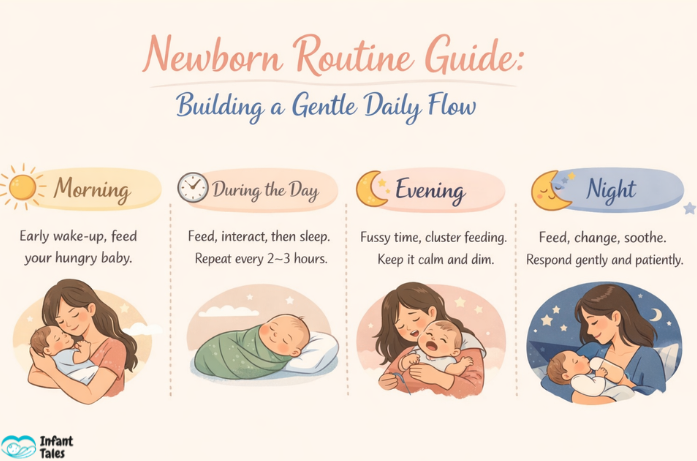
Newborn Routine Guide: Building a Gentle Daily Flow
Instead of following a strict schedule, think of your day as a soft, repeating rhythm of feeding, a little awake time, and sleep. This natural flow helps your baby feel secure while slowly bringing predictability into your day.
Morning
Mornings often begin early, even before you feel fully rested. Your baby usually wakes up hungry, and feeding becomes your first quiet moment of connection. After feeding, there is a short period when your baby feels calm and alert. This is a beautiful time for baby bonding, through gentle talking, eye contact, or simply holding your baby close.
During the Day
As the day goes on, you’ll notice a simple pattern repeating, feed, a little interaction, then sleep again. This cycle usually happens every 2 to 3 hours. It may feel repetitive, but it is actually helping your baby develop a natural rhythm and sense of comfort.
Evening
Evenings can feel a bit more challenging. Many babies become baby fussy during this time and may want to feed more often, a phase known as cluster feeding. Keeping the surroundings calm, lights dim, and noise low can help your baby feel more relaxed and secure.
Night
At night, everything slows down. Your focus shifts to comfort and gentle care, feeding, changing, and soothing your baby back to sleep. There’s no need for a strict night routine yet. Simply responding to your baby’s needs with calmness and patience is more than enough.
Feeding Your Newborn with Confidence
Feeding your baby is one of the most important parts of your day, and it can also be one of the most emotionally sensitive experiences. Whether you are breastfeeding or formula feeding, what matters most is that your baby is nourished and you feel supported. If you’re nursing, learn about breastfeeding foods that may affect your baby.
In the early days, feeding does not follow a strict schedule. Your baby may want to feed every 2–3 hours, and sometimes even more frequently. This is your baby’s way of growing, building strength, and feeling comforted.
You will slowly begin to recognize your baby’s hunger cues. These may include small movements like turning their head, sucking on their hands, or becoming slightly restless. Responding to these early cues makes feeding easier and more peaceful.
A gentle feeding routine can include:
- Feeding on demand rather than by the clock
- Burping your baby after each feed
- Holding your baby upright for a few minutes after feeding
Over time, feeding will start to feel more natural. That initial uncertainty will slowly turn into quiet confidence. In the early weeks, many moms worry about feeding, sleep, and overall care. If you ever feel unsure, reading medically reviewed guidance like this detailed resource from the NCBI on newborn care can give you reassurance and clarity without feeling overwhelming.
Understanding Newborn Sleep Patterns
Sleep is often one of the biggest concerns for new moms. It can feel confusing and sometimes even frustrating when your baby wakes frequently or struggles to settle.
Newborn sleep is very different from adult sleep. Babies sleep in shorter cycles and wake up often because their bodies need frequent feeding and comfort. This is not a problem, it is completely normal.
During the day, your baby may nap several times, but these naps can vary in length. Some may last just 20 minutes, while others may stretch longer. At night, your baby will still wake up regularly, and that is expected in this stage.
To gently support better baby sleep, you can:
- Watch for sleepy cues like yawning or fussiness
- Swaddle your baby to provide a sense of security
- Keep the sleep environment calm and quiet
It’s important to remember that you are not “spoiling” your baby by holding or comforting them to sleep. You are helping them feel safe in a new world.
Daily Care: Diapering, Bathing, and Comfort
Daily care routines may feel new at first, but they quickly become second nature. Diaper changes, in particular, will become a regular part of your day, happening every few hours.
Keeping your baby clean and comfortable is simple when done gently. Use soft wipes or warm water, and always be mindful of your baby’s delicate skin. Applying a protective cream can help prevent rashes, especially in the early weeks.
Bathing your baby does not need to be done every day. Two to three times a week is usually enough. What matters more is making bath time calm and comforting. The warmth of the water, your gentle touch, and your soothing voice all help your baby feel secure.
These small moments of baby care are not just tasks, they are opportunities for connection.
Creating a Peaceful Environment at Home
Your baby is highly sensitive to their surroundings. A calm environment can make a big difference in how settled and comfortable they feel.
Soft lighting, minimal noise, and a peaceful atmosphere can help your baby relax more easily. Even your tone of voice plays a role. Speaking gently and moving slowly around your baby creates a sense of safety.
Holding your baby often is not a bad habit. In fact, it builds trust and emotional security. Your warmth, your heartbeat, and your presence are the most familiar things your baby knows.
This is the true essence of newborn care, creating a space where your baby feels safe, loved, and protected.
Caring for Yourself in the Process
In the middle of everything, it’s easy to forget about yourself. But your well-being is just as important as your baby’s.
The early days of motherhood can feel exhausting, both physically and emotionally. Lack of sleep, constant responsibility, and new changes can feel overwhelming. It’s important to give yourself grace during this time.
Try to rest whenever you can, even if it’s just for short periods. Accept help from family or friends if it’s available. Eat nourishing meals and stay hydrated.
Most importantly, remind yourself that it’s okay to not have everything figured out. You are learning, growing, and adjusting, just like your baby.
For those who have previously had a tubal ligation and are thinking about growing their family again, consulting an experienced tubal reversal doctor can help them understand whether tubal reversal may be a suitable option for becoming pregnant in the future.
When Things Feel Uncertain
There will be days when your daily routine feels completely off. Your baby may cry more, sleep less, or seem harder to settle. These moments can feel discouraging, but they are a normal part of the journey.
Babies go through growth spurts, developmental changes, and emotional adjustments. These phases can temporarily affect their routine.
Instead of trying to fix everything, focus on meeting your baby’s needs in that moment. Comfort them, feed them, hold them close. Sometimes, that is all they need.
And sometimes, that is all you need to do.
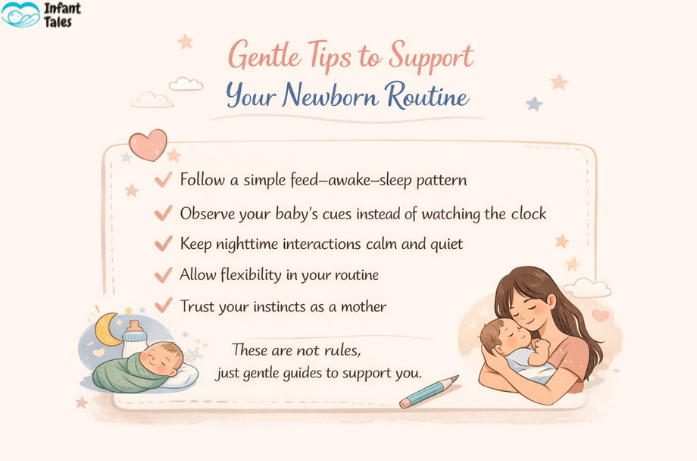
Gentle Tips to Support Your Newborn Routine
As you slowly find your rhythm, these small tips can help make your days feel a little more manageable:
- Follow a simple feed–awake–sleep pattern
- Observe your baby’s cues instead of watching the clock
- Keep nighttime interactions calm and quiet
- Allow flexibility in your routine
- Trust your instincts as a mother
These are not rules, just gentle guides to support you.
Final Thoughts: A Journey of Love and Learning
Dear mama, if you are reading this and wondering if you are doing enough, let me softly remind you, you are. This Newborn Routine Guide is not about creating perfection. It is about creating connection, comfort, and a sense of calm in your daily life.
Your baby does not need a perfect schedule. Your baby needs you, your warmth, your patience, your love. There will be messy days, tired nights, and moments of doubt. But there will also be quiet smiles, tiny hands holding yours, and a bond that grows stronger every single day.
Go gently with yourself. Trust your heart. You are not just building a routine, you are building a beautiful beginning.
As you continue this journey, remember that parenting doesn’t come with a perfect guidebook. But having supportive resources can make a big difference. I personally found comfort in simple, easy-to-understand advice from Kids Health’s guide for parents, especially during those uncertain first weeks.
If you found this guide helpful, share it with another new mom who might need a little support. And don’t forget to explore more gentle parenting tips and baby care guides on Infant Tales because you’re not alone in this journey
FAQs
1. When should I start a routine for my newborn?
You can start building a gentle routine from the first few weeks, but keep it flexible and follow your baby’s natural cues.
2. How often should a newborn feed?
Most newborns feed every 2–3 hours, but some may need to feed more frequently, especially during growth spurts.
3. Why is my newborn more fussy in the evening?
Evening fussiness is common and often linked to tiredness or cluster feeding. A calm environment can help soothe your baby.
4. How much sleep does a newborn need?
Newborns usually sleep 14–17 hours a day, but in short stretches rather than long continuous sleep.
5. Is it okay if my baby doesn’t follow a routine yet?
Yes, absolutely. Every baby is different, and routines develop gradually over time. Focus on comfort and consistency instead.
Disclaimer: This article is for informational purposes only and is based on personal experience as a mom. Every baby is different, so always trust your instincts and consult your pediatrician for any medical concerns or specific guidance.