Written with love by a caring mom at Infant Tales
You might have found yourself wondering what motivates your child to learn, especially on days when they seem distracted or lose interest quickly. It can feel confusing and even a little frustrating when something you thought they would enjoy doesn’t hold their attention.
I’ve been in that place too, sitting beside my child and gently guiding them, sometimes unsure if I was doing enough. Over time, I realized something important, children don’t learn simply because they are told to. They learn when they feel curious, safe, and emotionally supported.
Learning isn’t just about books or homework. It’s deeply connected to your child’s feelings, environment, and daily experiences. When learning feels positive and meaningful, children naturally become more engaged, curious, and willing to try
What Motivates Your Child to Learn: 10 Simple Ways to Inspire Curiosity
As a parent, understanding what motivates your child to learn can feel like gently solving a puzzle. Every child is unique, and what works for one may not work for another. But there are some simple and meaningful ways that can help spark that natural desire to learn.
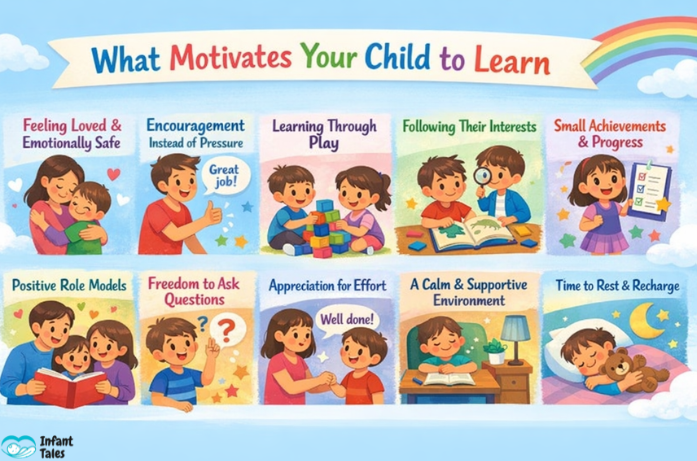
Here are 10 things that truly motivate children to learn, shared from both experience and understanding.
1. Feeling Loved and Emotionally Safe
The foundation of learning begins with emotional safety. When children feel loved, accepted, and secure, they become more confident in exploring the world around them.
A safe environment allows them to ask questions freely, make mistakes without fear, and try again without hesitation. When a child feels, “I am supported no matter what,” their willingness to learn grows naturally.
2. Encouragement Instead of Pressure
As parents, we want the best for our children. But sometimes, without realizing it, that desire can turn into pressure. And pressure can make learning feel heavy and stressful.
Gentle encouragement works in a completely different way, especially during stages when your baby fussy or easily frustrated. When you say things like, “You’re doing so well” or “Let’s try this together,” your child feels supported instead of judged. This builds confidence and helps them stay motivated even when something feels challenging.
Research also suggests that using rewards carefully and thoughtfully can help build motivation when combined with emotional support, as explained by the Cleveland Clinic. This balance helps children stay motivated without feeling pressured.
3. Learning Through Play
Play is one of the most powerful ways children learn. Try these fun learning activities to encourage curiosity at home. It may look simple from the outside, but during play, children are developing important skills like problem-solving, creativity, and understanding.
Whether it’s building blocks, role-playing, or simple games, play turns learning into something enjoyable. When learning feels fun, children naturally stay engaged without needing constant reminders.
4. Following Their Interests
Every child has their own interests. Some may love animals, others enjoy drawing, while some are fascinated by how things work.
When learning connects with these interests, it becomes meaningful. For example, a child who loves cars may enjoy counting cars, sorting them, or listening to stories about vehicles.
When you follow your child’s interests, learning becomes something they look forward to instead of something they avoid.
5. Small Achievements and Progress
Big tasks can sometimes feel overwhelming for children. But when learning is broken into small, manageable steps, it becomes easier and more motivating.
Each small success builds confidence. It gives your child a sense of achievement and encourages them to keep going. Over time, these little wins create a strong belief in their abilities.
6. Positive Role Models
Children learn more from what they see than from what they are told. When they see you reading, asking questions, or trying something new, they begin to copy that behavior naturally.
Your attitude towards learning becomes their attitude. Even small habits can leave a lasting impression. When learning is a part of your life, it becomes a part of theirs too.
7. Freedom to Ask Questions
Curiosity is the heart of learning. Children are naturally curious, but that curiosity grows when they feel safe to ask questions.
Instead of giving all the answers immediately, encourage your child to think. Let them wonder, imagine, and explore. When children feel heard and valued, their desire to learn becomes stronger.
8. Appreciation for Effort
Children need to know that effort matters more than perfection. When you notice and appreciate how hard they are trying, it motivates them to continue.
Instead of focusing only on results, try saying, “I saw how much effort you put into this.” This helps your child feel proud of their work and less afraid of making mistakes.
9. A Calm and Supportive Environment
A peaceful environment makes a big difference in how a child learns. When there is less stress and more understanding, children feel relaxed and open to learning.
A calm tone, patience, and gentle guidance create a space where your child feels comfortable. And when they feel comfortable, learning becomes easier and more natural.
10. Time to Rest and Recharge
Children need breaks just like adults do. Too much pressure or constant learning can make them feel tired and lose interest.
Free play, relaxation, and downtime help refresh their minds. When children feel rested, they return to learning with more energy and focus.
Why This Is Important
Understanding what motivates your child to learn is not just about helping them do well in school. It shapes how they feel about learning for the rest of their life.
When children feel motivated, they begin to develop:
- Confidence in their abilities
- A positive attitude towards challenges
- The courage to try new things
- A willingness to learn on their own
A motivated child doesn’t just study for marks. They begin to enjoy learning itself. And that makes a big difference.
Children who feel supported are not afraid of failure. They understand that mistakes are a part of learning, not something to fear. This mindset helps them grow stronger emotionally and mentally.
Studies have also shown that motivation in children is closely linked to emotional support and positive reinforcement. According to research published on PubMed Central, children who feel supported and encouraged develop stronger learning behaviors and long-term motivation. This reminds us that how children feel during learning matters just as much as what they learn.
How You Can Support Your Child Daily
As a parent, you don’t need complicated strategies to motivate your child. In fact, the simplest actions often have the biggest impact.
You can support your child by:
1. Listening with patience
Give your full attention when your child speaks. It makes them feel valued and understood.
2. Creating a positive learning space
A calm and comfortable environment helps your child focus better.
3. Encouraging effort over results
Focus on how hard they try, not just the outcome.
4. Spending quality time together
Even small moments of connection can strengthen your child’s confidence.
5. Being flexible and understanding
Some days will be easier than others, and that’s okay. Learning takes time.
These small, consistent actions build a strong emotional foundation. And when that foundation is strong, motivation grows naturally.
Final Thoughts
If you’re still wondering what motivates your child to learn, remember this simple truth, it begins with connection, not control.
You don’t have to push your child constantly or expect perfection. What your child truly needs is your presence, your patience, and your understanding.
There will be days when learning feels easy and days when it feels challenging. Both are part of the journey. What matters most is that your child feels supported through it all.
Because in the end, your love, your encouragement, and your belief in your child are the strongest motivations they will ever have. And truly, that is what helps them learn, grow, and shine in their own beautiful way.
Share this with another parent who might need support, and let’s grow together.
You can also explore more gentle parenting tips and real-life stories on Infant Tales to make your parenting journey a little easier and more joyful.
FAQs
1. What motivates your child to learn the most?
Children are most motivated when they feel safe, loved, and interested in what they are learning.
2. How can I motivate my child to study without pressure?
Use gentle encouragement, appreciate effort, and make learning fun through games and daily activities.
3. Why does my child lose interest in learning?
This can happen when learning feels stressful, boring, or not connected to their interests.
4. How do I understand my child’s learning style?
Observe whether your child enjoys visuals, listening, or hands-on activities, and guide them accordingly.
5. Is play important for learning?
Yes, play is one of the most natural ways children learn. It supports creativity, problem-solving, and understanding in a joyful way.
Disclaimer: This article is based on personal parenting experiences and general understanding. Every child is unique, and what works for one may not work for another. This content is meant for guidance and support, not as professional or medical advice. Always trust your instincts as a parent and seek expert advice if needed.