Authored by: A Caring Mom at Infant Tales
If your infant only wants mom, it is usually because Mom feels the most familiar, comforting, and safe.
You may notice your baby reaching for you the moment Dad, Grandma, or someone else tries to hold them. This can feel sweet at first, but it can also become tiring when you cannot step away for even a few minutes without tears.
Babies often go through phases of strong parental preference, especially when they are tired, teething, sick, going through separation anxiety, or adjusting to a new routine. It does not mean your baby loves the other parent less.
For most families, this is a temporary stage. With gentle practice, regular bonding time, and comforting care from other trusted adults, babies usually become more comfortable with more than one caregiver.
Table of Contents
- Why Does My Infant Only Want Mom?
- Why Does a Baby Only Want Mom All of a Sudden?
- How Long Does Parent Preference Last?
- What Can You Do When Baby Only Wants Mom?
- What If Baby Only Wants Mom at Bedtime?
- If You are the Parent Baby Keeps Rejecting
- When Should You Talk to Your Pediatrician?
- Final Thoughts
- Frequently Asked Questions
- Disclaimer
Why Does My Infant Only Want Mom?
For a baby, Mom can mean food, warmth, sleep, cuddles, comfort, and safety all at once. If you are the one who usually feeds, rocks, settles, and wakes up with your baby at night, it makes sense that they turn to you first.
Your voice, smell, touch, and the way you hold your baby are also very familiar. Babies naturally feel calmer around people and routines they know well.
That does not mean your baby loves Dad less. It simply means Mom may currently be the person they connect most strongly with comfort.
When a Newborn Only Wants Mom
If your newborn only wants mom, don’t worry that you have already created a bad habit. Newborns are not choosing favorites in the way older children do.
They are simply drawn toward what feels familiar. Mom’s smell, voice, body warmth, and feeding routine can all be deeply comforting during those first weeks.
Breastfeeding may strengthen that connection, but bottle-fed babies can prefer Mom too. Everyday cuddles, rocking, talking, and soothing all help build that strong sense of familiarity.
The good news is that babies can also build beautiful relationships with Dad, grandparents, and other regular caregivers.
Why Does a Baby Only Want Mom All of a Sudden?
One week your baby may happily go to anyone, and the next week only Mom will do. This sudden change can feel confusing, but it is often part of normal development.
As babies grow, they become more aware of familiar people and start noticing when someone leaves. This can make separation feel much harder than it did before.
According to the Cleveland Clinic, separation anxiety is a normal developmental stage that often begins around 6 to 12 months, which can explain why some babies suddenly become clingier when Mom leaves.
A baby only wants mom even more when they are tired, hungry, teething, sick, or overstimulated. When babies feel uncomfortable, they usually look for the person who feels most familiar.
So if your baby happily plays with Dad during the day but cries for you at bedtime, that does not mean Dad is doing anything wrong. Your baby may simply be tired and looking for their usual comfort.
Parental Preference Does Not Mean More Love
Parental preference can feel very personal. Dad picks up the baby, the baby cries, Mom takes them back, and suddenly everything is calm.
It can be easy to think, “Well, I guess the baby loves Mom more.”
But that is usually not what is happening. Babies do not measure love the way adults do.
Your baby may want Mom when sleepy but laugh the hardest with Dad. They may calm down with Grandma during a walk or enjoy bath time more with another caregiver.
Each relationship can be special in a different way.
How Long Does Parent Preference Last?
A very common question is, how long does parent preference last?
Unfortunately, there is no exact answer. Some babies go through this phase for a few days or weeks, while others may move in and out of it for months.
Preferences can also change completely.
Your baby might refuse to leave Mom today and later decide that only Dad can read the bedtime story.
Teething, illness, travel, daycare, sleep changes, or Mom returning to work can also make clinginess stronger for a while.
The best thing you can do is keep giving your baby positive experiences with other loving caregivers.
What Can You Do When Baby Only Wants Mom?
You do not need to force long separations or suddenly leave your baby for hours. A gentle approach usually works better.
Start when your baby is calm, rested, and fed. Let Dad or another caregiver sit nearby while you play together.
Once your baby seems relaxed, let the other caregiver hold them while you stay close.
After a few minutes, you can move across the room or step away briefly. Slowly increase the time as your baby becomes more comfortable.
Small, peaceful steps are often easier than making a big change all at once.
Let Dad Comfort Baby in His Own Way
This can be difficult for Mom because you probably know exactly how your baby likes to be held, rocked, or settled.
But Dad does not have to do everything exactly the same way.
Maybe Mom rocks gently while Dad walks around the house. Maybe you sing softly while Dad makes silly noises.
Both can work.
Unless something is unsafe, try giving the other caregiver room to figure things out. Babies can learn to feel comfortable with different styles of care.
Give Dad Some Happy Baby Time Too
If Dad only gets the baby when they are screaming, hungry, or exhausted, it is much harder for them to bond.
Try giving him some of the easy moments too.
After a nap and feeding is often a lovely time for Dad and baby to play, go for a stroller walk, read a book, or spend a few quiet minutes together.
These simple everyday moments help babies become more familiar with another caregiver.
Even fifteen relaxed minutes every day can make a difference over time. Research available through NIH’s PubMed Central also highlights the value of positive engagement from both mothers and fathers, including everyday activities such as playing, reading, talking, holding, and soothing a baby.
Create a Special Dad-and-Baby Routine
Babies love repetition, so having a routine with Dad can help.
Maybe Dad does bath time every evening, takes the baby outside after breakfast, or reads the same little book before bed.
It does not have to be anything exciting.
What matters is that it happens regularly. Your baby slowly starts connecting Dad with another safe and familiar part of the day.
Don’t Rush to Rescue Every Time
When your baby cries in Dad’s arms, your first instinct may be to take them back immediately. Sometimes that is exactly what they need.
But every little fuss does not always mean Mom has to step in.
Give Dad a little time to walk, cuddle, sing, change positions, or move somewhere quieter.
If Mom always takes over instantly, Dad and baby may never get much practice learning how to settle together.
Of course, if your baby becomes very upset, hungry, unwell, or clearly needs you, it is perfectly fine to step in.
What If Baby Only Wants Mom at Bedtime?
Bedtime can be one of the hardest times because your baby is already tired.
If Mom has always done the whole bedtime routine, asking Dad to suddenly take over may lead to plenty of tears.
Instead, start slowly.
Dad might begin by giving the bath while Mom handles pajamas and feeding. A few days later, Dad can add the bedtime book.
Over time, he can take on more of the routine.
This gentle change often feels easier for babies than suddenly replacing everything familiar.
Practice Short Separations
You don’t have to leave for hours to help your baby become comfortable without you.
Start with something small.
Let Dad stay with the baby while you shower, make tea, or step outside for a few minutes.
Each time you leave and return, your baby gets another chance to learn that Mom can go away and still come back.
That is an important lesson.
Try not to sneak away every single time, especially as your baby gets older. A simple goodbye like, “Mommy is going to shower, Daddy is staying with you,” can make separation feel more predictable.
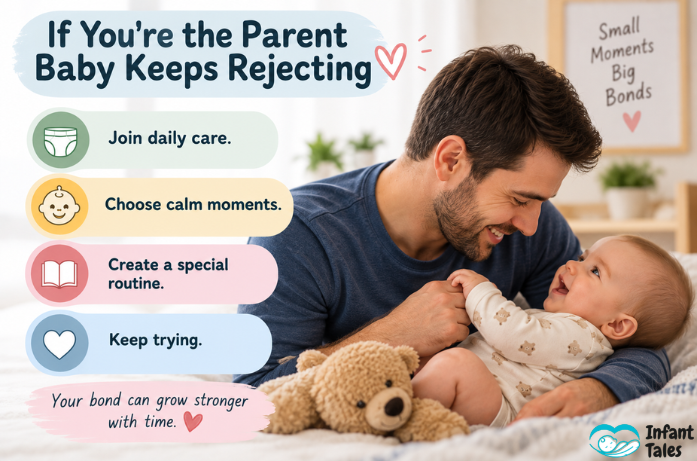
If You are the Parent Baby Keeps Rejecting
Being the non-preferred parent can hurt, especially when your baby keeps reaching for Mom. Try not to take it personally or step away completely.
A few simple things can help:
- Join daily care: Help with diapers, bottles, bath time, or bedtime.
- Choose calm moments: Bond when your baby is rested and happy.
- Create a special routine: Try a walk, song, book, or little game together.
- Keep trying: Short, positive moments can slowly build trust.
Your baby’s preference today does not define your future relationship. As your baby grows into toddlerhood, the CDC also encourages simple activities like reading, talking, playing, and exploring together as part of positive parenting. With time and consistency, your bond can grow stronger.
Things That Can Make Parent Preference Harder
Try not to turn your baby’s preference into a competition between parents. Jokes like “the baby doesn’t like Daddy” may seem harmless, but they can make the other parent feel rejected and may add unnecessary tension at home.
It is also best not to force your baby into someone’s arms when they are already frightened, overtired, or very upset. Babies usually respond better when they are introduced to other caregivers during calm, happy moments.
At the same time, don’t give up after one difficult handoff. A little crying does not mean your baby can never feel comfortable with Dad, Grandma, or another trusted caregiver.
Building trust takes repetition. Regular playtime, cuddles, feeding, walks, and everyday care can slowly help your baby feel safe with more than one person.
When Should You Talk to Your Pediatrician?
Most parent preference is completely normal.
Still, if your baby’s clinginess suddenly comes with fever, poor feeding, unusual tiredness, fewer wet diapers, pain, breathing problems, or another symptom that worries you, contact your pediatrician.
You can also mention very strong separation problems during a regular checkup if you are concerned about your baby’s behavior or development.
Final Thoughts
If your infant only wants mom, remember that this phase is usually about comfort and familiarity, not rejection. Your baby is simply reaching for the person who feels safest right now, and that preference can change as they grow.
Keep giving Dad and other trusted caregivers gentle chances to bond through play, cuddles, feeding, walks, and everyday care. With time and patience, your baby can feel secure with more than one person, while the love and trust you are building as a family continues to grow.
Frequently Asked Questions
Visit Infant Tales for more simple, supportive guides on baby development, sleep, feeding, and everyday parenting.
Disclaimer
This article is for general informational purposes only and is not a substitute for professional medical advice. If you are concerned about your baby’s health, development, or behavior, speak with your pediatrician or healthcare provider.
About the Author
Geeta Yogi is a parenting writer who shares gentle, practical guidance about baby development, attachment, separation anxiety, bonding, and everyday family life. Her writing focuses on helping parents understand common baby behaviors, build secure relationships with their little ones, and feel more confident through changing developmental stages.