
Written by a caring mom at Infant Tales
Pregnancy is a time of many changes, bringing both joy and emotional ups and downs. As your body supports your growing baby, hormonal shifts, physical discomfort, and new responsibilities can sometimes lead to stress during pregnancy. Feeling overwhelmed or worried at times is very common and completely natural.
Many moms find their thoughts becoming more active during this phase thinking about the baby, their changing body, and the future. These feelings often come from love and care, but they can also feel a bit heavy at times.
Understanding this can be comforting. With gentle self-care, support, and small daily changes, you can manage these emotions and feel more calm and balanced throughout your pregnancy journey.
Understanding Stress During Pregnancy
Stress during pregnancy is not always loud or obvious. It doesn’t always mean panic or tears. Sometimes, it shows up quietly, like constant thinking, emotional exhaustion, or a feeling that you just can’t fully relax.
You may notice:
- A busy mind that won’t slow down
- Feeling easily irritated or emotional
- Trouble sleeping or resting
- Worrying about your baby’s health or your future
This kind of pregnancy stress is more common than you think. Your body is changing, your hormones are shifting, and your life is preparing for a big transition. It’s natural for your mind to react.
In fact, even health experts like the World Health Organization highlight how emotional well-being during pregnancy is just as important as physical health, reminding us that maternal mental health deserves care and attention too.
What matters is not avoiding stress completely, but learning how to gently handle it.
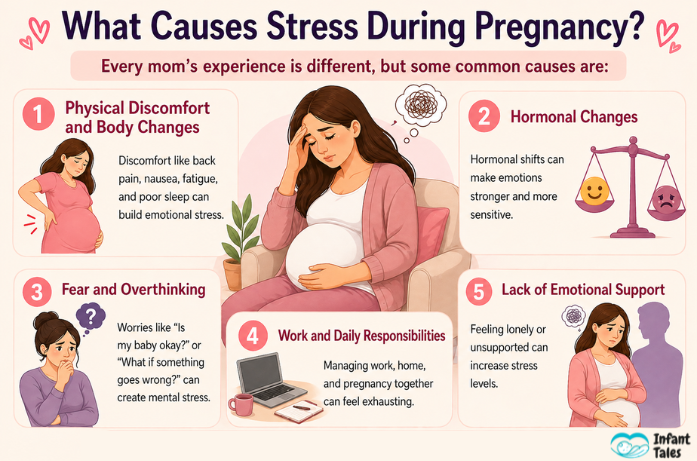
What Causes Stress During Pregnancy?
Every mom’s experience is different, but some common causes tend to show up again and again.
1. Physical Discomfort and Body Changes
Back pain, nausea, fatigue, sleep problems, leg cramps, and even lower back pain in early pregnancy can slowly build emotional stress.
Even simple things like sitting, walking, or sleeping can feel different, which can make daily life more tiring than usual.
2. Hormonal Changes
Hormones play a huge role in how you feel. They can make your emotions stronger and more sensitive. One moment you may feel calm, and the next, overwhelmed.
This isn’t something you can control, it’s a natural part of pregnancy.
3. Fear and Overthinking
Questions like:
- “Is my baby okay?”
- “Will I be a good mother?”
- “What if something goes wrong?”
These thoughts are very normal, but when they repeat often, they can create mental stress.
4. Work and Daily Responsibilities
Managing work, home, and pregnancy together can feel exhausting. You may feel pressure to keep everything balanced, even when your body is asking for rest.
5. Lack of Emotional Support
Pregnancy can sometimes feel lonely, especially if you don’t have someone to talk to openly. Feeling unheard or unsupported can increase stress levels.
How Stress Affects Your Body and Baby
Let’s talk about this in a calm and honest way.
A small amount of stress during pregnancy is completely normal and usually not harmful. However, when stress becomes constant or overwhelming, it can begin to affect your overall well-being. You might notice feeling low on energy, getting tired more easily, or experiencing headaches and body tension. Emotionally, it can show up as mood swings, irritability, or difficulty sleeping and focusing.
Your baby grows within your environment, both physically and emotionally. When stress continues for a long time, it can influence your daily habits, such as your sleep and eating patterns, and may also affect your energy levels and overall pregnancy comfort.
Some research, including findings shared in National Institutes of Health, also explains how long-term stress may have subtle effects on pregnancy outcomes, which is why emotional care is so important during this time.
This doesn’t mean you need to worry more. It simply reminds us how important it is to care for your emotional health. Taking gentle steps toward managing stress during pregnancy is not just helpful, it’s truly important for both you and your baby.
Signs You May Need More Emotional Care
Sometimes, stress builds slowly, and we don’t notice it right away.
Watch for these signs:
- You feel overwhelmed most of the time
- You’re not enjoying your pregnancy moments
- Small problems feel too big
- You feel emotionally drained or disconnected
If this sounds familiar, don’t ignore it. Think of it as your body gently asking for care.
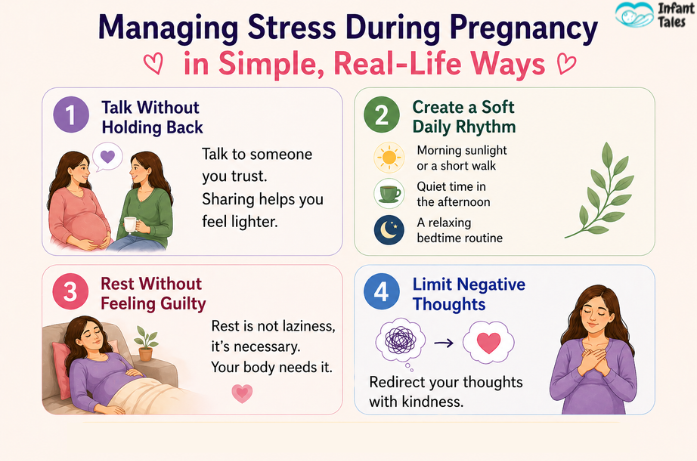
Managing Stress During Pregnancy in Simple, Real-Life Ways
You don’t need complicated plans or perfect routines. Real change comes from small, consistent habits.
1. Talk Without Holding Back
Sharing your feelings can be incredibly healing. Talk to your partner, a friend, or another mom.
Sometimes, just saying “I feel overwhelmed” can bring relief.
2. Create a Soft Daily Rhythm
A simple routine can make your day feel calmer. You don’t need strict schedules, just gentle structure.
For example:
- Morning sunlight or a short walk
- Quiet time in the afternoon
- A relaxing bedtime routine
These small habits can reduce maternal stress naturally.
3. Rest Without Feeling Guilty
This is something many moms struggle with. But rest is not laziness, it’s necessary.
Your body is working 24/7. Give yourself permission to slow down.
4. Limit Negative Thoughts
You can’t stop every worrying thought, but you can gently redirect your focus.
Try this: When a negative thought comes, pause and ask, Is this helpful right now?
If not, take a deep breath and shift your attention.
Stress Relief During Pregnancy That Truly Works
Let’s talk about simple, effective ways to feel calmer.
1. Deep Breathing
It sounds simple, but it works. Slow breathing helps your body relax.
Try this:
- Inhale slowly for 4 seconds
- Hold for 2 seconds
- Exhale gently
Repeat a few times whenever you feel tense.
2. Gentle Movement
A short walk, stretching, or light yoga can improve your mood and reduce tension.
Even 10–15 minutes a day can make a difference.
3. Calming Music or Silence
Create moments of peace in your day. Soft music or quiet time helps your mind slow down.
4. Writing Your Thoughts
Journaling helps you release emotions instead of holding them inside.
You don’t need perfect sentences, just write honestly.
Daily Habits That Help Reduce Pregnancy Stress
Sometimes, the simplest habits have the biggest impact.
Eat Regular, Nourishing Meals
Healthy food supports both your body and mood.
Stay Hydrated
Even mild dehydration can increase tiredness and irritability.
Sleep Matters More Than Ever
Try to create a calming bedtime routine:
- Dim lights
- Avoid screens
- Relax your mind
Take Breaks from Information
Too much reading, especially online, can increase anxiety. Stick to trusted sources and give your mind a break.
The Emotional Side of Pregnancy: What No One Talks About
Pregnancy isn’t just physical, it’s deeply emotional.
You’re preparing for a new role, a new identity. And that can feel overwhelming.
It’s okay if:
- You feel scared sometimes
- You don’t feel “glowing” every day
- You question yourself
These feelings don’t make you a bad mom. They make you human.
When to Ask for Help
Sometimes, stress becomes too heavy to handle alone.
Reach out if:
- You feel constantly anxious or low
- You’re unable to relax at all
- Your thoughts feel overwhelming
Talking to a doctor or counselor can provide support and reassurance.
There is strength in asking for help.
Be Kind to Yourself, You Deserve It
Take a moment to think about how kindly you would care for a friend during her pregnancy. You would speak gently, encourage her to rest, and remind her she’s doing her best. Now pause and ask yourself are you offering that same care to yourself?
Try to be softer with your thoughts. Let go of perfection and focus on what feels right for you and your baby. Even on difficult days, appreciate what your body is doing. You are growing a life, and that is truly something powerful.
Dear mama, feeling stress during pregnancy doesn’t make you weak it means you care deeply. Even small steps toward stress relief during pregnancy, like resting or taking a quiet breath, are meaningful ways of caring for both you and your baby.
Conclusion: You are Stronger Than You Feel
As you move through this journey, remind yourself that you don’t have to do everything perfectly. Taking it one day at a time is more than enough.
Be gentle with yourself, and trust your body and your instincts they are guiding you in the right direction. Even on the days that feel uncertain, you are still doing something truly incredible.
Your baby doesn’t need a perfect mom, they need you calm, loved, and supported. And step by step, you are growing into that with more strength and confidence every single day.
If this article helped you feel a little calmer, share it with another mom who might need it too. And don’t forget to explore more gentle, supportive parenting tips on Infant Tales you are never alone on this journey.
FAQs
1. What causes stress during pregnancy in early and late stages?
Stress can come from physical discomfort, hormonal changes, emotional worries, and daily responsibilities. Each stage of pregnancy may bring different challenges.
2. Is stress during pregnancy harmful to the baby?
Mild stress is usually normal, but long-term or high stress may affect your well-being, which is why emotional care is important during pregnancy.
3. How can I start managing stress during pregnancy at home?
Simple steps like talking to someone, resting, following a calm routine, and taking breaks can help you feel more relaxed and balanced.
4. What are the best stress relief during pregnancy techniques?
Deep breathing, light walking, listening to calming music, and journaling are gentle ways to relax your mind and body.
5. When should I worry about pregnancy stress and seek help?
If you feel constantly overwhelmed, anxious, or unable to relax, it’s a good idea to talk to a doctor or seek emotional support.
Disclaimer: This article is for informational purposes only and is not a substitute for professional medical advice. Every pregnancy is unique, so always consult your doctor or healthcare provider if you have concerns about your health or emotional well-being.