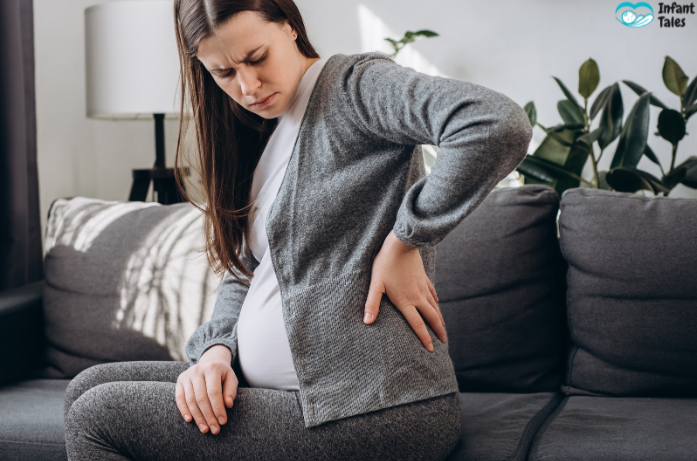
Written with love by a caring mom at Infant Tales
Lower back pain in early pregnancy is common and is often linked to hormonal changes, ligament relaxation, and the way your body begins adjusting to pregnancy. Mild discomfort is usually not a cause for concern, but severe pain or pain with bleeding, fever, dizziness, or urinary symptoms should be checked by a healthcare professional.
Early pregnancy brings many quiet changes, and lower back discomfort can sometimes be one of the first ones you notice. It may feel surprising, especially when your body does not yet look different. In this guide, you’ll learn what can cause lower back pain in early pregnancy, simple ways to ease it safely, and the warning signs that may need medical attention
Lower Back Pain in Early Pregnancy: What Your Body Is Trying to Tell You
In the first few weeks, your body is quietly doing a lot of invisible work. That mild ache or pressure in your lower back is often one of the earliest signs that things are shifting internally.
Lower back pain early pregnancy can feel different from regular back pain. It’s often softer, deeper, and sometimes comes with a sense of heaviness rather than sharp discomfort.
For many moms, it becomes a small but noticeable reminder that something new is happening inside. According to medical research, early pregnancy discomfort can be linked to physical and hormonal adjustments your body is making to support your baby.
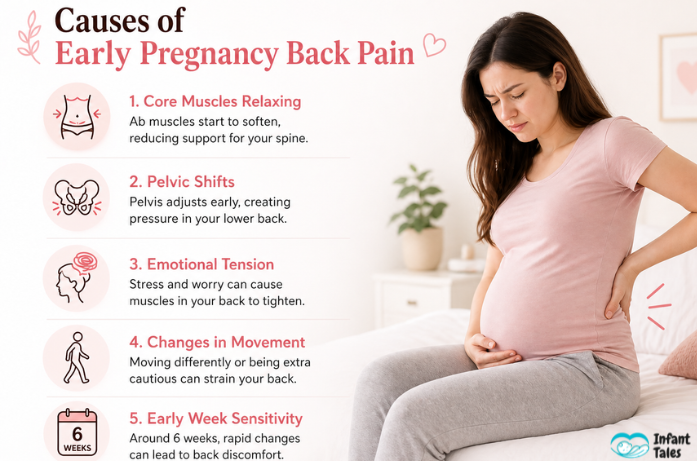
Causes of Early Pregnancy Back Pain
Along with hormonal changes, factors like muscle relaxation, subtle pelvic shifts, posture adjustments, emotional tension, and changes in daily movements can all contribute to early back discomfort.
1. Core Muscles Starting to Relax
Even early in pregnancy, your abdominal muscles begin to soften and loosen slightly. This reduces support for your spine, which can lead to early back strain.
This is why even simple movements, like getting up from bed, may feel different.
2. Subtle Pelvic Shifts
Your pelvis begins adjusting very early to make room for your growing uterus. These tiny shifts are not visible, but your lower back feels them.
For some women, this may feel similar to pelvic pain during pregnancy, with pressure or discomfort deep in the hips or tailbone.
3. Emotional Tension in the Body
This might surprise you, but emotional changes can physically show up as back pain.
When you feel anxious, overwhelmed, or even overly cautious in early pregnancy, your muscles can tighten, especially in your back.
4. Changes in Daily Movement
You may start moving differently without realizing it, being extra careful, slower, or more protective of your body. These changes can create new strain on your back muscles.
5. Early Week Sensitivity (Around 6 Weeks)
If you’re around this stage, lower back pain early pregnancy 6 weeks is very common. Your body is rapidly adjusting hormonally and physically, even if everything still looks the same on the outside.
How This Pain May Feel (And Why It Feels That Way)
Every pregnancy feels different, but many moms describe:
- A soft, spreading ache in the lower back
- A feeling of heaviness when standing too long
- Slight discomfort while turning in bed
- A tired or “used” feeling in the lower spine
It’s often not intense, but it’s noticeable enough to make you pause and wonder.
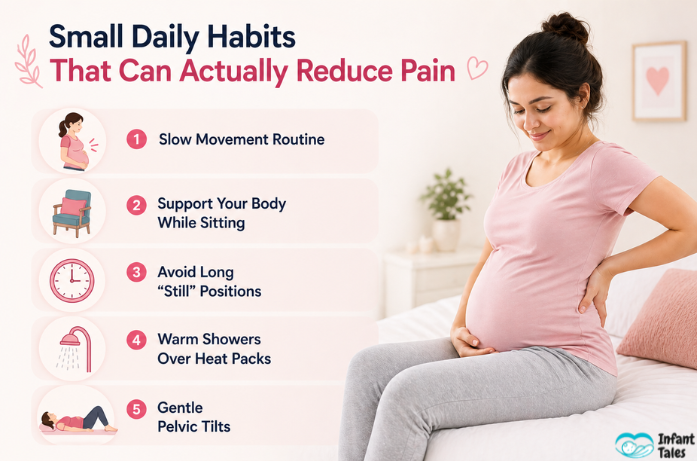
Small Daily Habits That Can Actually Reduce Pain
Instead of only easing the discomfort for a while, these simple daily habits can gently support your body and help stop the pain from becoming more intense over time.
Move slowly during daily activities, avoid sitting or standing too long, use proper back support while resting, stay hydrated, and include gentle stretching to keep your muscles relaxed.
1. Create a “Slow Movement Routine”
In early pregnancy, your body becomes more sensitive to quick or sudden movements. Slowing down how you sit, stand, or turn can protect your lower back from unnecessary strain. Try to sit down gently, avoid twisting your body, and use your hands for support when getting up.
These small changes may not seem like much, but they help your body feel more balanced and supported. Over time, moving with care can reduce discomfort and prevent your back pain from getting worse.
2. Support Your Body While Sitting
Instead of sitting stiffly straight, try a more relaxed and supported position. Slightly lean back and place a small cushion or pillow behind your lower back to maintain a natural curve in your spine.
This simple support reduces pressure on your lower back and allows your muscles to relax. Whether you’re resting or working, good sitting support can make your day feel much more comfortable.
3. Avoid Long “Still” Positions
Staying in one position for too long can increase stiffness and make back pain worse. Your body needs gentle movement to keep muscles relaxed and blood flowing properly.
Try to stand, stretch, or walk a little every 30–40 minutes. Even a short break can ease pressure in your lower back and help you feel lighter and more comfortable.
4. Warm Showers Over Heat Packs
Warm showers can be more soothing than heat packs because they relax your muscles naturally. The gentle flow of warm water helps improve circulation and reduces tightness in your lower back.
Taking a warm shower, especially in the evening, can calm your body and mind. It’s a simple way to release the day’s tension and feel more relaxed.
5. Gentle Pelvic Tilts
Pelvic tilts are small, safe movements that can help reduce pressure in your lower back. They gently support your spine and improve flexibility without causing strain.
You can do them while lying down or standing, just move slowly and comfortably. Practicing this regularly can help ease discomfort and improve your posture during early pregnancy.
Foods That May Help Reduce Muscle Discomfort
This is something many blogs don’t talk about enough.
Your muscles and joints need support from within too.
Try including:
- Calcium-rich foods (milk, yogurt)
- Magnesium sources (nuts, bananas)
- Plenty of water
Good hydration and balanced nutrition support overall pregnancy health, especially when you’re also dealing with discomfort such as leg muscle cramps. As you continue your motherhood journey beyond pregnancy, paying attention to nutrition remains important. For breastfeeding mothers, knowing the foods to avoid when breastfeeding a baby can help promote healthy feeding habits and overall wellness.
Emotional Side of Early Pregnancy Pain
Let’s talk about the feelings that quietly come with it.
When you notice pain this early, it’s natural for your mind to start asking questions “Is this normal?” or “Should I be worried?” These thoughts can come quickly, and they can feel a little overwhelming.
I’ve felt that same uncertainty too, and I know how heavy it can sit in your heart. But here’s something soft to hold onto: not every discomfort means something is wrong. Sometimes, it’s simply your body adjusting and learning in its own way. You’re not doing anything wrong, you’re just going through a new and powerful change.
When Should You Take It Seriously?
While most cases are harmless, there are certain signs you should not ignore.
Pay attention if you notice:
- Early pregnancy severe lower back pain that feels intense or worsening
- Pain combined with bleeding or spotting
- A sharp, stabbing feeling instead of a dull ache
- Pain spreading down your legs
- Difficulty standing or walking
These situations don’t always mean something serious, but they do deserve medical attention for peace of mind.
Experts at the American College of Obstetricians and Gynecologists (ACOG) also recommend that persistent or severe back pain during pregnancy should always be checked to rule out any underlying concerns.
What Most Moms Don’t Realize
Here’s something I wish someone had told me earlier:
Back pain in early pregnancy is not just physical, it’s part of your body learning how to carry new life.
Your body is adjusting posture, balance, and support systems all at once.
So if you feel discomfort, it’s not weakness, it’s adaptation. Medical guidance from the Cleveland Clinic also highlights that posture changes and muscle strain are very common causes of pregnancy-related back pain.
Simple Night Routine for Better Comfort
Evenings can be the hardest time for back pain. Try this gentle routine:
- Take a warm shower
- Do light stretching
- Lie on your side with pillow support, especially if you also experience hip pain when sleeping during pregnancy.
- Take slow, calming breaths
This helps your body release the day’s tension.
A Soft Reminder for You, Mama
You’re in a time where everything feels new every little change in your body, every thought that comes and goes. It’s completely natural to have questions and moments of uncertainty along the way.
But gently remind yourself of this: your body isn’t going against you, it’s quietly supporting you. Even when something feels uncomfortable, it’s often your body doing its best to adjust and care for your growing baby.
As you prepare for motherhood, learning about common newborn experiences, such as green newborn poop, can also help you feel more confident and informed during your baby’s first few weeks.
Final Thoughts: Trust the Process, Trust Yourself
Feeling lower back pain early pregnancy can be a little confusing in the beginning, but most of the time, it’s simply your body adjusting and making space for something truly special. These small discomforts are often part of a natural and beautiful process.
Be gentle with yourself as you move through these days. Rest when your body asks, take things slowly, and listen to what you need. And if anything feels unusual or worries you, don’t hesitate to reach out for reassurance, your peace of mind is important too.
Remember, you’re not just experiencing changes, you’re slowly stepping into motherhood. And you’re doing it with quiet strength, care, and so much love.
If this made you feel a little more calm, pass it along to another mom who might need it, Stay connected with Infant Tales for more simple, helpful tips.
Frequently Asked Questions
1. Is lower back pain early pregnancy normal?
Yes, mild lower back pain early pregnancy is common and usually happens due to hormonal and physical changes in your body.
2. Can lower back pain be an early pregnancy symptom?
Yes, for some women, lower back pain early pregnancy symptom can appear in the first few weeks along with other signs.
3. Why do I have lower back pain at 6 weeks pregnant?
Lower back pain early pregnancy 6 weeks can occur as your body adjusts, your uterus begins to grow, and hormones relax your muscles.
4. How can I relieve early pregnancy back pain at home?
You can try gentle rest, proper posture, warm showers, light stretching, and avoiding long periods of sitting or standing.
5. When should I worry about back pain in early pregnancy?
If you experience early pregnancy severe lower back pain, pain with bleeding, or sharp discomfort, it’s best to contact your doctor.
Description: Lower back pain in early pregnancy can feel confusing, but in most cases, it’s a normal part of your body adjusting. This guide helps you understand the causes, simple relief tips, and when to seek advice, so you can feel more calm and confident during these early weeks.