
Written by a caring mom at Infant Tales
I still remember the moment clearly I stood up from the bed and suddenly paused, a deep, sharp ache spreading through my pelvis. For a second, it felt like can barely walk due to pelvic pain during pregnancy, and my mind filled with questions… Is this normal? Should I be worried? I held onto the wall, trying to steady myself, feeling both confused and a little scared.
If you’re feeling something similar right now, please take a gentle breath. You are not alone in this. Many moms quietly go through this phase, learning to slow down, move carefully, and listen to their body in ways they never had to before.
Pelvic pain can make even the simplest daily movements feel difficult, but there’s a reason behind it and more importantly, there are safe, gentle ways to ease it. Let’s go through this together, step by step, like one mom talking to another
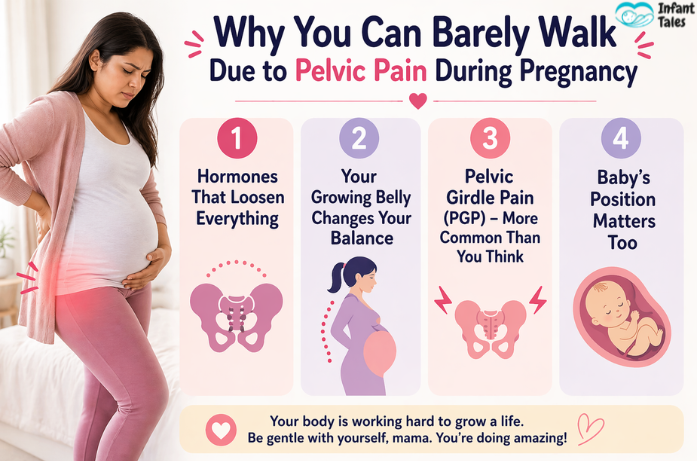
Why You Can Barely Walk Due to Pelvic Pain During Pregnancy
That heavy, pulling, or sharp pain in your pelvic area isn’t random. It’s your body adjusting in real time.
1. Hormones That Loosen Everything
Your body releases a hormone called relaxin, and just like its name, it relaxes your ligaments and joints, especially around your pelvis.
This helps your body prepare for childbirth later, but right now, it can make your pelvic joints feel loose, unstable, and sometimes painful. This is often the starting point of pregnancy pain that affects your movement.
2. Your Growing Belly Changes Your Balance
As your baby grows, your center of gravity shifts forward. You might not notice it at first, but your body is constantly adjusting to keep you balanced.
That extra weight puts pressure on your hips and pelvis, which is why hip pain slowly starts creeping in. Some days, it may feel like your body is heavier on one side than the other, especially if you’re also dealing with leg cramps during pregnancy.
3. Pelvic Girdle Pain (PGP) – More Common Than You Think
This is something I wish someone had told me earlier. There’s actually a name for this discomfort, Pelvic Girdle Pain (PGP).
It can feel like:
- Pain in the front pelvic area
- Lower back discomfort
- Difficulty walking or standing on one leg
- Pain when turning in bed
If your hip pain during pregnancy hurts to walk, there’s a strong chance PGP is behind it.
4. Baby’s Position Matters Too
Sometimes, your baby’s position adds pressure to certain nerves or muscles in your pelvis. This can cause sudden sharp pain when you move, especially when walking or climbing stairs.
It’s not something you’re doing wrong, it’s just how your baby is resting inside you.
What This Pain Really Feels Like (And Why It’s So Frustrating)
Let me be honest, pelvic pain isn’t just physical.
It’s emotional too.
There were days I avoided walking because I didn’t trust my own body. I remember taking tiny steps, holding onto furniture, and feeling frustrated that something so simple had become so hard.
Even getting out of bed felt like a task. Turning sides? That needed planning. If you’re feeling slow, uncomfortable, or even a little helpless… please know this is a shared experience for many moms.
And you deserve gentleness, not pressure.
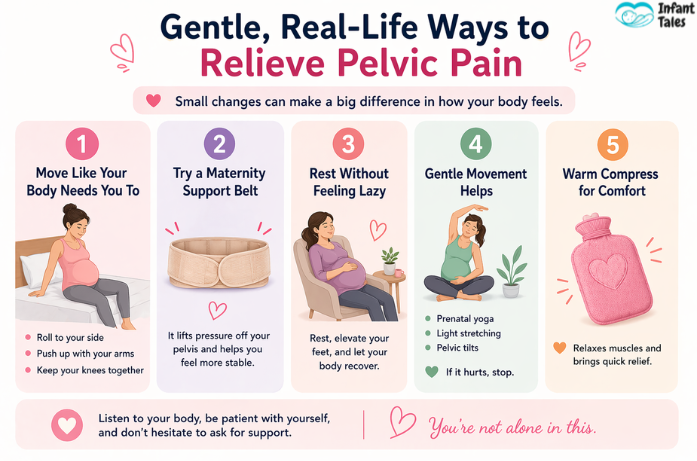
Gentle, Real-Life Ways to Relieve Pelvic Pain
You don’t have to just “push through it.” Small changes can make a big difference in how your body feels.
1. Move Like Your Body Needs You To
This was one of the biggest lessons for me, slow down without guilt.
When getting out of bed:
- Roll onto your side first
- Push yourself up with your arms
- Keep your knees together
It may feel like extra effort, but it reduces strain and makes movement smoother.
2. Try a Maternity Support Belt
A good support belt can feel like a gentle hug around your belly. It lifts some of the pressure off your pelvis and helps you feel more stable when walking.
I didn’t think it would make much difference… but honestly, it did.
3. Rest Without Feeling Lazy
This is important.
Some days, your body needs more rest. Not because you’re weak, but because you’re doing something incredible.
If you’re dealing with walking pain, sit down often, elevate your feet, and let your body recover. This can be especially comforting if you are also experiencing swollen feet during pregnancy, which often feels worse after standing or walking for too long.
4. Gentle Movement Helps (But Only If It Feels Right)
Staying completely still can sometimes make stiffness worse.
Try:
- Prenatal yoga
- Light stretching
- Pelvic tilts
But here’s the rule, if it hurts, stop. Your body always knows best.
5. Warm Compress for Comfort
A warm compress on your lower back or pelvic area can relax tight muscles and reduce discomfort. It became one of my favorite evening rituals.
According to the National Center for Biotechnology Information, pelvic pain during pregnancy is often linked to joint and ligament changes as your body prepares for childbirth.
Let’s Talk About Curb Walking (The Truth You Should Know)
You might have heard about curb walking pregnancy, a method where you walk with one foot on a curb to help start labor.
It sounds simple, but here’s the honest truth.
Is Curb Walking in Pregnancy Safe?
Curb walking during pregnancy is not always safe, especially if you are already experiencing pelvic pain. It can create uneven pressure on your hips and pelvis, which may increase discomfort and make walking more difficult. While some people suggest curb walking for pregnancy near the due date, it’s best to avoid it if your body feels unstable or painful. Your comfort and safety should always come first.
Small Daily Habits That Truly Help
Sometimes, it’s the smallest changes that bring the biggest relief.
Keep Your Legs Together
When getting in and out of bed or the car, keep your knees together. It protects your pelvic joints from strain.
Sit with Support
Choose chairs that support your back well. Avoid sitting cross-legged for long periods.
Wear Comfortable Shoes
Supportive, flat footwear can reduce pressure on your hips and pelvis. Avoid anything that throws off your balance.
Sleep with Support
A pillow between your legs can keep your hips aligned and reduce pain while sleeping.
It may not seem like much, but it makes nights easier.
When Should You Ask for Help?
While pelvic pain is common, there are times when you should reach out to your doctor.
- Pain becomes severe or constant
- You hear clicking or grinding in your pelvis
- Walking becomes extremely difficult
- Pain spreads down your legs
A physiotherapist or doctor can guide you with safe exercises and treatments.
You don’t have to figure this out alone.
The Emotional Side No One Talks About
Let’s be real for a moment.
Pregnancy is often shown as glowing and joyful. But when you’re dealing with pain, it doesn’t always feel that way.
You might feel:
- Frustrated with your body
- Tired of being uncomfortable
- Guilty for not enjoying every moment
Final Thoughts from One Mom to Another
Pregnancy isn’t always easy, and pelvic pain can make simple movements feel exhausting. Your body is going through real changes like loosening joints and shifting weight as your pregnancy belly continues to grow.
Try to support yourself with small steps: rest when needed, keep good posture, and avoid movements that cause pain. These little changes can help you feel more comfortable each day.
Most importantly, remember this phase is temporary. With care and support, your body will feel stronger again and you are not alone in this
For more baby care tips and real mom advice, explore more blogs on Infant Tales.
FAQs
1. Is walking still good during pregnancy?
Yes, gentle walking is usually safe and beneficial during pregnancy. It helps with circulation, mood, and overall health. But always listen to your body and avoid overexertion.
2. Is walking good for swollen feet during pregnancy?
Yes, light walking can improve blood flow and help reduce swelling in your feet. Just keep it slow and comfortable.
3. Should I keep walking if I have pelvic pain?
If walking increases your pelvic pain, it’s best to reduce or avoid it for a while. Rest and gentle movements are more important than pushing through pain.
4. How much walking is safe during pregnancy?
It depends on your comfort level. Short, slow walks are better than long, tiring ones. Even 10–15 minutes can be enough.
5. When should I stop walking during pregnancy?
Stop if you feel sharp pain, discomfort, dizziness, or pressure in your pelvis. Always prioritize your comfort and talk to your doctor if you’re unsure.
Disclaimer: This article is for informational purposes only and is based on personal experience. It should not replace medical advice. Always consult your doctor or healthcare provider if you have concerns about pelvic pain during pregnancy.