
Written by a caring mom at Infant Tales
As a mom, I’ve spent many evenings sitting beside my child, books open, pencils scattered, wondering quietly How to Teach Kids Healthy Study Habits without turning our home into a classroom full of pressure.
At first, I thought better grades meant longer study hours. But over time, I realized something much more important, children don’t need more studying, they need better ways to study. They need structure, yes, but also patience, encouragement, and space to grow.
If you’re here, you’re probably trying your best too. Maybe your child gets distracted easily, avoids homework, or feels overwhelmed. I’ve been there, and I want to share what truly helped us, not as strict rules, but as gentle guidance from one mom to another.
Why Study Habits Matter More Than You Think
Before we talk about how to teach kids healthy study habits, let’s pause for a moment.
Good study habits are not just about school, they shape how your child:
- Solves problems
- Manages time
- Handles responsibility
- Builds confidence
Children who learn how to learn grow into independent thinkers, and developing reading fluently is one of the important milestones that builds lifelong learning skills. And honestly, that matters far more than memorizing answers. According to helpful resources like Kids Health, building consistent study routines early can improve both focus and academic confidence in children. And honestly, that matters far more than memorizing answers.
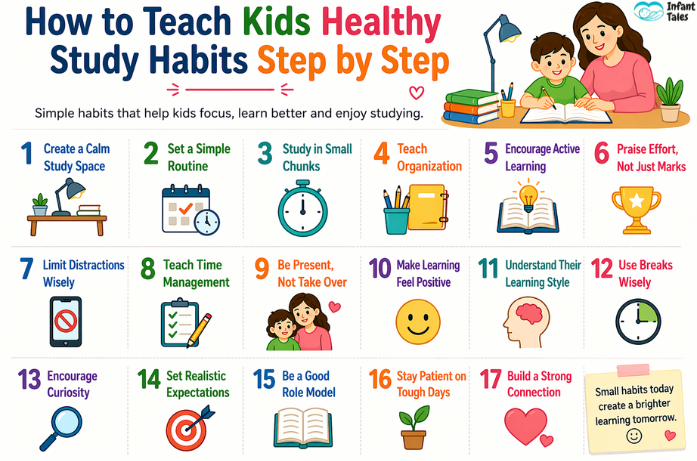
How to Teach Kids Healthy Study Habits Step by Step
Let’s go through simple, real-life strategies that actually work at home. These are not strict rules, just gentle habits I’ve learned as a mom things that slowly made studying easier and less stressful for my child.
1. Create a Calm and Dedicated Study Space
Children focus much better when they have a consistent place to study. It doesn’t have to be perfect or expensive. Even a small, quiet corner with good lighting can make a big difference. When the space feels peaceful, their mind automatically settles.
Try to keep the area clean and free from distractions like TV or loud noise. Over time, this little corner becomes their comfort zone for learning, helping build strong study habits naturally.
2. Set a Simple and Predictable Routine
Kids feel more secure when they know what comes next. A fixed study time each day helps their mind prepare for learning without resistance. It doesn’t have to be strict, just consistent enough to become a habit.
Start with short study sessions and slowly increase the time. A gentle routine makes studying feel like a normal part of the day, not something forced or stressful.
3. Break Study Time into Small Chunks
Long hours can overwhelm children quickly. Instead, divide study time into small, manageable sessions. This helps them stay focused without feeling tired or bored.
A simple pattern like 20–25 minutes of study followed by a short break works beautifully. It keeps their mind fresh and improves concentration without pressure.
4. Teach Organization Skills Early
A cluttered study area often leads to a distracted mind. Helping your child stay organized can make studying much smoother. Simple habits like arranging books or packing their school bag daily go a long way.
These small actions teach responsibility and independence. Over time, children feel more confident because they know where everything is and what needs to be done.
5. Encourage Active Learning Instead of Passive Reading
Children understand better when they actively engage with what they study. Just reading silently is often not enough. They need to think, question, and explain.
You can ask simple questions or let them teach you what they learned. Using drawings or real-life examples also makes learning more interesting and meaningful.
6. Focus on Effort, Not Just Marks
As a mom, I’ve learned that too much focus on marks can create unnecessary pressure. Children need encouragement more than comparison. When we appreciate their effort, they feel motivated to keep trying.
Simple words like “You did your best” or “I’m proud of your focus” build confidence. Over time, this mindset helps strengthen their study habits naturally.
7. Limit Distractions Without Being Too Strict
Screens and gadgets are part of today’s world, so removing them completely isn’t realistic. Instead, it’s better to create clear and balanced rules around study time.
Keep devices away during homework and allow screen time later as a reward. This teaches children discipline without making them feel restricted.
8. Teach Time Management Slowly
Time management is something children learn step by step. They won’t get it right immediately, and that’s okay. Start small and guide them gently.
Help them plan their tasks and set simple goals for each session. Gradually, they begin to understand how to manage their time and complete work independently.
9. Be Present, But Don’t Take Over
It’s natural to want to help your child with everything. I used to do that too, but I realized it made my child more dependent. Now, I stay nearby but let my child try first.
Offer help only when needed. This gives them the confidence to solve problems on their own while still feeling supported.
10. Make Learning Feel Safe and Positive
Children learn best in a calm and loving environment. If they feel judged or scared, they may avoid studying altogether. Emotional safety is just as important as academic support.
Research and guidance from U.S. Department of Education also highlight how emotional support and a positive environment play a key role in children’s learning and development.
Stay patient during mistakes and encourage open conversations. When learning feels safe, children naturally develop better study habits.
11. Understand Your Child’s Learning Style
Every child learns in their own way. Some prefer reading quietly, while others understand better through listening or doing activities. Observing your child can help you guide them better.
When learning matches their style, it becomes easier and more enjoyable. This is one of the most important parts of teaching healthy study habits.
12. Use Breaks Wisely
Breaks are not a waste of time, they are necessary for focus. Short breaks help refresh the mind and improve attention during study sessions.
Encourage simple activities like stretching, drinking water, or relaxing for a few minutes. Avoid screens during breaks, as they can reduce focus.
13. Encourage Curiosity, Not Just Completion
Instead of only focusing on finishing homework, try to understand what your child is learning. Ask simple questions about their day or lessons.
When children feel curious, they enjoy learning more. It shifts their mindset from “I have to study” to “I want to learn.”
14. Set Realistic Expectations
Every child has their own pace of learning. Expecting too much too soon can create stress and frustration. It’s important to accept their strengths and support their weaknesses.
Focus on progress rather than perfection. This helps children stay motivated and confident in their abilities.
15. Be a Role Model at Home
Children learn more from what they see than what they hear. When they watch you read, stay organized, or manage your time, they naturally follow those habits.
You don’t always need to teach directly. Your daily actions become their biggest lessons.
16. Stay Patient on Tough Days
There will be days when your child doesn’t feel like studying. They may get distracted, tired, or frustrated. That’s completely normal.
Instead of forcing, take a step back and try again later. Patience helps build trust and keeps learning stress-free.
17. Build a Strong Parent-Child Connection
At the end of the day, your bond with your child matters the most. When children feel loved and supported, they are more open to learning.
Spend time together beyond studies, talk, laugh, and connect. A strong relationship makes everything easier, including building healthy study habits.
Common Mistakes Parents Should Avoid
Sometimes, unknowingly, we make things harder.
Try to Avoid:
- Forcing long study hours
- Comparing your child with others
- Scolding during mistakes
- Expecting instant results
Gentle guidance works better than pressure.
A Gentle Reminder for Parents
If you often find yourself worrying about your child’s learning and progress, it simply shows how deeply you care. And that kind of love and attention means more than any perfect routine or strict plan ever could.
You don’t have to be a perfect parent. What your child truly needs is your presence, your patience on tough days, and your gentle support as they grow and learn at their own pace even during phases when your baby is fussy or easily distracted.
Conclusion: Small Steps, Big Changes
Improving study habits isn’t about big changes overnight. It’s about small, consistent efforts that slowly shape your child’s learning journey.
As a mom, I’ve learned that children don’t need strict rules, they need understanding, encouragement, and trust.
There will be messy days, distracted evenings, and moments of doubt. But with your love and guidance, your child will find their rhythm.
And one day, you’ll look back and realize, those small efforts made all the difference.
You are doing an amazing job, even on the days it doesn’t feel like it.
Subscribe to Infant Tales for expert-backed parenting tips, baby care advice, and simple ways to support your child’s growth every day
FAQs
1. How can I help my child focus better during study time?
Create a quiet, distraction-free space and keep study sessions short. Regular breaks and a consistent routine can also improve focus.
2. What is the best age to start teaching study habits?
You can start as early as preschool by introducing simple routines like reading time and organizing school items, along with fun learning activities at home.
3. How long should kids study each day?
It depends on their age, but younger kids usually do well with 20–30 minute sessions, while older kids can handle longer periods with breaks.
4. What should I do if my child refuses to study?
Stay calm and try to understand the reason. Make learning more engaging and avoid forcing them, as pressure can create resistance.
5. How can I make studying more interesting for my child?
Use interactive methods like games, storytelling, and real-life examples. Let them explore topics they enjoy to build curiosity.