
Written by a caring mom at Infant Tales
A toddler meltdown can happen over something that seems very small, like a broken biscuit, the wrong cup, or leaving the park. One moment your child is calm, and the next they are crying, kicking, screaming, or lying on the floor. If you have ever wondered why your toddler reacts so strongly, you are not alone.
Most meltdowns are not a sign of bad behavior or bad parenting. They usually happen because toddlers feel overwhelmed and do not yet have the words or emotional skills to explain what they need. Hunger, tiredness, frustration, overstimulation, and sudden changes can all make big feelings harder to manage.
Understanding these triggers can help you respond with more patience and confidence. In this guide, you will learn why toddler meltdowns happen, how they differ from tantrums, and gentle ways to help your child feel safe and calm.
What Is a Toddler Meltdown?
A toddler meltdown is an intense emotional reaction caused by frustration, tiredness, fear, overstimulation, or another strong feeling.
During a meltdown, your child may cry uncontrollably, scream, hit, kick, throw things, cover their ears, or refuse comfort. They may also struggle to listen or follow simple instructions.
Toddlers are still learning how to express emotions and calm their bodies. Their behavior is often a form of communication. A meltdown may mean they are tired, hungry, frightened, frustrated, or unable to explain what they need.
Your child is not always choosing to behave this way. Their emotions have simply become too difficult for them to control in that moment.
Toddler Meltdown vs Tantrum
Many parents wonder whether their child is having a tantrum or a meltdown. Although they can look similar, they usually happen for different reasons.
A tantrum often happens when a child wants something, such as a toy, a snack, or more playtime. They may cry, shout, or stomp their feet in hopes of getting what they want. Once their demand is met or they become distracted, the tantrum often ends.
A toddler meltdown, however, happens when a child becomes emotionally overwhelmed. They are no longer able to manage their feelings, so they may continue crying or screaming even after the original problem has been solved. For example, a child crying for another cookie may be having a tantrum, while a tired child who becomes inconsolable after a busy day is more likely experiencing a meltdown.
Sometimes, a tantrum can turn into a meltdown if your child becomes too upset to regain control. In either situation, staying calm, offering reassurance, and setting gentle but consistent boundaries will help your child more than shouting or punishment.
Staying calm does not mean allowing every behavior. Gentle rules and consistent limits can help children feel secure. Read our guide on the best way to discipline a toddler for more positive ways to guide behavior without fear or shame.
Why Do Toddler Meltdowns Happen?
Toddler meltdowns happen because young children are still developing emotional control, language, patience, and problem-solving skills.
Toddlers can feel anger, sadness, excitement, disappointment, and fear very deeply. However, they may not have the words to describe those feelings.
They also want more independence but cannot always do everything by themselves. This combination can easily lead to frustration.
As children grow, their communication and emotional skills improve. Until then, they rely on parents and caregivers to help them feel safe and calm.
Common Causes of Toddler Meltdowns
very child has different triggers, but hunger, tiredness, frustration, and difficulty expressing emotions are among the most common. The Cleveland Clinic’s guide to temper tantrums also explains that toddlers may react strongly because they are still developing the language and coping skills needed to manage disappointment.
Hunger
Toddlers can become irritable when meals or snacks are delayed. Because they have small stomachs, they may need food more often than adults.
Keeping a simple snack and water nearby can help prevent hunger-related meltdowns.
Tiredness
Lack of sleep is one of the biggest triggers. A skipped nap, late bedtime, or busy day can make small problems feel much harder.
If your child often becomes upset in the evening, tiredness may be the reason.
Overstimulation
Busy shops, loud parties, family gatherings, bright lights, and crowded places can be overwhelming.
Some children become upset immediately, while others release their feelings after they return home to a familiar space.
Communication Difficulties
Toddlers often understand more than they can say. They may know exactly what they want but struggle to explain it.
This can lead to crying, shouting, pushing, or throwing things.
Wanting Independence
Toddlers love doing things by themselves. They may want to choose their clothes, pour a drink, open a packet, or put on their shoes.
When they cannot complete the task, frustration can quickly build.
Changes in Routine
Children usually feel safer when they know what to expect. Travel, moving house, starting childcare, illness, visitors, or a new sibling may increase emotional reactions.
Even positive changes can feel confusing to a young child.
Early Signs of a Toddler Meltdown
A meltdown may look sudden, but many toddlers show warning signs first.
You may notice your child:
- Becoming unusually clingy
- Whining more often
- Rubbing their eyes
- Refusing simple requests
- Throwing toys
- Covering their ears
- Becoming restless
- Reacting strongly to small problems
Learning your child’s early signs can help you step in before emotions become too intense.
A snack, cuddle, quiet break, or change of environment may be enough to prevent a bigger reaction.
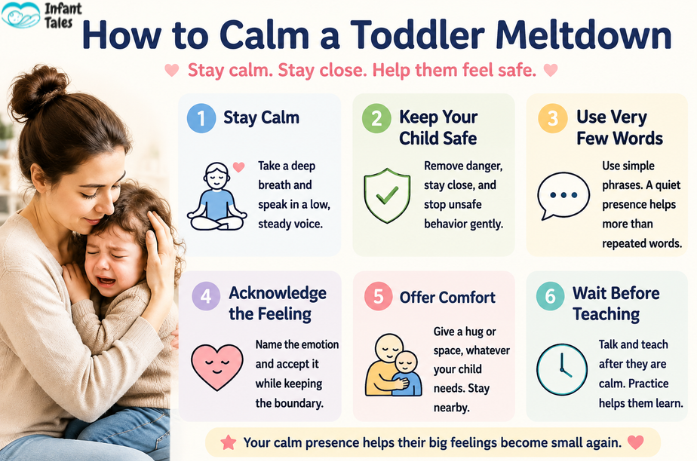
How to Calm a Toddler Meltdown
When a meltdown begins, try to stay calm rather than arguing, threatening, or giving a long explanation. The Mayo Clinic’s advice on toddler tantrums also recommends remaining consistent and avoiding giving in simply to end the outburst. A calm response helps your child feel safe while keeping the boundary clear.
1. Stay Calm
This is not always easy, especially when the meltdown happens in public.
Take a slow breath before responding. Relax your shoulders and speak in a low, steady voice.
Children often copy the emotional energy around them. When you stay calm, you show your child that the situation is safe and manageable.
2. Keep Your Child Safe
If your toddler is kicking, hitting, or throwing objects, move dangerous items away.
Stay close, but avoid forcing a hug unless your child wants one. Some toddlers need physical comfort, while others need a little space.
You can gently stop unsafe behavior without becoming angry.
Hitting can sometimes happen when toddlers do not have the words to express anger or frustration. If this is a common concern in your home, our guide on toddler hitting parents explains the possible reasons and gentle ways to respond.
3. Use Very Few Words
A child in the middle of a meltdown cannot understand a long explanation.
Use simple phrases such as:
- I am here.
- You are safe.
- I know you are upset.
- We can talk when you feel calmer.
A quiet presence may help more than repeated instructions.
4. Acknowledge the Feeling
Naming the emotion helps your child feel understood.
You may explain that they are sad because playtime ended or angry because they could not have a toy. Acknowledging feelings does not mean changing a reasonable rule.
You can accept the emotion while keeping the boundary. Your child is allowed to feel angry, but hitting is still not okay.
Listening calmly and helping children name their emotions can strengthen trust over time. Learn more about positive parent communication and how everyday conversations can help children feel safe, heard, and understood.
5. Offer Comfort
Some toddlers calm down with a cuddle, gentle rocking, or sitting on a parent’s lap. Others prefer not to be touched until the strongest emotion has passed.
Follow your child’s cues and remain nearby. Your presence shows that they are still loved, even during a difficult moment.
Responding with comfort and reassurance helps children build emotional security over time. If your little one also struggles with separation or always wants to stay close, our guide on helping your child feel emotionally secure explains why this happens and gentle ways to support them.
6. Wait Before Teaching
Do not try to teach a lesson while your child is still crying heavily.
Once they are calm, briefly explain what happened and what they can try next time.
You might remind them to ask for help, use simple words, take a breath, or hold your hand during a transition.
These skills take time and repetition.
What Parents Should Avoid
Meltdowns can test even the most patient parent, and it is normal to feel stressed in the moment. Reacting imperfectly once does not make you a bad parent, but certain responses can make your child feel even more overwhelmed.
Try to avoid shouting, shaming, teasing, or laughing at your toddler. These reactions may increase fear and frustration instead of helping them calm down. Long explanations are also unlikely to work during a meltdown because your child is not ready to listen or process instructions.
It is equally important not to change every boundary just to stop the crying. Giving in repeatedly may teach your child that screaming is the quickest way to get a different answer. A calm voice, a clear limit, and a steady presence usually work best.
How to Reduce Frequent Meltdowns
You cannot prevent every meltdown, but a few habits may reduce how often they happen.
Keep a Routine
Regular meals, naps, and bedtime can help your toddler feel secure and rested.
Give Warnings Before Transitions
Tell your child a few minutes before leaving the park, turning off the television, or ending playtime.
Sudden changes can be difficult for toddlers.
Offer Simple Choices
Give two suitable options instead of asking an open question.
For example, allow your child to choose between two shirts or two snacks.
This supports independence without making the decision too difficult.
Teach Emotion Words
Use simple words such as sad, angry, tired, worried, and excited during everyday conversations.
Over time, your child may begin using these words instead of expressing every emotion through behavior.
Praise Calm Behavior
Notice when your child uses words, waits patiently, or accepts help.
Specific praise helps them understand what they did well and encourages them to use that skill again.
When to Seek Professional Advice
Most toddler meltdowns are a normal part of early development. However, speak with your pediatrician or another qualified professional if:
- Meltdowns happen very frequently
- Your child often hurts themselves or others
- Episodes regularly last a long time
- Your child cannot recover even with support
- You notice speech or communication delays
- Sensory experiences cause severe distress
- Meltdowns are affecting sleep, childcare, or family life
- You feel unable to keep your child safe
Asking for help does not mean you have failed. It means you are paying attention to your child’s needs.
Frequently Asked Questions
1. What causes a toddler meltdown?
A toddler meltdown usually happens because of tiredness, hunger, frustration, overstimulation, communication difficulties, or sudden changes.
2. How can I calm my toddler quickly?
Stay close, speak softly, keep them safe, and use only a few words. Offer comfort but do not force physical contact.
3. What is the main difference between a meltdown and a tantrum?
A tantrum is often connected to wanting something. A meltdown is usually caused by emotional or sensory overload.
4. Should I ignore a toddler meltdown?
You may give your child space, but it is helpful to remain nearby. A calm and reassuring presence can help them feel safe.
5. At what age do toddler meltdowns improve?
Meltdowns often become less frequent as children develop better language and emotional control during the preschool years. Every child develops at a different pace.
A Gentle Reminder for Parents
A toddler meltdown does not mean your child is bad, and it does not mean you are failing.
Your toddler is still learning how to live with emotions that can feel huge and confusing. They need guidance, boundaries, and reassurance, but they do not need perfection.
There may be days when you stay calm and days when you feel frustrated. What matters is reconnecting, repairing, and trying again.
Every time you comfort your child, hold a safe boundary, or help them name a feeling, you are supporting their emotional development.
Conclusion
Toddler meltdowns can be tiring and difficult, but they are also a common part of growing up.
Your child is learning how to manage disappointment, anger, tiredness, and change. These skills develop slowly, with plenty of support and repetition.
You do not need to prevent every tear. Your calm presence, gentle limits, and loving reassurance are already teaching your child how to feel safe during hard moments.
You are not failing because your toddler has meltdowns. You are helping a little person understand emotions they cannot yet manage alone, and that patient support matters deeply.
Explore more toddler care, parenting, and child development guides at Infant Tales for warm and practical support through every stage.
Medical disclaimer
This article is for general informational purposes only and does not replace professional medical or developmental advice. Contact your pediatrician or a qualified healthcare professional if you are concerned about your child’s behavior or development.
About the Author
Geeta Yogi is a mom and parenting writer at Infant Tales. She shares practical, research-backed guidance on baby care, toddler behavior, and child development to help parents make informed and confident decisions.