Written by a caring mom at Infant Tales
When a newborn is not feeding well or producing enough wet diapers, parents naturally begin to wonder whether dehydration could be the reason. Since babies cannot tell us when they need more fluids, their bodies give small warning signs instead. Fewer wet diapers, a dry mouth, dark yellow urine, weak feeding, unusual tiredness, and a sunken soft spot are some of the most common signs of dehydrated newborn that parents should watch closely.
Newborn dehydration can develop when a baby is not getting enough breast milk or formula, or when fluids are lost because of vomiting, diarrhea, fever, or illness. Recognizing the symptoms early can make it easier to get help before the problem becomes serious. This guide explains the signs of a dehydrated newborn, common causes, simple ways to monitor hydration, when medical care is needed, and what to do if newborn is dehydrated.
What Is Dehydration in a Newborn?
Dehydration happens when a baby loses more fluids than they take in. Because newborns have tiny bodies and need frequent feeding, even a small lack of fluids can affect them more quickly than older children or adults.
During the first few weeks, babies rely entirely on breast milk or formula for hydration. If they are not feeding well, vomiting frequently, or losing too much fluid due to illness, dehydration can develop surprisingly fast.
The key is recognizing the early signs dehydration newborn before the condition becomes serious.
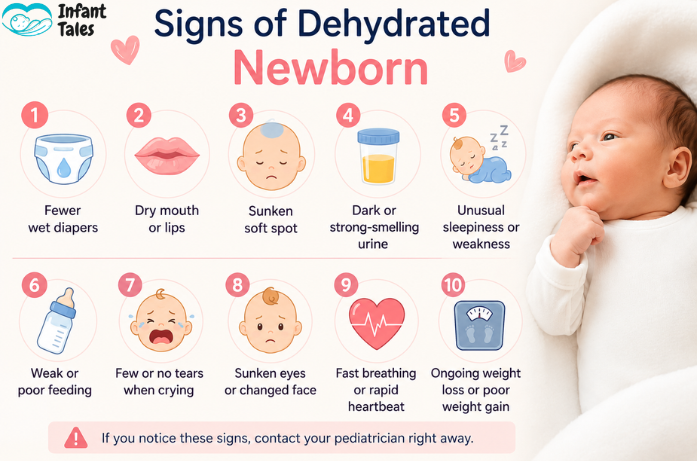
Signs of a Dehydrated Newborn Parents Should Know
Newborns cannot tell us when they need more fluids, so their feeding habits, diapers, and behaviour often provide the first clues. One small change does not always mean dehydration, but several symptoms appearing together should never be ignored.
American Academy of Pediatrics explains that warning signs may include fewer wet diapers, a dry mouth, fewer tears, unusual sleepiness, and a sunken soft spot. One small change does not always mean dehydration, but several symptoms appearing together need prompt attention.
Here are the most common signs of dehydrated newborn parents should watch for.
1. Fewer Wet Diapers Than Usual
Wet diapers are one of the clearest ways to understand whether your newborn is getting enough milk.
After the first several days of life, many babies have around six or more wet diapers in 24 hours. If your baby is urinating much less than usual or has not produced a wet diaper for several hours, contact your healthcare provider for advice.
2. A Dry Mouth or Cracked Lips
A well-hydrated baby’s mouth usually looks moist.
If your newborn’s lips appear dry or cracked, or the tongue and inside of the mouth feel unusually dry or sticky, they may not be taking in enough fluid. Look for this sign together with changes in feeding and diaper output.
3. A Sunken Soft Spot
The soft area on the top of your newborn’s head is called the fontanelle.
It may naturally look slightly different depending on your baby’s position. However, a noticeably sunken soft spot, especially with poor feeding, dry diapers, or unusual sleepiness, can be a warning sign of dehydration.
4. Dark or Strong-Smelling Urine
Newborn urine is usually pale or nearly colourless when a baby is well hydrated.
Urine that becomes dark yellow or has a stronger smell may mean your baby is not getting enough fluid. During the first few days after birth, you may also notice pink or orange stains caused by urate crystals. These can occur briefly, but repeated stains should be discussed with your baby’s doctor.
5. Unusual Sleepiness or Weakness
Newborn babies spend much of the day sleeping, so it can be difficult to know what is normal.
The concern is not simply that your baby sleeps often, but that they are suddenly harder to wake, less responsive, or too tired to complete a feeding. Unusual drowsiness combined with fewer wet diapers or a dry mouth needs prompt medical advice.
6. Weak or Poor Feeding
A baby who is becoming dehydrated may not have enough energy to feed properly.
You might notice weak sucking, very short feeding sessions, difficulty staying awake at the breast or bottle, or refusing several feeds. Less feeding can worsen dehydration, so do not wait too long to ask for help if your newborn is repeatedly unable to feed.
7. Few or No Tears When Crying
Babies who are dehydrated may produce fewer tears when they cry.
However, very young newborns do not always make visible tears, even when they are healthy. For this reason, the absence of tears should not be used alone to judge hydration. Pay closer attention when it appears with a dry mouth, fewer wet diapers, or unusual sleepiness.
8. Sunken Eyes or a Changed Facial Appearance
A dehydrated baby’s eyes or cheeks may look more sunken than usual.
Parents often notice that their baby’s face simply looks different or less full. This is generally a more concerning sign, especially when it appears with poor feeding, weakness, vomiting, or very little urine.
9. Fast Breathing or a Rapid Heartbeat
More serious dehydration can affect the way a baby’s body works.
You may notice faster breathing, a rapid heartbeat, cool or blotchy skin, or unusual restlessness. These are not symptoms to monitor at home. Seek urgent medical care, particularly if your baby also appears weak, pale, difficult to wake, or unable to feed.
10. Ongoing Weight Loss or Poor Weight Gain
It is normal for newborns to lose some weight during the first few days after birth.
However, they should gradually begin gaining it back as feeding becomes established. Continued weight loss or poor weight gain may suggest that your baby is not taking in enough breast milk or formula. Your pediatrician can check your baby’s weight, feeding technique, and hydration.
Look at the Whole Picture
One dry diaper, a sleepy afternoon, or a short feeding does not always mean your baby is dehydrated. What matters most is whether the change continues or several warning signs appear together.
Trust what you notice. If your newborn is feeding poorly, producing far fewer wet diapers, becoming difficult to wake, or simply does not seem like themselves, contact your pediatrician promptly. With newborns, it is always better to ask early than to wait and worry.
Why Do Newborns Become Dehydrated?
Understanding the causes can help parents prevent problems before they happen.
Some common reasons include:
- Difficulty breastfeeding
- Poor latch
- Low milk supply
- Formula feeding problems
- Vomiting
- Diarrhea
- Fever
- Hot weather
- Sleeping through feeds too often
- Certain medical conditions
Most newborn dehydration happens because babies simply aren’t getting enough milk during the early feeding days.
Breastfed Babies and Dehydration
Many breastfeeding moms worry that their baby isn’t getting enough milk.
This concern is completely understandable, especially before your milk supply is fully established.
Rather than guessing how much milk your baby drinks, watch for these reassuring signs:
- Frequent wet diapers
- Regular feeding
- Active sucking and swallowing
- Good weight gain
- Alert periods between naps
If several dehydration symptoms appear together, contact your baby’s healthcare provider for feeding support.
Formula-Fed Babies and Hydration
Formula-fed babies can also become dehydrated.
Sometimes babies drink smaller amounts because they are sleepy, unwell, or having trouble feeding.
Always prepare formula exactly as instructed. Never add extra water to stretch formula because doing so can be dangerous for newborns.
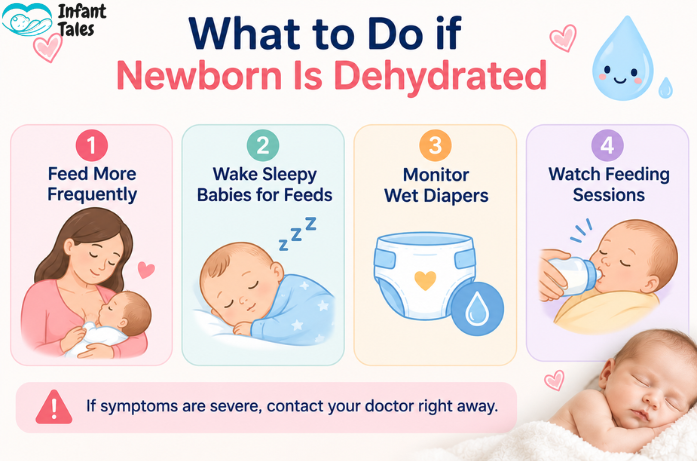
What to Do if Newborn Is Dehydrated
Many parents panic when they suspect dehydration, but taking calm action is the best approach.
If you notice mild symptoms:
1. Feed More Frequently
Offer breast milk or formula every two to three hours, or sooner if your baby shows hunger cues.
2. Wake Sleepy Babies for Feeds
Some newborns sleep so deeply that they miss feeding opportunities.
Gently wake your baby for regular feeds until your healthcare provider says longer stretches are appropriate.
3. Monitor Wet Diapers
Continue tracking diaper output throughout the day.
A simple notebook or phone app can help you notice changes early.
4. Watch Feeding Sessions
Pay attention to how long your baby feeds and whether swallowing sounds can be heard during breastfeeding.
If you think your newborn may be dehydrated, contact your pediatrician before giving water, electrolyte drinks, or any other home treatment. Kids Health by Nemours recommends continuing breast milk or formula unless your healthcare provider advises otherwise and explains that treatment depends on the cause and severity of dehydration. Newborns should always receive medical guidance because their condition can change quickly.
When Should You Call Your Doctor?
Call your baby’s healthcare provider immediately if your newborn has:
- No wet diaper for several hours
- Refuses multiple feeds
- A very sunken soft spot
- Constant vomiting
- Bloody diarrhea
- Extreme sleepiness
- Trouble waking
- High fever
- Difficulty breathing
- Blue lips or skin
Newborns can become dehydrated faster than older children, so it’s always better to ask for medical advice if you’re unsure.
How Doctors Treat Newborn Dehydration
Treatment depends on how serious the dehydration is.
For mild dehydration, improving feeding often solves the problem.
Your doctor may:
- Observe a feeding session
- Check weight gain
- Recommend more frequent feeds
- Help improve breastfeeding
- Suggest temporary supplementation if medically needed
If dehydration is severe, babies may need hospital care with intravenous (IV) fluids until hydration is restored.
Thankfully, early treatment usually leads to a full recovery.
Tips to Prevent Dehydration in Newborns
Fortunately, many cases can be prevented with simple daily habits.
Feed on Demand
Watch your baby’s hunger cues instead of waiting for crying.
Count Wet Diapers
Wet diapers remain one of the easiest ways to monitor hydration.
Attend Regular Checkups
Routine newborn appointments help track healthy weight gain.
Ask for Breastfeeding Support
Lactation consultants can often solve feeding issues before dehydration develops.
Trust Your Instincts
Parents often notice when something feels different.
If your baby doesn’t seem like themselves, it’s okay to seek advice.
Frequently Asked Questions
A Gentle Reminder for Worried Parents
I know how easy it is to second-guess yourself during those first newborn weeks. Every diaper, every feeding, and every sleepy moment can make you wonder if you’re doing enough.
The truth is, you’re learning alongside your baby. Knowing the signs of dehydrated newborn doesn’t mean you should worry about every little change it simply helps you recognize when your little one may need extra care. Most parents who notice the warning signs early and seek guidance find that their baby recovers quickly with proper feeding and support.
Remember, no one expects you to have all the answers. Asking questions, calling your pediatrician, and trusting your instincts are all part of being a wonderful parent.
Final Thoughts
Learning the signs of dehydrated newborn can give you confidence during those precious early weeks of parenthood. By watching for wet diapers, feeding well, and recognizing early dehydration in newborn signs, you’ll be better prepared to respond if your baby ever needs extra help.
Above all, remember that you are not alone. Every parent has moments of uncertainty, and every question you ask comes from a place of love. Keep feeding your baby with patience, enjoy the little cuddles, and know that with attentive care and timely support, most newborns stay healthy, hydrated, and continue growing beautifully.
Parenting comes with lots of questions, and you’re never alone. Explore more expert-backed newborn care, feeding, and baby health guides on Infant Tales to support your parenting journey with confidence.
Medical Disclaimer
This article is for informational purposes only and should not replace professional medical advice. If you think your newborn is dehydrated or showing concerning symptoms, contact your pediatrician or seek medical care promptly.