Authored by: A Caring Mom at Infant Tales
After giving birth, you probably expected your body to slowly return to normal. But then you look down and notice your feet are still swollen, your ankles look puffy, and even your comfortable slippers feel tight. It can be surprising, especially when you’re already busy caring for your newborn.
The good news is that foot swelling after giving birth is quite common and usually improves within one to two weeks. During pregnancy, your body holds extra fluid, and it takes time to get rid of it after delivery. Some moms even notice more swelling after childbirth, especially if they received IV fluids or had a C-section.
While swelling in both feet is generally nothing to be worried about, it is useful to know when the swelling could be an indication of a more serious problem, and this is what will be discussed in the following sections of the article: what causes the feet to swell after childbirth, ways to treat the problem and how long the condition would last.
Is Foot Swelling After Giving Birth Normal?
Yes, having swollen feet and ankles after giving birth is quite normal. This is called postpartum edema, which simply means your body is holding onto extra fluid.
During pregnancy, your body produces more blood and stores additional fluid to support your growing baby. Once your baby is born, that extra fluid doesn’t disappear overnight. Your body slowly gets rid of it through urination and sweating.
You might even notice that your feet look more swollen during the first few days after delivery, especially if you received IV fluids during labor or had a C-section.
For most moms, the swelling starts getting better within a few days and improves significantly within one to two weeks. However, if the swelling suddenly gets worse, becomes painful, or affects one leg much more than the other, it’s important to contact your doctor.
What Causes Foot Swelling After Childbirth?
Your body goes through many changes during pregnancy and delivery. Here are some common reasons your feet may remain swollen after childbirth.
1. Extra Fluid From Pregnancy
During pregnancy, your body stores extra fluid to support your baby. According to the Mayo Clinic, fluid retention, hormonal changes, and pressure on blood vessels can contribute to swollen feet and ankles during pregnancy.
Some of this fluid remains after delivery and collects around your feet and ankles. The swelling usually decreases as your body gradually removes it.
2. IV Fluids During Labor
If you received IV fluids during labor or a C-section, your body may temporarily hold onto some of that extra fluid. This can make your feet look puffier during the first few days after delivery.
3. Hormonal Changes
After childbirth, your hormone levels change quickly. These changes can affect how your body manages fluid, which is why postpartum swelling may continue for several days.
4. Less Movement After Delivery
Spending long hours sitting, breastfeeding, or resting can cause fluid to collect in your lower legs. Poor posture during newborn care may also contribute to back pain after carrying your baby. Gentle walking and moving your ankles, when medically safe, can help improve circulation.
5. Recovery After a C-Section
Swelling can be more noticeable after a C-section because of IV fluids and limited movement during recovery. Learning how to hold a baby comfortably can also make everyday newborn care easier while you’re healing. Mild swelling in both feet is common, but painful swelling or swelling mainly in one leg needs urgent medical attention.
How Long Does Postpartum Foot Swelling Last?
For many moms, swelling starts improving within a few days and settles significantly within one to two weeks.
However, recovery varies depending on your delivery, fluid retention, and overall health.
Here’s a general timeline.
| Time after delivery | What you may notice |
| Days 1–3 | Feet may appear puffier as fluid shifts after delivery. |
| Days 4–7 | Swelling often begins decreasing as excess fluid leaves the body. |
| Week 2 | Many moms notice their feet and ankles returning closer to normal. |
| Beyond 2 weeks | Persistent swelling should be discussed with a healthcare provider. |
Remember, this is only a general guide.
The most important sign is that your swelling is gradually improving rather than getting worse.
If your feet suddenly become much more swollen or you develop other symptoms, don’t wait for the two-week mark to seek advice.
Normal vs. Concerning Postpartum Swelling
It’s helpful to understand which symptoms are commonly associated with normal recovery and which may need medical attention.
| Usually less concerning | Warning signs |
| Mild swelling in both feet | Sudden or severe swelling |
| Puffiness after standing | One leg much more swollen |
| Swelling that improves with rest | Pain, redness, or warmth in one leg |
| Gradual improvement | Swelling with severe headache or vision changes |
This comparison isn’t a diagnosis. If you’re uncertain about your symptoms, contact your healthcare provider.
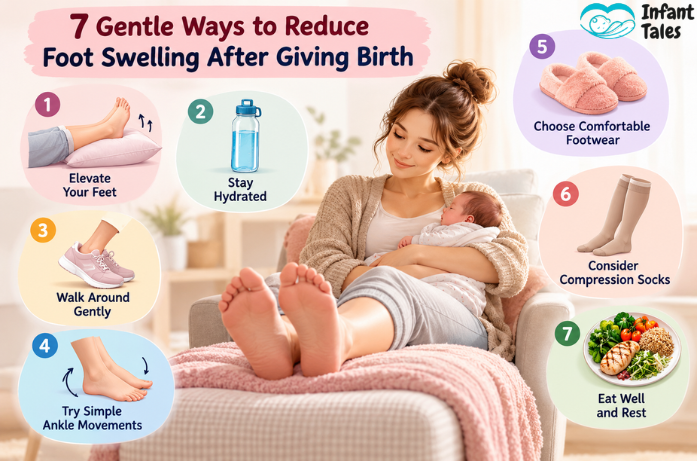
7 Gentle Ways to Reduce Foot Swelling After Giving Birth
Swollen feet can feel uncomfortable, especially when you’re already tired from caring for your newborn. The good news is that a few simple changes can help ease post pregnancy swelling feet symptoms while your body gets rid of extra fluid.
1. Keep Your Feet Elevated
Whenever you get a chance to rest, place a pillow under your legs to raise your feet. The Office on Women’s Health also recommends keeping your feet elevated to help reduce swelling after delivery.
If comfortable, try keeping them slightly above heart level for short periods. This can help reduce fluid buildup around your ankles and ease that heavy, tight feeling.
2. Stay Hydrated
Even though your body is holding extra fluid, drinking enough water is still important. It helps your kidneys work properly and maintain a healthy fluid balance. Keep a water bottle nearby, especially during breastfeeding, and drink whenever you feel thirsty.
3. Walk Around Gently
You don’t need to start exercising right after delivery. A few short walks around your home can help improve blood circulation and prevent fluid from collecting in your legs. Start slowly, and if you’ve had a C-section, follow your doctor’s advice about movement.
4. Try Simple Ankle Movements
If you’re sitting for long periods while feeding your baby, gently move your feet up and down or rotate your ankles. These small movements help your leg muscles support circulation and may reduce swelling. The NHS recommends simple foot exercises to improve circulation and ease swelling during pregnancy.
5. Choose Comfortable Footwear
Your regular shoes might feel tight for a little while, and that’s okay. Wear soft, supportive slippers or roomy shoes that don’t squeeze your feet. Avoid tight socks or footwear that leaves marks around your ankles.
6. Consider Compression Socks
Compression socks can help improve blood flow and reduce fluid buildup in your lower legs. However, it’s best to ask your healthcare provider before using them, especially after a C-section. If one leg is painful or much more swollen than the other, seek urgent medical advice first.
7. Eat Well and Get Enough Rest
Your body needs nutritious meals and proper rest to recover after childbirth. Having a few postpartum freezer meals ready can make eating well easier when you’re busy caring for your newborn.
Include fruits, vegetables, whole grains, and protein-rich foods in your diet, and avoid too many salty packaged snacks. Take breaks from standing, ask for help with household chores, and give yourself time to heal.
A Simple Daily Routine for Swollen Feet
Sometimes the easiest way to manage postpartum swelling is to connect small habits with your existing routine.
Morning: Gently move your ankles before getting out of bed. Drink water with breakfast and wear comfortable footwear.
Afternoon: Take a short walk around your home if medically cleared. Change sitting positions during feeding sessions.
Evening: Rest with your feet elevated and notice whether the swelling is improving compared with previous days.
You don’t need to follow a strict schedule. These are simply gentle ways to support your recovery.
Why Are My Feet More Swollen After Delivery Than During Pregnancy?
You might be surprised to see your feet looking puffier after childbirth, especially if you didn’t have much swelling during pregnancy.
This usually happens because your body is still holding extra pregnancy fluid. IV fluids given during labor and spending more time resting after delivery can also make the swelling worse.
For some moms, swelling increases during the first few days before gradually improving as the body removes excess fluid.
However, if your feet suddenly become very swollen, painful, or you notice other unusual symptoms, contact your healthcare provider.
What Is Pitting Edema After Childbirth?
If you gently press your swollen foot or ankle and notice a small dent that stays for a few seconds, this is called pitting edema.
It happens when extra fluid builds up in the tissues beneath your skin. Mild pitting edema can occur after childbirth as your body gets rid of the fluid stored during pregnancy.
However, if the swelling becomes severe, keeps getting worse, or comes with pain or other unusual symptoms, contact your healthcare provider.
When Should You Worry About Postpartum Swelling?
Most mild postpartum edema feet symptoms improve naturally. However, certain warning signs may indicate a serious medical condition.
Swelling in Only One Leg
If one leg becomes noticeably more swollen than the other, especially with pain, warmth, tenderness, or redness, seek urgent medical care. Family Health Centers of San Diego also explains when pregnancy-related swelling may be a warning sign rather than ordinary fluid retention.
These symptoms may indicate deep vein thrombosis (DVT), a blood clot in a deep vein.
Don’t massage the affected leg while waiting for medical assessment.
Sudden Swelling With Headache or Vision Changes
Sudden swelling, especially involving your face or hands, along with a severe headache, blurry vision, or upper abdominal pain may indicate postpartum preeclampsia.
This serious blood pressure condition can develop after childbirth, even if your blood pressure was normal during pregnancy.
It requires immediate medical attention.
Chest Pain or Difficulty Breathing
Sudden chest pain, shortness of breath, fainting, or coughing up blood can indicate a pulmonary embolism or another serious heart or lung problem.
Call emergency services immediately.
New breathing difficulty, particularly when lying flat, also needs urgent medical assessment.
Swelling That Keeps Getting Worse
Contact your healthcare provider if swelling continues increasing, doesn’t gradually improve, or is accompanied by fever or reduced urination.
The CDC’s urgent maternal warning signs explain which symptoms need immediate attention after childbirth.
What Should You Avoid When Your Feet Are Swollen?
A few simple precautions can help you recover comfortably after childbirth.
- Avoid self-medication: Don’t take water pills or herbal remedies without your doctor’s advice.
- Don’t massage painful legs: One-sided swelling with pain or redness may indicate a blood clot and needs urgent medical attention.
- Limit prolonged standing: Take breaks and elevate your feet when possible.
- Avoid heavy exercise: Stick to gentle movement until your doctor says it’s safe.
If swelling suddenly worsens or feels unusual, contact your healthcare provider.
Frequently Asked Questions
1. Is foot swelling after childbirth normal?
Yes, mild swelling in both feet is common after delivery due to extra pregnancy fluid. It should gradually improve.
2. How long does postpartum edema last?
Many moms notice improvement within several days, with significant relief within one to two weeks.
3. Does walking help postpartum swelling?
Gentle walking supports circulation and may reduce fluid pooling when your healthcare provider says it’s safe.
4. Can breastfeeding cause swollen feet?
Breastfeeding itself isn’t usually the cause, but sitting for long feeding sessions can make existing swelling more noticeable.
5. When should I call a doctor?
Seek medical advice for worsening or persistent swelling. One-sided painful swelling or sudden swelling with severe headache or vision changes requires urgent assessment.
Final Thoughts
Your body goes through so many changes during pregnancy and childbirth, and it needs time to recover. So, if your feet still look swollen after delivery, don’t worry too much. For most moms, foot swelling after giving birth is temporary and gradually improves within one to two weeks.
Simple things like drinking enough water, taking short walks, resting with your feet elevated, and wearing comfortable shoes can help you feel better. However, if the swelling suddenly gets worse, becomes painful, or affects one leg more than the other, contact your doctor.
And remember, while you’re busy caring for your little one, don’t forget to look after yourself. These tips for new parents can also help make the early days of motherhood feel more manageable. Take things slowly, get help when you need it, and give your body the rest it deserves.
With love, Infant Tales here to support you through every step of motherhood.
Medical Disclaimer: This article is for educational purposes only and doesn’t replace professional medical advice. Always consult your healthcare provider about postpartum symptoms, especially if swelling is severe, worsening, or accompanied by warning signs.