Authored by: A Caring Mom at Infant Tales
Welcoming a baby into your life is such a special moment, but the days after childbirth can be more challenging than you expect. While you are busy feeding, cuddling, and caring for your newborn, your own body is still recovering from delivery.
You may feel tired, sore, emotional, or simply unsure about what you’ll need to feel comfortable. That’s why preparing a few postpartum essentials before your baby arrives can make those early weeks a little easier.
The good news is that you don’t need a long shopping list or expensive recovery products. Just a few practical items can help you manage discomfort, stay comfortable, and focus on healing.
In this guide, we’ll share the most useful postpartum essentials for mom, including must-have recovery supplies, items for vaginal and C-section births, and simple tips to help you feel more prepared for life after delivery.
Why Are Postpartum Essentials Important?
Your body goes through many changes after giving birth, and recovery takes time. During the first few weeks, you may experience postpartum bleeding, cramps, soreness, breast tenderness, and fatigue. If you’ve had a C-section, you’ll also need extra care while your incision heals.
According to research published in the NCBI Bookshelf, the postpartum period involves important physical and hormonal changes as the body gradually adjusts after pregnancy and childbirth.
Having the right postpartum recovery essentials ready can make these early days more comfortable. Simple items like maternity pads, soft underwear, and feeding supplies can help you manage everyday needs without unnecessary stress.
When everything you need is within reach, you can spend less time worrying about small things and more time resting, healing, and bonding with your baby.
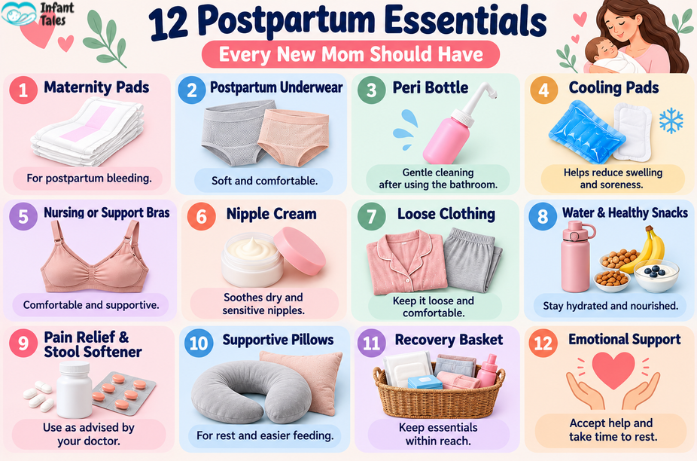
12 Postpartum Essentials Every New Mom Should Have
You don’t need to buy everything on a postpartum shopping list. These simple postpartum essentials can help you stay comfortable, manage recovery, and care for yourself during the first few weeks after birth.
1. Maternity Pads for Postpartum Bleeding
After childbirth, you’ll experience vaginal bleeding called lochia, whether you had a vaginal birth or C-section. Bleeding is usually heavier at first and gradually becomes lighter.
According to the Mayo Clinic, postpartum vaginal discharge gradually changes in color and becomes lighter over the following weeks as the body recovers.
Choose soft, extra-absorbent maternity pads and change them regularly. Start with one or two packs and buy more as needed.
Mom tip: Avoid tampons and menstrual cups until your healthcare provider says they’re safe.
2. Comfortable Postpartum Underwear
Your regular underwear may feel tight after delivery, especially if you have swelling, stitches, or abdominal soreness.
Disposable mesh underwear works well during the first few days. Later, soft cotton underwear can keep you comfortable. For C-section recovery, choose high-waisted underwear that doesn’t rub against your incision.
3. Peri Bottle for Gentle Cleaning
Using the bathroom after vaginal birth can feel uncomfortable, particularly if you have stitches or tenderness.
A peri bottle helps you gently rinse your perineal area with warm water after using the toilet. It makes cleaning easier without harsh wiping.
Mom tip: Use clean, comfortably warm water and gently pat the area dry afterward.
4. Cooling Pads for Postpartum Soreness
Swelling and soreness around the perineal area are common after vaginal delivery.
A cold pack wrapped in a soft cloth can help reduce swelling and provide temporary relief, especially during the first day or two.
Never place ice directly on your skin. Ask your healthcare provider before using medicated cooling products or sitz baths.
5. Comfortable Nursing or Support Bras
Your breasts may feel fuller and more sensitive after childbirth, whether you’re breastfeeding or not.
A soft, supportive bra can help you stay comfortable. If you’re breastfeeding, choose a nursing bra with easy-open clips for convenient feeding.
You can also use breast pads if you experience milk leakage, but there’s no need to buy too many in advance.
6. Nipple Cream for Breastfeeding Comfort
Breastfeeding may cause some initial nipple sensitivity as you and your baby learn to latch comfortably.
A breastfeeding-safe nipple cream can help soothe dry skin. However, persistent pain, cracked nipples, or bleeding may indicate a feeding problem.
If breastfeeding continues to hurt, ask a lactation consultant for guidance.
7. Loose and Comfortable Clothing
Your body needs time to heal after delivery, so tight clothing may feel uncomfortable.
Choose loose cotton pajamas, soft trousers, or button-front nightgowns that make resting and feeding easier.
If you’ve had a C-section, avoid waistbands that press against your incision. Keep a few extra outfits ready for milk leaks or baby spit-up.
8. A Large Water Bottle and Healthy Snacks
Caring for a newborn can make it easy to forget about your own meals and hydration.
Keep a water bottle and simple snacks near your feeding area. Fruits, yogurt, nuts, and whole-grain crackers are convenient choices.
If you’re breastfeeding, regular meals and adequate fluids are especially important for meeting your nutritional needs.
9. Doctor-Approved Pain Relief and Stool Softener
Postpartum cramps, soreness, and constipation are common during recovery.
Your healthcare provider may recommend pain medication or a stool softener if needed. Drinking enough water, eating fiber-rich foods, and moving gently can also help prevent constipation.
Always check with your doctor before taking medicines, especially while breastfeeding.
10. Supportive Pillows for Rest and Feeding
A comfortable pillow can support your back and arms while resting or feeding your baby.
After a C-section, gently holding a small pillow against your abdomen when coughing or laughing may help reduce discomfort.
Regular pillows often work just as well as special nursing pillows. Always keep loose pillows out of your baby’s sleep space.
11. A Simple Postpartum Recovery Basket
Keeping your recovery supplies together can make those busy newborn days easier.
Fill a small basket with maternity pads, spare underwear, tissues, and other personal care items. Keep it near your bathroom or resting area.
This saves unnecessary trips around the house, especially when you’re tired or sore. Store any medications safely out of children’s reach.
12. Emotional Support and Practical Help
Postpartum recovery isn’t just about physical healing. You also need rest, emotional support, and time to adjust to life with your baby.
Ask your partner, family, or trusted friends to help with meals, laundry, cleaning, or grocery shopping.
Even small things, like someone holding your baby while you shower, can make a difference.
Remember: Taking care of yourself is an important part of taking care of your baby.
Postpartum Essentials for Vaginal Birth vs. C-Section
Your recovery needs may differ depending on how your baby was delivered.
Here’s a simple comparison:
| After Vaginal Birth | After C-Section |
| Peri bottle for gentle cleaning | High-waisted underwear |
| Cold packs for perineal swelling | Loose clothing around the incision |
| Soft maternity pads | Soft maternity pads |
| Perineal comfort products if approved | Small pillow for abdominal support |
| Stool softener if recommended | Stool softener if recommended |
| Comfortable sitting positions | Extra help with lifting and chores |
Both types of delivery require time, rest, and proper medical care.
If you’ve had a C-section, follow your healthcare provider’s instructions about incision care, lifting, and physical activity.
What Postpartum Essentials Should You Pack in Your Hospital Bag?
You don’t need to bring your entire recovery collection to the hospital.
Focus on items that make your stay comfortable.
Consider packing:
- Loose clothes and a comfortable going-home outfit.
- Soft underwear and a nursing or support bra.
- Personal toiletries and lip balm.
- Phone charger and slippers.
- Any medicines or documents requested by your hospital.
Many hospitals provide maternity pads, mesh underwear, and peri bottles, but supplies vary.
Helpful tip: Call your hospital before packing to ask what they provide. This can save money and valuable space in your bag.
How to Prepare Your Home for Postpartum Recovery
Preparing your home is just as important as buying post partum essentials.
A few small changes can make the first weeks easier.
Create a Bathroom Recovery Station
Keep maternity pads, spare underwear, a peri bottle, and clean towels within easy reach.
If bending feels uncomfortable, place supplies on a shelf at a convenient height.
Prepare a Comfortable Feeding Corner
Choose a comfortable chair or resting area with good back support.
Keep your water bottle, snacks, phone charger, and feeding supplies nearby.
Stock Up on Easy Meals
If possible, prepare a few freezer-friendly meals before your due date.
Soups, casseroles, rice dishes, and other easy-to-reheat meals can save time when you’re tired.
Plan for Household Help
Talk with your partner or family about who can manage cooking, cleaning, laundry, and shopping.
Even small amounts of help can give you more opportunities to rest.
What Do Moms Need During Each Stage of Postpartum Recovery?
Your recovery needs will change over time.
| Recovery stage | What may help |
| First 3 days | Maternity pads, pain relief, comfortable underwear, assistance |
| Days 4–7 | Hygiene supplies, loose clothing, easy meals, feeding support |
| Weeks 2–3 | Comfortable routines, lighter pads as needed, emotional support |
| Weeks 4–6 | Continued rest, gentle activity as advised, follow-up care |
| After 6 weeks | Ongoing recovery, pelvic floor support if needed, health checkups |
This timeline is only a general guide.
Some moms feel better within a few weeks, while others need longer, especially after surgery or complications. The American College of Obstetricians and Gynecologists (ACOG) recommends contacting your maternity care provider within the first three weeks after birth, followed by a comprehensive postpartum visit no later than 12 weeks.
There’s no fixed deadline for feeling like yourself again.
Postpartum Products You Can Skip or Buy Later
You don’t need to buy every postpartum product before your baby arrives. Expensive recovery kits, extra nursing pillows, breast pads, and special creams can wait until you actually need them.
Start with basic postpartum essentials and check what your hospital provides to avoid unnecessary spending.
Avoid products promising quick weight loss or instant recovery. Your body needs time, rest, and proper care to heal after childbirth.
When Should You Contact Your Doctor After Birth?
Some postpartum discomfort is normal, but certain symptoms require medical attention. The Centers for Disease Control and Prevention (CDC) advises new moms to pay attention to unusual symptoms during and after pregnancy and seek medical care when something doesn’t feel right.
Seek urgent care if you experience:
- Heavy bleeding that soaks through a pad in an hour.
- Chest pain, breathing difficulties, or fainting.
- Severe headaches with vision changes.
- Fever of 100.4°F (38°C) or higher.
- Severe or worsening abdominal pain.
- Painful swelling or redness in one leg.
- Increasing redness, discharge, or pain around a C-section incision.
If you experience thoughts of harming yourself or your baby, seek emergency help immediately.
Also, talk to your healthcare provider if sadness, anxiety, or hopelessness becomes intense or continues beyond two weeks.
You deserve support for your mental health as much as your physical recovery.
Frequently Asked Questions About Postpartum Essentials
1. What are the most important postpartum essentials for mom?
Maternity pads, comfortable underwear, loose clothing, hygiene supplies, approved pain relief, nutritious food, water, and practical support are among the most useful essentials.
2. When should I buy postpartum recovery essentials?
Preparing your basic supplies around 34–36 weeks of pregnancy is practical, although you can start earlier if needed.
3. How many maternity pads will I need after birth?
Start with one or two packs of heavy-absorbency pads. The amount you’ll need depends on your bleeding and how often you change them.
4. Do I need different essentials after a C-section?
Yes. High-waisted underwear, loose clothing, approved pain medication, and additional help with everyday activities can be especially useful.
5. How long does postpartum recovery take?
Initial recovery often takes around six weeks, but complete healing may take several months. Every woman’s recovery is different.
Final Thoughts
The first few weeks after childbirth are a time for healing, adjusting, and bonding with your baby. Having the right postpartum essentials can make recovery more comfortable and help you manage everyday needs with less stress.
You don’t need expensive products or a perfect routine. Simple recovery supplies, nutritious meals, proper rest, and support from loved ones can make a real difference.
Every mom heals at her own pace, so listen to your body, accept help, and give yourself time to recover. Your baby needs your love and care, but remember, you deserve that same care too.
Looking for more helpful tips on postpartum recovery and newborn care? Visit Infant Tales for practical advice, caring guidance, and support throughout your motherhood journey.
Medical Disclaimer
This article is for general educational purposes only and does not replace professional medical advice. Always follow your healthcare provider’s recommendations for postpartum recovery, medications, and medical concerns.