Written by a caring mom at Infant Tales
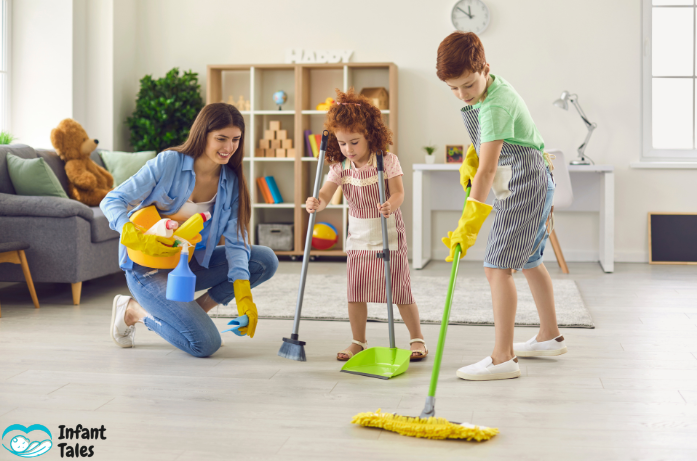
Three is an adorable age. One day your child asks for assistance with everything and the next they tell you cheerfully: “No, Mommy, I can do it myself!” This increased independence offers a good opportunity to introduce some simple chores for 3 year olds that will make them feel included in the life of the family.
Of course, things won’t go smoothly. There might be a few toys left on the floor and the socks might go into the wrong drawer. However, this is not a problem because the idea is just to let the little one participate.
Three-year-olds can do small chores like putting toys away, bringing clothes to the laundry, setting the table with napkins, wiping small spills, watering plants, and putting the books back. Start with two or three simple jobs and help the child until he/she understands the process.
Table of Contents
Are 3-Year-Olds Ready for Chores?
Yes, but I like to think of them as little family helping jobs rather than serious chores.
Three-year-olds are naturally curious about what Mom and Dad are doing. They may want to stir while you’re cooking, carry something when you are unpacking groceries, or grab the cloth when you are cleaning the table.
These ordinary moments are often the easiest opportunities to introduce responsibility.
Just remember that every child is different. One toddler may carefully carry napkins to the table while another gets distracted halfway there because a toy dinosaur suddenly becomes very important. Both are normal.
At this age, little kids are becoming more independent and often want to copy what adults are doing. The CDC’s positive parenting tips for preschoolers also encourage parents to let children help with simple chores and offer small choices as they grow.
A Simple Ready-or-Not Check
Before giving your child a new task, ask:
- Is it safe?
- Can they understand the instruction?
- Can it be finished in a few minutes?
- Can they do at least part of it?
- Am I nearby if they need help?
If the answer is mostly yes, let them try.
And if “clean your room” causes instant frustration, make the job smaller.
“Put these five blocks in the basket” feels much more manageable to a three-year-old.
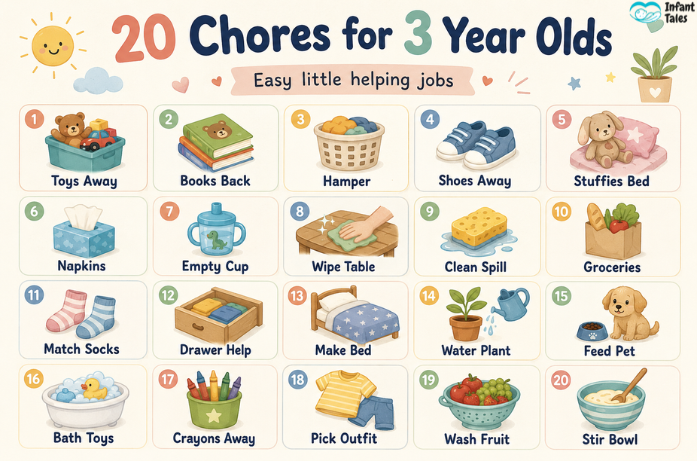
20 Chores for 3 Year Olds That Fit Into Real Life
The easiest chores are usually the little things already happening around your home. You don’t need a fancy chore chart or a long list of jobs for a three-year-old.
Just let your toddler help with small parts of your normal routine. Some days they may be excited to join in, and other days they may lose interest after thirty seconds. That’s completely normal.
1. Put Toys in a Basket
Toy cleanup is one of the easiest places to start.
Instead of saying, “Clean your whole room,” try something simple like, “Can you put all your cars in this basket?”
A small job feels much easier for a toddler, and they can clearly see when they’re finished.
2. Return Books to the Shelf
After storytime, ask your little one to put the books back on a low shelf or into a book basket.
Don’t worry if the books aren’t perfectly lined up.
If the books make it back to their spot, I would call that a win.
3. Put Dirty Clothes in the Hamper
This is such an easy chore to add to your everyday routine.
When pajamas come off in the morning or clothes come off before bath time, ask your toddler to drop them into the hamper.
After a while, they may even start doing it without being reminded.
4. Put Shoes in Their Place
Give your child’s shoes one simple spot near the door.
When you come home, you can say, “Let’s put your shoes back in their little home.”
It sounds simple, but repeating the same routine every day can make it easier for toddlers to remember.
5. Put Stuffed Animals on the Bed
If stuffed animals seem to end up everywhere in your house, turn putting them away into a bedtime job.
Ask your toddler to place their teddy, bunny, or favorite soft toys on the bed or in a basket.
It makes cleanup feel less like a chore and more like getting everyone ready for sleep.
6. Place Napkins on the Table
This is one of those little jobs toddlers often love because it feels important.
Hand your child a few napkins and ask them to put one at each place.
They may look incredibly proud when everyone sits down and sees what they helped prepare.
7. Carry Their Empty Cup
After a meal or snack, let your toddler carry their empty cup to a safe place on the counter.
Use a lightweight, unbreakable cup and stay close while they’re learning.
They don’t need to clear the whole table. Taking care of one little thing is enough.
8. Wipe Their Spot at the Table
Give your child a small damp cloth and let them wipe the area where they ate.
Will they get every crumb? Probably not.
But that’s not really the point. They’re learning that after we make a little mess, we can help clean it up.
9. Help Clean a Small Spill
Toddlers spill things. A lot.
When it’s just a little water or another safe mess, hand them a cloth and say, “Let’s clean it together.”
It turns an accident into a calm little learning moment instead of something stressful.
10. Carry a Light Grocery Item
When you come home from shopping, let your toddler carry something small and light into the kitchen.
Bread, tissues, or a lightweight packet are good choices.
They usually love feeling like they’re helping with the groceries just like Mom or Dad.
11. Match Socks
Laundry can actually become a fun little game.
Give your toddler a few socks and ask, “Can you find the one that matches this?”
Don’t give them the entire laundry basket. Two or three pairs are plenty to keep it simple and fun.
12. Put Clothes in a Drawer
Your child can help put socks, pajamas, or other simple clothes into a low drawer.
And yes, they may unfold the clothes you just folded.
Sometimes it’s better to leave that slightly messy drawer alone and let them feel proud that they helped.
13. Help Make the Bed
A three-year-old doesn’t need to make the bed perfectly.
They can pull up the blanket, put the pillow back, or arrange their favorite stuffed animals.
You can finish the rest together. At this age, teamwork is more important than neat corners.
14. Water a Plant
Give your toddler a small cup or little watering can and let them help water a plant.
Just make sure you only give them a tiny amount of water.
Otherwise, you may discover that your child believes every houseplant needs its own private swimming pool.
15. Help Feed a Pet
If you have a family pet, your toddler may enjoy helping at mealtime.
You can measure the food first and let your child pour it into the bowl while you stay nearby.
Leave pet waste, litter boxes, and anything messy or unsafe to the adults.
16. Put Bath Toys Away
Before bath time ends, ask your toddler to put their toys back into the basket.
You can make it playful by counting them.
“Three ducks left… now two… where’s the last one?”
Sometimes turning cleanup into a tiny game makes all the difference.
17. Put Crayons Away
When coloring time is over, ask your child to put the crayons back in their box.
They can also stack the paper or place it in a drawer.
It’s a simple way to teach that cleaning up is just another part of playing.
18. Choose Tomorrow’s Clothes
Give your toddler two outfits that you’re happy with and let them choose which one to wear the next day.
Then ask them to help place it somewhere ready for morning.
They get a little independence, and you avoid opening the entire wardrobe for negotiation.
19. Wash Fruits or Vegetables
While you’re preparing food, let your toddler help rinse fruits or vegetables with you.
This can be a fun way for them to join you in the kitchen without giving them anything complicated to do.
Keep knives, hot pans, raw meat, and breakable items well away from little hands.
20. Stir Cool Ingredients
If you’re baking or making something simple, let your toddler stir safe, cool ingredients while you hold the bowl.
They may stir with far more excitement than the recipe actually requires.
A little flour on the counter is okay. For a three-year-old, being included is often the best part.
This gentle approach is also supported by the American Academy of Pediatrics. Their guide to age-appropriate chores for children suggests praising a child’s effort rather than expecting perfect results and keeping responsibilities realistic.
A Simple 3-Step Way to Teach a Chore
Telling a three-year-old, “Go do this,” can sometimes be too much.
I’ve found it easier to teach little jobs in three stages.
Step 1: Show Them
Do the job yourself while they watch.
“The blocks go in this basket.”
Keep the explanation short.
Step 2: Do It Together
Next time, work beside your child.
You put away one toy, and they put away another.
It feels more like teamwork than an order.
Step 3: Let Them Try
Once they understand, give them a chance to do it while you’re nearby.
Try not to correct every tiny mistake.
That crooked blanket or badly matched pair of socks might be something they’re incredibly proud of.
Try a Chore Ladder
You don’t always have to introduce brand-new jobs. One simple chore can slowly grow as your child becomes more confident.
Take laundry:
Level 1: Put dirty socks in the hamper.
Level 2: Carry several clothes to the hamper.
Level 3: Match clean socks with Mom.
Level 4: Put those socks into the drawer.
I love this approach because children can build on something familiar instead of being expected to suddenly manage a bigger responsibility.
Add Chores to Routines You Already Have
You don’t really need a separate “chore time.”
Connect tasks with things that already happen:
After play: toys go into the basket.
Before bath: clothes go into the hamper.
After meals: cup goes to the counter.
Before bed: books go back on the shelf.
Over time, the routine itself becomes the reminder.
What If My 3-Year-Old Refuses?
Some days, your toddler may simply say “No!” and refuse to help. That is pretty normal at this age.
Instead of turning it into a battle, make the job smaller or do it together. You might say, “I’ll pick up the cars, and you can do the blocks,” or offer a simple choice like, “Books first or toys first?”
A little flexibility can make chores feel less stressful. If your child is tired or having a difficult day, it is okay if everything does not get done perfectly.
If saying “no” is becoming common at this age, these gentle ways to guide toddler behavior may also help you handle resistance without turning every little task into a battle.
How Do I Know If a Chore Is Too Hard?
If your child seems confused, gets frustrated quickly, or needs you to do most of the task, the chore may be a little too difficult right now.
Try making it smaller and more specific. Instead of saying, “Put the laundry away,” say, “Can you put these socks in your drawer?” You can always add more steps as your toddler becomes more confident.
Keep Chores Safe
Three-year-olds love doing things by themselves, but they still need plenty of supervision.
Keep them away from cleaning products, sharp tools, hot food, glass dishes, heavy objects, electrical appliances, pet waste, raw meat, and anything that requires unsafe climbing.
Simple jobs with toys, clothes, lightweight items, or a damp cloth are more than enough. The goal is to let your child help while keeping the experience safe and stress-free.
Praise the Helping, Not the Perfect Result
Your toddler may put pajamas in the wrong drawer or leave a few toys behind, and that is completely normal at this age. Try to notice the effort instead of focusing on whether the job was done perfectly.
Simple words like, “Thank you for helping,” or “You remembered where your books go!” can make your child feel proud. You do not need to offer a reward every time either a smile, hug, or high-five can be more than enough.
FAQs
Final Thoughts
Teaching your three-year-old to help is not about having a perfectly tidy home. It is about giving them small chances to join in, try something new, and feel proud of themselves.
Some days they will happily help, and other days the toys may still be everywhere. Keep the jobs simple, stay patient, and celebrate the effort. These little everyday moments are how confidence and independence slowly begin to grow.
Looking for more simple, real-life parenting tips? Explore more toddler guides on Infant tales and find gentle ideas to make everyday parenting a little easier.
Disclaimer
This article is for general informational purposes only and is based on everyday parenting experiences. Every child develops at their own pace, so always choose chores that are safe and suitable for your child’s abilities and supervise them when needed.
About the Author
Geeta Yogi is a parenting writer who shares simple, practical ideas for toddler routines, independence, behavior, and everyday family life. Her writing focuses on realistic ways parents can encourage young children to help, learn new skills, and build confidence through small age-appropriate responsibilities.