By a caring mom at infant tales
Starting school is a big milestone for every child and every parent. For many moms, it feels emotional watching their little one step into a classroom for the first time. Some children feel excited, while others may feel nervous, shy, or clingy during the first few days.
If you are searching for how to prepare kids for school, the good news is that school readiness is not about making children perfect before the first day. It is about helping them feel emotionally safe, confident, and comfortable with simple routines.
At Infant Tales, we believe preparing children for school should feel gentle, warm, and pressure-free. Every child learns differently, and with love and patience, the school journey can become easier for both parents and children.
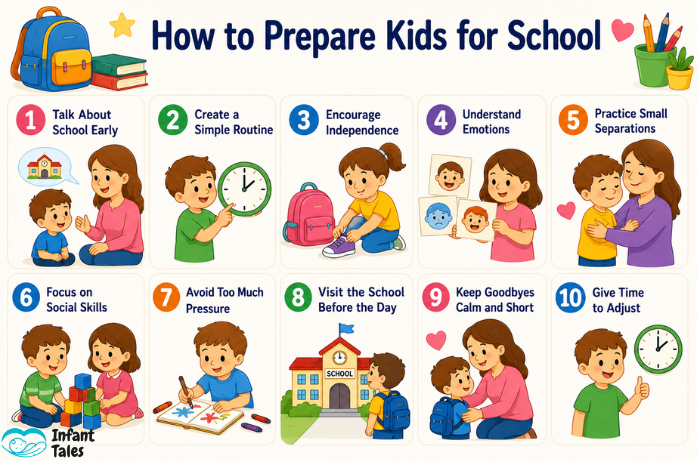
How to Prepare Kids for School
The best way to help kids get ready for school… is by focusing on emotional confidence, daily routines, independence, and social skills. Children adjust better when preparation feels calm and natural instead of stressful.
1. Start Talking About School Early
Children often feel nervous when something is completely new to them. Talking about school in a happy and gentle way can help your child feel more comfortable before the first day arrives. Simple conversations about making friends, playing games, and meeting teachers can slowly build excitement.
Try to keep your tone calm and positive. Instead of saying things like “Don’t cry,” reassure your child that feeling nervous is normal. When children feel emotionally supported, school feels much less scary.
2. Create a Simple Daily Routine
One important part of preparing children for school is helping them adjust to a routine before school starts. Children feel calmer when they know what to expect during the day.
A few weeks before school begins, slowly start earlier bedtimes, regular meal times, and quiet activities like reading or independent play. These small habits help children settle into school life more naturally and comfortably.
3. Encourage Independence Slowly
Children feel proud when they learn to do little things on their own. Simple tasks like wearing shoes, washing hands, or carrying a backpack can build confidence before school begins.
You do not need to expect perfection. Let your child practice slowly and encourage their effort instead of correcting every mistake. Those small moments of independence help children feel more ready for school.
4. Help Your Child Understand Emotions
Emotional readiness is a big part of school readiness. Many children struggle because they do not yet know how to explain feelings like nervousness or fear.
Teach your child simple emotions like happy, sad, excited, or scared. Let them know all feelings are okay. Gentle reassurance from parents helps children feel emotionally safe during this new transition.
5. Practice Small Separations Before School
If your child has never spent much time away from you, school may feel overwhelming at first. Small separations before school starts can help children slowly adjust.
Short playdates, activity classes, or spending time with grandparents can teach children that parents always come back. These little experiences help build emotional confidence over time.
6. Focus More on Social Skills Than Studies
Many parents worry about reading, writing, and numbers before school starts. But social skills are just as important during the early years.
Children benefit greatly from learning how to share, listen, take turns, and ask for help politely. These simple habits help children feel more comfortable and confident inside the classroom.
7. Avoid Putting Too Much Pressure on Children
One common mistake parents make is turning school preparation into strict learning sessions. Too much pressure can make children feel stressed about school before it even begins.
Young children learn best through play, stories, music, drawing, and everyday conversations. Real learning happens naturally when children feel relaxed, curious, and emotionally safe.
Play-based activities can be a wonderful way to support learning without creating pressure. Our guide to preschool learning activities at home shares simple ideas that help children develop important early skills while having fun.
8. Visit the School Before the First Day
Seeing the school before classes begin can help children feel less nervous. Familiar places usually feel safer for little kids.
If possible, show your child the classroom, playground, or entrance gate before the first day. Even one short visit can make the school environment feel more comfortable and less unfamiliar.
9. Keep Goodbyes Calm and Short
The first school goodbye can feel emotional for both parents and children. Long emotional goodbyes often make separation harder for little ones.
Instead, hug your child warmly, smile calmly, and reassure them that you will come back soon. Children usually feel safer when parents stay relaxed and confident during drop-off.
10. Give Your Child Time to Adjust
Some children settle into school quickly, while others need extra time. Every child adjusts differently, and both experiences are completely normal.
If your child cries or resists school, stay patient and supportive. Some parents also wonder why is my child so fussy during big transitions, and understanding their emotions can help you respond with confidence. Gentle encouragement and emotional reassurance help children slowly build confidence and feel more secure in their new environment.
Simple Things That Make School Exciting
Children love feeling involved in their school journey. Small choices can create excitement and independence.
You can let your child choose:
- Their backpack
- Water bottle
- Lunch napkin
- Hair clips
- Socks
Tiny family rituals also help children emotionally.
Special goodbye hugs, little lunchbox notes, or cheerful morning routines make school feel more comforting.
A Gentle Reminder for Every Parent
Before school begins, many parents quietly wonder if they are doing enough to prepare their child. It is completely normal to feel emotional, nervous, or even uncertain during this stage. But the truth is, children do not need perfect parents to feel ready for school.
What children truly need is love, patience, comfort, and emotional support during new experiences. Preparing children for school is not about pushing them to grow up too fast. It is about helping them slowly build confidence while feeling safe, supported, and deeply loved at home.
Some school mornings will feel smooth and exciting, while others may bring tears or clingy hugs. Both moments are a normal part of parenting, and both are filled with love.
Conclusion
If you have been wondering how to prepare kids for school, remember this simple truth children do not need to be perfect before the first day of school. What they truly need is emotional support, gentle routines, encouragement, and loving guidance from parents. When children feel safe and confident, they adjust to school much more comfortably.
At Infant Tales, we believe every child grows and learns at their own pace. Some children walk into school happily from the very first day, while others need a little more time, extra hugs, and reassurance. Both journeys are completely normal, and there is no “perfect” way for a child to adjust.
So take a deep breath, mama, and trust yourself through this new chapter. Your patience, love, and support are already helping your little one become emotionally strong, confident, and truly school ready.
Follow Infant Tales for more gentle parenting advice, mom-friendly guides, and simple tips to help your little one grow with confidence.
FAQs About How to Prepare Kids for School
1. How can I emotionally prepare my child for school?
Talk positively about school, create simple routines, and reassure your child that feeling nervous is normal. Emotional support helps children feel more confident.
2. What are the most important school readiness skills?
Basic independence, listening skills, sharing, communication, and emotional confidence are some of the most important school readiness skills for young children.
3. How early should I start preparing my child for school?
It is helpful to start gentle preparation a few weeks before school begins by adjusting routines and talking about school positively.
4. Is it normal for children to cry during the first school days?
Yes, many children feel emotional during the first few days or weeks of school. With patience, reassurance, and consistency, most children adjust gradually.
5. How do I make kids ready for school without pressure?
Focus on play, routines, emotional support, and small independent tasks instead of forcing academic learning. Children learn best when they feel relaxed and safe.
Disclaimer: Every child grows differently. This article is for general parenting guidance and informational purposes only.