Written by a caring mom at Infant Tales
If you are in the last few months of pregnancy and suddenly feel like your energy has disappeared, extreme fatigue in third trimester pregnancy is something many moms experience. A growing bump, bathroom trips, back pain, heartburn, leg cramps, and broken sleep can all leave you feeling exhausted, even after a full night in bed.
Most late-pregnancy tiredness is normal, but sudden or overwhelming exhaustion especially when rest does not help should not be ignored. The CDC lists severe, unusual tiredness among important maternal warning signs.
From one mom to another, this guide will help you understand what may be draining your energy, why sleep may not feel refreshing, when low iron could play a role, simple ways to feel better, and when it is best to call your healthcare provider.
Extreme Fatigue in Third Trimester Pregnancy: Is It Normal?
Yes, feeling very tired can be common during the third trimester.
According to the NHS guidance on tiredness and sleep in pregnancy, tiredness can return later in pregnancy because of the extra weight you are carrying and difficulty getting comfortable enough for good-quality sleep.
Still, there is no perfect amount of energy a pregnant woman is supposed to have.
One mom may still enjoy daily walks at 36 weeks, while another may need a break after making breakfast. What matters most is not comparing yourself with someone else but noticing what is normal for you.
Normal Third-Trimester Tiredness vs. Fatigue Worth Checking
| What You Notice | Common Pregnancy Fatigue | Worth Discussing With Your Provider |
| How it begins | Gradually becomes stronger | Suddenly becomes severe |
| After resting | You may feel slightly better | Sleep does not refresh you |
| Daily activities | You need more breaks | Normal tasks feel extremely difficult |
| Other symptoms | Typical aches and poor sleep | Fainting, severe dizziness, chest pain, breathing problems, severe headache or vision changes |
| Baby movement | Your baby’s usual pattern | Movement becomes noticeably slower or stops |
This simple difference is important because moms are often told, “Of course you’re tired and you’re pregnant.” Usually that is true, but you should never feel that pregnancy means you have to ignore a major change in how your body feels.
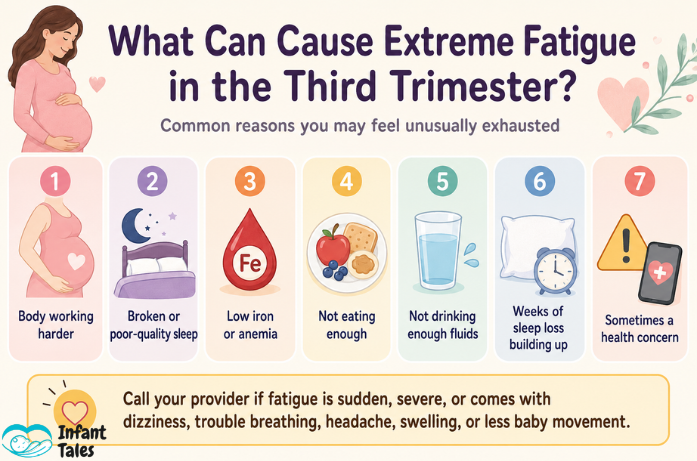
What Can Cause Extreme Fatigue in the Third Trimester?
Extreme fatigue in late pregnancy often happens because several physical and lifestyle changes are affecting your energy at the same time. Sometimes the cause is simple, such as broken sleep or not eating enough, while other times low iron or another health concern may be involved.
1. Your Body Is Working Much Harder
By the third trimester, your body is supporting a much bigger baby while carrying extra pregnancy weight and increased blood volume. Even simple activities like walking, standing, climbing stairs, or getting dressed can use more energy than before.
This extra physical demand can leave you feeling completely drained by the middle or end of the day.
2. Poor-Quality Sleep Can Leave You Exhausted
You may spend eight hours in bed and still wake up feeling exhausted. Bathroom trips, heartburn, back pain, leg cramps, baby movements, and difficulty getting comfortable can repeatedly interrupt your sleep.
When this happens night after night, the lack of deep, restful sleep can become a major reason for extreme fatigue third trimester.
3. Low Iron or Anemia Could Be Making Fatigue Worse
Not every exhausted pregnant mom has low iron anemia, but it is an important possibility to know about.
Pregnancy increases the body’s need for iron because iron helps make the additional blood needed during pregnancy. ACOG notes that pregnant women generally need about 27 mg of iron per day, and blood testing during pregnancy can help identify anemia.
Fatigue from low iron may sometimes appear alongside symptoms such as:
- unusual weakness
- dizziness
- headaches
- feeling unusually breathless
- a racing heartbeat
- looking paler than usual
Because normal pregnancy symptoms can overlap with anemia symptoms, you cannot tell just by how tired you feel.
If your exhaustion feels stronger than expected, ask your provider whether your blood results or iron levels need reviewing.
And do not automatically start taking extra high-dose iron just because you feel tired. Your prenatal vitamin may already contain iron, and additional supplements are best discussed with your healthcare professional.
4. Not Eating Enough Can Drain Your Energy
As your baby grows, large meals may become uncomfortable and heartburn can reduce your appetite. This sometimes means going several hours without giving your body enough fuel.
Try smaller meals and snacks throughout the day, such as yogurt and fruit, eggs with toast, nut butter with fruit, cheese and crackers, or hummus with vegetables.
Regular meals can help prevent your energy from crashing during the day.
5. Not Drinking Enough Fluids Can Make Fatigue Worse
It can be tempting to drink less because of frequent bathroom trips, but not getting enough fluids may leave you feeling weak, sluggish, or lightheaded.
Keep water nearby and sip regularly throughout the day. Small, frequent drinks may feel easier than trying to drink a lot at once.
6. Weeks of Broken Sleep Can Build Up
Sometimes extreme fatigue is not caused by one bad night. It is the result of several weeks of interrupted sleep.
If you have been waking repeatedly every night, your body may simply be running on accumulated sleep loss. Short daytime rests, an earlier bedtime, supportive pillows, and asking for help with evening tasks may help you protect the sleep you can get.
7. Severe Fatigue Can Sometimes Signal Something Else
Extreme exhaustion should not always be blamed on pregnancy.
If your fatigue suddenly becomes much stronger, does not improve with rest, or comes with symptoms such as fainting, severe dizziness, trouble breathing, chest pain, severe headache, vision changes, unusual swelling, or reduced baby movement, contact your healthcare provider or maternity team.
Why Am I Still Exhausted After Sleeping All Night?
This deserves its own section because so many moms worry about it.
You may sleep from 10 p.m. until 7 a.m. and still wake up feeling as though you barely slept.
The reason may be sleep quality rather than sleep quantity.
Imagine waking six times during those nine hours:
12:30 — bathroom
1:45 — hip pain
3:00 — heartburn
4:10 — bathroom again
5:00 — baby moving
6:15 — cannot get comfortable
Technically, you spent nine hours in bed. But your body never got one long, peaceful stretch of sleep.
So instead of asking only, “How many hours did I sleep?”, ask:
“How often was my sleep interrupted?”
That small question may explain a lot.
How Third-Trimester Fatigue May Change by Week
Every pregnancy is different, so this is not a medical timetable. Still, fatigue often feels a little different as the weeks pass.
Weeks 28–32:
You may have felt better during the second trimester, only to suddenly notice your energy dropping again.
Your belly is growing, sleep is becoming less comfortable, and everyday movement may require more effort.
This is a good time to start slowing down before exhaustion forces you to.
Weeks 33–36: Sleep May Become the Biggest Problem
Backache, pelvic pressure, heartburn, bathroom trips, leg discomfort, and difficulty turning over can make nights frustrating.
Try not to pack every task into one “good energy” day.
If you have appointments in the morning, maybe keep the afternoon quiet. If you go shopping, avoid planning three more errands afterward.
Think about your energy like money: spend it on what matters most.
Weeks 37–40: Protect Your Energy
By the final weeks, you may feel physically heavy and emotionally ready to meet your baby.
Some days you may want to clean everything in sight. Other days, getting off the sofa feels ambitious.
Both can happen.
Save some energy for yourself instead of treating every burst of motivation as a reason to complete the entire pre-baby checklist.
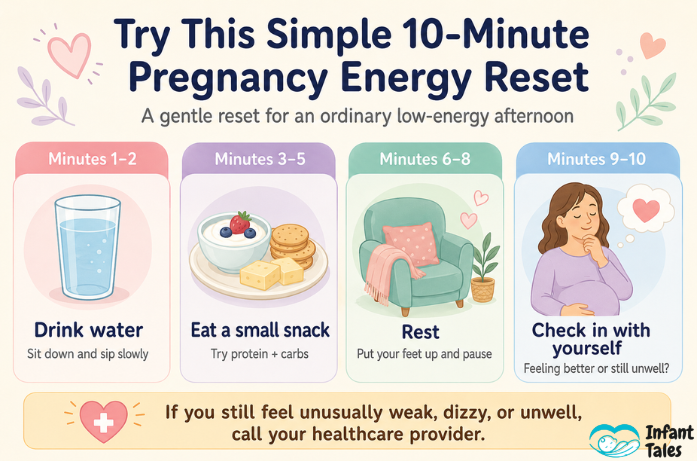
Try This Simple 10-Minute Pregnancy Energy Reset
This is not a treatment for severe fatigue. It is simply something you can try on an ordinary low-energy afternoon.
Minutes 1–2: Drink
Sit down and slowly drink some water.
Minutes 3–5: Eat Something Small
Choose a snack with some protein and carbohydrates, such as yogurt and fruit or crackers with cheese.
Minutes 6–8: Actually Rest
Put your feet up.
Not “rest while answering emails.”
Not “rest while ordering baby supplies.”
Just stop for a couple of minutes.
Minutes 9–10: Check In With Yourself
Ask:
Do I feel a little better, or do I still feel unusually weak or unwell?
If you feel refreshed enough, continue your day gently.
If something still feels very wrong, contact your healthcare provider instead of trying to push through it.
Does Extreme Fatigue Mean Labor Is Near?
Feeling extra tired at 38, 39, or 40 weeks does not always mean labor is starting. Some moms feel exhausted before labor, while others get a sudden burst of energy.
Fatigue alone is not a reliable sign of labor. More common signs include regular contractions that get stronger and closer together, your waters breaking, or changes in vaginal discharge.
So if you suddenly feel very tired, it may simply be your body asking for more rest. If you notice regular contractions, leaking fluid, bleeding, or less baby movement, contact your maternity team.
When Should You Worry About Extreme Fatigue in the Third Trimester?
Most pregnancy fatigue is uncomfortable rather than dangerous.
But sudden overwhelming tiredness should not automatically be dismissed as normal pregnancy exhaustion.
The CDC’s urgent maternal warning signs include overwhelming tiredness, particularly when you suddenly feel very weak, cannot manage your normal day, or do not feel refreshed despite sleeping.
Seek prompt medical advice if severe fatigue happens with symptoms such as:
- trouble breathing
- chest pain or a very fast heartbeat
- fainting or ongoing severe dizziness
- a severe or worsening headache
- sudden vision changes
- fever of 100.4°F (38°C) or higher
- severe abdominal pain
- significant vaginal bleeding or fluid leaking
- your baby’s movement becoming noticeably slower or stopping
If your baby’s normal movement pattern changes, do not wait until the next day to mention it.
Watch for Signs of Pre-Eclampsia Too
Extreme tiredness by itself does not mean you have pre-eclampsia.
However, severe headache, blurred vision or flashing lights, pain below the ribs, sudden swelling of the face, hands or feet, vomiting, or feeling very unwell can be warning symptoms that need prompt assessment.
The NHS pre-eclampsia guidance advises getting these symptoms checked immediately.
When in doubt, call.
Pregnancy is not a time when you need to prove that you can “tough it out.”
Frequently Asked Questions
A Gentle Final Thought for the Tired Mom
These final weeks of pregnancy can feel exhausting, so give yourself permission to slow down. Drink your water, eat when you need energy, rest when your body asks for it, and let a few things on your to-do list wait. Most extreme fatigue third trimester has a simple explanation, especially when your growing belly and broken sleep are taking more out of you each day.
Still, pay attention to how you feel. If your exhaustion suddenly becomes severe, feels very different from your usual pregnancy tiredness, or comes with other worrying symptoms, contact your doctor or maternity team. For now, take these last weeks one day at a time and be gentle with yourself you and your baby deserve that care.
For more simple, mom-friendly pregnancy tips and helpful guides, explore more articles on Infant Tales and feel supported through every stage of your pregnancy journey.
Medical Disclaimer
This article is for general informational purposes only and is not a substitute for professional medical advice, diagnosis, or treatment. Always contact your doctor, midwife, or healthcare provider if you have concerns about severe fatigue or any unusual pregnancy symptoms.