Written by a caring mom at Infant Tales
Introducing solids is an exciting milestone, but it can also leave parents wondering which foods are safest, healthiest, and easiest for a baby to digest. A homemade vegetable puree for baby is one of the best ways to begin because it is soft, nutritious, simple to prepare, and easy to adjust as your little one grows.
When I started making purees for my baby, I loved knowing exactly what was in every spoonful. Fresh vegetables provide important vitamins, minerals, fiber, and natural flavors without added salt, sugar, or preservatives. In this guide, you’ll discover the best vegetables for babies, easy vegetable puree recipes, age-appropriate textures, feeding tips, and simple storage ideas to help you make healthy first meals with confidence.
Why Choose Vegetable Puree for Baby?
Vegetables are packed with vitamins, minerals, fiber, and antioxidants that support your baby’s healthy growth and development. Introducing a variety of vegetables early also helps babies become familiar with different tastes and textures.
Homemade vegetable baby puree gives you complete control over the ingredients. You know exactly what goes into each spoonful, and there are no unnecessary preservatives, added salt, or sugar.
As a mom, I also loved how affordable homemade purees were. A few fresh vegetables could provide several meals, making it a healthy and budget-friendly choice.
When Can Babies Start Vegetable Puree?
The Centers for Disease Control and Prevention (CDC) also recommends introducing solid foods around 6 months of age, when babies show signs of developmental readiness, while continuing breast milk or infant formula as their main source of nutrition. Before introducing vegetable puree for baby, watch for signs that your little one is ready.
These signs include:
- Sitting with little support
- Good head and neck control
- Showing interest in food
- Opening their mouth when offered a spoon
- Losing the tongue-thrust reflex
If you are unsure, always speak with your baby’s pediatrician before starting solids.
Best Vegetables for Baby’s First Purees
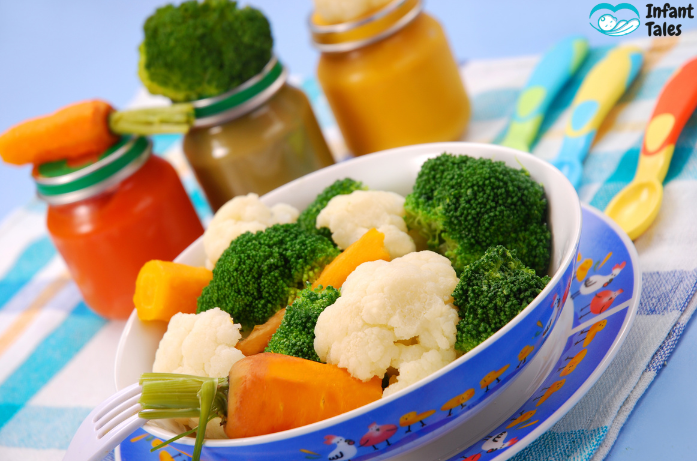
Some vegetables are naturally mild, soft, and easy to digest, making them perfect first foods.
1. Carrot Puree
Carrots are naturally sweet and rich in vitamin A, which supports healthy vision and immunity.
Steam carrots until soft before blending into a smooth puree.
2. Sweet Potato Puree
Sweet potatoes are creamy, filling, and packed with beta-carotene, fiber, and vitamin C.
Their naturally sweet flavor makes them a favorite for many babies.
3. Pumpkin Puree
Pumpkin has a soft texture and gentle flavor that works well for beginners.
It also contains vitamin A and antioxidants that support healthy growth.
4. Pea Puree
Peas provide plant protein, fiber, iron, and vitamin C.
Blend cooked peas thoroughly and strain if needed for a smoother texture.
5. Broccoli Puree
Broccoli puree introduces babies to slightly stronger flavors while providing vitamin C, calcium, and fiber.
Steam until tender before blending.
6. Cauliflower Puree
Cauliflower creates a naturally creamy puree and contains vitamin C and folate.
Its mild taste pairs well with carrots or potatoes.
7. Zucchini Puree
Zucchini puree has a gentle flavor and high water content, making it easy for babies to digest.
Simply steam and blend until smooth.
8. Spinach Puree
Spinach is packed with iron, folate, vitamin K, and antioxidants. Because it has a stronger flavor, it’s often best mixed with sweet potato, pumpkin, or peas after your baby has tried a few single-ingredient purees.
9. Root Vegetable Puree
A colorful root vegetable puree made with carrots, sweet potatoes, parsnips, or beets offers a wonderful combination of vitamins, minerals, and natural sweetness.
These vegetables blend beautifully together and create a smooth texture that’s ideal for babies learning to eat solids.
10. Mixed Vegetable Puree
Once your baby has safely enjoyed several individual vegetables, you can combine favorites like carrots, peas, broccoli, pumpkin, zucchini, and sweet potatoes to create colorful, nutritious vegetable puree recipes that introduce new flavors and textures.
How to Make Vegetable Puree for Baby
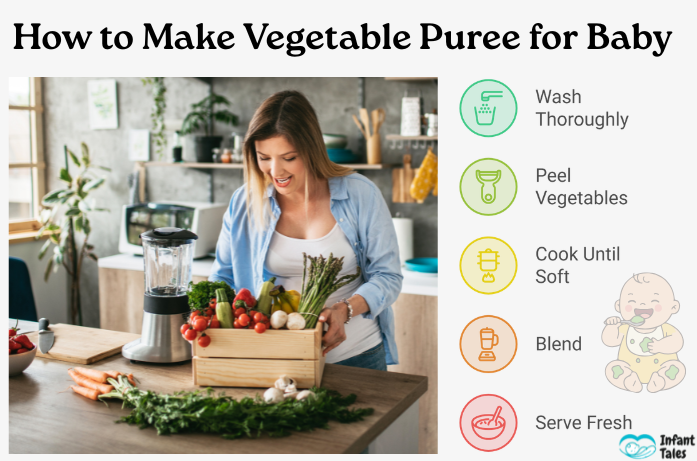
Making homemade puree is much easier than many parents expect.
Step 1: Wash Thoroughly
Clean vegetables carefully under running water.
Step 2: Peel if Needed
Remove tough skins from vegetables like carrots, sweet potatoes, and beets.
Step 3: Cook Until Soft
Steaming is often the best method because it helps preserve nutrients.
Boiling also works well, especially for harder vegetables.
Step 4: Blend
Place cooked vegetables into a blender or food processor.
Add small amounts of cooking water, breast milk, or formula until you reach a smooth consistency.
Step 5: Serve Fresh
Allow the puree to cool before offering small spoonfuls to your baby.
Easy Vegetable Puree Recipes
Here are a few simple vegetable puree recipes that worked wonderfully for my baby.
Carrot and Sweet Potato Puree
Ingredients
- 1 carrot
- 1 small sweet potato
Steam until soft.
Blend with a little water until creamy.
Broccoli and Pea Puree
Ingredients
- 1 cup broccoli florets
- ½ cup peas
Steam both vegetables until tender.
Blend until smooth.
Pumpkin and Carrot Puree
Ingredients
- Pumpkin cubes
- Carrot slices
Cook until soft and blend together.
This combination creates a naturally sweet, creamy puree.
Creamy Root Vegetable Puree
Ingredients
- Sweet potato
- Carrot
- Parsnip
Steam until soft.
Blend into a silky smooth puree using cooking water if needed.
This is one of my favorite recipes with vegetable puree because it offers a variety of nutrients in one meal.
How Much Vegetable Puree Should Baby Eat?
Every baby has a different appetite.
When starting solids, one or two teaspoons may be enough.
Gradually increase the amount as your baby becomes more comfortable eating.
Remember, breast milk or formula remains your baby’s primary source of nutrition during the first year.
Avoid forcing your baby to finish a serving. Let their hunger and fullness cues guide the meal.
Can You Mix Vegetables Together?
Absolutely.
Once your baby has tolerated individual vegetables without any signs of allergies, you can begin combining them.
Some favorite combinations include:
- Carrot + sweet potato
- Broccoli + peas
- Pumpkin + cauliflower
- Zucchini + peas
- Carrot + pumpkin
Mixing vegetables introduces babies to new flavors while creating balanced meals.
How to Store Homemade Baby Vegetable Puree
Homemade puree stores surprisingly well.
Refrigerator
Keep fresh puree in an airtight container for up to 48 hours.
Freezer
Freeze puree in small portions using ice cube trays.
Once frozen, transfer cubes into freezer-safe bags.
Most homemade baby vegetable puree keeps well for about three months.
Always label containers with the preparation date.
Foods to Avoid Adding
Homemade puree should stay simple.
Avoid adding:
- Salt
- Sugar
- Honey (before 12 months)
- Artificial seasonings
- Spicy sauces
Babies enjoy the natural taste of vegetables, and simple flavors help them develop healthy eating habits.
Common Mistakes Parents Make
When I first started making purees, I learned a few lessons along the way.
Some common mistakes include:
- Introducing too many new vegetables at once
- Making the puree too thick
- Overfeeding
- Using canned vegetables with added salt
- Forgetting to cool the puree before serving
Keeping things simple often makes mealtime much easier for both baby and parent.
Tips to Help Babies Enjoy Vegetable Puree
Research published in PubMed Central (PMC) suggests that repeated exposure to vegetables can gradually improve a child’s acceptance of new foods. Offering the same vegetable several times without pressure can help babies become more familiar with its taste over time.
Here are a few gentle tips that helped my little one:
Offer vegetables repeatedly
Babies sometimes need 10–15 exposures before accepting a new food.
Eat together
Seeing parents enjoy vegetables encourages babies to copy healthy habits.
Stay relaxed
If your baby refuses today, simply try again another day.
Follow your baby’s pace
Some babies enjoy large spoonfuls, while others prefer tiny tastes.
Building positive mealtime experiences is more important than finishing every bite.
Frequently Asked Questions
A Gentle Reminder for Parents
Starting solids is an exciting milestone, but it can also feel overwhelming. Some days your baby may happily finish every spoonful, while other days they may barely take a bite. That’s completely normal.
I’ve learned that introducing new foods isn’t about creating perfect meals it’s about helping our little ones explore flavors, textures, and healthy eating habits at their own pace. With patience, love, and gentle encouragement, those tiny tastes gradually become confident bites.
Conclusion
Making vegetable puree for baby at home is a simple and loving way to introduce fresh flavors, important nutrients, and healthy eating habits from the very beginning. From smooth carrot and pumpkin puree to creamy root vegetable puree and mixed vegetable puree recipes, there are many easy combinations you can prepare as your baby becomes more comfortable with solids.
Start with small amounts, offer one new vegetable at a time, and adjust the texture as your baby grows. Some babies enjoy new foods immediately, while others may need several gentle tries before accepting a different taste. Both reactions are completely normal.
The most important thing is to keep mealtimes calm, safe, and pressure-free. By following your baby’s hunger cues and preparing simple, age-appropriate meals, you are helping them build a positive relationship with food. Every spoonful of homemade baby vegetable puree is not just nourishment it is also a small step toward confident, healthy eating.
Looking for more baby feeding tips and homemade recipes? Explore Infant Tales for trusted guides on starting solids, baby nutrition, and simple meals to support your little one’s healthy growth.
Disclaimer
This article is for educational purposes only and should not replace professional medical advice. Always consult your pediatrician or a qualified healthcare provider before introducing new foods or if you have concerns about your baby’s health or nutrition.