Written by a caring mom at Infant Tales
If you are looking for baby puree recipes to start your little one on solids the best place to begin is with soft foods like sweet potato, avocado, banana, apple, pear and carrot. These foods are good for your baby because they are gentle on tummies. You can make these foods at home. They are perfect for babies who are just learning how to eat.
Your baby will. Become more confident with solids. Then you can move on to baby puree combinations made with fruits, vegetables, oats, lentils and soft proteins like chicken.
Starting baby puree is a deal but it can also be confusing. You might be thinking what baby puree should I try first? How smooth should the baby puree be? What if my baby does not like the baby puree? You are not the one who is thinking about these things.
The good thing is that making baby puree at home is not hard. You just need a few ingredients and some patience. Then you can make baby puree for every stage of your babys growth without making a big mess in your kitchen. You can make baby puree, with things and your baby will be happy and healthy.
When Can Babies Start Purees?
Most babies are ready to begin purees around 6 months, when they show signs of readiness like good head control, sitting with support, and interest in food. The CDC infant and toddler feeding guidance also recommends introducing a variety of healthy foods while continuing breast milk or formula as an important part of your baby’s diet.
A baby may be ready to start solids when they:
- can sit with support and hold their head up well
- show interest in food and watch you eat
- open their mouth when food is offered
- swallow food instead of pushing it right back out with their tongue
If your baby isn’t quite there yet, that’s okay. A little extra time can make the transition much easier.
A Simple Guide to Purees by Stage
Stage 1: Around 6 Months
This is the “first tastes” stage. Start with smooth, single-ingredient purees that are soft, thin, and easy to swallow. Think of the texture as similar to loose yogurt. At first, even a few teaspoons is enough.
Stage 2: Around 7 to 8 Months
Once your baby has tried a few single foods and tolerated them well, you can offer thicker textures and simple two-ingredient combinations. This stage brings more variety and a little more fun to mealtimes.
Stage 3: Around 8 to 10+ Months
Older babies are usually ready for thicker purees, soft mashes, and heartier blends. This is a great time to introduce lentils, grains, and soft proteins while helping your baby prepare for finger foods.
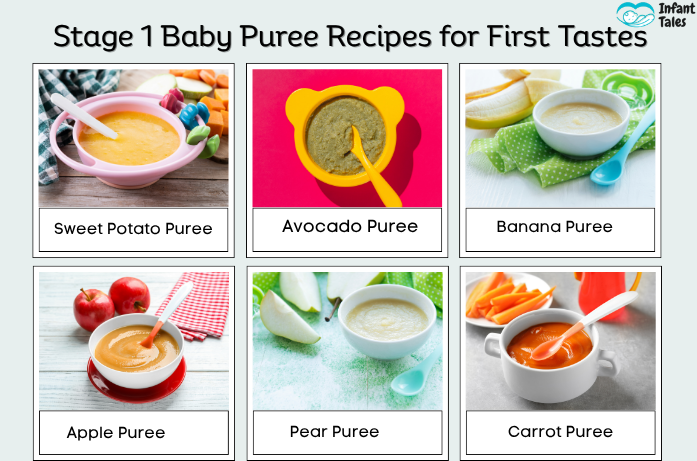
Stage 1 Baby Puree Recipes for First Tastes
1. Sweet Potato Puree
Sweet potato is one of the most popular first foods for babies, and it’s easy to see why. It’s naturally sweet, packed with vitamin A, and blends into a lovely smooth puree.
How to make it: Peel and chop one sweet potato into cubes. Steam or boil until very soft, then blend with a little breast milk, formula, or water until smooth and thin.
Why it’s a great first food: Sweet potato is gentle, filling, and easy to pair later with apple, pear, or carrot.
2. Avocado Puree
Avocado is one of the easiest first purees because it doesn’t need cooking. It’s creamy, rich in healthy fats, and wonderfully soft for babies who are just beginning solids.
How to make it: Scoop a ripe avocado into a bowl and mash until smooth. Add a little milk or water if you want a thinner texture.
Why it works so well: Avocado is nutrient-dense and satisfying, which makes it a lovely first healthy baby food for growing babies.
3. Banana Puree
Banana baby food is another easy and baby-friendly first food. It’s naturally soft, sweet, and can be made in minutes, which is perfect on those busy days when you need something simple.
How to make it: Peel a ripe banana and mash it well with a fork until smooth. For a thinner consistency, add a little breast milk, formula, or warm water.
Why babies do well with it: Banana is easy to digest, naturally filling, and works beautifully later with oats, pear, avocado, or yogurt.
4. Apple Puree
Apple puree is a classic choice for early solids. It has a naturally sweet flavor and a soft texture once cooked, making it easy for babies to accept.
How to make it: Peel, core, and chop two apples. Steam or simmer until soft, then blend until smooth. Add a little water if needed.
Why parents keep coming back to it: Apples are easy to find, easy to cook, and mix well with so many other foods later on.
5. Pear Puree
Pear is a gentle fruit for babies who are just getting used to solids. It’s mild, naturally sweet, and often a nice option for little ones with sensitive tummies.
How to make it: Peel and chop ripe pears, steam until soft, then blend until smooth.
Why it’s a lovely starter puree: Pear has a soft flavor, smooth texture, and combines beautifully with banana, oatmeal, or pumpkin later.
6. Carrot Puree
Carrot is a wonderful vegetable to introduce early because it has a natural sweetness that many babies enjoy. It also makes a bright, silky puree when cooked until soft.
How to make it: Peel and chop carrots, steam the carrot until very soft, then blend with water or milk until smooth.
Why it’s worth trying: Carrots are rich in beta-carotene and can help babies get used to vegetables from the very beginning.
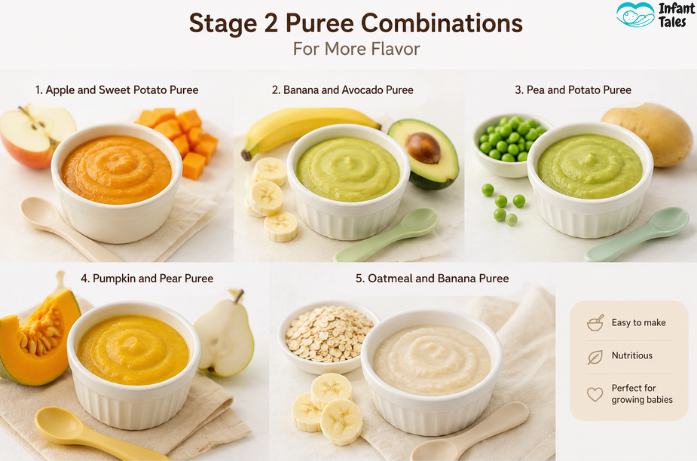
Stage 2 Puree Combinations for More Flavor
Once your baby has done well with single-ingredient foods, you can start combining flavors. These simple blends are still gentle, but they add variety and make meals feel a little more complete.
1. Apple and Sweet Potato Puree
This is one of those comforting combinations that works beautifully because both ingredients are naturally sweet and soft.
How to make it: Steam one peeled apple and one small sweet potato until soft, then blend together until smooth.
Why it’s a good combination: The apple lightens the flavor while the sweet potato makes it creamy and filling.
2. Banana and Avocado Puree
This quick puree doesn’t require any cooking and is perfect when you want something fast, nourishing, and creamy.
How to make it: Mash half a ripe banana with half a ripe avocado until smooth. Thin if needed.
Why it’s a favorite: Banana adds sweetness while avocado brings richness and healthy fat, making it especially satisfying.
3. Pea and Potato Puree
For babies who are ready to move beyond sweeter fruit blends, pea and potato is a lovely savory option. It’s mild, creamy, and easy to adjust in texture.
How to make it: Steam one potato and half a cup of peas until soft, then blend with warm water until smooth.
Why it’s helpful: Peas add fiber and a little plant protein, while potato keeps everything soft and comforting.
4. Pumpkin and Pear Puree
Pumpkin and pear make a cozy, naturally sweet combination that’s smooth and easy to spoon-feed.
How to make it: Steam peeled pumpkin and chopped pear until soft, then blend until smooth.
Why babies enjoy it: Pumpkin gives the puree richness, while pear softens the flavor and adds gentle sweetness.
5. Oatmeal and Banana Puree
When your baby is ready for something a little more filling, oatmeal and banana makes a lovely breakfast puree. It’s warm, soft, and easy on the tummy.
How to make it: Cook baby oats or finely ground oats until very soft, then mash in half a banana and stir until smooth.
Why it’s a helpful option: Oats can add iron and texture, while banana keeps the flavor familiar and baby-friendly.
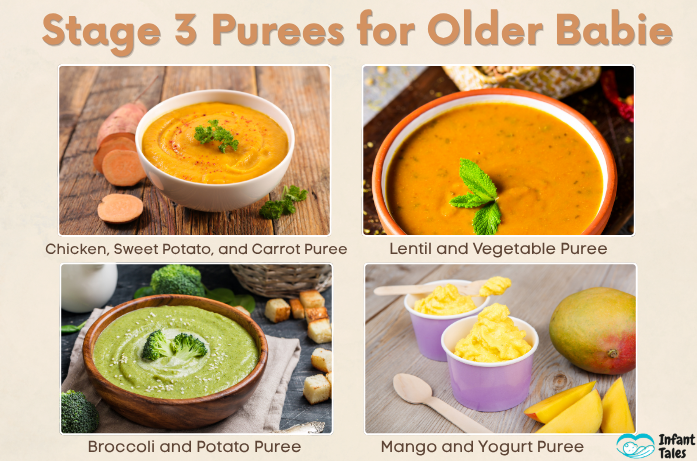
Stage 3 Purees for Older Babies
As babies get older, their purees can become thicker, heartier, and more meal-like. This is the stage where you can begin adding lentils, vegetables, and soft proteins.
1. Chicken, Sweet Potato, and Carrot Puree
This puree is a nourishing choice for older babies who are ready for more than fruits and vegetables. It offers protein, iron, and a naturally soft texture when blended well.
How to make it: Cook chicken until tender. Steam sweet potato and carrot until soft, then blend everything together with warm water or homemade low-sodium broth.
Why it’s useful: As babies grow, iron-rich foods become more important, and chicken can be a gentle way to introduce protein.
2. Lentil and Vegetable Puree
Lentils are one of my favorite ingredients for older babies because they’re affordable, filling, and packed with iron and fiber.
How to make it: Cook red lentils until soft. Steam carrots or zucchini, then blend with the lentils until creamy.
Why it’s a smart next step: Lentils make purees more satisfying and help babies get used to savory, meal-like flavors.
3. Broccoli and Potato Puree
If you want to introduce stronger vegetable flavors while still keeping the texture soft, broccoli and potato is a nice next step.
How to make it: Steam broccoli and potato until soft, then blend together. If your baby already tolerates dairy, you can stir in a spoonful of plain full-fat yogurt.
Why it’s a good addition: Broccoli adds fiber and vitamin C, while potato makes the puree mild and creamy.
4. Mango and Yogurt Puree
Mango and yogurt is a refreshing puree for babies who are already doing well with fruit and dairy. It feels almost like a treat, while still being wholesome.
How to make it: Blend ripe mango with plain full-fat yogurt until smooth.
Why it’s lovely for older babies: Mango adds sweetness and vitamin C, while yogurt makes the texture creamy and satisfying.
Helpful Tips for Making Purees at Home
Start with one ingredient at a time
Single-ingredient purees make it easier to notice if something doesn’t agree with your baby. Once a food has been tolerated well, you can begin combining it with others.
Keep portions small
In the early days, one or two teaspoons may be enough. Your baby is still learning how to taste, swallow, and explore.
Let texture change slowly
Very smooth purees work best at first, but as your baby becomes more confident, you can gradually make foods thicker and lumpier.
Don’t worry if a food is refused
Babies often need to see and taste a food several times before accepting it. A scrunched-up face doesn’t always mean they dislike it forever.
Skip salt and sugar
Babies don’t need added salt or sugar in their food. Simple, natural flavors are more than enough.
The UNICEF guide to feeding babies 6–12 months is also a helpful resource for understanding how milk, solids, and self-feeding gradually come together during this stage.
How to Store Homemade Purees Safely
Homemade purees are easier when you make a little extra, but safe storage matters.
- Store fresh puree in the fridge for up to 24 to 48 hours.
- Freeze extra portions in small airtight containers or ice cube trays.
- Label each puree with the name and date.
- Reheat gently and stir well before serving.
- Throw away leftovers from your baby’s bowl rather than saving them.
If a puree smells off, looks unusual, or has been left out too long, it’s safest not to serve it.
When to Move Beyond Purees
Your baby may be ready for thicker mashes and soft finger foods when they swallow purees comfortably, show interest in grabbing food, and seem frustrated by very smooth textures. Many babies do well with both purees and soft solids for a while, so there’s no need to rush the process.
A Gentle Reminder for Moms Starting Solids
If feeding your baby feels messy, slow, or uncertain some days, you’re not doing anything wrong. Starting solids is a learning process for both of you. Some babies open wide for every spoonful, while others need time, patience, and lots of repeated tries.
The goal isn’t to make perfect meals or to have your baby finish every bowl. The goal is simply to offer safe, nourishing food and let your little one learn at their own pace. A lovingly mashed banana or a spoonful of sweet potato is already a beautiful start.
Final Thoughts
These baby puree recipes are meant to make the first months of solids feel simpler, calmer, and a little more joyful. You don’t need fancy gadgets or complicated ingredients to feed your baby well. A soft pear, a mashed avocado, a steamed sweet potato, or a bowl of oatmeal and banana can go a long way.
As your baby grows, those first simple purees can slowly turn into heartier blends with vegetables, grains, lentils, and soft proteins. Start gently, follow your baby’s cues, and remember that feeding is something both of you will learn together, one spoonful at a time.
FAQs
1. When can babies start purees?
Most babies are ready for purees around 6 months, once they show signs of readiness like good head control and interest in food.
2. What are the best first purees for babies?
Sweet potato, avocado, banana, pear, apple, and carrot are all gentle first options.
3. How long do homemade purees last?
Homemade purees usually last 24 to 48 hours in the fridge and 1 to 3 months in the freezer.
4. Can I mix fruits and vegetables together?
Yes, once your baby has tolerated individual foods well, you can begin simple combinations like apple and sweet potato or banana and avocado.
5. Do I need a baby food maker?
No. A blender, food processor, immersion blender, or even a fork for soft foods like banana and avocado works just fine.
Disclaimer: This article is for general educational purposes only and is not a substitute for medical advice. Always check with your pediatrician before starting solids or introducing new foods, especially if your baby was born early, has allergies, reflux, or feeding concerns.
Looking for more gentle baby feeding tips, first food ideas, and mom-friendly guidance? Explore more helpful baby care articles on Infant Tales to make every stage of your little one’s journey feel a little easier.