Written by a caring mom at Infant Tales
Pregnancy restless leg syndrome relief often starts with gentle movement, stretching, leg massage, a warm bath, less evening caffeine, and a regular sleep routine. Low iron may also contribute to restless legs, so your doctor may recommend a blood test. Do not begin iron, magnesium, sleeping medicine, or herbal remedies without first speaking to your pregnancy healthcare provider.
You are finally comfortable in bed when your legs begin to tingle, pull, twitch, or feel strangely restless. Staying still becomes difficult, and moving your feet or walking around seems to be the only thing that helps.
This can feel exhausting when pregnancy has already made sleep difficult. The reassuring news is that restless leg syndrome is common during pregnancy, and simple, safe changes may make your nights more comfortable.
What Is Restless Leg Syndrome in Pregnancy?
Restless leg syndrome, also called RLS, is a condition that creates an uncomfortable urge to move the legs. Symptoms usually begin when you are resting, sitting for a long time, or lying in bed.
Moving, stretching, rubbing your legs, or walking may provide temporary relief. However, the sensation can return when you stop moving.
Common signs include:
- A strong urge to move the legs
- Crawling, tingling, pulling, or buzzing sensations
- Discomfort that begins during rest
- Temporary relief after movement
- Symptoms that become worse in the evening
- Trouble falling asleep or staying asleep
Some women describe it as ants crawling beneath the skin. Others feel a deep ache or nervous energy inside their legs.
The feeling may be difficult to explain, but it is real. You are not imagining it, and you are not failing to relax.
Is It Restless Legs or a Leg Cramp?
Restless legs and pregnancy leg cramps can both interrupt sleep, but they usually feel different. A leg cramp causes a muscle, often in the calf, to tighten suddenly and painfully. The muscle may feel hard or knotted.
RLS usually causes an uncomfortable sensation and an urge to move. Walking or stretching may help for a short time, but there may not be a painful muscle knot. Some pregnant women experience both, so notice how the symptoms begin and what makes them better.
A leg cramp causes a muscle, often in the calf, to tighten suddenly and painfully. The muscle may feel hard or knotted. You can learn more about the causes and safe relief options in our guide to leg cramps during pregnancy.
Why Does Restless Leg Syndrome Happen During Pregnancy?
There is not always one clear cause. Pregnancy hormones, increased iron needs, family history, certain medicines, and nervous system changes may all contribute.
1. Low Iron Levels
Your body needs more iron during pregnancy because your blood volume increases and your baby also needs iron for development.
Low iron stores may trigger or worsen restless legs, even before severe anaemia develops. Your doctor may check your haemoglobin or ferritin levels if symptoms are frequent.
Never take high-dose iron without professional advice. Too much iron may cause nausea, constipation, stomach pain, or other problems.
2. Hormonal Changes
Pregnancy hormones affect sleep, movement, circulation, and the nervous system. These changes may explain why some women experience RLS for the first time during pregnancy.
Symptoms often become stronger later in pregnancy, although they can begin at any stage.
3. Family History
Restless leg syndrome can run in families. You may be more likely to develop it if your mother, sister, or another close relative experiences similar nighttime symptoms.
Pregnancy may make a previously mild tendency easier to notice.
4. Certain Medicines
Some antihistamines, antidepressants, nausea medicines, and other products may worsen restless legs in some people.
Do not stop prescribed medicine on your own. Ask your doctor or pharmacist to review your medicines, vitamins, supplements, and over-the-counter products.
Restless Leg Syndrome in Pregnancy First Trimester
Restless leg syndrome in pregnancy first trimester is possible, although symptoms are often more common later in pregnancy. Early pregnancy brings hormonal changes, nausea, tiredness, food aversions, and disturbed sleep. These changes can affect your eating habits and make it harder to get enough iron-rich foods.
Early symptoms do not usually mean something is wrong with your baby. However, speak to your doctor or midwife if restless legs are happening several nights each week.
Keeping a short symptom diary may help. Write down when symptoms begin, how long they last, what you ate, which medicines you took, and whether movement helped.
Early pregnancy can bring several discomforts at the same time. Along with restless legs, some moms may also experience lower back pain in early pregnancy as hormones and posture begin to change.
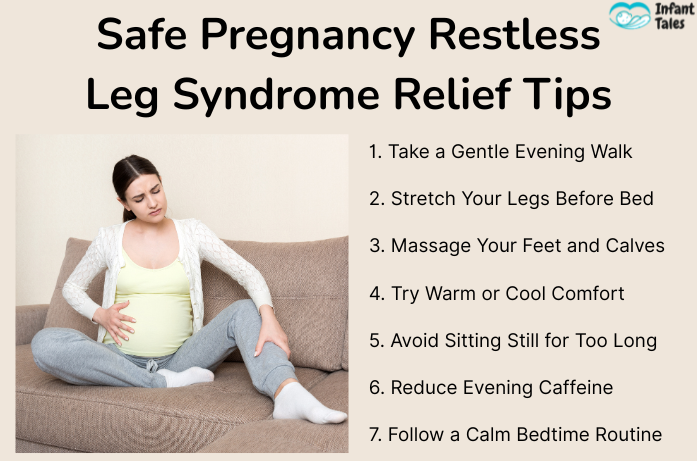
Safe Pregnancy Restless Leg Syndrome Relief Tips
Restless leg relief often comes from combining a few gentle habits rather than finding one instant cure.
1. Take a Gentle Evening Walk
A short walk after dinner may reduce restlessness before bedtime.
You do not need a long workout. Ten minutes of slow movement around your home or outside may be enough.
Avoid intense exercise late at night, as it may make you feel more alert. Follow your maternity provider’s advice if you have been told to limit activity.
2. Stretch Your Legs Before Bed
Gentle calf and thigh stretches may help settle your legs.
Stand facing a wall and step one foot behind you. Keep your back heel on the floor and lean forward slowly until you feel a comfortable calf stretch. Hold briefly and change sides.
Do not bounce or force the stretch. Stop if you feel pain, dizziness, contractions, or pelvic pressure.
3. Massage Your Feet and Calves
A soft massage may help your muscles relax and distract your nervous system from the restless feeling.
Use slow strokes with your hands or ask your partner to help. A plain pregnancy-safe moisturiser may make the massage more comfortable.
Avoid deep pressure, especially if it feels painful.
Do not massage a leg that is suddenly swollen, red, warm, or tender. These symptoms need medical attention.
4. Try Warm or Cool Comfort
Some women prefer warmth, while others find cool temperatures more soothing.
You could try:
- A comfortably warm bath
- A lukewarm shower
- A warm towel around your calves
- A cool pack wrapped in cloth
- A cool damp towel
Avoid very hot baths, extreme temperatures, and falling asleep with a heating pad.
5. Avoid Sitting Still for Too Long
Long car journeys, flights, desk work, and television time may trigger symptoms.
Stand and move regularly when possible. While seated, circle your ankles, flex your feet, lift your heels, or straighten each leg slowly. Moving before the sensations become strong may work better than waiting until bedtime.
Long periods of sitting may also make heaviness and swelling feel worse. If your feet or ankles are becoming puffy, our guide to swollen feet during pregnancy explains common causes, simple relief tips, and when to call your doctor.
6. Reduce Evening Caffeine
Caffeine may disturb sleep and increase restlessness in some people.
Coffee, tea, cola, energy drinks, chocolate, and certain medicines can contain caffeine. Try having caffeinated drinks earlier in the day.
Continue following the caffeine limit recommended by your maternity provider.
7. Follow a Calm Bedtime Routine
A predictable bedtime routine may help your body and mind settle.
Dim the lights, reduce screen use, and choose a quiet activity such as reading, slow breathing, gentle stretching, or listening to calm music.
Keep your bedroom cool, dark, and comfortable. Going to bed and waking at similar times may also support better sleep.
Home Remedies for Restless Leg Syndrome During Pregnancy
Home remedies for restless leg syndrome during pregnancy should be gentle and easy to repeat.
A simple evening routine may include:
- Eating a balanced dinner
- Taking a short walk
- Stretching for a few minutes
- Having a warm shower
- Massaging your calves and feet
- Lowering the lights
- Keeping your bedroom cool
When symptoms begin after you lie down, do not force yourself to stay still. Sit up, flex your feet, stretch gently, or walk around the room for a minute.
You can also place a pillow between your knees while sleeping on your side. This will not cure RLS, but it may reduce general hip, back, and leg tension.
Can Iron-Rich Foods Help?
Iron-rich foods can support healthy pregnancy nutrition. However, food alone may not correct a serious iron deficiency.
Useful sources include:
- Lean meat and poultry
- Lentils, beans, and chickpeas
- Eggs
- Tofu
- Iron-fortified cereal
- Leafy green vegetables
- Nuts and seeds
Eating plant-based iron with vitamin C may improve absorption. Try adding tomatoes to lentils, berries to fortified cereal, or bell peppers to a bean salad.
If blood tests show low iron, your doctor may recommend a suitable supplement and dosage. The Mayo Clinic advises taking iron supplements only after your iron levels have been checked and under the guidance of a healthcare professional.
What About Magnesium for Pregnancy RLS Relief?
Magnesium is often promoted online as one of the cures for restless leg syndrome in pregnancy, but it is not a proven solution for everyone.
Some women may need magnesium for a specific medical reason, but taking it without advice may not improve RLS. Supplements may also cause diarrhoea, stomach discomfort, or interactions with medicines.
Check with your healthcare provider before using magnesium tablets, powders, sprays, sleep gummies, herbal blends, or other natural remedies.
Natural does not always mean pregnancy-safe.
How to Help Restless Leg Syndrome During Pregnancy at Night
Knowing how to help restless leg syndrome during pregnancy when symptoms suddenly appear can make nighttime episodes easier to manage.
Try this short routine:
- Sit up and breathe slowly.
- Circle your ankles several times.
- Flex and relax your feet.
- Stretch each calf gently.
- Walk around for one or two minutes.
- Massage your legs before lying down again.
The goal is not to force your legs to stay still. A short movement break may help more than lying awake and becoming frustrated.
Keep water, supportive pillows, a wrapped cool pack, and pregnancy-safe moisturiser near your bed so you do not need to search for them during the night.
Treating Restless Leg Syndrome During Pregnancy
Treating restless leg syndrome during pregnancy usually begins with lifestyle changes and checking for possible causes, such as low iron. A review published by the National Center for Biotechnology Information explains that non-medication approaches, including gentle exercise, massage, stretching, and healthy sleep habits, are usually preferred first during pregnancy.
Many medicines normally used for RLS are not routinely recommended during pregnancy. In severe cases, your doctor may consider treatment based on your trimester, iron levels, health history, symptoms, and amount of sleep loss.
Contact your healthcare provider if:
- Symptoms happen most nights
- You regularly lose sleep
- Home remedies are not helping
- Your mood or concentration is affected
- You feel too tired to manage daily tasks safely
- Symptoms began after starting a medicine
- You have weakness, numbness, or continuing pain
Sleep is important for your physical and emotional wellbeing. Asking for help is part of caring for yourself.
When Leg Symptoms Need Urgent Care
Restless legs usually improve temporarily with movement and do not normally cause severe one-sided swelling or redness.
Seek urgent medical care if you notice:
- Sudden swelling in one leg
- One-sided calf pain or tenderness
- Red or unusually warm skin
- Severe or constant pain
- Chest pain
- Sudden shortness of breath
- Coughing up blood
- Fainting or feeling seriously unwell
Do not massage a painful or swollen leg. These symptoms may need urgent assessment for a blood clot or another medical problem.
Does Pregnancy RLS Go Away After Birth?
Pregnancy-related restless leg syndrome often improves after delivery.
Relief may not happen immediately because your hormones, iron stores, sleep patterns, and physical recovery all need time to adjust.
Speak to your doctor if symptoms continue after birth, become worse, or regularly disturb your sleep.
Frequently Asked Questions
1. Is restless leg syndrome harmful to my baby?
RLS itself is not usually harmful to the baby. However, severe symptoms may disturb your sleep, so discuss them with your provider.
2. Why are restless legs worse at night?
RLS usually becomes stronger during rest and in the evening. Sitting for long periods, tiredness, caffeine, and poor sleep may make it feel worse.
3. Can I take iron for restless legs?
Only take additional iron after speaking to your healthcare provider. Blood tests may be needed before the correct dose is recommended.
4. Are restless legs the same as leg cramps?
No. Cramps cause sudden, painful muscle tightening. RLS causes tingling, pulling, crawling sensations, and an urge to move.
5. When should I call my doctor?
Call when symptoms regularly prevent sleep, affect daily life, or occur with numbness, weakness, severe pain, redness, warmth, or one-sided swelling.
Final Thoughts
Pregnancy restless leg syndrome relief may take a little trial and error. Gentle walking, stretching, massage, warm or cool comfort, less evening caffeine, and a calm bedtime routine may all help.
Please do not blame yourself when your legs refuse to settle. Restless legs are a genuine physical condition, not a sign that you are worrying too much.
Speak to your doctor or midwife if symptoms are frequent, severe, or affecting your sleep. With the right support and a few simple habits, your evenings may begin to feel calmer and more comfortable.
Looking for more gentle pregnancy guidance? Explore Infant Tales for practical tips, reassuring advice, and supportive information for every stage of your journey.
Disclaimer: This article is for general information only and is not a substitute for medical advice. Always speak with your doctor or midwife before taking supplements, medicines, or trying new treatments during pregnancy.