Written by a caring mom at Infant Tales
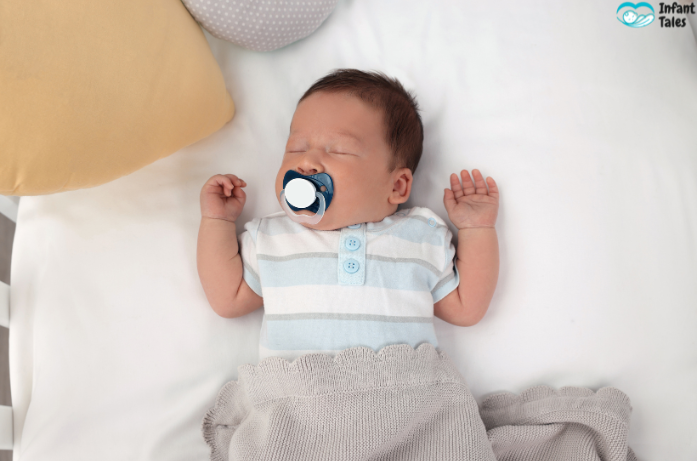
Can a newborn sleep with a pacifier? Yes, most healthy full-term newborns can sleep with a pacifier safely. A clean, age-appropriate pacifier may help your baby feel calm, settle faster, and sleep more peacefully. It may also help reduce the risk of SIDS when offered at nap time and bedtime. If you are breastfeeding, it is usually better to wait until breastfeeding is going well before introducing one. If the pacifier falls out after your baby falls asleep, you do not need to put it back.
The newborn stage is beautiful, but it can also feel confusing. One moment your baby is sleeping peacefully, and the next moment you are wondering if every small choice is safe. Many parents ask whether pacifiers are helpful or harmful, especially during sleep.
As a mom, I understand that feeling. You want comfort for your baby, but you also want to make the safest decision. This guide will explain everything in easy language so you can feel more confident.
Table of Contents
- Can a Newborn Sleep with a Pacifier?
- Why Do Babies Like Pacifiers?
- Benefits of Using a Pacifier at Sleep Time
- Should Newborns Sleep with a Pacifier?
- When Should You Introduce a Pacifier?
- How to Use a Pacifier Safely
- Common Pacifier Mistakes to Avoid
- Are There Any Downsides to Using a Pacifier?
- FAQs
- Final Thoughts
Can a Newborn Sleep with a Pacifier?
Yes, a newborn can usually sleep with a pacifier if they are healthy, full-term, and feeding well. Babies are born with a strong sucking reflex. Sucking helps them feed, but it also helps them relax.
For many newborns, a pacifier feels comforting because it gives them a gentle way to soothe themselves when they are not hungry. My own baby loved a pacifier during evening fussiness but refused it during the day. That reminded me that every baby has their own little personality, and what works for one family may not work for another. Both are normal.
A pacifier should never be forced. If your baby does not want it, that is okay. Your baby can still sleep safely without one.
Why Do Babies Like Pacifiers?
Babies like pacifiers because sucking feels natural to them. Many babies even suck their fingers before birth. After they are born, sucking can help them feel safe in this big new world.
Sometimes a baby is full but still wants to suck for comfort. This is called non-nutritive sucking. It does not mean your baby is still hungry. It simply means sucking helps them calm their body.
A pacifier may be helpful during fussy evenings, before naps, after feeding, during travel, or when your baby needs extra comfort. It is not a magic solution, but it can be a gentle tool.
Benefits of Using a Pacifier at Sleep Time
A pacifier is not necessary for every baby, but it can be helpful for many families.
It May Lower the Risk of SIDS
Health experts often recommend offering a pacifier at nap time and bedtime because it is linked with a lower risk of Sudden Infant Death Syndrome, also called SIDS. A pacifier does not remove all risk, but it can be one part of a safe sleep routine.
Safe sleep still matters most. Always place your baby on their back, use a firm mattress, and keep the crib empty. No pillows, blankets, stuffed toys, or bumpers should be in the sleep space.
It Can Help Your Baby Settle
Newborns can become tired very quickly. Sometimes they cry even after feeding, burping, changing, and cuddling. A pacifier may help them move from fussy to sleepy more easily.
This can be helpful when your baby is overtired and struggling to relax.
It Gives Gentle Comfort
The first weeks outside the womb are a big adjustment. Your baby is learning new sounds, lights, smells, and feelings. A pacifier may give them a small sense of comfort and control.
For some babies, that little sucking motion is enough to help them feel secure.
Should Newborns Sleep with a Pacifier?
Should newborns sleep with a pacifier? They can, but they do not have to. If your baby likes it and feeding is going well, you can offer it during naps and bedtime.
The key word is “offer.” Do not push it into your baby’s mouth. Do not worry if they refuse it. Some babies love pacifiers, and some babies never care for them.
Your baby’s cues matter more than any rule from another parent.
When Should You Introduce a Pacifier?
The right time depends mostly on how your baby is feeding.
For Breastfed Babies
If you are breastfeeding, many experts suggest waiting until breastfeeding is well established. This often means your baby is latching well, gaining weight, feeding comfortably, and your milk supply feels steady.
For many moms, this happens around three to four weeks, but every journey is different. If you are unsure, ask your pediatrician or lactation consultant.
For Bottle-Fed Babies
If your baby is bottle-fed, you may be able to introduce a pacifier earlier. There is usually less concern about latch confusion. Still, make sure your baby is feeding well and gaining weight.
A pacifier should support comfort, not replace a feeding.
Can Newborns Sleep with a Pacifier All Night?
Yes, newborns can sleep with a pacifier at night. But if the pacifier falls out after your baby falls asleep, you do not need to keep replacing it.
Many parents feel they must put it back every time it drops. That can disturb both you and your baby. If your baby is sleeping peacefully, let them sleep.
If your baby wakes and wants it again, you can offer it back.
How to Use a Pacifier Safely
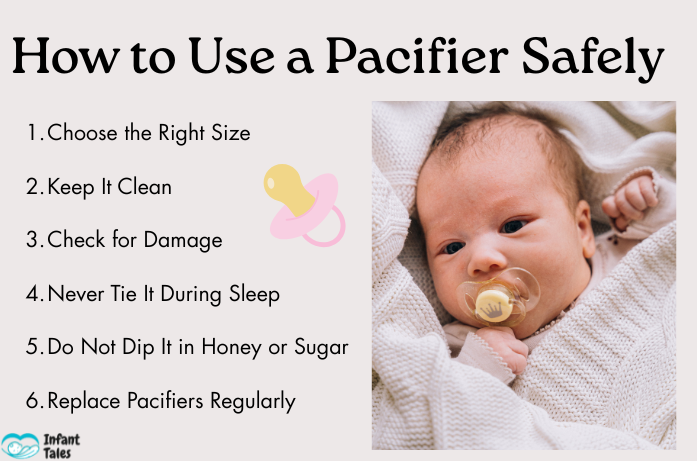
Pacifier safety is simple when you follow a few important rules.
Choose the Right Size
Always use a pacifier made for your baby’s age. A newborn pacifier is smaller and better suited for a tiny mouth.
Check the packaging and choose a one-piece pacifier from a trusted brand when possible.
Keep It Clean
Newborns have developing immune systems, so cleanliness matters. Wash pacifiers often and follow the cleaning instructions on the package.
If a pacifier falls on a dirty floor, clean it before giving it back.
Check for Damage
Look at the pacifier often. If you see cracks, tears, stickiness, or loose parts, throw it away and use a new one.
A damaged pacifier is not safe.
Never Tie It During Sleep
Do not attach a pacifier to your baby’s clothes, crib, blanket, or toy while they sleep. Strings, cords, clips, and ribbons can be dangerous.
At sleep time, the pacifier should be loose and unattached.
Do Not Dip It in Honey or Sugar
Never dip a pacifier in honey, sugar, syrup, or sweet liquids. Honey is not safe for babies under one year, and sweet foods are not good for baby teeth or gums.
A plain, clean pacifier is best.
Replace Pacifiers Regularly
Even if a pacifier looks fine, replace it every few weeks or sooner if you notice wear and tear. A damaged pacifier can become unsafe for your baby.
Common Pacifier Mistakes to Avoid
Parents learn as they go. These small tips can help you avoid common mistakes.
Do not use a pacifier to delay hunger. If your baby is rooting, sucking hands, crying for food, or searching for the breast or bottle, feed your baby first.
Do not force a pacifier if your baby does not want it. Try again later, or simply let it go. Do not depend on a pacifier as the only way to calm your baby. Cuddling, rocking, feeding, burping, singing, and skin-to-skin time are also comforting.
Do not use a pacifier to delay hunger. If your baby is rooting, sucking their hands, crying for milk, or searching for the breast or bottle, offer a feed first. Missing or delaying feeds may increase the risk of newborn dehydration, especially during the early weeks.
Are There Any Downsides to Using a Pacifier?
Pacifiers can be a great source of comfort, but they also have a few possible downsides. If introduced too early, they may affect breastfeeding for some babies. That’s why many experts recommend waiting until breastfeeding is well established before offering a pacifier.
As babies get older, some may wake up when the pacifier falls out and need help falling back asleep. Long-term pacifier use may also increase the risk of dental problems and ear infections. However, these concerns are generally not an issue during the newborn stage when a pacifier is used safely and appropriately.
According to the Mayo Clinic, pacifiers can be a helpful soothing tool when used appropriately, but prolonged use beyond the toddler years may increase the risk of dental problems and ear infections. Gradually weaning your child at the right age can help reduce these risks.
What If My Baby Refuses a Pacifier?
If your baby refuses a pacifier, do not worry. It does not mean anything is wrong.
Some newborns prefer other comfort methods, such as cuddling, rocking, feeding, soft singing, white noise, or skin-to-skin contact.
Your baby does not need a pacifier to be calm, loved, or safe. It is only one soothing option.
When Should You Stop Using a Pacifier?
You do not need to think too much about weaning during the newborn stage. Right now, your focus is feeding, bonding, sleep, and comfort.
Many families slowly reduce pacifier use after the first birthday. Some children stop earlier, and others need more time.
When the time comes, gentle weaning usually works better than suddenly taking it away. You can start by using it only for sleep, then slowly reduce it.
FAQs
1. Can a newborn sleep with a pacifier every night?
2. Should I put the pacifier back if it falls out?
3. Can a pacifier replace feeding?
4. Is a pacifier safe for breastfed babies?
5. What if my baby does not like pacifiers?
Final Thoughts
Choosing whether to use a pacifier is a personal decision, and what works well for one baby may not work for another. For most healthy, full-term newborns, a pacifier can be a safe and comforting part of their sleep routine when used correctly and alongside safe sleep practices.
As you get to know your little one, you’ll discover what helps them feel calm and secure. Trust your instincts, follow your baby’s cues, and don’t hesitate to ask your pediatrician if you have any concerns. Parenting isn’t about being perfect it’s about showing up with love, patience, and care. Those simple things are what help your baby feel safe, comforted, and deeply loved every single day.
If you found this guide helpful, explore more newborn care, baby sleep, breastfeeding, and parenting tips on Infant Tales. We’re here to support you through every step of your parenting journey.
Disclaimer
This article is for informational purposes only and is not a substitute for professional medical advice, diagnosis, or treatment. Always consult your pediatrician or healthcare provider if you have questions or concerns about your baby’s health or sleep.
About the Author
Geeta Yogi is a parenting writer who shares gentle and practical guidance about newborn care, baby sleep, feeding, and early parenting experiences. Her writing focuses on helping new parents feel more confident while making everyday decisions with love and care.