By a caring mom at Infant Tales
The early days are tender, sleep-deprived, emotional, and sometimes utterly enchanting. One moment you are gazing at your baby in sheer wonder, and the next, you are wondering if you will ever get a decent night’s sleep again. It comes as no surprise that so many exhausted parents, while feeding their little ones late at night, find themselves trying to figure out just How Long Does the Newborn Stage Last.
At ‘Infant Tales,’ we understand that the newborn phase is about much more than just adorable baby photos and tiny outfits. It is a monumental life transition one filled with love, care, learning, and growth for both the baby and the parents.
If you are currently navigating this newborn phase, this loving guide will help you understand what is normal and when this stage typically comes to an end.
How Long Does the Newborn Stage Last?
The newborn stage usually lasts from birth until your baby is around 8 weeks old. While doctors medically classify a newborn as a baby under 28 days old, most parents experience the full newborn phase for about two months.
During this stage, your baby is adapting to life outside the womb. Everything is brand new for them sleeping, feeding, breathing, digestion, sounds, lights, and even being held.
For parents, the newborn stage often feels like a blur of:
- Feeding around the clock, diaper changes, contact naps, and sleepless nights often revolve around early feeding routines before milestones like holding a baby bottle independently.
- Diaper changes
- Contact naps
- Sleepless nights
- Emotional highs and lows
The Newborn Stage Timeline: What Changes Week by Week
Understanding the invigorated stage timeline can help parents feel less anxious during those changeable early weeks.
Every baby develops differently, but most newborns follow similar patterns.
Weeks 1–2: The Survival Phase
The first two weeks are each about adaptation.
Your baby is learning how to:
- Feed regularly
- Sleep outside the womb
- Reuse new sounds and sensations
- Feel safe in a completely different environment
At the same time, parents are recovering physically and emotionally.
Numerous mothers feel overwhelmed during this stage, especially while mending after birth and performing on veritably little sleep. Hormonal changes can make feelings feel indeed stronger.
Weeks 3–4: Feeding, Crying, and Constant Cuddles
Many babies become more clingy and baby fussy during this phase, which is completely normal.
Babies may:
- Wake every 2–3 hours
- Feed more constantly
- Cry more during evenings
- Want to be held constantly
- Sleep best on your chest
This is generally the point where parents begin searching when does invigorated stage end because prostration starts erecting up.
The verity is, babe crave closeness because they spent months hearing your twinkle and feeling your warmth. Being near you helps them feel safe.
So if your baby only wants to sleep in your arms right now, you are not “ spoiling ” them.
You’re assuring them exactly the way they need.
Weeks 5–8: The Stage That Brings Hope
Around the second month, babies slowly become more interactive.
You may notice:
- Tiny smiles
- Better eye contact
- Longer awake windows
- Less random sleepiness
- Increased curiosity
These little moments frequently feel magical after weeks of survival mode.
This is also when numerous parents eventually feel emotionally connected rather of simply exhausted.
The invigorated development stages begin shifting from pure sleep- and- feed cycles into further social commerce.
When Does the Newborn Stage End?
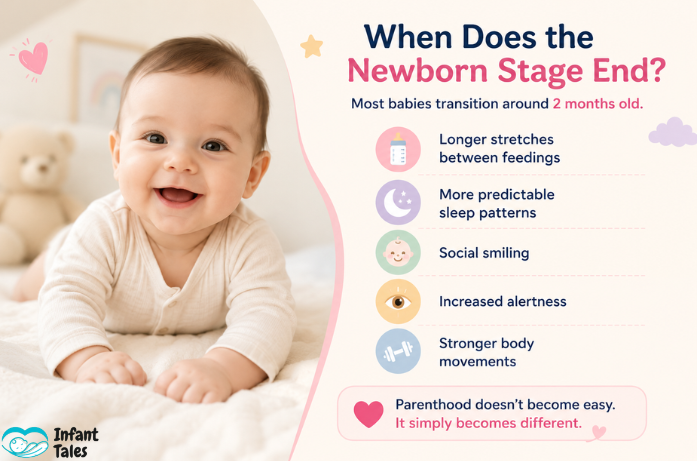
Most babies transition out of the newborn phase around 2 months old. You’ll likely notice:
- Longer stretches between feedings
- More predictable sleep patterns
- Social smiling
- Increased alertness
- Stronger body movements
But here’s something many competitor blogs forget to say:
Indeed after the invigorated stage ends, parenthood does n’t suddenly come “ easy. ” It simply becomes different.
rather of surviving insomniac nights, you begin navigating teething, growth spurts, rolling over, and curious little personalities.
The Emotional Side of the Newborn Phase Explained
numerous papers explain baby mileposts but ignore the emotional reality parents face.
The newborn phase explained honestly means understanding that parents are also going through a huge transformation.
You may feel:
- Deeply in love
- Completely exhausted
- Emotionally sensitive
- Lonely at times
- Unsure of yourself
- Overstimulated
And all of that is normal.
One of the biggest surprises of motherhood is realizing you can feel grateful and overwhelmed at the same time.
At Infant Tales, we believe moms deserve reassurance instead of pressure.
Your baby does not need a perfect mother. They need a loving, present one.
Common Challenges During the Newborn Development Stages
1. Sleep Deprivation Feels Endless
Newborns wake frequently because their stomachs are tiny and they need regular feedings.
Unfortunately, that means parents often survive on broken sleep for weeks.
Helpful ways to cope:
- Sleep when possible instead of focusing on chores
- Share responsibilities with your partner
- Keep nighttime lighting dim
- Accept support from family or friends
You do not need to “do it all.”
2. Feeding Can Be Emotionally Draining
Whether breastfeeding, formula feeding, or both, feeding a newborn takes patience.
Some babies feed easily while others struggle with:
- Latching
- Reflux
- Gas
- Slow weight gain
- Cluster feeding
Please remember:
How you feed your baby does not define your worth as a mother.
A fed baby is what matters most.
3. Crying Can Feel Overwhelming
Sometimes babies cry even when you’ve tried everything.
That does not mean you are failing.
Babies cry because they are adjusting to a huge new world.
Gentle soothing ideas:
- Skin-to-skin contact
- Swaddling
- White noise
- Rocking slowly
- Walking while holding baby
- Soft singing
And sometimes, babies simply need your closeness more than a “solution.”
Simple Ways to Enjoy the Newborn Stage More
The newborn days are exhausting, but small mindset shifts can make them feel softer.
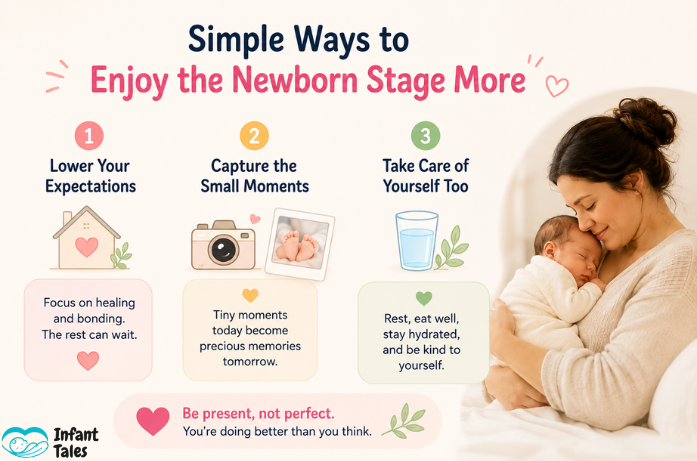
1. Lower Your Expectations
Your home does not need to be spotless right now.
Laundry can wait.
Dishes can wait.
Your healing and bonding matter more.
2. Capture the Small Moments
The newborn phase passes quickly.
Take photos of:
- Tiny fingers
- Milk-drunk naps
- Baby stretches
- Sleeping on your chest
- Their little yawns
One day, these ordinary moments will feel incredibly special.
3. Take Care of Yourself Too
Moms often forget their own needs during the newborn stage.
Try to:
- Drink enough water
- Eat nourishing meals
- Shower regularly
- Step outside for fresh air
- Rest without guilt
A healthy mom matters too.
FAQs
1. How long is the newborn stage for most babies?
For most babies it lasts for 6–8 weeks, but medically the newborn stage is the first 28 days.
2. When does the emotional ‘newborn period’ for parents conclude?
Feeling emotionally more stable, many parents begin to feel this after the second or third month of life, when routines begin to become more predictable.
3. What are the biggest newborn development stages?
Important milestones are feeding, smiling socially, movements, awake windows and alertness.
4. Does the newborn phase make you struggle?
Yes. The birth of a child is a challenging time for most parents both physically and emotionally. Sense of exhaustion or being overwhelmed is extremely common.
5. Why does it seem so long when the baby is born?
Time may seem to move slower due to sleep deprivation, continual feeding, and the transition to parenthood. But many parents find out how fast the time has gone after it has passed.
Final Thoughts
Though the newborn period may only span a couple of weeks, it will be filled with moments that you will never forget, times of emotion and lots of love. There will be days that will be tiring and days that will be particularly special and most of the days will be a mix of both.
We hope all of our parents at Infant Tales remember this, you are doing more than you realise. Your baby does not require perfection, he or she requires your love, comfort and presence. Be gentle and embrace your little one during these special early days!