
Written with care by a mom at Infant Tales
Becoming a parent brings many beautiful moments, but it also comes with important life decisions. One of the biggest choices families face is whether to choose stay at home parenting or continue working outside the home. This decision is not just about finances or routine, it is about your lifestyle, emotional well-being, and what feels right for your child and your family.
If you are thinking about stay at home parenting, it is completely normal to feel confused or unsure. As a mom who understands these feelings, I want to help you explore this choice in a practical, honest, and supportive way so you can make a decision with confidence.
What Is Stay at Home Parenting?
Stay at home parenting means being the primary caregiver for your child while staying at home instead of working full-time outside. It involves managing your child’s daily needs, emotional care, early learning, and home responsibilities.
This role is not limited to basic childcare. It includes teaching life skills, building emotional security, managing routines, and supporting your child’s development during their most important early years.
Some parents stay at home full-time, while others combine it with freelance work, remote jobs, or small businesses. There is flexibility depending on your family’s needs.
Why Families Choose Stay at Home Parenting
Every family has its own reasons, and there is no single correct choice. Understanding common reasons can help you reflect on your own situation.
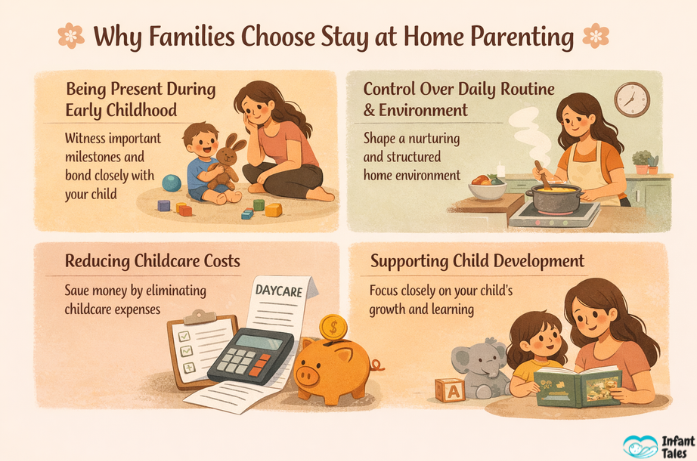
1. Being Present During Early Childhood
The early years of a child’s life are filled with rapid growth and development. Many parents choose stay at home parenting so they can be present during these important stages.
You get to observe your child’s behavior, understand their needs, and respond immediately, especially during phases when your baby fussy or needs extra comfort. This can strengthen emotional bonding and create a strong sense of security for your child.
2. Control Over Daily Routine and Environment
When you are at home, you have full control over your child’s daily schedule, meals, activities, and screen time.
You can create a calm, structured environment that supports healthy habits, learning, and emotional development. This level of control gives many parents peace of mind.
3. Reducing Childcare Costs
In many cases, childcare expenses can take up a large part of a family’s income. For some families, staying at home becomes a practical financial decision.
While it may reduce one source of income, it can also lower expenses related to commuting, work clothing, and daycare.
4. Supporting Child Development
Stay at home parenting allows you to focus closely on your child’s development. You can introduce early learning activities, storytelling, and interactive play that support cognitive and emotional growth.
Children benefit from consistent care and attention, especially in their early years, which helps prepare them for future milestones like reading skills.
Challenges of Stay at Home Parenting
While this path has many benefits, it is important to understand the challenges as well.
1. Emotional Fatigue
Caring for a child all day without breaks can be mentally and physically exhausting. Unlike a typical job, there are no fixed working hours.
You may feel tired even before the day ends, especially during difficult phases like sleep regression or toddler tantrums.
2. Feeling Isolated
Stay at home parents may sometimes feel disconnected from the outside world. Limited adult interaction can lead to feelings of loneliness.
This is especially common if you do not have a strong support system nearby.
3. Identity and Career Concerns
Some parents struggle with stepping away from their careers. You may feel like you are losing a part of your identity or worry about future career opportunities.
These feelings are valid and deserve attention.
4. Financial Pressure
Living on a single income or reduced income can create stress. Budgeting becomes more important, and long-term financial planning needs careful consideration.
Is Stay at Home Parenting Right for You?
There is no universal answer to this question. However, asking yourself the right questions can help you make a thoughtful decision.
1. Consider Your Personality
Do you feel comfortable spending most of your time at home?
Do you enjoy caring for children and managing home routines?
Understanding your personality helps you choose a lifestyle that feels natural rather than forced.
2. Evaluate Your Support System
Having emotional and practical support can make a big difference. This may include your partner, family members, or friends.
Even occasional help can reduce stress and improve your overall experience.
3. Assess Financial Stability
Take a realistic look at your finances. Can your household manage with reduced income?
Consider savings, monthly expenses, and future financial goals before making a decision.
4. Think About Long-Term Goals
Your decision today does not have to define your future permanently. Some parents return to work later, start businesses, or pursue new opportunities.
It is important to think about both your current situation and future plans.
Daily Life in Stay at Home Parenting
A typical day in stay at home parenting is a mix of routine tasks and unexpected moments.
Your day may include:
- Preparing meals and feeding your child
- Cleaning and organizing the home
- Engaging in play and learning activities
- Managing naps and bedtime routines
Some days feel smooth and fulfilling, while others may feel overwhelming. This variation is completely normal.
Practical Tips to Succeed in Stay at Home Parenting
If you decide to choose this path, small strategies can help you manage your time and energy better.
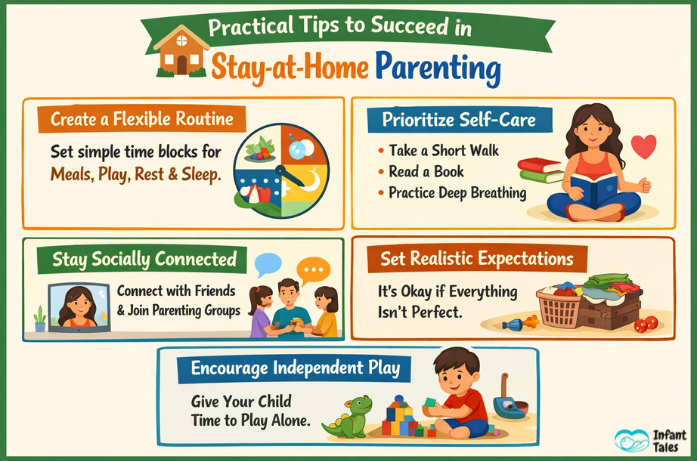
1. Create a Flexible Routine
A simple routine can bring structure to your day without adding pressure. Focus on basic time blocks for meals, play, rest, and sleep.
Flexibility is important because children’s needs change daily.
2. Prioritize Self-Care
Taking care of yourself is essential. Even short breaks can improve your mood and energy levels.
You can:
- Take a short walk
- Read a book
- Practice deep breathing
A well-rested parent can care better for their child.
3. Stay Socially Connected
Make an effort to stay in touch with others. Regular conversations with friends or family can reduce feelings of isolation.
Joining parenting communities, either online or offline, can also provide support and shared experiences.
4. Set Realistic Expectations
Not every day will be perfect. Some tasks may remain unfinished, and that is okay.
Focus on what truly matters, your child’s well-being and your emotional balance.
5. Encourage Independent Play
Allow your child to play independently for short periods. This helps build their confidence and gives you some time to manage other tasks.
Maintaining Your Identity as a Parent
Stay at home parenting does not mean losing yourself. It simply means adjusting your priorities for a phase of life.
You can still:
- Learn new skills
- Explore hobbies
- Set personal goals
Even small efforts can help you stay connected to your individuality.
When You Feel Doubt
It is normal to question your decision sometimes. Parenting is a continuous learning process.
Instead of judging yourself, try to reflect on what is working and what needs adjustment. You can always make changes based on your situation.
There Is No Perfect Parenting Path
Every family is different. Some parents stay at home, some work outside, and some do both.
The most important factor is not the type of parenting, but the quality of care, love, and attention you provide.
Children thrive in environments where they feel safe, valued, and supported.
Final Thoughts
Stay at home parenting is a meaningful and demanding role that requires patience, effort, and emotional strength. It offers the opportunity to build a deep connection with your child and actively participate in their early development.
At the same time, it comes with challenges that require awareness and preparation.
Take your time to think, discuss with your partner, and evaluate your situation honestly. There is no need to rush into a decision.
Trust your instincts and choose what feels right for your family. You are doing your best, and that is more than enough.
If you found this helpful, subscribe to Infant Tales for more real, heartwarming parenting tips and guidance made with love for moms like you.
FAQs
1. What is stay at home parenting?
Stay at home parenting means a parent chooses to stay home and take care of their child full-time instead of working outside.
2. Is stay at home parenting better for children?
It depends on the family. Children thrive in a loving and supportive environment, whether parents stay at home or work.
3. How do I know if stay at home parenting is right for me?
Consider your personality, finances, support system, and personal goals before making a decision.
4. Can I return to work after being a stay at home parent?
Yes, many parents return to work later. Skills and experience can be rebuilt over time.
5. How can stay at home parents avoid feeling isolated?
Stay connected with friends, join parenting groups, and make time for social interaction regularly.
Disclaimer: This article is for informational and supportive purposes only. Every family situation is unique, so please make decisions based on your personal circumstances and consult a professional if needed.