Authored by: A Caring Mom at Infant Tales
When you first bring your baby home, you may wonder what playtime with a newborn should actually look like. Newborns spend most of their day sleeping, feeding, and needing comfort, so it can feel confusing to know how to play with such a tiny baby.
The good thing is that playing with babies is simple and does not need much effort on your side expensive toys, complex games, or a strict schedule are not needed here. Your baby’s favorite toy is you the sound of your voice, your facial expressions, and your body language are all important for your baby’s development.
Simple actions such as talking while changing diapers, singing to your baby, or establishing eye contact while feeding are all kinds of play.
Table of Contents
- What Does Playtime With a Newborn Really Mean?
- Why Playtime Is Important for Your Newborn’s Development
- Simple Playtime With a Newborn Activities Moms Can Try
- Everyday Moments That Can Become Baby Play
- How to Know If Your Baby Enjoys Playtime
- Avoid Overstimulating Your Newborn
- How Much Playtime Does a Newborn Need?
- Playtime Tips for Tired New Moms
- Frequently Asked Questions About Playtime With a Newborn
- Final Thoughts
What Does Playtime With a Newborn Really Mean?
Many parents imagine playtime as something active, like toys, games, or lots of movement. But with newborns, play is much simpler. It is about connection, communication, and helping your baby slowly discover the world around them.
During the newborn stage, babies learn through everyday experiences like listening to familiar voices, watching faces, and responding to gentle interactions. Understanding how your baby learns and develops can help you feel more confident during these early moments. The experts at Kids Health explain how newborn babies begin learning through their senses, relationships, and daily experiences.
Playtime with newborn babies is often hidden inside everyday moments. Feeding, cuddling, bathing, and changing clothes can all become opportunities to talk, smile, and connect.
Your newborn does not need hours of entertainment. A few loving minutes of interaction when your baby is awake and calm can be enough.
Why Playtime Is Important for Your Newborn’s Development
Even though newborns seem so small and sleepy, their brains are developing quickly. Every interaction helps create new connections that support learning, communication, and emotional security.
When you talk to your baby, they begin recognizing your voice. When you smile and respond to their expressions, they start learning about relationships and emotions.
Gentle play also helps babies practice important skills like:
- Following sounds and movements
- Focusing their eyes on faces and objects
- Moving their arms and legs
- Developing early communication skills
- Feeling safe and loved
The goal is not to make your baby reach milestones faster. It is simply about giving them loving experiences that support their natural growth.
These simple interactions are also part of positive parenting because they help your baby feel safe, loved, and supported. Responding to your baby’s needs, talking with them, and showing affection all play an important role in early development. The Centers for Disease Control and Prevention (CDC) also shares helpful guidance for parents on supporting healthy development during infancy.
Simple Playtime With a Newborn Activities Moms Can Try
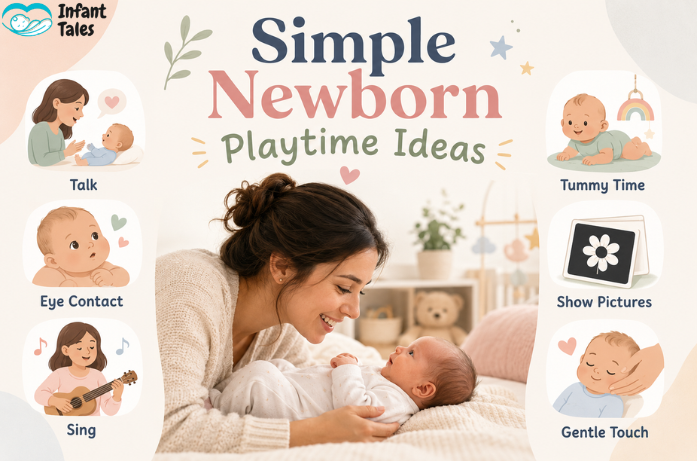
Every baby is different, and play does not need to be complicated. Simple activities like talking, singing, smiling, and gentle movement can help strengthen the bond between parents and babies. Pregnancy Birth and Baby provides additional ideas on how everyday play and interaction can support your baby’s early learning.
1. Talk to Your Baby Like They Understand You
One of the easiest activities is simply talking to your baby throughout the day.
You can describe what you are doing while folding clothes, preparing a bottle, or changing a diaper. Tell your baby about your day, make silly sounds, or repeat the little noises they make.
Your newborn may not understand your words, but they are learning the rhythm of language. They are listening to your tone, recognizing your voice, and feeling comforted by your presence.
Many moms feel like they are “just talking,” but these conversations are actually helping their baby learn.
2. Make Eye Contact and Share Smiles
Newborns are naturally drawn to faces. Looking into your baby’s eyes is one of the simplest ways to connect.
Hold your baby close, smile gently, and give them time to look at you. You can make different facial expressions or slowly move your face from side to side.
Your baby may not smile back immediately, but they are watching and learning. These quiet moments help your baby understand emotions and build trust.
Some of the sweetest memories of early motherhood come from these simple face-to-face moments.
3. Sing Songs and Use Your Voice
You do not need to be a great singer to sing to your baby. Your newborn does not care about perfect notes. They love the sound of you.
Try singing during cuddles, bath time, or before naps. You can sing traditional lullabies or create your own little songs.
A familiar voice can help calm your baby when they feel overwhelmed or tired. Over time, your baby may begin to recognize certain songs and sounds.
4. Practice Short Tummy Time Sessions
Tummy time is an important activity that helps newborns strengthen their neck, shoulder, and upper body muscles.
At first, many babies dislike tummy time because it feels unfamiliar. This is completely normal. Start with short sessions and slowly increase the time as your baby becomes stronger.
You can make tummy time more enjoyable by lying down at your baby’s level and talking to them. Your face and voice can encourage them to stay engaged.
Remember, every baby develops differently. A few minutes of practice is still valuable.
5. Show Simple Pictures and Objects
Newborns are attracted to simple patterns and strong contrasts. You can introduce gentle visual activities by showing your baby black-and-white pictures, colorful objects, or baby books.
Hold the object close enough for your baby to focus and move it slowly. Give them time to observe instead of moving too quickly.
You do not need a shelf full of toys. A few simple items combined with your attention can create wonderful learning moments.
6. Give Your Baby Gentle Massage and Touch
Touch is one of the first ways babies understand love and comfort.
A gentle baby massage, holding their tiny hands, rubbing their feet, or simply cuddling skin-to-skin can become a beautiful bonding activity.
Many moms find these moments calming too. They create a quiet pause in the busy newborn routine where you can simply enjoy your baby.
Always follow your baby’s signals. If they seem uncomfortable, stop and try again another time.
Everyday Moments That Can Become Baby Play
You do not need to create a separate “play session” every day. Newborns learn through regular care and connection.
Here are some everyday moments that can become special:
During Feeding
Feeding is not only about nutrition. It is also a bonding experience. Look at your baby, talk softly, and enjoy the closeness.
During Diaper Changes
Diaper changes happen many times each day, making them perfect opportunities for interaction. Smile, talk, and gently explain what you are doing.
During Walks
A short walk outside can introduce your baby to new sounds, sights, and sensations. Fresh air and a change of scenery can be enjoyable for both baby and mom.
During Bath Time
Bath time can become a calming sensory experience. Talk to your baby, sing softly, and enjoy those sweet little moments.
How to Know If Your Baby Enjoys Playtime
Newborns communicate in small ways. They cannot tell you when they are enjoying something, but their body language gives clues.
Your baby may be enjoying playtime if they:
- Look at your face
- Stay calm and relaxed
- Move their arms or legs
- Make small sounds
- Try to focus on an object
- Seem interested in your voice
However, babies can become tired quickly. Signs that your baby needs a break may include:
- Turning their head away
- Closing their eyes
- Becoming fussy
- Crying suddenly
- Looking overwhelmed
A break does not mean you did something wrong. It simply means your baby needs rest.
Avoid Overstimulating Your Newborn
Sometimes parents worry they are not doing enough, so they try many activities at once. But newborns can become overwhelmed easily.
Too many sounds, bright lights, toys, and movements may make your baby tired instead of happy.
A calmer approach often works best. Try one simple activity, watch your baby’s response, and allow quiet time afterward.
Remember, newborns are adjusting to a completely new world. Gentle and slow experiences are usually the most enjoyable.
How Much Playtime Does a Newborn Need?
There is no exact amount of playtime every newborn needs. Babies have different personalities, energy levels, and sleep patterns.
Some babies enjoy several short interactions throughout the day. Others may only be awake for a few minutes before needing rest.
Instead of counting minutes, focus on quality connection. A few moments of loving attention are meaningful.
Your baby does not need a busy schedule. They need a parent who notices them, responds to them, and makes them feel secure.
Playtime Tips for Tired New Moms
The newborn stage can be beautiful, but it can also be exhausting. Lack of sleep and constant responsibilities can make it difficult to feel playful every day.
Give yourself permission to keep things simple.
You do not need to create Pinterest-worthy activities or buy special toys. Your baby will not remember the toys you bought, but they will benefit from the love and attention you give.
Some days, playtime may simply mean holding your baby while you rest together. Those moments matter too.
Motherhood is not about doing everything perfectly. It is about showing up with love again and again.
Frequently Asked Questions About Playtime With a Newborn
Final Thoughts
Playtime with a newborn is not about keeping your baby entertained all day. It is about creating small moments of love, comfort, and connection.
Your baby learns from your voice, your touch, your smile, and the way you care for them every day. Those simple interactions are helping shape their early understanding of the world.
Enjoy these tiny moments, even the quiet ones. The newborn stage can feel long during sleepless nights, but it passes faster than most parents expect.
You do not need to be a perfect parent or plan perfect activities. Your presence is already one of the greatest gifts your baby could receive.
Want more simple parenting tips and newborn care ideas? Visit Infant Tales for helpful guides created to support moms through every stage of their parenting journey.
Disclaimer
The information shared in this article is for general parenting education only and is not a substitute for professional medical advice. Every baby develops differently, so always follow your baby’s cues and consult your pediatrician if you have any concerns about your baby’s growth, development, or health.
About the Author
Geeta Yogi is a parenting writer who shares practical and gentle guidance about newborn care, early development, bonding, play, and everyday motherhood. Her writing focuses on helping parents understand their baby’s early needs and turn simple daily moments into meaningful opportunities for connection and learning.