
Written with love by a caring mom at Infant Tales
Becoming a parent is a journey filled with love, learning, and sometimes a little worry. One of those early concerns many of us face is seeing redness on our baby’s soft, delicate skin. If you’re using cloth diapers, you might find yourself searching for answers about diaper rash cloth diapers, wondering what caused it and how to soothe your little one quickly.
I remember those moments so clearly, checking my baby again and again, feeling unsure if I was doing something wrong. But over time, I learned something comforting: cloth diaper rash is common, and most importantly, it’s manageable.
With a little understanding, gentle care, and a few simple adjustments, your baby’s skin can heal beautifully. Let’s go through this together, step by step, like one mom helping another.
Understanding Diaper Rash Cloth Diapers
Cloth diapers are a wonderful choice. They are soft, breathable, eco-friendly, and gentle on your baby’s skin. Many parents choose them for comfort and sustainability. But even with all these benefits, babies can still develop rashes.
Diaper rash cloth diapers usually happens when your baby’s skin reacts to moisture, friction, or something in the diapering routine. It doesn’t mean cloth diapers are bad, and it definitely doesn’t mean you’re doing anything wrong.
Baby skin is extremely sensitive. Even small changes like a longer diaper wear time, a new detergent, or changes in diet can lead to irritation.
The key is not to panic, but to observe and adjust gently. According to expert-backed resources like Kids Health, diaper rash is very common in babies and is usually caused by moisture, friction, or sensitivity, which means it can happen with both cloth and disposable diapers.
What Does Cloth Diaper Rash Look Like?
Before treating anything, it’s important to recognize what you’re seeing. Not every redness is severe, and catching it early can make a big difference.
Common signs of cloth diaper rash:
- Red or pink patches in the diaper area
- Slight swelling or warmth
- Dry, rough, or slightly bumpy skin
- Baby becoming fussy during diaper changes
- Skin looking irritated where the diaper touches
Sometimes the rash stays only in contact areas, which can help you identify whether it’s caused by fabric, moisture, or friction.
If you notice these early signs, you are already doing a great job by paying attention.
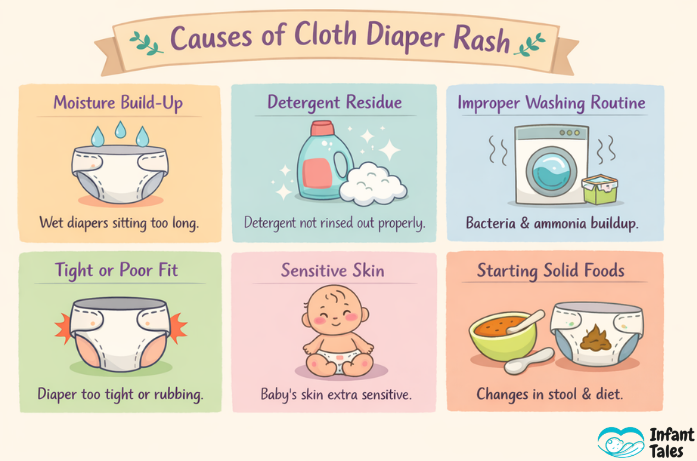
Causes of Cloth Diaper Rash
Understanding the cause is the first step to solving the problem. Let’s look at the most common reasons behind cloth diaper rash in a simple and practical way.
1. Moisture Build-Up
Cloth diapers absorb well, but they don’t pull moisture away from the skin as quickly as disposables. If your baby stays in a wet diaper for too long, the skin remains damp, which can lead to irritation.
Changing diapers every 2–3 hours and immediately after poop helps keep your baby’s skin dry and comfortable.
2. Detergent Residue
Sometimes, the problem isn’t the diaper itself but what’s left behind after washing. If detergent isn’t rinsed out properly, it can irritate your baby’s delicate skin.
This usually happens when too much detergent is used, the rinse cycle is not enough, or the detergent contains strong fragrances. Simple, gentle cleaning works best for babies.
3. Improper Washing Routine
A proper wash routine is very important in cloth diapering. If diapers are not cleaned thoroughly, bacteria and ammonia can build up over time.
This can cause strong smells, frequent rashes, and skin irritation. It’s one of the most common hidden reasons behind cloth diapers and diaper rash.
4. Tight or Poor Fit
A diaper that is too tight can create friction and trap heat, both of which can irritate your baby’s skin. Comfort plays a big role in preventing rashes.
If you notice red marks, elastic digging into the skin, or your baby feeling uncomfortable, it may be time to adjust the fit. A diaper should be snug but never tight.
5. Baby’s Sensitive Skin
Some babies naturally have more sensitive skin than others. Even soft fabrics like cotton or bamboo can sometimes cause irritation in such cases.
If your baby has sensitive skin, it’s best to stick to gentle, natural fabrics and avoid using too many products. Finding what suits your baby may take a little time.
6. Starting Solid Foods
When babies begin eating solid foods, their stool changes and can become more irritating to the skin. If you’re starting solids, a simple banana puree is a gentle first-food option. This is a very normal phase but may increase the chances of rash.
During this time, changing diapers more frequently and cleaning the area gently can help keep your baby comfortable.
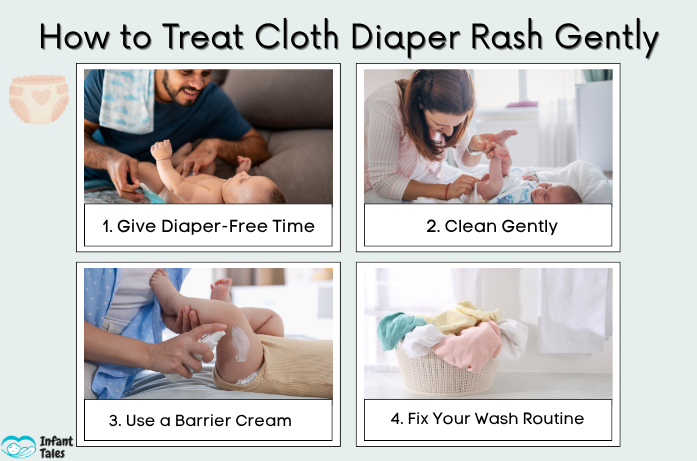
How to Treat Cloth Diaper Rash Gently
When your baby has a rash, your first instinct is to fix it quickly, and that’s completely natural. Seeing your little one uncomfortable can be hard. The good news is, most cases of cloth diaper rash heal beautifully with simple and gentle care.
1. Give Diaper-Free Time
Air is one of the best natural healers for your baby’s skin. Letting the diaper area breathe helps reduce moisture and speeds up healing.
You can give your baby diaper-free time for about 10–15 minutes, a few times a day. Just place a soft towel underneath and let your baby relax or play freely. Even this small step can make a big difference.
2. Clean Gently
During a rash, your baby’s skin becomes extra sensitive. Using harsh wipes can sometimes make irritation worse.
Instead, clean the area with a soft cloth and warm water. Gently pat the skin dry rather than rubbing it. This keeps the skin calm and helps prevent further irritation.
3. Use a Barrier Cream
A gentle diaper rash cream can protect your baby’s skin from moisture and give it time to heal. It acts like a shield between the skin and the diaper.
Look for creams that contain zinc oxide and are free from strong fragrances. Apply a thin layer, just enough to protect the skin without being too heavy.
4. Fix Your Wash Routine
Sometimes, the real cause of the rash is hidden in the wash routine. This step can truly make a big difference for many parents.
Make sure you’re using the right amount of detergent and rinsing diapers thoroughly. After washing, diapers should smell fresh and clean. If they don’t, adjusting your routine can quickly improve cloth diaper rash issues.
5. Try Different Fabrics
Every baby’s skin is different, and sometimes a small change in fabric can help a lot. If the rash keeps coming back, it might be worth trying something new.
You can switch to cotton inserts or bamboo liners, which are often gentler on the skin. If your baby reacts to synthetic materials, it’s best to avoid them and stick to natural options.
Prevention Tips for Diaper Rash Cloth Diapers
Once you understand what works best for your baby, preventing cloth diaper rash becomes much easier. Small daily habits can make a big difference in keeping your baby’s skin healthy.
1. Frequent Diaper Changes
This is the most important step in prevention. Keeping your baby dry helps avoid irritation before it even starts.
Try to change diapers every 2–3 hours and never leave a dirty diaper on for too long. Less moisture means healthier, happier skin.
2. Maintain a Consistent Wash Routine
A simple and consistent wash routine keeps diapers clean and safe for your baby’s skin.
Start with a pre-rinse, followed by a main wash with a mild detergent. If needed, add an extra rinse to remove any leftover residue. This helps prevent buildup that can lead to cloth diapers and diaper rash.
3. Avoid Overloading the Machine
Cloth diapers need enough space in the washing machine to get properly cleaned. Overloading can prevent proper washing and rinsing.
When the load is too full, dirt can stay trapped and detergent may not rinse out completely. Clean diapers are essential for good baby skin care.
4. Choose Breathable Materials
Some diaper covers can trap heat, making your baby’s skin sweaty and uncomfortable. This can increase the chances of a rash.
Choosing breathable fabrics with good airflow helps keep the skin cool and comfortable. Cooler skin means a happier baby
5. Watch for Early Signs
Catching early signs of redness can prevent a rash from getting worse. A little attention at the right time goes a long way.
At the first sign, give more diaper-free time and check your routine. Small steps early can prevent bigger problems later.
When Should You See a Doctor?
Most diaper rashes heal within a few days. But sometimes, extra help is needed.
Consult a doctor if:
- The rash doesn’t improve in 3–4 days
- You see blisters or open sores
- The rash spreads beyond the diaper area
- Your baby seems in pain
Trusted resources Cleveland Clinic also explain that most diaper rashes are mild, but some may need medical attention if they don’t improve within a few days.
A Gentle Reminder for Moms
If you’re dealing with diaper rash cloth diapers, please take a deep breath and remind yourself, you are doing your best.
Parenting doesn’t come with a manual. We all learn through experience, small mistakes, and lots of love.
Some days feel easy, and some feel confusing. That’s completely normal.
You’re not alone in this.
With a little patience:
- You’ll understand your baby better
- You’ll find the right routine
- You’ll feel more confident
And slowly, everything starts to feel easier.
Final Thoughts
Cloth diapers are a beautiful and thoughtful choice for your baby and the environment. Yes, small challenges like cloth diaper rash can happen, but they are usually temporary and easy to manage with a little care and patience.
With a gentle routine, some small adjustments, and trust in your instincts, your baby’s skin will heal. Take it one step at a time, you truly know your baby best, and your love is always enough.
If you found this helpful, share it with another mom who might need it, and explore more gentle parenting tips on Infant Tales to make your journey a little easier.
FAQs
1. Can cloth diapers cause diaper rash?
Yes, diaper rash cloth diapers can happen due to moisture, poor washing, or detergent residue.
2. How to treat cloth diaper rash fast?
Keep the area clean, give diaper-free time, and use a gentle cream to heal cloth diaper rash.
3. How to prevent cloth diapers and diaper rash?
Change diapers often, wash properly, and keep your baby’s skin dry to avoid cloth diapers and diaper rash.
Disclaimer: This article is for informational purposes only and is based on personal parenting experience. It is not a substitute for medical advice. If your baby’s rash persists or worsens, please consult a pediatrician.