Authored by: A Caring Mom at Infant Tales
After giving birth, most mothers expect sleepless nights, backaches, and physical changes. But experiencing postpartum foot pain while getting out of bed or carrying your baby can come as a surprise.
Foot pain after pregnancy is often caused by changes in foot arches, stretched ligaments, lingering swelling, or conditions like plantar fasciitis. You may notice sharp heel pain in the morning, aching feet after standing, or shoes that suddenly feel too tight.
The good news is that supportive footwear, gentle stretching, and proper rest can often help relieve discomfort. Let’s explore what causes postpartum foot pain, how long it lasts, and simple ways to feel more comfortable.
Is Postpartum Foot Pain Normal?
Some foot discomfort after childbirth is common, especially if you experienced swelling, heel pain, or changes in your shoe size during pregnancy. A study published in the Journal of Family Practice found that 31% of postpartum women reported foot pain, compared with 22% of women who had never been pregnant. This suggests that foot discomfort can be more common during the postpartum period.
Your feet have spent months supporting additional weight while your body adjusted to pregnancy-related changes.
Even after delivery, your muscles, ligaments, and joints may need time to adapt.
You might notice:
- Aching heels when getting out of bed
- Soreness along your foot arches
- Swollen or tired feet after standing
- Pain when walking barefoot
- Shoes feeling tighter than before pregnancy
- Discomfort after carrying your baby
For many mothers, mild discomfort gradually improves. However, persistent or worsening pain shouldn’t automatically be considered a normal part of recovery.
Why Does Postpartum Foot Pain Happen?
Several physical changes during pregnancy can contribute to aching feet postpartum. From hormonal changes to increased pressure on your feet, here are five common reasons you may experience discomfort after childbirth.
1. Pregnancy Hormones Affect Your Ligaments
During pregnancy, your body releases a hormone called relaxin, which helps loosen ligaments to prepare for childbirth. However, it can also affect the ligaments supporting your feet.
As these ligaments become more flexible, your foot arches may flatten slightly, changing how your weight is distributed when walking or standing.
Although hormone levels change after delivery, some changes in your foot structure may remain, causing discomfort during everyday activities.
2. Changes in Your Foot Arches
Have you noticed that your favorite shoes feel tighter after pregnancy? You’re not alone.
The extra weight and increased ligament flexibility during pregnancy can cause your arches to become lower and your feet to grow slightly longer or wider.
Research published in the American Journal of Physical Medicine & Rehabilitation suggests that some of these changes may continue after childbirth.
Lower arches can place additional strain on the tissues supporting your feet, leading to foot pain after giving birth, especially when standing or walking for extended periods.
3. Plantar Fasciitis Causes Heel Pain
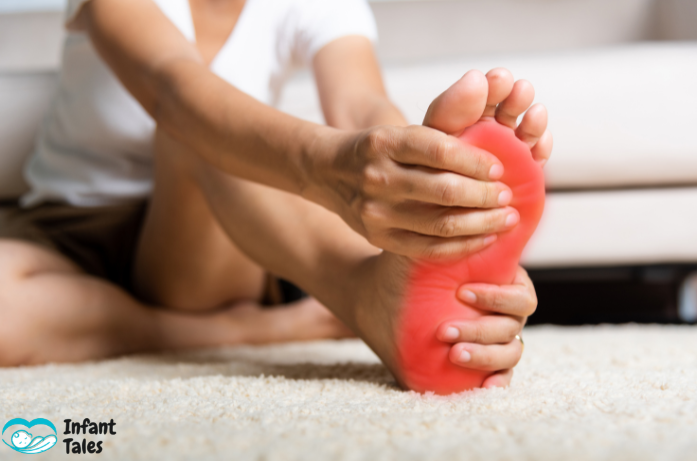
If your heels hurt when you take your first steps in the morning, plantar fasciitis could be one possible reason.
The plantar fascia is a thick band of tissue along the bottom of your foot that supports your arch. Increased pressure or repeated strain can irritate this tissue and cause heel pain.
Common symptoms include:
- Sharp pain underneath the heel
- Pain during your first morning steps
- Discomfort after sitting for a long time
- Soreness after prolonged standing
Wearing supportive shoes, stretching gently, and avoiding activities that worsen the pain may help relieve discomfort.
4. Swelling Continues After Childbirth
Swollen feet are common during pregnancy, but the swelling may not disappear immediately after delivery.
Your body retains extra fluid during pregnancy and gradually removes it after childbirth through urination and sweating.
During the first several postpartum days, you may notice mild swelling in both feet and ankles, making them feel heavy, tight, or uncomfortable.
This swelling usually improves as your body recovers. However, sudden swelling in one leg, especially with pain, redness, or warmth, requires urgent medical attention, as it may indicate a blood clot.
5. Increased Standing and Walking
Taking care of a newborn means spending plenty of time on your feet, often without realizing it.
From rocking your baby to changing diapers and completing household chores, these everyday activities can put additional pressure on feet that are still adjusting after pregnancy. Learning how to hold a baby comfortably may also help reduce unnecessary strain while caring for your little one.
Walking barefoot on hard floors or wearing slippers without proper support may make the discomfort worse.
Taking short breaks, choosing supportive footwear, and sitting whenever possible can help reduce strain and make daily activities more comfortable.
How Long Does Foot Pain Last After Pregnancy?
The duration of postpartum foot pain depends on its underlying cause and how your body recovers after childbirth.
If the pain is caused by temporary swelling, it usually improves within a few days to two weeks. However, discomfort from muscle strain or changes in your walking pattern may take several weeks to settle.
Conditions like plantar fasciitis can cause heel pain for weeks or even months, while some pregnancy-related changes in foot size and arch height may be permanent.
Every mother’s recovery is different. If your foot pain continues, becomes worse, or makes walking difficult, consult your healthcare provider to identify the cause and receive appropriate treatment.
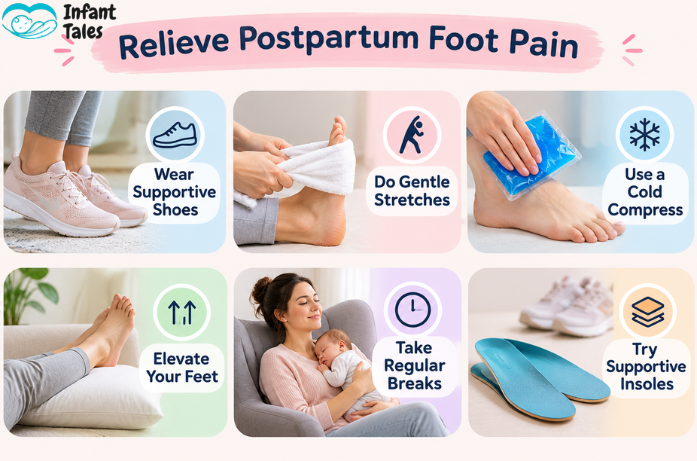
What Helps Relieve Postpartum Foot Pain?
Relieving postpartum foot pain doesn’t have to be complicated. A few simple changes to your daily routine can help ease discomfort and support recovery after childbirth.
1. Wear Comfortable, Supportive Shoes
Walking barefoot on hard floors or wearing unsupportive slippers can increase heel and arch pain.
Choose shoes with good arch support, cushioned heels, non-slip soles, and enough room for your toes. If your old shoes feel tight, consider getting your feet measured again.
2. Try Gentle Foot Stretches
Gentle stretching can help relieve tight muscles and discomfort associated with plantar fasciitis.
Try this simple towel stretch:
- Sit with one leg extended.
- Wrap a towel around the ball of your foot.
- Gently pull it toward you.
- Hold for 15–30 seconds, then relax.
- Repeat a few times.
Stop if stretching causes pain, and check with your healthcare provider if you have postpartum exercise restrictions.
3. Apply a Cold Compress
A cold compress may help soothe aching heels and tired feet after a long day.
Wrap an ice pack in a towel and apply it to the painful area for 10–15 minutes. You can also gently roll your foot over a cool water bottle for temporary relief.
4. Elevate Your Feet While Resting
If your feet feel swollen or heavy, raise them on a pillow while sitting or lying down.
This may help reduce mild swelling and discomfort. Try elevating your feet during short breaks, especially after standing for long periods.
5. Take Regular Breaks From Standing
Caring for a newborn involves plenty of standing, walking, and carrying, which can worsen aching feet postpartum.
Sit whenever possible, keep baby essentials nearby, and take short breaks between household tasks to reduce unnecessary pressure on your feet.
6. Consider Supportive Shoe Insoles
If you have flattened arches or persistent heel pain, supportive insoles may help distribute pressure more comfortably.
Over-the-counter arch supports may provide relief, but if the pain continues, consult a podiatrist or physical therapist for personalized advice.
Can Breastfeeding Cause Foot Pain?
Breastfeeding itself doesn’t directly cause foot pain, but sitting in one position during long feeding sessions can make existing discomfort more noticeable.
You may experience stiffness or heel pain when standing up after feeding your baby, especially if you have plantar fasciitis. Lack of sleep and physical exhaustion can also make everyday aches feel worse.
To stay comfortable, support your feet while breastfeeding, change your sitting position occasionally, and gently move your ankles before standing.
If the pain continues or you need pain medication while breastfeeding, consult your healthcare provider for safe treatment options.
When Should You See a Doctor?
Although many cases of foot pain postpartum are related to musculoskeletal changes, some symptoms require medical attention.
Seek urgent medical care if you experience:
- Sudden swelling in one leg, especially with calf pain
- Redness, warmth, or significant tenderness in one leg
- Severe or rapidly worsening foot pain
- A foot that becomes unusually cold, pale, or blue
- Fever with a red, hot, swollen foot
Call emergency services immediately if you develop chest pain, sudden shortness of breath, coughing up blood, or fainting. These may indicate a pulmonary embolism.
Postpartum preeclampsia can also occur after childbirth. Seek immediate medical assessment if swelling is accompanied by a severe headache, vision changes, upper abdominal pain, or high blood pressure.
For ongoing but non-emergency discomfort, schedule an appointment if your pain persists, repeatedly returns, causes numbness, or interferes with walking.
How Can You Prevent Foot Pain From Getting Worse?
While you can’t prevent every pregnancy-related change in your feet, a few healthy habits can help reduce postpartum foot pain and prevent further discomfort.
- Wear supportive footwear: Choose comfortable shoes with good arch support and cushioning, especially when walking on hard floors. Avoid spending long periods barefoot.
- Increase activity gradually: Start with short, comfortable walks and slowly increase your activity as your body recovers. Avoid running or high-impact workouts if your feet are still painful.
- Take regular breaks: Avoid standing for extended periods. Sit down whenever possible and elevate your feet if they feel swollen or tired.
- Stretch and strengthen your feet: Gentle calf stretches, ankle movements, and simple foot-strengthening exercises may improve flexibility and support.
- Pay attention to pain: Notice which activities make your feet hurt and adjust your routine. Don’t push through worsening discomfort.
If your pain continues despite these changes, consult a podiatrist or physical therapist. They can identify the underlying cause and recommend appropriate exercises or treatment to support your recovery.
Frequently Asked Questions
1. Why do my heels hurt after pregnancy?
Heel pain may result from plantar fasciitis, changes in your arches, or increased pressure from standing and walking. Pain during your first morning steps is particularly common with plantar fasciitis.
2. Will my feet return to their normal size after pregnancy?
Pregnancy-related swelling usually improves, but some women experience lasting changes in foot length or arch height. You may need a different shoe size.
3. Can postpartum foot pain happen months after delivery?
Yes. Changes in foot structure, plantar fasciitis, or ongoing strain can cause discomfort months after childbirth. Persistent pain should be evaluated.
4. Does walking help postpartum foot pain?
Gentle walking may help maintain mobility, but excessive walking can worsen certain conditions. Wear supportive shoes and reduce activity if your pain increases.
5. Is postpartum foot pain serious?
Most foot aches are not emergencies. However, sudden one-sided swelling, severe pain, redness, warmth, or breathing difficulties require urgent medical attention.
Final Thoughts
Getting back to normal after childbirth is an event that requires some patience, including recovery of your feet. If you suffer from postnatal foot pain, please note that alterations in foot arches, leftover edema, or even plantar fasciitis may be behind the pain you feel.
Fortunately, small changes may go a long way towards relieving pain. Using comfortable footwear, doing stretching exercises, and getting enough rest may help.
Although some pain might resolve itself, worsening pain is a red flag and should not be ignored. Contact your doctor about persistent foot pain that makes it hard to walk.
Also, do not forget about your well-being, dear mother. Your feet are involved in your daily routines when you take care of your baby.
With care,
A Caring Mom at Infant Tales
Medical Disclaimer
This article is for informational purposes only and is not a substitute for professional medical advice, diagnosis, or treatment. Always consult your healthcare provider about persistent foot pain or other postpartum concerns. Seek urgent medical care for sudden one-sided leg swelling, severe pain, or breathing difficulties.