Authored by: A Caring Mom at Infant Tales
Postpartum cramping is common after childbirth as your uterus contracts and gradually returns to its pre-pregnancy size. These period-like cramps, known as afterpains, are usually strongest during the first few days and gradually become milder as your body recovers.
However, knowing postpartum cramping when to worry is important, especially if the pain continues for several weeks, becomes more intense, or comes with symptoms like fever, heavy bleeding, or unusual vaginal discharge. While mild cramps are often part of normal recovery, persistent or worsening pain may need medical attention.
In this guide, we’ll explain what causes postpartum cramps, how long they typically last, whether cramping at three weeks postpartum is normal, warning signs you shouldn’t ignore, and simple ways to relieve discomfort safely.
Is Postpartum Cramping Normal After Giving Birth?
Yes, postpartum cramping is common, particularly during the first few days after delivery.
Throughout pregnancy, your uterus stretches to accommodate your growing baby. After childbirth, it begins contracting and gradually shrinking toward its pre-pregnancy size.
These contractions are called afterpains.
They may feel like mild menstrual cramps, a pulling sensation in your lower abdomen, or even small labor contractions.
Some moms barely notice them. Others find them surprisingly uncomfortable, especially while breastfeeding or after having a second or third baby.
The important difference is that normal afterpains generally become less painful as recovery progresses.
Why Do You Get Cramps After Childbirth?
Postpartum cramps usually happen as your uterus shrinks back to its normal size. However, breastfeeding, previous pregnancies, and digestive changes can also cause discomfort.
1. Your Uterus Is Returning to Its Normal Size
After childbirth, your uterus starts shrinking through a natural process called uterine involution. These contractions help reduce bleeding and return the uterus to its pre-pregnancy size. This process takes about six weeks, but cramps usually improve within a few days.
2. Breastfeeding Can Make Cramps Stronger
Breastfeeding releases a hormone called oxytocin, which helps your uterus contract. That’s why you may notice period-like cramps while nursing your baby. These cramps are usually temporary and become milder as your body heals.
3. Second-Time Moms May Feel Stronger Afterpains
Postpartum cramps can feel stronger after your second or third baby. This happens because your uterus may need stronger contractions to shrink after previous pregnancies. It’s common, but severe or worsening pain should be checked by a doctor.
4. Constipation and Trapped Gas
Hormonal changes, less physical activity, dehydration, and certain medications can cause constipation after delivery. This may lead to bloating, gas, and lower abdominal cramps. The discomfort often improves after passing gas or having a bowel movement, but severe or persistent pain needs medical attention.
How Long Do Postpartum Cramps Last?
If you’re wondering how long do postpartum cramps last, most uterine afterpains are strongest during the first two to three days and gradually settle over the following days.
Some women notice mild cramps for about a week or slightly longer.
Here’s a simple recovery timeline.
| Time After Delivery | What You Might Experience |
| Days 1–3 | More noticeable uterine cramps, especially while breastfeeding |
| Days 4–7 | Afterpains usually become milder and less frequent |
| Days 8–14 | Typical afterpains have generally settled |
| Week 3 | New, persistent, or recurring cramps should be discussed with a healthcare provider |
| Weeks 4–6 | Uterine recovery continues, but ongoing pain shouldn’t automatically be considered normal |
These timeframes are general guidelines, not a way to diagnose the cause of pain.
According to the American College of Obstetricians and Gynecologists (ACOG), cramping is a common postpartum symptom, and afterpains can be more noticeable during breastfeeding and after previous births.
The key thing to remember is that your uterus may still be healing even when normal afterpains have stopped.
Cramping 3 Weeks Postpartum: Should You Be Concerned?
You’re three weeks into motherhood. Maybe your bleeding has become lighter, you’re moving around more, and you finally feel like your body is settling down.
Then those cramps return.
Experiencing cramping 3 weeks postpartum can be confusing, particularly if you felt fine a few days earlier.
By this stage, typical uterine afterpains have usually improved significantly. Mild discomfort may come from digestion or recovering tissues, but persistent or new cramps shouldn’t automatically be blamed on uterine shrinking.
Possible Reasons for Three Weeks Postpartum Cramping
Constipation or gas: Changes in digestion can cause intermittent abdominal cramps, bloating, and pressure.
Urinary tract infection: Lower abdominal discomfort with burning urination, frequent bathroom trips, or urgency may indicate a UTI.
Uterine infection: Postpartum endometritis may cause abdominal pain, uterine tenderness, fever, chills, or foul-smelling discharge.
Retained placental tissue: Occasionally, tissue remaining inside the uterus can contribute to abnormal bleeding, cramping, or infection.
Returning ovulation: Ovulation can resume before the first postpartum period, although timing varies widely and breastfeeding often delays it.
If you’re experiencing postpartum cramps 3 weeks after delivery, especially when they are new, recurring, or unexplained, contact your maternity care provider for advice.
You don’t need to wait until the pain becomes severe to ask questions.
Postpartum Cramping: When to Worry and Call Your Doctor
A useful way to think about postpartum pain is to consider whether it’s improving or getting worse.
Normal afterpains generally become milder. Pain that becomes stronger, remains constant, or appears alongside other symptoms may indicate a complication.
1. Severe or Increasing Abdominal Pain
Strong pain that doesn’t ease, sudden sharp pain, or cramps that become progressively worse need medical attention.
Severe lower abdominal pain is a reason to seek emergency care, even if you don’t have a fever.
2. Heavy Bleeding or Large Blood Clots
Some vaginal bleeding after childbirth is expected. It’s called lochia.
However, bleeding that suddenly becomes heavy, soaks a pad within an hour, or includes large clots needs urgent assessment.
If you’re also dizzy, faint, weak, or experiencing a racing heartbeat, seek emergency care.
3. Fever, Chills, or Unusual Discharge
A temperature of 100.4°F (38°C) or higher, particularly with abdominal pain, can be a warning sign of infection.
Postpartum endometritis is an infection of the uterine lining that may develop after either vaginal or cesarean delivery.
It can occur weeks after birth, not just while you’re in the hospital.
The American College of Obstetricians and Gynecologists (ACOG) identifies postpartum endometritis, hemorrhage, and preeclampsia as important complications to recognize after childbirth.
4. Painful Urination or Bladder Problems
Burning while urinating, frequent urination, or lower abdominal pressure may suggest a urinary tract infection.
If you develop fever, back pain, or chills, seek prompt medical attention.
5. Severe Headache or Upper Abdominal Pain
Not all postpartum abdominal pain comes from the uterus.
Pain in the upper right abdomen, particularly with a severe headache, blurred vision, swelling of the face or hands, or high blood pressure, may indicate postpartum preeclampsia.
This can occur after delivery, including in women who didn’t have high blood pressure during pregnancy.
Seek urgent medical care for these symptoms.
How to Tell Normal Afterpains From Concerning Cramps
When you’re exhausted and recovering from childbirth, it isn’t always easy to describe what you’re feeling.
This comparison can help you decide what to do next.
| What You’re Noticing | What It May Mean |
| Mild cramps during breastfeeding in the first few days | Often normal uterine afterpains |
| Cramps becoming less frequent each day | Usually consistent with recovery |
| Bloating and discomfort with constipation | Possible digestive discomfort |
| New or persistent cramps at three weeks | Contact your healthcare provider |
| Cramps with fever or foul-smelling discharge | Possible infection; seek prompt care |
| Severe pain, fainting, or heavy bleeding | Seek emergency medical care |
This table is a guide, not a diagnosis. Even mild pain deserves medical advice if it keeps returning or doesn’t seem right.
Postpartum Cramps After a C-Section vs. Vaginal Birth
Whether you delivered vaginally or by C-section, your uterus still needs to contract after childbirth.
That means both types of delivery can cause afterpains.
However, after a C-section, you may also experience discomfort from the surgical incision and surrounding abdominal tissues.
You might notice soreness when standing up, coughing, laughing, or changing positions. Learning how to hold your baby safely and comfortably may also help reduce unnecessary strain while recovering.
Incision discomfort should gradually improve as healing progresses.
Increasing redness, swelling, warmth, drainage, fever, or worsening abdominal pain should be assessed promptly.
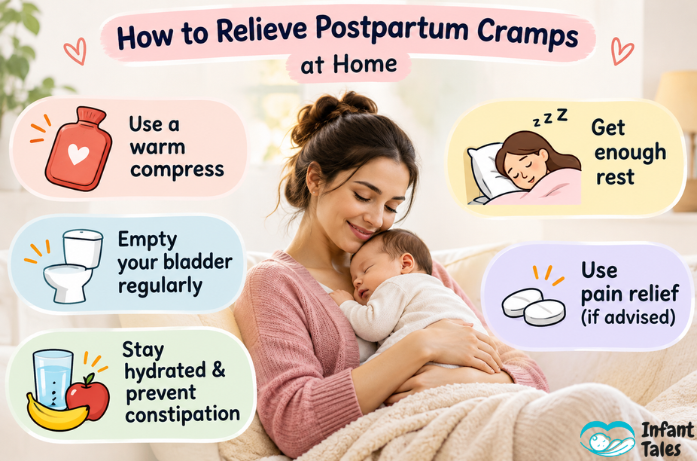
How to Relieve Normal Postpartum Cramps at Home
When your healthcare provider has confirmed that your discomfort is part of normal recovery, a few simple changes may help.
Try a Warm Compress
A warm compress or heating pad on a low setting may help soothe mild uterine cramps.
Keep a layer of fabric between your skin and the heat source.
Avoid placing heat directly on a healing C-section incision, and don’t fall asleep while using a heating pad.
Empty Your Bladder Regularly
A full bladder can add pressure to your lower abdomen.
Try going to the bathroom regularly, especially before settling down for a long feeding session.
If you cannot urinate normally, seek medical advice.
Drink Water and Prevent Constipation
Keep water nearby during feeding sessions and include fiber-rich foods such as oats, fruits, vegetables, and whole grains in your meals.
Gentle walking, when you’re comfortable and medically cleared, can also support digestion.
If constipation continues, ask your healthcare provider about suitable treatment.
Rest Without Feeling Guilty
It’s tempting to get back to laundry, cooking, and household routines as soon as you start feeling better.
But postpartum recovery takes time.
Accept help when you can, avoid lifting more than your provider recommends, and slow down if an activity increases discomfort.
Ask About Pain Medication
Ibuprofen or acetaminophen may be appropriate for postpartum discomfort and are generally compatible with breastfeeding when used correctly.
However, your health conditions, medications, and delivery circumstances matter.
Ask your healthcare provider which pain reliever and dose are suitable for you.
A Simple Postpartum Cramping Checklist for New Moms
One helpful habit is to pay attention to your symptoms rather than trying to remember exactly what happened between sleepless nights.
If you’re experiencing cramps, make a quick note of:
- Timing: When did the pain begin, and how long does it last?
- Location: Is it in your lower belly, one side, or near your incision?
- Intensity: Is it mild, moderate, or severe?
- Triggers: Does it happen during breastfeeding, urination, or bowel movements?
- Other symptoms: Have you noticed fever, unusual discharge, heavier bleeding, or dizziness?
You can share these details with your healthcare provider.
They may help identify whether your discomfort is related to normal recovery, digestion, or another condition requiring treatment.
Don’t delay urgent care just to complete the checklist.
What Happens If Your Postpartum Cramps Need Medical Attention?
Sometimes, the uncertainty feels worse than the pain itself.
You may wonder whether calling your doctor will lead to unnecessary tests or another hospital visit.
But getting checked doesn’t automatically mean something serious is wrong.
Your healthcare provider may ask about your delivery, examine your abdomen, check your temperature and blood pressure, or discuss changes in your bleeding.
Depending on your symptoms, they may recommend urine tests, blood tests, or an ultrasound.
These assessments help determine whether you’re experiencing normal recovery discomfort or a condition that needs treatment.
The National Institute for Health and Care Excellence (NICE) advises seeking medical guidance without delay for postpartum symptoms such as unusual bleeding, abdominal or pelvic pain with signs of infection, and persistent or severe headaches.
Frequently Asked Questions
1. Is cramping normal two weeks postpartum?
Typical uterine afterpains usually improve within several days. Mild discomfort at two weeks may have another cause, but persistent, recurring, or unexplained cramps should be discussed with your healthcare provider.
2. Is three weeks postpartum cramping normal without bleeding?
Cramping can happen without vaginal bleeding, but new or persistent cramps at three weeks still deserve medical advice. The absence of bleeding doesn’t rule out infection or another problem.
3. Why are postpartum cramps worse while breastfeeding?
Breastfeeding releases oxytocin, which causes the uterus to contract. These cramps are often most noticeable during the first few days after delivery.
4. Can postpartum cramps feel like period pain?
Yes. Uterine afterpains often feel similar to menstrual cramps, with tightening or aching in the lower abdomen.
5. When should postpartum cramping stop completely?
Most uterine afterpains settle within several days to about a week, although recovery varies. Cramps that continue, return, or worsen should be evaluated rather than assumed normal.
Final Thoughts
Postpartum cramping is usually a normal part of recovery as your uterus returns to its pre-pregnancy size. Most cramps improve within a few days, but every mom’s healing journey is different.
If your cramps continue for weeks, become more painful, or come with fever, heavy bleeding, or unusual discharge, contact your doctor. Don’t ignore symptoms that don’t feel right.
Remember to rest, stay hydrated, and give your body time to heal. Taking care of yourself is just as important as caring for your little one.
Looking for more helpful tips on postpartum recovery and newborn care? Visit Infant Tales for simple, practical advice to support you and your little one through every stage of motherhood.
Medical Disclaimer
This article is intended for educational purposes only and is not a substitute for professional medical advice, diagnosis, or treatment. Contact your healthcare provider about persistent or concerning postpartum symptoms. Seek emergency care for severe pain, heavy bleeding, fainting, breathing difficulties, or other serious warning signs.