
Authored by: A Caring Mom at Infant Tales
At 15 weeks pregnant, you’re well into your second trimester, and your body is going through some exciting changes. Your baby is growing quickly, your belly may be starting to show, and those exhausting early pregnancy days might finally be getting easier.
But not every mom feels the same. While some notice more energy and fewer episodes of nausea, others still experience headaches, bloating, mild cramps, or tiredness. You might even feel completely normal and wonder if everything is okay.
The good news is that many 15 weeks pregnant symptoms are a normal part of your body’s adjustment to pregnancy. Understanding these changes can help you feel more confident and recognize when something needs medical attention.
Let’s look at the common symptoms at week 15, how your baby is developing, and simple ways to stay comfortable as your pregnancy progresses.
15 Weeks Pregnant at a Glance
At 15 weeks, you’re in your fourth month of pregnancy and well into the second trimester.
Your uterus is expanding, your baby is becoming more active, and your body is adjusting to new changes.
| Pregnancy milestone | What to expect |
| Trimester | Second trimester |
| Pregnancy month | Fourth month |
| Baby’s size | About the size of an apple |
| Baby’s length | Approximately 10 cm (4 inches), head to bottom |
| Baby’s weight | Around 70–80 grams |
| Baby’s movements | Moving, but usually too small to feel |
| Common symptoms | Growing belly, increased appetite, headaches, and mild aches |
These measurements are averages. Every baby develops at their own pace.
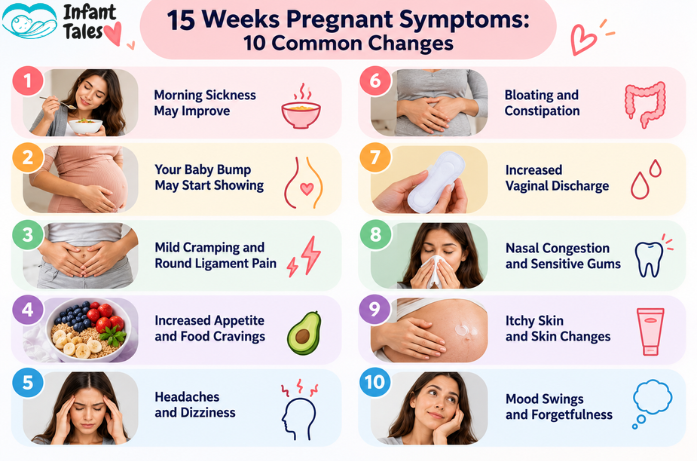
15 Weeks Pregnant Symptoms: 10 Common Changes
At 15 weeks, some early pregnancy symptoms may begin to improve, while new changes appear as your baby grows. The NHS week-by-week pregnancy guide also explains the changes you may experience during this stage. Every pregnancy is different, so you might experience several symptoms or hardly any at all.
Here are 10 common pregnancy symptoms at 15 weeks and simple ways to manage them.
1. Morning Sickness May Start Improving
For many moms, nausea begins to ease during the second trimester as pregnancy hormones change. You may finally enjoy your favorite meals again, although some women still experience morning sickness at 15 weeks.
Eating small, frequent meals, avoiding strong smells, and sipping water throughout the day may help. Contact your doctor if you cannot keep fluids down.
2. Your Baby Bump May Start Showing
Your belly may begin looking rounder as your uterus grows upward from your pelvis. Some moms have a noticeable bump at 15 weeks, while others take longer to show. Both can be normal.
Choose comfortable, stretchy clothing as your waistline changes. Remember, your bump doesn’t need to look like anyone else’s, and belly size alone doesn’t determine your baby’s growth.
3. Mild Cramping and Round Ligament Pain
As your uterus expands, the supporting ligaments stretch, sometimes causing brief pulling or sharp sensations in your lower belly. You may notice this when standing quickly, coughing, or changing positions.
Moving slowly, resting when needed, and avoiding sudden movements can ease discomfort. Seek medical advice if the pain becomes severe, persistent, or occurs with bleeding.
4. Increased Appetite and Food Cravings
You might feel hungrier as nausea improves and your body supports your growing baby. Some foods may suddenly seem more appealing, while others still trigger aversions.
Keep nutritious snacks like fruit, yogurt, nuts, and eggs nearby. Balanced meals containing protein, fiber, and healthy fats can help you feel satisfied throughout the day.
5. Headaches and Dizziness
Headaches are among the common 15 weeks symptoms that may result from hormonal changes, dehydration, tiredness, or missed meals. Changes in blood circulation can also make you feel lightheaded.
Drinking enough water, eating regularly, getting proper rest, and standing up slowly may help. Seek medical advice for severe headaches, vision changes, or fainting.
6. Bloating and Constipation
Pregnancy hormones slow digestion, which can cause bloating, gas, and constipation. Iron supplements may also contribute to digestive discomfort.
Including fiber-rich foods, drinking plenty of water, and taking gentle walks can support digestion. If constipation becomes painful or persistent, ask your doctor about safe treatment options.
7. Increased Vaginal Discharge
You may notice more vaginal discharge than usual. Normal pregnancy discharge is generally thin, clear or milky white, and has no strong unpleasant smell.
Wearing breathable cotton underwear and avoiding scented vaginal products can help you stay comfortable. Contact your doctor if discharge causes itching, smells unusual, contains blood, or becomes watery and leaks continuously.
8. Nasal Congestion and Sensitive Gums
Hormonal changes and increased blood flow can cause a blocked nose, occasional nosebleeds, or bleeding gums. These changes are fairly common during pregnancy.
A saline nasal spray may relieve congestion, while a soft toothbrush and regular dental care can help keep your gums healthy.
9. Itchy Skin and Skin Changes
As your belly grows, your skin may feel tight or mildly itchy. You might also notice darker facial patches or a dark line on your abdomen called linea nigra.
Applying fragrance-free moisturizer and wearing loose cotton clothing can ease mild itching. However, severe itching, especially on your palms or soles, needs prompt medical attention.
10. Mood Swings and Forgetfulness
Pregnancy hormones, stress, and changes in sleep can affect your emotions and concentration. You may feel excited one moment and worried or forgetful the next.
Getting enough rest, writing down reminders, and talking with someone you trust may make things easier. If sadness or anxiety becomes overwhelming, don’t hesitate to speak with your healthcare provider.
Is It Normal to Have No Symptoms at 15 Weeks Pregnant?
Yes, it’s completely normal to have few or even no noticeable pregnancy symptoms at 15 weeks.
As you enter the second trimester, morning sickness may start fading, your energy might return, and you may suddenly fe.el more like yourself again.
While that’s a welcome change, it can also leave you wondering, “Is everything okay with my baby?”
The good news is that 15 week pregnancy symptoms can come and go, and feeling better doesn’t mean something is wrong. Every pregnancy is different, and some moms simply experience fewer symptoms than others.
If your prenatal checkups have been reassuring and you’re feeling well, there’s usually no reason to worry about fewer symptoms alone.
However, if you notice vaginal bleeding, severe abdominal pain, fluid leakage, or anything that feels unusual, contact your healthcare provider for advice
Baby Development at 15 Weeks Pregnant
While you’re noticing changes outside, your baby is busy growing inside. According to the American Pregnancy Association, week 15 is an important stage of your baby’s ongoing growth and development.
Your Baby Is Moving More
Your little one can move their arms and legs, bend their joints, and practice small movements.
They may even bring their hands toward their mouth.
You probably won’t feel these movements yet, but they’re helping develop muscles and coordination.
Bones and Facial Features Are Developing
Your baby’s skeleton continues developing as cartilage gradually turns into bone.
Their facial features are becoming more defined, while the eyes and ears move closer to their eventual positions.
Fine Hair Is Beginning to Grow
Soft, fine hair called lanugo is beginning to develop on your baby’s body.
Your baby’s hearing structures and other senses are also developing, although they will continue maturing throughout pregnancy.
Can You Feel Your Baby Move at 15 Weeks?
At 15 weeks pregnant, your baby is already moving their tiny arms and legs, but you may not be able to feel those movements just yet.
Some moms, especially those who have been pregnant before, may notice gentle flutters or tiny bubbles in their belly. These first movements are called quickening.
Most women start feeling their baby move between 16 and 24 weeks. If this is your first pregnancy, you might not notice anything until after 20 weeks. Understanding when you can feel your baby move can help you know what to expect.
So, if you haven’t felt your baby move at 15 weeks, don’t worry. It’s usually too early to expect regular movements, and there’s no need to count kicks yet.
However, if you haven’t felt any movement by 24 weeks, let your doctor or midwife know.
Normal Symptoms vs. Warning Signs at 15 Weeks
Knowing when to seek medical advice can make pregnancy feel a little less confusing.
| Symptom | Often normal | When to call your provider |
| Belly discomfort | Brief stretching or pulling | Severe or persistent pain |
| Vaginal discharge | Clear or milky white | Unusual odor, itching, bleeding, or watery leakage |
| Headache | Mild and occasional | Severe, persistent, or with vision changes |
| Itching | Mild skin stretching | Severe itching, especially palms or soles |
| Dizziness | Brief lightheadedness | Fainting or repeated episodes |
| Nausea | Occasional nausea | Unable to keep fluids down |
Any vaginal bleeding during pregnancy deserves medical advice. Seek emergency care for severe bleeding, chest pain, difficulty breathing, or loss of consciousness. The CDC’s urgent maternal warning signs guide explains other serious symptoms that need immediate medical attention during pregnancy.
How to Stay Comfortable at 15 Weeks Pregnant
A few simple habits can help make this stage easier.
Eat nourishing meals: Include vegetables, fruit, protein, whole grains, and iron-rich foods. Choosing safe and nutritious foods during pregnancy can help support your baby’s development. Continue prenatal supplements as recommended.
Stay hydrated: Drink water regularly to support circulation and digestion.
Keep moving gently: Walking, swimming, or prenatal yoga can help you stay active if your pregnancy care team says it’s safe.
Practice pelvic floor exercises: These exercises may help support bladder control during and after pregnancy.
Make time for rest: Even if your energy improves, your body is still working hard.
What Tests and Appointments Happen Around 15 Weeks?
Your healthcare provider may review earlier test results, check your blood pressure, and discuss second-trimester screening options.
Depending on your medical history and local care schedule, some blood screening tests may be offered around this stage.
You may also begin planning your anatomy ultrasound, usually performed around 18–22 weeks.
At your next appointment, consider asking whether your symptoms are normal, which screening tests are appropriate, and when to schedule your ultrasound.
Frequently Asked Questions About 15 Weeks Pregnant
1. What are the most common symptoms at 15 weeks pregnant?
Common symptoms include a growing belly, increased appetite, mild abdominal stretching, headaches, constipation, nasal congestion, and increased vaginal discharge.
2. Is it normal to have no pregnancy symptoms at 15 weeks?
Yes. Many women notice fewer symptoms during the second trimester. Feeling better doesn’t necessarily indicate a problem.
3. Can I feel my baby move at 15 weeks?
It’s possible, particularly in a second pregnancy, but most moms begin noticing movements between 16 and 24 weeks.
4. Why is my belly still small at 15 weeks?
Bump size varies with body shape, abdominal muscles, and previous pregnancies. A small bump alone doesn’t mean your baby isn’t growing normally.
5. Is cramping normal at 15 weeks pregnant?
Mild stretching or round ligament discomfort can be normal. Severe, persistent, or worsening cramps should be medically assessed.
6. Can morning sickness continue at 15 weeks?
Yes. Some women experience nausea into the second trimester. Seek medical advice if vomiting is severe or you cannot stay hydrated.
Final Thoughts
At 15 weeks pregnant, your baby is growing, your body is changing, and some of those uncomfortable early pregnancy symptoms may finally be easing. While some moms feel more energetic, others may still experience nausea, tiredness, or mild discomfort. Every pregnancy is different, and that’s perfectly normal.
Focus on eating nutritious meals, staying hydrated, getting enough rest, and attending your prenatal appointments. Remember, having fewer symptoms or a smaller baby bump doesn’t necessarily mean something is wrong.
Most importantly, be patient with yourself and enjoy these little milestones. Your body is doing amazing work, and every passing week brings you closer to meeting your baby.
Want more helpful pregnancy tips? Explore Infant Tales for practical advice and caring guidance throughout your pregnancy journey.
Medical Disclaimer
This article is for general educational purposes and doesn’t replace professional medical advice. Always consult your doctor or midwife about pregnancy symptoms, medical concerns, or treatment decisions.