
Authored by: A Caring Mom at Infant Tales
One minute, your toddler is happily playing, and the next, they’re crying over something small. Maybe they refuse their favorite snack, don’t want to get dressed, or suddenly want to be held all the time. These unexpected mood changes can leave parents confused, wondering what’s bothering their little one.
If you’re wondering how to calm a fussy toddler, understanding the reason behind their behavior is a good place to start. Hunger, tiredness, overstimulation, and physical discomfort are some common causes of toddler fussiness. At this age, children are still learning how to express their feelings and handle frustration, so even little things can feel overwhelming.
Thankfully, there are simple ways to make these difficult moments easier for both you and your toddler. From gentle calming activities and comforting routines to recognizing signs of overstimulation, this guide shares practical tips to help your little one settle and feel more secure.
Why Do Toddlers Get Fussy So Easily?
Before trying to stop the crying, it helps to understand what’s causing it.
Toddlers are becoming more independent, but their communication and emotional regulation skills are still developing.
According to MedlinePlus, a health information resource from the U.S. National Library of Medicine, irritability in children can be associated with hunger, tiredness, discomfort, frustration, or illness.
Some common reasons include:
- Hunger or tiredness: Missing meals, snacks, or naps can make small frustrations feel overwhelming.
- Overstimulation: Loud noises, crowded places, and too many activities may leave toddlers overwhelmed.
- Communication difficulties: Your toddler may know what they want but struggle to explain it.
- Wanting independence: Being unable to do something themselves can quickly lead to frustration.
- Changes in routine: Travel, daycare changes, or a new sibling may temporarily increase fussiness.
- Physical discomfort: Teething, constipation, fever, or illness can sometimes cause unusual irritability.
Understanding the possible cause makes it easier to choose the right response instead of trying different things without knowing what your child needs.
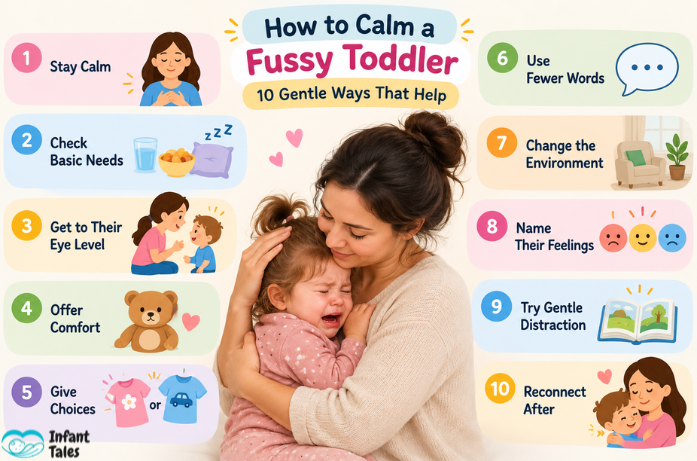
How to Calm a Fussy Toddler: 10 Gentle Ways That Help
When your toddler is crying or having a meltdown, staying patient can feel difficult. But understanding their feelings and responding gently can help them settle.
Here are ten simple and practical ways to calm a toddler during those challenging moments.
1. Stay Calm Before Responding
Toddlers often look to their parents for comfort when they feel upset. Shouting or reacting angrily may make the situation worse.
Take a deep breath, lower your voice, and speak gently. Staying calm helps your toddler feel safe and may make it easier for them to settle.
2. Check Their Basic Needs
Sometimes, fussiness happens because your toddler is hungry, thirsty, tired, or uncomfortable. Young children may struggle to explain what is bothering them.
Offer a healthy snack, water, or a quiet rest if needed. Also, check for wet diapers, uncomfortable clothing, or signs of illness.
3. Get Down to Their Eye Level
When your toddler is upset, try kneeling or sitting beside them instead of standing over them. This can make your presence feel less overwhelming.
Use a gentle voice and acknowledge their feelings. Even if they continue crying, your attention can help them feel understood and supported.
4. Offer Comfort Without Forcing It
Some toddlers want cuddles when they are upset, while others prefer a little space. Pay attention to what makes your child comfortable.
Offer a hug or their favorite stuffed animal. If they pull away, stay nearby and give them time to settle without forcing physical contact.
5. Give Two Simple Choices
Toddlers often become frustrated when they cannot make their own decisions. Giving them small choices can help reduce everyday struggles.
Let your child choose between two shirts, snacks, or activities. Keep the options simple so they feel involved without becoming overwhelmed.
6. Use Fewer Words During Meltdowns
When toddlers are extremely upset, they may find it difficult to understand long explanations or follow instructions.
Speak slowly and use short, reassuring sentences. Wait until your child is calmer before explaining what happened or discussing better ways to respond.
7. Change the Environment
Loud noises, crowded places, and too many activities can make toddlers feel overwhelmed. Sometimes, a quieter environment is all they need.
Move to a peaceful room, turn off the television, or reduce bright lights. A short break from noise and activity may help your toddler relax.
8. Help Your Toddler Name Their Feelings
Toddlers experience anger, sadness, and frustration but may not know how to express these emotions.
Help your child recognize feelings by using simple words such as sad, angry, or frustrated. Over time, this can help them communicate their needs more clearly.
9. Try Gentle Distraction
If you notice your toddler becoming frustrated, shifting their attention to something familiar may help prevent a bigger meltdown.
Offer a favorite book, suggest a simple game, or take a short walk outside. Gentle distraction usually works best before your child becomes extremely upset.
10. Reconnect After the Meltdown
Once your toddler feels calmer, spend a few quiet minutes together. A cuddle, story, or familiar activity can help them feel secure again.
If they hit or threw something, calmly explain that the behavior is not acceptable. Focus on teaching better ways to express frustration rather than making your child feel ashamed.
How to Calm an Overstimulated Toddler
Toddlers can become overwhelmed after birthday parties, shopping trips, or busy family gatherings. Too much noise, excitement, or activity may leave them cranky, restless, or upset.
Recognizing these signs early can help you understand when your toddler needs a quiet break, gentle comfort, and some time to relax.
Signs of Overstimulation
- Becoming unusually clingy or tearful
- Covering their ears around loud noises
- Losing interest in favorite activities
- Becoming restless or irritable
- Crying suddenly after busy activities
What Parents Can Do to Help
- Find a quiet place: Move your toddler away from crowds, noise, and bright lights.
- Offer gentle comfort: Give a hug, hold their hand, or sit beside them if they prefer space.
- Reduce stimulation: Turn off the television and put away noisy toys.
- Try a calming activity: Read a familiar book or offer their favorite stuffed animal.
- Allow time to relax: Avoid rushing them into another activity and let them settle at their own pace.
Remember, sometimes your toddler needs less excitement and more quiet time with you to feel calm and secure again.
Create a Toddler Calm Down Corner at Home
A toddler calm down corner is a quiet, cozy space where your little one can relax when feeling upset or overwhelmed. You don’t need expensive supplies. Just choose a peaceful corner of your bedroom or living room.
What to Include in a Calm Down Corner
- Soft cushion or mat: A comfortable place to sit.
- Favorite stuffed animal: Provides familiar comfort.
- Picture books: Help your toddler relax with quiet reading.
- Cozy blanket: Makes the space feel warm and secure.
- Emotion cards: Help your child recognize different feelings.
- Sensory toys: Encourage gentle, calming play.
Introduce the corner when your toddler is relaxed and encourage them to use it whenever they need quiet time. Sit beside them, read a story, or offer gentle comfort.
Remember: Never use this space as punishment or force your toddler to stay there. It should always feel safe, comforting, and welcoming.
5 Simple Toddler Calming Activities to Try
Gentle play can help your toddler relax when they’re feeling upset or overwhelmed. These simple toddler calming activities are easy to try at home and require very little preparation.
1. Blow Pretend Birthday Candles
Hold up your fingers like birthday candles and encourage your toddler to blow them out slowly. This fun breathing game may help them relax and settle their emotions.
2. Read a Familiar Story
Sit together in a quiet place and read your toddler’s favorite picture book. Familiar stories and your soothing voice can provide comfort when they’re upset.
3. Play With Playdough
Let your toddler squeeze, roll, and flatten soft, non-toxic playdough. This hands-on activity can help them focus on something calming. Always supervise young children during play.
4. Take a Short Nature Walk
Take your toddler outside for a gentle walk and explore birds, flowers, or trees together. Fresh air and a peaceful change of surroundings may help improve their mood.
5. Listen to Gentle Music
Play a soft lullaby or your toddler’s favorite calming song at a low volume. Gentle music may help them relax, but if they prefer quiet, turn it off and let them rest.
How to Prevent Toddler Fussiness Throughout the Day
While toddler meltdowns are a normal part of development, simple daily routines can help reduce fussiness and keep your little one more comfortable.
1. Maintain Regular Meals and Sleep
Hunger and tiredness can make toddlers more irritable. Offer meals, snacks, and naps at consistent times to help prevent unnecessary frustration.
According to the CDC, toddlers ages 1–2 need 11–14 hours of sleep daily, including naps. Getting enough rest supports their mood and healthy development.
2. Prepare Your Toddler for Transitions
Toddlers may become upset when their favorite activity suddenly ends. Give gentle reminders before changing activities, such as letting them know playtime will finish soon.
Simple routines and clear instructions can make daily transitions easier.
3. Notice Fussiness Patterns
Pay attention to when your toddler becomes most fussy. Is it before meals, after daycare, or close to bedtime?
Recognizing these patterns can help you make small changes, like offering a snack, allowing extra rest, or planning quieter activities.
4. Spend Quality Time Together
Set aside a few minutes each day to give your toddler your full attention. Read books, build blocks, or enjoy their favorite game together.
These small moments of connection help your toddler feel loved, secure, and understood.
What Should You Avoid When Your Toddler Is Fussy?
When you’re exhausted, it’s understandable to want the crying to stop quickly.
However, certain responses may make things harder.
Try to avoid shouting, threatening, shaming, forcing hugs, or giving long lectures during meltdowns.
Also, avoid changing every boundary just to stop the crying.
You can acknowledge your child’s feelings while maintaining reasonable limits.
The American Academy of Pediatrics (AAP) explains that tantrums are common in young children and recommends approaches such as offering limited choices and responding consistently.
Remember, being gentle doesn’t mean allowing unsafe behavior. It means setting boundaries with patience and respect.
When Should You Worry About Toddler Fussiness?
Occasional fussiness is a normal part of toddler development.
However, sudden or persistent irritability may sometimes indicate illness, pain, or another concern.
Contact your pediatrician if your toddler experiences:
- Unusual or persistent crying
- Fever or signs of pain
- Significant changes in sleep or appetite
- Frequent severe meltdowns affecting daily life
- Concerns about communication or development
Seek urgent medical attention if your child has difficulty breathing, is difficult to wake, or shows signs of severe dehydration.
If your toddler’s behavior seems very different from usual, trust your observations and ask a healthcare professional for guidance.
Frequently Asked Questions
1. What is the fastest way to calm a fussy toddler?
Check if your toddler is hungry, tired, or uncomfortable. Speak gently and offer comfort.
2. How do I calm a toddler who won’t stop crying?
Stay calm, offer reassurance, and give them time to settle. Seek medical advice if the crying is unusual or persistent.
3. How can I calm an overstimulated toddler quickly?
Move to a quiet place, reduce noise, and offer a favorite toy or comforting hug.
4. Should I ignore my toddler during a tantrum?
No. Stay nearby, keep them safe, and offer comfort when they’re ready.
5. At what age do toddler tantrums improve?
Tantrums are common between ages 1 and 3 and often become less frequent as children develop communication skills.
Final Thoughts
Learning how to calm a fussy toddler takes patience, love, and understanding. Every toddler is different, so what works one day may not work the next.
Sometimes, a warm hug, a healthy snack, or a quiet break is all your little one needs. Stay calm, notice their needs, and give them time to settle.
Remember, tantrums are a normal part of growing up. With your gentle support, your toddler will gradually learn to manage their emotions.
At Infant Tales, we believe that small moments of patience, comfort, and connection can make a big difference in your parenting journey.
Looking for more gentle parenting advice? Visit Infant Tales for practical toddler care tips, developmental guidance, and everyday parenting support.
Medical Disclaimer: This article is for educational purposes only and does not replace professional medical advice. Consult your pediatrician if your toddler’s fussiness is persistent, unusual, or accompanied by concerning symptoms.