Authored by: A Caring Mom at Infant Tales
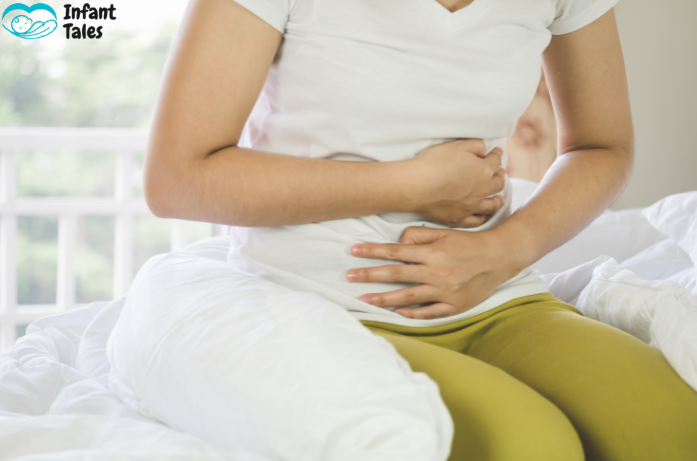
After giving birth, your body goes through many changes, and digestive discomfort is one of them. Postpartum gas is a common issue that can cause bloating, stomach cramps, trapped gas, and frequent passing of gas after delivery. It can happen after both vaginal birth and C-section due to hormonal changes, slower digestion, constipation, and certain medications.
For many new moms, gas and bloating improve within a few days, although discomfort may last longer depending on the type of delivery and recovery. If you’re wondering how long postpartum gas lasts or what helps relieve the discomfort, understanding the causes is a good place to start.
Let’s explore why postpartum gas happens, how long it may last, and simple, safe ways to find relief while your body heals.
What Is Postpartum Gas?
Postpartum gas is the extra gas, bloating, or abdominal discomfort some women experience after childbirth.
During pregnancy and delivery, your body goes through major hormonal and physical changes. These changes, along with medications and constipation, can temporarily affect digestion.
You may notice:
- Frequent burping or passing gas
- A swollen or tight-feeling stomach
- Mild abdominal cramps
- Painful trapped gas
- Pressure that improves after passing gas
- Difficulty controlling gas after delivery
Some moms experience mild bloating, while others feel more uncomfortable during the first few days.
Although these symptoms are often temporary, severe or worsening abdominal pain should never be ignored.
Why Does Postpartum Gas Happen?
After childbirth, your digestive system needs time to adjust. Hormonal changes, constipation, medications, and daily habits can all contribute to postpartum gas. Here are five common reasons you may feel bloated or gassy after delivery.
1. Hormonal Changes After Delivery
During pregnancy, progesterone slows digestion by relaxing the muscles in your intestines. This can cause gas, bloating, and constipation.
Although hormone levels change quickly after birth, your bowel habits may take longer to return to normal, leaving you feeling uncomfortable for a few days.
2. Slower Digestion After a C-Section
After a C-section, anesthesia, surgery, and certain pain medications can temporarily slow bowel movements. This allows gas to build up, causing abdominal pressure and cramps. For more information about managing discomfort safely after childbirth, read the ACOG guide to postpartum pain management.
Helpful tip: Once your doctor allows it, short, gentle walks may help your intestines start moving normally again.
3. Constipation After Childbirth
Constipation is a common cause of postpartum gas pain. Dehydration, iron supplements, and fear of straining because of stitches or soreness can make bowel movements difficult. According to MedlinePlus’s postpartum care guidance, constipation and menstrual-like cramps are among the physical changes women may experience after childbirth.
When stool stays in your intestines longer, gas may become trapped.
Helpful tip: Drink enough water, eat fiber-rich foods, and ask your doctor about a stool softener if needed.
4. Weakened Pelvic Floor Muscles
Pregnancy and vaginal delivery can stretch or injure the pelvic floor muscles that help control gas and bowel movements.
You may notice gas escaping unexpectedly when laughing, walking, or standing up.
Helpful tip: If you regularly struggle to control gas or experience stool leakage, speak with your healthcare provider about pelvic floor therapy.
5. Changes in Eating Habits
With a newborn to care for, you may rush through meals, skip breakfast, or eat whatever is available.
Eating quickly can make you swallow extra air, while foods such as beans, cabbage, and fizzy drinks may increase gas.
Helpful tip: Eat slowly, try smaller meals, and notice which foods make your bloating worse without unnecessarily restricting nutritious foods.
How Long Does Postpartum Gas Last?
One question many new moms ask is, how long does postpartum gas last?
For many women, gas and bloating begin improving within the first several days after childbirth.
However, symptoms may continue for weeks if constipation, medications, or pelvic floor problems are involved.
Here’s a general idea of what recovery may look like.
| Recovery period | What you may experience |
| First 1–2 days | Bloating, slower bowel movements, or trapped gas |
| Days 3–7 | Gradual improvement as digestion becomes more active |
| Weeks 2–6 | Occasional gas or constipation may continue |
| After 6 weeks | Persistent symptoms should be discussed with a healthcare provider |
These are general patterns, not exact recovery deadlines.
After a Vaginal Delivery
Gas often improves within a few days as bowel movements become more regular.
However, constipation or pelvic floor weakness may cause symptoms to last longer.
After a C-Section
Gas discomfort can be stronger during the first few days because surgery temporarily affects bowel activity.
Many women begin passing gas within a day or two, although recovery varies.
If you develop increasing abdominal swelling, vomiting, or an inability to pass gas or stool, seek urgent medical attention.
What Does Postpartum Gas Pain Feel Like?
Postpartum gas pain can sometimes feel surprisingly uncomfortable, especially when your abdomen is already tender.
You may experience:
- Sharp or cramping stomach pain
- Pressure in your lower abdomen
- A swollen, full feeling
- Gurgling sounds
- Discomfort that improves after passing gas
However, not every postpartum stomach cramp comes from gas.
Gas Pain vs. Other Postpartum Cramps
| Type of discomfort | Common signs |
| Trapped gas | Bloating, moving cramps, relief after passing gas |
| Uterine afterpains | Period-like cramps, sometimes stronger during breastfeeding |
| Constipation | Hard stools, straining, abdominal fullness |
| C-section soreness | Tenderness or pulling around the incision |
These signs can help you describe your discomfort, but they cannot confirm its cause.
Severe, persistent, or worsening pain needs medical evaluation.
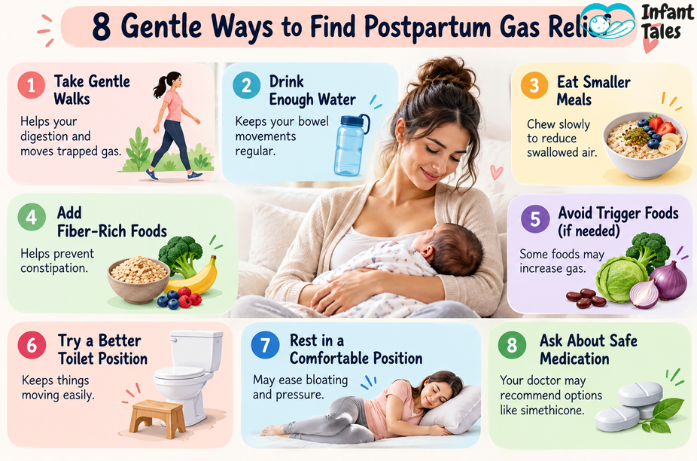
8 Gentle Ways to Find Postpartum Gas Relief
Dealing with bloating and gas while caring for a newborn can be uncomfortable. Thankfully, a few simple changes may help improve digestion and ease postpartum gas pain without putting extra pressure on your recovering body.
1. Take Short, Gentle Walks
Gentle movement helps your intestines move gas and stool more easily, which may reduce bloating and trapped gas.
Start with a few minutes of slow walking around your home once your healthcare team says it’s safe. If you’ve had a C-section, take your time and avoid movements that strain your incision.
Mom tip: A short walk after meals may help your digestion without making you feel exhausted.
2. Stay Hydrated Throughout the Day
Not drinking enough water can make stools harder, leading to constipation and more gas discomfort.
Keep a water bottle beside your bed or feeding chair and sip regularly, especially if you’re breastfeeding.
You can also enjoy water-rich foods like watermelon, oranges, and soups to support hydration.
3. Eat Smaller Meals and Chew Slowly
Eating large meals or rushing through food can leave your stomach feeling heavy and bloated.
Try smaller, balanced meals and chew your food properly to reduce the amount of air you swallow.
Helpful tip: Sit upright while eating and avoid lying down immediately afterward if it makes you uncomfortable.
4. Add Fiber-Rich Foods Gradually
Constipation can make trapped gas worse, so keeping bowel movements regular is important for postpartum gas relief.
Include foods such as oatmeal, whole grains, pears, prunes, and cooked vegetables in your meals.
Increase fiber slowly and drink enough water, as adding too much fiber at once may cause more bloating.
5. Identify Foods That Trigger Gas
Some foods, including beans, cabbage, broccoli, onions, and fizzy drinks, may produce extra gas during digestion.
You don’t need to stop eating these nutritious foods completely. Instead, notice which ones make you uncomfortable and try smaller portions.
Mom tip: Cooking vegetables until tender and eating slowly may make some meals easier to tolerate.
6. Make Bathroom Visits More Comfortable
If you’re constipated, straining can make bowel movements painful, especially when you’re healing from stitches or a C-section.
Place your feet on a small, stable stool while sitting on the toilet, lean forward slightly, and breathe gently instead of pushing hard.
If constipation continues, ask your healthcare provider whether a stool softener would help.
7. Try Comfortable Resting Positions
Changing your position may help reduce pressure when your belly feels swollen.
Try resting on your side with a pillow between your knees or supporting your abdomen. Sitting upright after meals may also feel more comfortable.
Avoid deep stretches, abdominal pressure, or positions that cause pain around your C-section incision.
8. Ask About Safe Gas Relief Medication
If you are not getting enough relief from natural remedies, your doctor or pharmacist may suggest something that is available over the counter.
Simethicone is a common drug for discomfort due to gas and it is deemed safe for breastfeeding mothers as very little, if at all, enters the bloodstream.
However, if a different condition such as constipation is causing your discomfort, it may not help.
When in doubt, confirm with your doctor before taking any medication while recovering after giving birth.
Keep in mind that these recommendations are applicable in cases of mild gas and bloating. Seek immediate medical help in case of severe or increasing abdominal pain, continuous vomiting, or a bloated stomach with the inability to fart or pass stool.
Why Am I Passing Gas but Not Pooping After Delivery?
It is not unusual to pass gas rather than have a bowel movement for a few days after child delivery and it is even more frequent after C-section surgery. Several factors such as surgery, pain medications, dehydration, and limited movement can slow down digestion and cause constipation.
Passing gas after surgery indicates that your intestines are slowly starting to work, but you may not have the first bowel movement for a few more days.
Recommended action: Drink a lot of water, eat foods rich in fiber, and walk around moderately when permitted by your doctor. Avoid straining, especially if you have stitches or a healing wound after C-section surgery.
In case you have not passed any stool for two or more days, consult your doctor. Seek immediate medical care if you experience extreme abdominal pain, vomiting, worsening bloating, or inability to pass gas.
Can Breastfeeding Cause Postpartum Gas?
Breastfeeding doesn’t directly cause postpartum gas, but changes in your eating habits, water intake, and daily routine while nursing may contribute to bloating or constipation.
You may also notice stomach cramps during breastfeeding. These are often afterpains, caused by the hormone oxytocin, which helps your uterus shrink back toward its pre-pregnancy size.
Helpful tip: Drink enough water, eat balanced meals, and pay attention to your symptoms. If abdominal pain becomes severe, persistent, or worse over time, contact your healthcare provider.
When Should You Worry About Gas After Delivery?
Mild gas and bloating often improve naturally, but certain symptoms need medical attention.
Contact your healthcare provider if you experience:
- Persistent or worsening gas discomfort
- Constipation lasting several days
- Frequent painful bloating
- Difficulty controlling gas or stool
- Digestive symptoms affecting daily activities
Seek urgent medical care if you experience:
- Severe or worsening abdominal pain
- Persistent vomiting
- A swollen abdomen with inability to pass gas or stool
- Fever of 100.4°F (38°C) or higher
- Chest pain or difficulty breathing
- Severe headache, vision changes, or upper-right abdominal pain
These symptoms may indicate complications that need medical treatment rather than home remedies.
Frequently Asked Questions About Postpartum Gas
1. Is postpartum gas normal after vaginal delivery?
Yes. Hormonal changes, constipation, and pelvic floor stretching can contribute to gas after vaginal birth.
2. How long does postpartum gas last after a C-section?
Gas often begins improving within several days as bowel activity returns, although constipation or medication effects may prolong symptoms.
3. Can postpartum gas cause sharp stomach pain?
Yes, trapped gas can cause sharp cramps. However, severe, persistent, or worsening pain should be medically evaluated.
4. What is the fastest way to relieve postpartum gas?
Gentle walking, drinking enough water, and managing constipation may help. There isn’t one remedy that works immediately for everyone.
5. Why can’t I control my gas after childbirth?
Pregnancy or delivery may affect pelvic floor muscles and nerves. Persistent difficulty controlling gas or stool should be assessed by a healthcare professional.
Final Thoughts
The time it takes to recover from childbirth includes several factors, and one of them is the condition of your digestive system. While postpartum gas can lead to painful bloating and other discomforting symptoms, in general things will improve with time as your digestion eases up and your bowel movements return to normal.
Some of the simple things one can do to alleviate suffering include gentle motion, eating foods rich in fiber and proper hydration. If the delivery included a C-section, one’s digestive system will need extra time to heal.
Persistent or worsening pain in the abdomen shouldn’t be dismissed. Seek medical attention if the symptoms don’t improve and go to the hospital if there’s severe abdominal pain, uncontrolled vomiting or inability to pass gas.
At Infant Tales, we believe every new mom deserves a healthy, comfortable, and well-supported postpartum recovery.
Medical Disclaimer
This article is for educational purposes only and does not replace professional medical advice. Always consult your healthcare provider about persistent postpartum symptoms, medications, or concerns about your recovery.