Authored by: A Caring Mom at Infant Tales
Newborns can be surprisingly noisy and wiggly sleepers. One minute your baby is lying peacefully in the bassinet, and the next they are stretching, twitching, making little faces, or letting out a tiny grunt. If you’re a new parent, these sounds and movements can easily make you wonder whether your baby is waking up, needs something, or is actually still fast asleep.
Newborn active sleep is a normal sleep state in which babies may move, make noises, change facial expressions, or briefly open their eyes while still asleep. Newborns spend a good portion of their sleep in this active state, so these little movements and sounds can appear several times during naps and nighttime sleep.
Learning what newborn active sleep looks like and how it differs from quiet sleep or being truly awake can make those nighttime moments much easier to understand. It can help you recognize when your baby genuinely needs feeding or comfort and when they may simply need a quiet moment to continue sleeping.
Table of Contents
- What Is Newborn Active Sleep?
- What Does Active Sleep Look Like in Newborns?
- Newborn Active Sleep vs Quiet Sleep vs Awake: What’s the Difference?
- Try the “Watch, Listen, Respond” Approach
- How Long Does Active Sleep Last?
- Safe Sleep Still Matters During Active Sleep
- When Active-Looking Sleep May Need Medical Attention
- Frequently Asked Questions
- Final Thoughts
- Disclaimer
What Is Newborn Active Sleep?
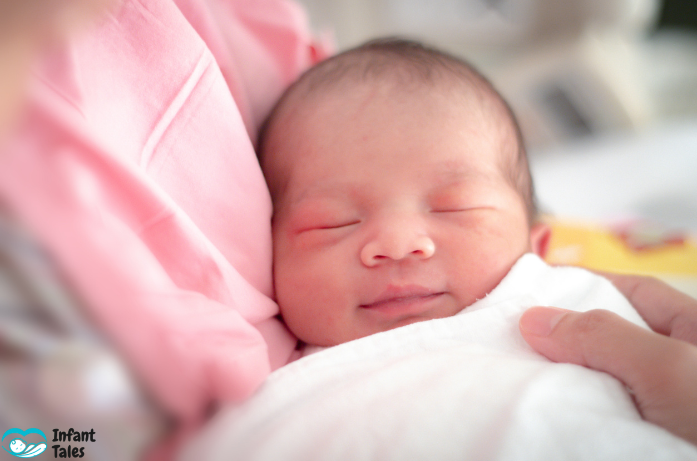
Newborn active sleep is a normal sleep stage when your baby may move, twitch, make little noises, or change facial expressions while still asleep. Their breathing may also be a little less regular during this time.
Active sleep is similar to REM sleep in adults, but newborn sleep is still developing. This is why your baby can sometimes look awake even when they are actually sleeping.
Research available through the National Library of Medicine also explains that newborn active sleep is marked by eye movements and more variable breathing, and that newborns spend a large portion of their total sleep time in this state.
As your baby’s brain and nervous system mature, their sleep patterns gradually become more settled and organized.
What Does Active Sleep Look Like in Newborns?
This is often the part that surprises new parents most.
We usually picture sleep as lying completely still with closed eyes. Newborns don’t always sleep that way.
During active sleep, your baby may:
- twitch their hands, feet, arms, or face
- wiggle, stretch, or squirm
- flutter their eyelids
- move their eyes underneath closed eyelids
- briefly open their eyes
- smile, frown, or grimace
- make sucking movements
- squeak, grunt, whimper, or briefly cry
- breathe faster and then more slowly
One movement alone doesn’t tell you whether your baby is awake.
If their eyes remain mostly closed, the movements are brief and they settle again without help, they may still be sleeping.
Learning what active sleep looks like in newborns can keep every little wiggle from feeling like another wake-up.
Why Are Newborns So Active While Sleeping?
Your newborn may be asleep, but their developing brain and nervous system are still very busy. This is why you might notice little twitches, stretches, eye movements, sucking motions, or changing facial expressions while they sleep.
Newborns also move between different sleep states throughout a nap or nighttime sleep. One moment your baby may look completely still and peaceful, and the next they may wiggle, grunt, or scrunch up their face.
These sudden changes can catch you off guard, especially during the first few weeks. But in many cases, all that movement is simply a normal part of newborn sleep and doesn’t mean your baby is fully awake.
According to Stanford Medicine Children’s Health, newborn sleep patterns can vary quite a bit in the early months, and babies commonly wake every few hours for feeding.
Newborn Active Sleep vs Quiet Sleep vs Awake: What’s the Difference?
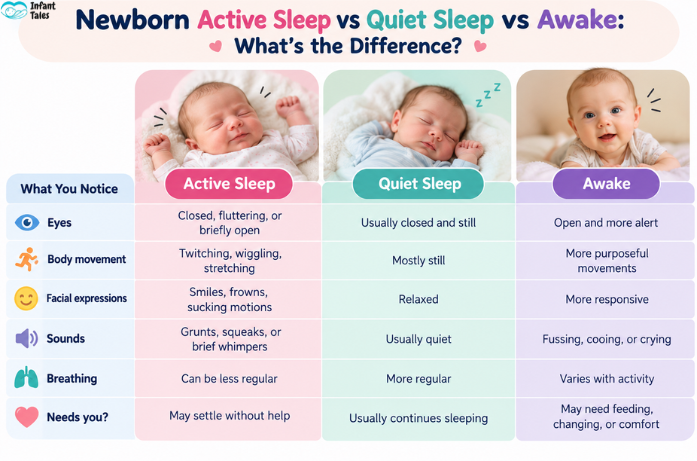
Newborns can look surprisingly different depending on whether they are in active sleep, quiet sleep, or fully awake. Knowing a few simple signs can help you understand what your baby may be doing before you rush to pick them up.
During active sleep, your baby may twitch, wiggle, make little noises, flutter their eyelids, or briefly open their eyes. In quiet sleep, they are usually much more still and their breathing looks more regular. When your baby is awake, their eyes generally stay open, their movements become more purposeful, and they may begin looking around, fussing, or showing feeding cues.
Here’s an easy way to compare the three:
| What You Notice | Active Sleep | Quiet Sleep | Awake |
| Eyes | Closed, fluttering, or briefly open | Usually closed and still | Open and more alert |
| Body movement | Twitching, wiggling, stretching | Mostly still | More purposeful movements |
| Facial expressions | Smiles, frowns, sucking motions | Relaxed | More responsive |
| Sounds | Grunts, squeaks, or brief whimpers | Usually quiet | Fussing, cooing, or crying |
| Breathing | Can be less regular | More regular | Varies with activity |
| Needs you? | May settle without help | Usually continues sleeping | May need feeding, changing, or comfort |
If you’re unsure whether your baby is waking, watch for a few moments when it is safe to do so. A baby in active sleep may make a noise or move and then settle again, while an awake baby usually becomes increasingly alert or continues trying to get your attention.
Try the “Watch, Listen, Respond” Approach
Newborns can make plenty of little sounds while they sleep, so you don’t always need to pick your baby up at the first grunt or wiggle. If they seem comfortable, give yourself a few moments to see what happens.
Watch: Notice whether your baby’s eyes are still closed and if they relax again after a little movement.
Listen: A quick squeak, grunt, or whimper may happen during active sleep. If the crying continues or becomes stronger, your baby may be waking up.
Respond: If your baby settles on their own, they may still be asleep. If they’re clearly awake, hungry, uncomfortable, or continuing to cry, go ahead and respond to what they need.
The idea isn’t to ignore your baby. It’s simply to pause long enough to tell the difference between a normal sleepy sound and a baby who is truly awake and needs you.
Why Does My Newborn Grunt and Make Noises While Sleeping?
Newborns aren’t always quiet sleepers. You may hear little grunts, squeaks, sighs, snorts, or whimpers coming from the bassinet, even when your baby is still asleep. Many of these small sounds can happen naturally during active sleep.
What matters is how your baby looks along with the noise. An occasional grunt followed by calm, comfortable sleep is different from repeated grunting with every breath.
If your baby seems to be struggling to breathe, has unusual changes in skin or lip color, or the grunting continues with signs of distress, seek medical advice promptly. When you’re unsure, it’s always reasonable to check with your baby’s healthcare provider.
Why Does My Newborn Smile or Twitch During Sleep?
Those tiny sleepy smiles can be one of the sweetest parts of the newborn stage.
During active sleep newborns may smile, frown, grimace, suck, twitch, or make other little facial movements.
These expressions don’t necessarily mean your baby is dreaming about something happy. Many are spontaneous movements associated with the developing nervous system.
Brief twitching can also happen during normal newborn sleep.
If movements are repetitive, prolonged, continue while your baby is awake, involve unusual stiffening, or make you wonder about seizures, contact your baby’s healthcare provider.
If you can safely record a short video, it may also help your healthcare provider understand what you observed.
How Long Does Active Sleep Last?
There isn’t a set amount of active sleep that every newborn should have. Babies have shorter sleep cycles than adults and naturally move between active and quieter sleep throughout a nap or nighttime sleep. The Sleep Foundation explains that newborn sleep mainly includes active (REM) and quiet (non-REM) sleep, with newborns spending about half of their sleep in the active REM stage.
So, your baby may look peacefully asleep one minute and then suddenly start stretching, squirming, or making little noises. It can seem like they’re waking up, but if they settle again after a short time, they may simply be moving from one sleep state to another.
As your baby grows and their sleep patterns mature, sleep gradually becomes more organized and these active periods may become less noticeable.
Can You Accidentally Wake a Baby During Active Sleep?
Yes, sometimes you can. During active sleep, your newborn may wiggle, flutter their eyelids, make sucking movements, or even let out a brief cry. These signs can look like waking, even though your baby may still be asleep.
If your baby is safe and comfortable, pause for a few moments before picking them up. They may become quiet again as they move into a deeper, calmer stage of sleep. Picking them up, talking to them, or turning on bright lights too quickly may fully wake them.
However, don’t delay if your baby is clearly awake or needs you. Continued crying, rooting or other hunger cues, discomfort, or a dirty diaper are good reasons to respond. As you get to know your newborn, it often becomes easier to tell the difference between their active-sleep movements and a true wake-up.
Does Active Sleep Mean My Baby Is Uncomfortable?
Not always. During active sleep, newborns may wiggle, stretch, grunt, scrunch their face, or pull their legs up. These movements can look like discomfort, even when your baby is still peacefully sleeping.
Instead of judging by one movement or sound, notice how your baby seems overall. If they settle again, feed normally, and seem comfortable when awake, those little nighttime movements may simply be part of their usual sleep pattern.
However, frequent crying, obvious signs of pain, trouble feeding, repeated vomiting, poor weight gain, or ongoing discomfort shouldn’t automatically be blamed on active sleep. If something seems unusual for your baby or you’re concerned, talk with your pediatrician or healthcare provider.
Safe Sleep Still Matters During Active Sleep
No matter how much your newborn wiggles, safe sleep practices remain important.
Place your baby on their back for sleep on a firm, flat sleep surface intended for infants, unless your healthcare provider has given you different medical instructions.
Keep pillows, loose blankets, stuffed toys, bumpers, wedges, sleep positioners, and other soft items out of the baby’s sleep space.
The American Academy of Pediatrics also recommends placing babies on their backs for every sleep, using a firm, flat sleep surface, and keeping soft objects and loose bedding out of the baby’s sleep area.
It can be tempting to add something to make a restless-looking baby more comfortable, but a simple, clear sleep space is safer.
If your baby falls asleep in a sitting device, such as a swing, move them to an appropriate firm, flat sleep surface as soon as practical.
When Active-Looking Sleep May Need Medical Attention
Most twitching, wiggling, eyelid fluttering, and occasional noises during active sleep are normal.
But not every unusual sound or movement should automatically be blamed on active sleep.
Seek urgent medical advice if your newborn:
- appears to struggle to breathe
- repeatedly grunts with breathing
- has pulling in around or underneath the ribs while breathing
- develops blue, gray, very pale, or unusual coloring
- is unusually difficult to wake
- has movements you think could be seizures
- seems seriously unwell
For babies younger than 3 months, a temperature of 100.4°F (38°C) or higher also needs prompt medical attention.
And remember, you don’t have to wait for something to match a checklist perfectly. If your baby’s breathing, movements, feeding, or behavior worries you, contact your pediatrician or healthcare provider.
Frequently Asked Questions
Final Thoughts
Newborn active sleep may look restless, but movements such as twitching, stretching, facial expressions, and little noises are often a normal part of newborn sleep. Learning these patterns can help you tell when your baby is simply sleeping and when they are truly waking up.
Keep your baby’s sleep space safe and pay attention to their overall behavior rather than one little grunt or wiggle. If you notice breathing difficulty, unusual movements, feeding problems, or anything that doesn’t seem normal for your baby, contact your healthcare provider.
It takes time to learn your newborn’s sleepy sounds and wake-up cues. As the weeks pass, those unfamiliar nighttime movements often become easier to recognize, giving you a little more confidence during those late-night checks.
Want more simple, reassuring guidance for your baby’s sleep and development? Explore more helpful newborn tips at Infant Tales and feel a little more confident through every stage.
Disclaimer
This article is for general informational purposes only and is not a substitute for professional medical advice. If you have concerns about your baby’s sleep, breathing, feeding, movements, or health, please contact your pediatrician or healthcare provider.
About the Author
Geeta Yogi is a parenting writer who shares practical guidance about newborn sleep, infant development, feeding, safe sleep, and everyday baby care. Her writing focuses on helping new parents better understand normal newborn behaviors and feel more confident during the early months with their baby.