Authored by: A Caring Mom at Infant Tales
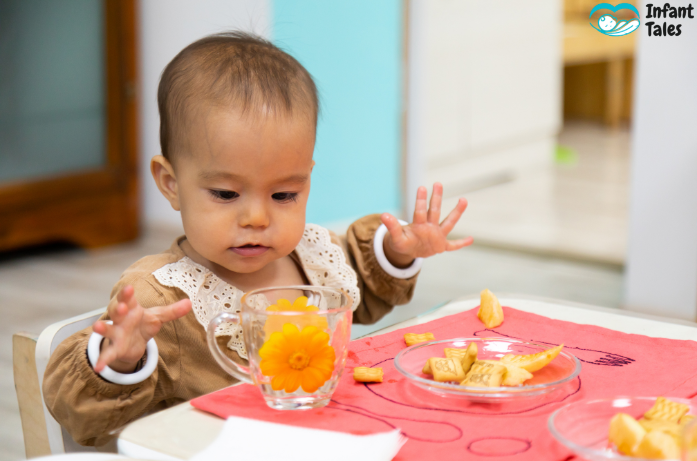
If you are wondering how to get toddler to stop throwing food, try the simple method first: Stay cool, remind your toddler briefly and demonstrate how to handle the unwanted food. Food throwing is quite a common toddler behavior which usually occurs when kids are satiated, bored, curious or unable to say “all done.”
Sometimes, it’s really annoying to see how your carefully prepared meal is scattered all around the kitchen after just a couple minutes from the beginning. In most cases, your child does not want to ruin the dinner. He/she is only learning boundaries, communication and mealtimes.
In this guide, you will find information on why do toddlers throw food, how to react to this situation and tips that will help you to minimize the unwanted behavior. With small servings, routine approach and several tricks, mealtimes will become more comfortable for both of you.
Why Do Toddlers Throw Food?
Toddlers throw food for many reasons, and the timing can give you a clue. If it happens near the end of a meal, they may be full. If they throw a certain food right away, they may not want it or feel unsure about it.
Food throwing can also happen when toddlers are bored, tired, not very hungry, or looking for a reaction. Some children simply do not yet know how to say “all done” or show that they have had enough.
Once you understand the reason behind the throwing, it becomes much easier to respond calmly and choose the right approach.
How to Get Toddler to Stop Throwing Food
You do not need a complicated discipline plan. A calm, simple, and consistent response is usually easier for toddlers to understand.
Stay Calm
Big reactions can make food throwing more interesting. If your toddler drops or throws food, use a short reminder such as, “Food stays on the table,” and avoid turning it into a long conversation.
The calmer your response, the less attention the behavior gets.
Show Them What to Do Instead
Toddlers also need to learn what they can do with food they do not want.
Give them a simple place to put it, such as the side of the plate or a small bowl, and say, “You can put it here.”
You may need to repeat this many times before it becomes a habit.
End the Meal If Throwing Continues
One dropped piece of food does not mean the meal is over.
But if your toddler keeps throwing food after a reminder and no longer seems interested in eating, they may be finished.
You can calmly say, “Looks like you’re all done,” and remove the plate.
This helps your toddler learn that food is for eating, while keeping the moment calm rather than turning it into a punishment.
Pay Attention to When the Throwing Starts
When your toddler starts throwing food can help you understand what is causing it.
Throwing at the Beginning of the Meal
If food is thrown almost immediately, your toddler may not be very hungry yet. Snacks, milk, or small bites before the meal can easily reduce appetite.
Try keeping meals and snacks on a fairly regular schedule so your child comes to the table hungry enough to eat, but not overly tired or upset.
Throwing Near the End of the Meal
If your toddler eats well first and then begins dropping food, they may simply be full.
Look for other fullness signs too, such as turning away, pushing the plate, slowing down, squirming, or losing interest in eating. This is often a good time to end the meal calmly before throwing becomes a game.
Throwing Only Certain Foods
If your toddler throws only certain foods, they may be rejecting the food rather than the whole meal.
The CDC notes that young children may need to try a new food many times before they accept it, so it can help to keep offering unfamiliar foods without pressure.
Instead of forcing them to eat it, show them where unwanted food can go. You might say, “You don’t have to eat it. Put it on the side.”
This teaches your toddler how to refuse food appropriately while keeping mealtimes calm and pressure-free.
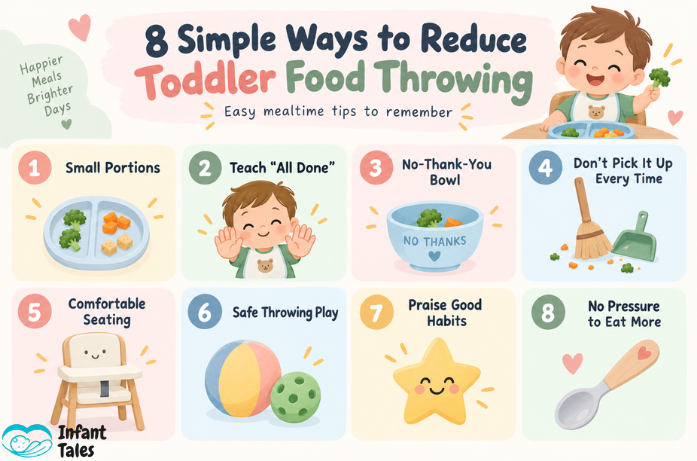
8 Simple Ways to Reduce Toddler Food Throwing
1. Serve Smaller Portions
A large plate can feel overwhelming to a toddler and gives them more food to throw.
Start with a few pieces of each food and offer more if your child is still hungry. Smaller portions can also help reduce waste and make cleanup easier.
2. Teach “All Done”
Some toddlers throw food because they do not yet know how to tell you they are finished.
Teach a simple phrase or gesture such as “all done” and model it at the end of meals. Over time, your toddler may begin using it instead of pushing or throwing food.
3. Give Unwanted Food a Place to Go
Toddlers may reject foods they liked yesterday, and that is normal.
Give them a small “no thank you” spot, such as one side of the plate or a small bowl. You can say, “You don’t have to eat it. Put it here.”
This gives them an acceptable alternative to throwing.
4. Avoid Picking Up Food Again and Again
If your toddler throws food on floor and you immediately pick it up every time, the behavior can quickly become a game.
Unless you need to clean something for safety, leave it until the meal ends. Avoid repeatedly replacing deliberately thrown food too.
This helps your toddler learn that food thrown from the table does not come straight back.
5. Make Sure Your Toddler Is Comfortable
An uncomfortable toddler may find it harder to sit and focus on eating.
Check that the chair feels supportive and your child is not constantly sliding, twisting, or trying to escape. Tiredness can also make food throwing more likely, especially at the end of a long day.
6. Give Them Safe Opportunities to Throw
Throwing is a normal physical skill toddlers enjoy practicing.
Give your child appropriate options such as soft balls, beanbags, rolled socks, or outdoor throwing games.
You can keep the rule simple: “Balls are for throwing. Food stays on the table.”
7. Praise the Behavior You Want
It is easy to notice the food that lands on the floor, but try to notice good mealtime behavior too.
Simple comments like, “Thanks for keeping your food on the plate,” or “Good job telling me all done,” help your toddler understand what you want them to do.
You do not need to praise every bite. A little positive attention at the right moment is enough.
8. Avoid Pressuring Your Toddler to Eat More
Toddlers naturally eat different amounts from one meal or day to another. If your child seems full, avoid pushing them to take “just one more bite.”
Pressure can make mealtimes stressful and may encourage playing with or throwing food once your toddler is finished eating.
According to Kids Health, toddlers should be allowed to decide how much they eat from the food offered, while parents focus on regular meals and healthy choices.
Instead, watch their hunger and fullness cues and focus on their overall eating habits rather than one meal.
What If My Toddler Eats Well at Daycare but Throws Food at Home?
This is surprisingly common. Your toddler may eat calmly at daycare and then come home and send dinner straight to the floor.
Daycare often has a predictable routine, set snack times, other children eating nearby, and consistent mealtime rules. Ask your childcare provider what they do when food is thrown and see whether you can use a similar approach at home.
Sometimes a little consistency between daycare and home makes a big difference.
Keep Caregiver Responses Consistent
Toddlers learn faster when the adults around them respond in a similar way.
If one person laughs, another picks the food up, and someone else removes the plate, the rule can become confusing.
Try agreeing on one simple response: give a calm reminder, show where unwanted food belongs, and end the meal if the throwing continues.
The more predictable the response, the easier it is for your toddler to understand what is expected.
What About Food Throwing at Restaurants?
A toddler throwing food at a restaurant can feel especially stressful, but try to keep expectations realistic.
Offer small amounts of food at a time and bring a quiet activity for the wait before the meal arrives. If your toddler is clearly finished eating, remove the food rather than expecting them to sit through a long meal.
Sometimes leaving earlier than planned is simply part of eating out with a toddler.
Should Toddlers Help Clean Up?
Older toddlers can begin helping with simple cleanup after a meal.
You might hand them a napkin or ask them to help put dropped food in the bin. Keep it calm and matter-of-fact rather than using cleanup as a punishment.
The goal is simply to teach that everyone helps take care of messes.
What Not to Do When Your Toddler Throws Food
Food throwing can be frustrating, especially when you are already tired.
Try to avoid yelling, shaming, long lectures, forcing your toddler to eat, or repeatedly replacing food that has been deliberately thrown.
Big reactions can sometimes make the behavior more interesting.
A calm, predictable response usually works better than turning the moment into a battle.
When Should You Be Concerned?
Food throwing by itself is usually a normal part of toddler development.
However, talk with your child’s pediatrician or another feeding professional if you also notice difficulty chewing or swallowing, frequent coughing or choking during meals, poor growth, very limited food intake, or strong distress around eating.
If something about mealtimes feels unusually difficult, it is always reasonable to ask for guidance.
A Simple Plan to Try This Week
If you are wondering how to stop toddler from throwing food, you do not need to change everything at once.
Start with a few simple habits: serve smaller portions, teach “all done,” give unwanted food a place to go, and use the same calm reminder each time food is thrown.
If the throwing continues and your toddler is clearly finished eating, calmly end the meal.
Toddlers learn through repetition, so focus on being consistent rather than expecting the behavior to disappear overnight.
Frequently Asked Questions
1. Why Is My Toddler Throwing Food on the Floor?
They may be full, bored, tired, curious, or simply finished eating.
2. How to Stop Toddler From Throwing Food?
Stay calm, use a short reminder, and show them where unwanted food should go.
3. What Should I Do If My Toddler Throws Food on Floor?
Give one reminder. If it continues and they seem finished, calmly end the meal.
4. Is Toddler Throwing Food a Normal Phase?
Yes. It is common and usually improves as communication and mealtime skills develop.
5. How to Get Toddler to Stop Throwing Food Without Punishment?
Use calm boundaries, smaller portions, and simple routines instead of punishment.
Final Thoughts
Learning how to get toddler to stop throwing food is usually a gradual process, not something that changes after one or two meals. Toddlers are still learning how to communicate, recognize when they are full, and understand what is expected at the table.
Some meals will still be messy, and that is completely normal. What matters most is keeping your response calm, offering small portions, teaching simple alternatives like “all done,” and staying consistent.
With time, those repeated little lessons begin to add up. Your toddler may not stop throwing food overnight, but they can slowly learn better mealtime habits and feel more confident at the table.
Explore more practical feeding, parenting, and toddler guides on Infant Tales to make everyday parenting feel a little easier.
Disclaimer
This article is for general informational purposes only and is not a substitute for medical or feeding advice. If you are concerned about your toddler’s eating, growth, chewing, or swallowing, speak with your pediatrician or a qualified feeding professional.