Authored by: A Caring Mom at Infant Tales
Pregnancy can make you question foods you have eaten your whole life without a second thought. One moment you are making tea, and the next you are staring at the honey jar wondering, can you have honey while pregnant, or should you avoid it until your baby arrives?
The reassuring answer is that most pregnant women can enjoy honey as part of a balanced diet. The warning you may have heard about honey and botulism mainly applies to babies under 12 months, not to pregnant women eating honey themselves.
Still, there are a few things worth knowing about sugar, gestational diabetes, raw honey, herbal products, and how honey fits into a healthy pregnancy diet.
Table of Contents
- Can You Have Honey While Pregnant?
- Why Can Pregnant Women Eat Honey but Babies Cannot?
- Can You Eat Honey While Pregnant in Every Trimester?
- Honey and Gestational Diabetes
- Is Raw Honey Safe During Pregnancy?
- Can You Put Honey in Tea During Pregnancy?
- How Much Honey Can You Have During Pregnancy?
- When Should You Be More Careful?
- FAQs About Honey During Pregnancy
- Final Thoughts
Can You Have Honey While Pregnant?
Yes, most pregnant women can eat honey.
The concern surrounding honey comes from the fact that it can sometimes contain Clostridium botulinum spores. These spores may cause infant botulism in babies under one year because their digestive systems are still developing.
Adults have much more mature digestive systems, which is why the warning about giving honey directly to babies does not mean pregnant women need to avoid it.
So if you added honey to toast, oatmeal, yogurt, tea, or a recipe before wondering whether it was safe, there is generally no reason to panic.
Why Can Pregnant Women Eat Honey but Babies Cannot?
This is probably the most confusing part for new moms.
You may hear that babies should never eat honey before their first birthday and naturally wonder how it can be okay while you are carrying a baby.
The important difference is that honey you eat goes through your digestive system. Your unborn baby is not directly eating honey or being exposed to it in the same way as an infant who is spoon-fed honey after birth.
Babies younger than 12 months have immature intestines, which makes them more vulnerable to botulism spores.
Guidance from Health Canada explains that pregnant women should take extra care with food safety because pregnancy increases the risk of foodborne illness. Importantly, its guidance specifically warns against giving honey to babies under one year because of infant botulism, while honey is not listed among the foods pregnant women are advised to avoid.
A simple way to remember it is:
Honey during pregnancy is generally okay, but honey should not be given directly to a baby under one year.
Can You Eat Honey While Pregnant in Every Trimester?
For most women, honey can be enjoyed during the first, second, and third trimesters.
There is no particular stage of pregnancy when ordinary honey suddenly becomes a food that all pregnant women need to avoid.
However, your health may change throughout pregnancy. For example, some women are diagnosed with gestational diabetes and may need to pay closer attention to carbohydrates and added sugars.
If your doctor or dietitian has given you specific nutrition advice, always follow that plan.
Honey During the First Trimester
The first trimester can be difficult when nausea, food aversions, and changing tastes make meals less appealing.
A little honey on oatmeal, toast, fruit, or yogurt may make certain foods easier to enjoy.
Just remember that honey is mainly a sweetener. It should not replace nutrient-rich foods that provide protein, iron, calcium, folate, healthy fats, and other important nutrients during pregnancy.
Honey During the Second and Third Trimesters
Honey can still fit into your meals later in pregnancy.
At this stage, blood sugar may become a bigger consideration for some moms. Because honey contains natural sugars, it can affect blood glucose levels.
If you are being monitored for gestational diabetes, ask your healthcare provider how sweeteners such as honey fit into your individual eating plan.
Is Honey Healthier Than Regular Sugar?
Honey is often described as a natural alternative to table sugar.
It does contain small amounts of plant compounds, but it is still mostly made up of sugars.
That does not mean honey is unhealthy or forbidden. It simply means that being “natural” does not make unlimited amounts a good idea.
A light drizzle on breakfast or a spoonful in a recipe is very different from adding several large spoonfuls to drinks and snacks throughout the day.
Think of honey as something to enjoy for sweetness and flavor rather than something you need to consume for pregnancy health.
Honey and Gestational Diabetes
If you have gestational diabetes, honey needs a little more attention.
Honey can raise blood sugar because it contains carbohydrates and simple sugars. Switching from white sugar to honey does not automatically make a meal suitable for gestational diabetes.
This does not necessarily mean you can never have it.
Some women may be able to include small amounts depending on the rest of their meal, glucose readings, and healthcare provider’s advice.
A registered dietitian or doctor can help you understand how much carbohydrate works best for you.
Because every case of gestational diabetes is different, personalized guidance is much more useful than following a general serving recommendation online.
Is Raw Honey Safe During Pregnancy?
Yes, raw honey is generally safe to eat during pregnancy for most healthy women.
It is different from unpasteurized milk or certain soft cheeses, which can carry a higher risk of harmful bacteria during pregnancy.
Still, it is best to buy honey from a trusted source and check the label before using it.
If you have a weakened immune system or a health condition that affects food safety, ask your doctor before eating raw honey.
And remember, whether honey is raw or processed, babies under 12 months should never be given honey.
Can You Have Manuka Honey While Pregnant?
Manuka honey is still honey, so the same general advice applies.
If you enjoy it as a food, a reasonable amount can usually fit into your pregnancy diet.
You do not need to buy Manuka honey simply because you are pregnant, even though it is sometimes promoted as a wellness product.
Where you should be more careful is with Manuka-based supplements, herbal remedies, lozenges, or concentrated products containing extra ingredients.
A jar of plain honey and a product containing honey mixed with several herbs or supplements are not the same thing.
Always check the complete ingredient list.
Can You Put Honey in Tea During Pregnancy?
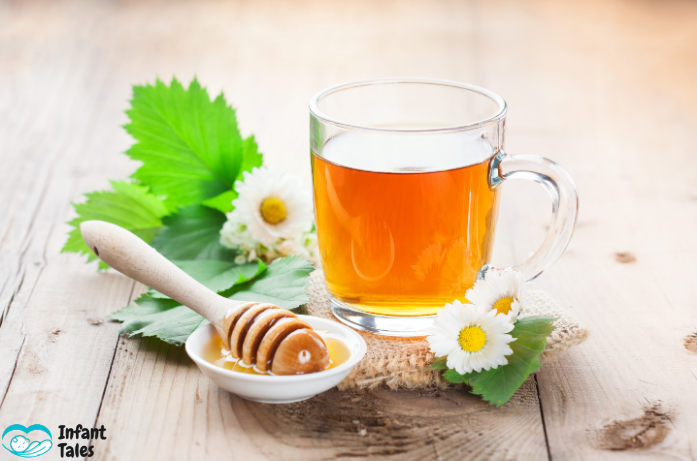
For most women, a little honey in tea is fine.
A warm drink can be especially comforting during pregnancy, particularly when you are tired or dealing with a mild sore throat.
The bigger question may actually be the tea itself.
Some teas contain caffeine, while certain herbal ingredients may not be recommended during pregnancy.
So when drinking honey tea, check both parts of the drink rather than focusing only on the honey.
If you regularly drink tea or coffee, also remember to consider your total daily caffeine intake.
Can Honey Help a Sore Throat During Pregnancy?
A warm drink with honey can help soothe a dry or irritated throat and may feel comforting when you are under the weather.
It can be a simple home comfort when you do not want to take medication without first checking whether it is pregnancy-safe.
However, honey does not cure the underlying cause of an illness.
If you have a high fever, difficulty breathing, dehydration, severe pain, worsening symptoms, or an illness that is not improving, contact your healthcare provider.
Easy Ways to Enjoy Honey During Pregnancy
If you like honey, you do not need complicated recipes to include it.
You can try:
- Drizzling a little over oatmeal.
- Mixing it into plain yogurt with fruit.
- Spreading a small amount on whole-grain toast.
- Adding it to a homemade salad dressing.
- Stirring a little into a pregnancy-safe warm drink.
- Using a small amount when baking.
- Pairing honey with fruit, nuts, or yogurt for a filling snack.
Combining something sweet with foods containing fiber, protein, or healthy fats can help make your snack more satisfying.
And sometimes it is okay to eat honey simply because you enjoy the taste. Every food in pregnancy does not need to have a special health benefit.
What About Foods That Contain Honey?
Foods made with honey can generally be eaten during pregnancy as long as the other ingredients are pregnancy-safe too.
Honey may appear in bread, cereals, yogurt, sauces, baked foods, roasted nuts, dressings, or marinades.
The honey itself may be fine, but always look at the complete dish.
For example, honey-glazed meat still needs to be properly cooked. A dish containing honey and soft cheese should still follow pregnancy food-safety recommendations.
Similarly, a herbal honey drink should be checked for the herbs it contains.
Sometimes the ingredients around the honey are more important than the honey itself.
How Much Honey Can You Have During Pregnancy?
There is no special pregnancy rule that gives every woman one exact daily amount of honey.
Your overall diet matters more than one teaspoon here or there.
If you add a small amount to breakfast or a drink, you usually do not need to worry about carefully measuring every drop.
However, honey is concentrated in sugar, so large amounts used repeatedly throughout the day can quickly increase your total sugar intake.
Enjoy it in moderation and treat it as a sweetener rather than an essential health food.
When Should You Be More Careful?
Most pregnant women do not need special precautions beyond moderation and normal food safety.
It is also worth being careful about pregnancy food advice you find online. A study available through PubMed Central found that discussions about food risks during pregnancy on social media sometimes included confusion, misinformation, or underestimated risks. When you are unsure about a food, trusted health organizations and your healthcare provider are better sources than social media advice alone.
However, speak with your healthcare provider if you:
- Have gestational diabetes.
- Have pre-existing diabetes.
- Have been advised to limit carbohydrates or sugar.
- Have previously had an allergic reaction to honey.
- Have a condition affecting your immune system.
- Are using honey in an herbal remedy or supplement.
- Have been given specific pregnancy dietary restrictions.
Checking the entire ingredient list is especially important with herbal syrups, wellness products, and supplements.
One Important Honey Rule After Your Baby Is Born
There is one honey rule you should definitely remember for later.
Do not give honey to your baby before their first birthday.
Babies under 12 months are at risk of infant botulism because their digestive systems have not fully developed the defenses that older children and adults have.
This rule applies even though you were able to eat honey while pregnant.
Pregnancy food rules and newborn feeding rules are not always the same.
FAQs About Honey During Pregnancy
Final Thoughts
So, can you have honey while pregnant? For most moms, yes. A little honey in oatmeal, yogurt, toast, recipes, or a warm drink can usually remain part of your diet.
The honey warning you hear so often is mainly something to remember after your baby arrives, since honey should not be given directly to children under one year.
During pregnancy, moderation is the main thing to keep in mind because honey still contains sugar. Moms with gestational diabetes or other medical conditions should follow personalized advice from their healthcare team.
Pregnancy already gives you plenty to think about. You do not need to feel guilty about every spoonful or ingredient. Choose foods thoughtfully, ask for professional guidance when you genuinely need it, and allow yourself to enjoy the small comforts along the way.
Want more simple pregnancy food and wellness tips? Explore more helpful guides on Infant Tales for calm, practical support throughout your pregnancy.
Disclaimer
This article is for general informational purposes only and is not a substitute for medical advice. If you have gestational diabetes, allergies, or any pregnancy-related health concerns, speak with your healthcare provider.
About the Author
Geeta Yogi is a parenting writer who shares practical, easy-to-understand guidance about pregnancy nutrition, food safety, and everyday wellness. Her writing focuses on helping expecting moms make informed food choices while keeping pregnancy meals simple, balanced, and less stressful.