
Written by a caring mom at Infant Tales
Tiredness in third trimester of pregnancy is usually caused by your baby’s rapid growth, extra body weight, hormonal changes, interrupted sleep, and the physical work your body is doing to prepare for birth. Resting more, eating nourishing meals, staying hydrated, and doing gentle movement may help. However, sudden or extreme fatigue should always be discussed with your doctor or midwife.
Some days, you may wake up feeling as though you have barely slept, even after spending the whole night in bed. Taking a shower can feel like a task, climbing stairs may leave you breathless, and the thought of preparing dinner may seem overwhelming.
This kind of late pregnancy exhaustion is common, but that does not mean it is easy. Your body is supporting a rapidly growing baby while also preparing for labor, birth, and breastfeeding. You are not being lazy or unproductive. Your body is simply asking for more care.
Table of Contents
- Why Is Tiredness in Third Trimester of Pregnancy So Common?
- What Does Third Trimester Fatigue Feel Like?
- Why Are You So Tired in Late Pregnancy?
- When Does Tiredness Start in Pregnancy?
- Simple Ways to Ease Third Trimester Tiredness
- Could Anemia Be Causing Your Exhaustion?
- When Should You Worry About Pregnancy Fatigue?
- Protecting Your Emotional Energy
- FAQs
- Final Word
Why Is Tiredness in Third Trimester of Pregnancy So Common?
Tiredness during the third trimester of pregnancy often shows up again, because your whole body is taking on more physical demand than it did in the middle months, or whatever.
Your baby is gaining weight, your uterus is expanding, and your heart is working harder to move blood around your body. Your muscles and joints are also carrying more weight, which can make normal activities require much more effort. The Cleveland Clinic explains that these normal third-trimester body changes often make everyday activities feel more physically demanding.
At the same time, getting good quality sleep can become tricky. Back pain, heartburn, needing to pee often, leg cramps, baby kicks and rolls, plus trouble finding a comfy position can end up waking you a few times through the night, sometimes small stuff, sometimes not.
Fatigue commonly appears during both the first and third trimesters. In late pregnancy, it is often connected to increasing discomfort and disrupted sleep.
What Does Third Trimester Fatigue Feel Like?
Pregnancy fatigue can feel different from the tiredness you experienced before becoming pregnant. It may not disappear after one good night of sleep.
You may notice:
- Heavy or kind of weak arms and legs
- Sleepiness during the day
- Trouble focusing or concentrating
- Less interest in everyday tasks
- A strong need to sit or lie down
- Feeling drained even after light activity
- Getting emotional more easily, or being more impatient than usual
Some mornings may feel almost fine, while other days can start with almost zero energy. Pregnancy tiredness can shift from day to day, depending on how you slept, what you ate, your activity, and how your body is feeling that moment.
Try not to compare your energy with another pregnant woman’s energy. Every body, baby, pregnancy, and home situation is different.
Why Are You So Tired in Late Pregnancy?
Several physical and emotional changes can make you feel more tired during the third trimester.
Your Baby Is Growing Fast
Your baby is gaining weight and developing quickly, which requires a lot of energy from your body. Even while you’re resting, your body is working hard to support your baby’s growth. UNICEF also notes that the final trimester is an important stage of rapid fetal development, which naturally places extra demands on your body.
You’re Carrying More Weight
Your growing baby, placenta, and extra fluid put more pressure on your muscles and joints. Simple activities like walking, standing, or climbing stairs can feel much more tiring.
Your Sleep Is Interrupted
Many moms wake up several times during the night because of:
- Frequent bathroom trips
- Back or hip pain
- Heartburn
- Leg cramps
- Baby movements
- Trouble finding a comfortable position
Poor sleep often leads to feeling exhausted the next day.
Hormonal Changes
Pregnancy hormones continue changing in the third trimester. These changes prepare your body for labor but can also leave you feeling physically and emotionally drained.
Your Mind Is Working Too
Thinking about labor, your baby’s arrival, hospital bags, or becoming a parent can be emotionally tiring. Even happy excitement can make it harder to relax and sleep well.
When Does Tiredness Start in Pregnancy?
For many women, it begins very early, sometimes around the time of a missed period.
During the first trimester, increasing progesterone and the early physical demands of pregnancy can make you feel unusually sleepy. Some women notice exhaustion before they even know they are pregnant.
It may begin within the first few weeks after conception, although every woman experiences pregnancy differently.
Some mothers feel deeply tired from the beginning. Others have mild fatigue or do not notice it until later.
When Does the Tiredness Go Away in Pregnancy?
First-trimester fatigue often becomes easier during the second trimester, when nausea may settle and energy may improve.
However, this energy boost is not guaranteed. Some women continue to feel tired throughout pregnancy because of poor sleep, work, anemia, stress, other children, or health conditions.
Fatigue often returns during the third trimester as your belly becomes heavier and sleep becomes less comfortable. After birth, the physical causes of pregnancy fatigue gradually improve, although newborn care brings its own interrupted nights.
Instead of waiting for tiredness to disappear completely, focus on making your days gentler and more manageable.
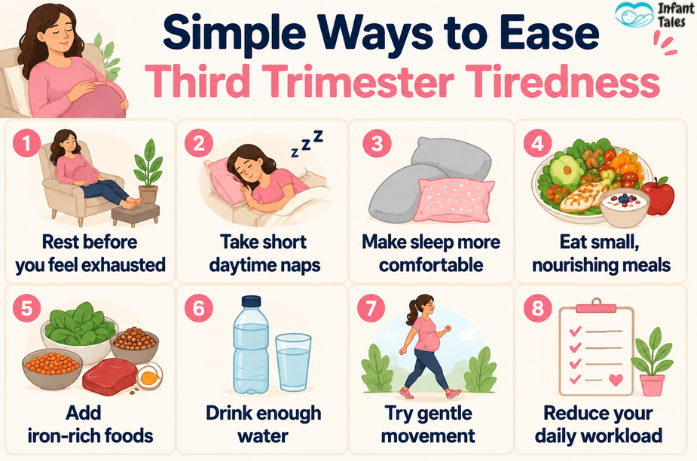
Simple Ways to Ease Third Trimester Tiredness
You may not be able to remove pregnancy fatigue completely, but a few daily habits can make tiredness in late pregnancy easier to manage. The American Pregnancy Association recommends simple strategies like getting enough rest, eating nutritious foods, staying hydrated, and listening to your body’s need for breaks to help manage pregnancy fatigue.
1. Rest Before You Feel Exhausted
Take short breaks before your body feels completely drained. Sit down between tasks, put your feet up, or lie on your side for a few minutes.
Resting during the third trimester is not laziness. It is one of the simplest ways to protect your energy and support your growing baby.
2. Take Short Daytime Naps
A short nap can help when nighttime sleep is interrupted. Try resting earlier in the afternoon so it does not affect your bedtime routine.
Even 15 to 20 minutes of quiet rest can help you feel calmer and more refreshed.
3. Make Sleep More Comfortable
Use pillows to support your belly, back, hips, and knees. Sleeping with a pillow between your legs may reduce pressure on your lower back.
Keep your bedroom cool and dark, limit screens before bed, and try to follow a regular sleep schedule. After 28 weeks, it is generally recommended to go to sleep on your side.
4. Eat Small, Nourishing Meals
Long gaps between meals can make pregnancy tiredness worse. Eat small meals and snacks throughout the day to keep your energy steady.
Choose nutritious foods such as eggs, yogurt, oats, lentils, beans, fruit, vegetables, nuts, whole grains, and lean meat. Pairing protein with healthy carbohydrates can help you feel full for longer.
5. Add Iron-Rich Foods
Low iron levels can contribute to tiredness and fatigue in pregnancy. Include iron-rich foods such as lentils, beans, spinach, eggs, chicken, lean red meat, tofu, and fortified cereals.
Pair plant-based iron with vitamin C foods like tomatoes, berries, oranges, or lemon. Do not take iron supplements unless your healthcare provider recommends them.
6. Drink Enough Water
Dehydration may make you feel tired, dizzy, constipated, or headachy. Keep a water bottle nearby and take small sips throughout the day.
Drink more fluids earlier in the day if frequent bathroom trips disturb your sleep at night.
7. Try Gentle Movement
Light activity can sometimes improve circulation, mood, and sleep. With your healthcare provider’s approval, try a short walk, prenatal yoga, stretching, or swimming.
Even 10 minutes of gentle movement may help. Stop exercising and seek medical advice if you experience pain, bleeding, dizziness, fluid leakage, chest discomfort, or unusual breathlessness.
8. Reduce Your Daily Workload
Trying to do too much can make third trimester fatigue feel worse. Choose only the most important tasks and let less urgent jobs wait.
Prepare simple meals, sit while doing chores, order groceries when possible, and accept help from family or friends. Saving your energy before birth is a sensible form of self-care.
Could Anemia Be Causing Your Exhaustion?
Tiredness and fatigue in pregnancy may sometimes be related to iron-deficiency anemia. This means your body does not have enough healthy red blood cells to carry oxygen effectively.
Possible symptoms include:
- Extreme tiredness
- Weakness
- Dizziness
- Pale skin
- Pregnancy Headaches
- A racing heartbeat
- Shortness of breath
- Reduced ability to exercise
Iron deficiency and blood loss are among the most common causes of anemia during pregnancy. Healthcare providers usually use blood tests to check for it.
Fatigue alone does not prove that you have anemia because many normal pregnancy changes can make you tired. Ask your doctor or midwife whether your iron levels have been checked, especially if your exhaustion feels severe.
When Should You Worry About Pregnancy Fatigue?
Normal pregnancy fatigue usually develops gradually and improves somewhat with food, hydration, or rest.
Contact your healthcare provider if your tiredness is sudden, severe, getting rapidly worse, or stopping you from managing basic daily activities.
Seek prompt medical advice if fatigue appears with:
- Fainting or severe dizziness
- Chest pain
- A very fast or irregular heartbeat
- Difficulty breathing while resting
- A severe or persistent headache
- Blurred vision or flashing lights
- Sudden swelling of the face or hands
- Heavy vaginal bleeding
- Fever
- Painful urination
- One-sided leg pain or swelling
- Noticeably reduced baby movements
Breathing problems, chest pain, faintness, and vision changes can sometimes be warning signs of serious pregnancy complications and should not be ignored.
Trust your instincts. You do not need to wait until a symptom becomes unbearable before asking for help.
Protecting Your Emotional Energy
Late pregnancy can be emotionally tiring, especially when people keep asking whether the baby has arrived or telling you to enjoy your sleep while you can.
Give yourself permission to create quieter days. You can delay visitors, silence unnecessary notifications, say no to plans, and step away from conversations that make you anxious.
Try writing down worries before bed so they are not circling in your mind. Talking honestly with your partner, a friend, your doctor, or your midwife may also make you feel less alone.
If you feel persistently sad, hopeless, panicked, disconnected, or unable to enjoy anything, tell a healthcare professional. Emotional health concerns during pregnancy are common and deserve the same care as physical symptoms.
FAQs
Final Word
Tiredness in third trimester of pregnancy can make the last few weeks feel longer than you expected. Tasks that once seemed simple may now require planning, breaks, and help from other people.
Please remember that your value is not measured by how clean your home is, how many jobs you complete, or how active you remain. Your body is already doing something remarkable.
Eat when you can, rest without guilt, drink regularly, move gently, and accept support. Keep attending your prenatal appointments, and speak to your healthcare provider whenever fatigue feels unusual or comes with concerning symptoms.
You do not need to handle these final weeks perfectly. You only need to care for yourself one day at a time. Soon, the tiredness, waiting, and heavy steps will become part of the story of how patiently and lovingly you carried your baby toward the moment you finally met.
Looking for more pregnancy tips and real-mom guidance? Explore Infant Tales for trusted advice to help you enjoy a healthier and more confident pregnancy journey.
Medical Disclaimer
This article is for educational purposes only and should not replace medical advice, diagnosis, or treatment. Always consult your doctor, midwife, or healthcare provider if you have concerns about pregnancy fatigue or any symptoms during pregnancy.