
Written by a caring mom at Infant Tales
In most cases, you cannot overfeed a breastfed newborn when your baby is nursing directly at the breast. Breastfed babies are usually very good at taking the amount of milk they need and stopping when they feel full. That is why frequent feeding in the newborn stage is often normal, even when it feels like your baby wants to nurse all day.
If you’ve been wondering can you overfeed a breastfed newborn, you are not alone. Many new moms worry when their baby wants to feed often, spits up a little milk, or asks to nurse again soon after a feed. The good news is that cluster feeding, comfort nursing, and small spit-ups are all common in newborns and do not usually mean your baby is getting too much milk.
Can You Overfeed Newborn Breastfeeding? What It Really Means
The question can you overfeed newborn breastfeeding is very common, especially for new moms. In the first few weeks, babies can seem hungry all the time. They may nurse, sleep for a few minutes, wake up, and want to latch again.
This can make you wonder, “Is my baby really hungry, or am I feeding too much?”
The comforting truth is that breastfeeding works naturally with your baby’s hunger and fullness cues. When your baby nurses at the breast, they control the sucking, swallowing, pausing, and stopping. Milk does not flow the same way it can from a bottle.
Most breastfed newborns will unlatch, slow down, fall asleep, or turn away when they are full. So, if your baby is gaining weight well, having enough wet diapers, and seems mostly comfortable, frequent breastfeeding is usually normal.
Why Breastfed Newborns Want to Nurse So Often
Newborns have tiny tummies. They cannot take large amounts of milk at one time, so they need to feed often. Breast milk also digests quickly, which means your baby may be hungry again sooner than you expect.
Many breastfed newborns feed around 8 to 12 times in 24 hours. Some babies nurse even more during growth spurts or cluster feeding days. This can feel exhausting, but it does not automatically mean overfeeding.
Sometimes your baby wants the breast for comfort, not just milk. Nursing helps them feel safe, warm, calm, and close to you. For a newborn, your arms and your breast feel like home.
So when your baby wants to nurse again and again, it may simply mean they are adjusting to the world, growing quickly, or needing extra comfort.
Is It Hunger or Comfort Nursing?
Many moms worry when their baby keeps wanting to latch. But not every nursing session is a full feeding.
Sometimes babies do little “snack feeds.” Sometimes they suck softly because they are tired or overstimulated. Sometimes they just want to be near you.
Comfort nursing is not a bad habit. It is a normal part of breastfeeding. Your baby is not trying to manipulate you, and you are not spoiling them by responding with love.
A newborn’s nervous system is still developing. Nursing helps them calm down, regulate their body, and feel secure. That closeness matters just as much as milk in the early weeks.
Signs Your Breastfed Newborn Is Full
Instead of watching the clock, try watching your baby’s body language. Babies often give clear signs when they have had enough.
Your breastfed newborn may be full if:
- they unlatch on their own
- their hands relax and open
- their body becomes soft and calm
- their sucking slows down
- they turn away from the breast
- they fall asleep peacefully
- they stop swallowing and only flutter suck
Every baby is different, so your little one may not show all these signs every time. But slowly, you will learn your baby’s special cues.
This is one of the most reassuring parts of breastfeeding. Your baby usually knows when they are done.
Signs That Look Like Overfeeding but Usually Are Not
Some normal newborn behaviors can make parents think the baby has had too much milk. But many of these signs are common and not always a problem.
Small spit-ups
A little spit-up after feeding is normal for many newborns. Their digestive system is still immature, and milk can come back up easily. If your baby is gaining weight and seems happy, small spit-ups are usually not a sign of overfeeding.
Wanting to nurse again soon
If your baby wants to feed again after 30 minutes or one hour, it does not always mean something is wrong. They may be cluster feeding, thirsty, tired, or needing comfort.
Falling asleep and waking again
Newborns often fall asleep at the breast before finishing a full feed. Then they wake up and want to latch again. This can feel like nonstop feeding, but it is common.
Gas and grunting
Babies grunt, stretch, squirm, and pull their legs up often. Gas is very common in newborns and does not always mean your baby drank too much milk.
Real Signs Baby May Be Getting Too Much Milk Too Fast
True overfeeding at the breast is uncommon, but some babies may struggle if milk comes too quickly. This is often linked to fast letdown or oversupply, not simple overfeeding.
Watch for these signs:
- coughing or choking during feeds
- pulling off the breast often
- gulping loudly
- crying during letdown
- milk spraying when baby unlatches
- frequent large spit-ups
- green, frothy stools with fussiness
- baby seeming very uncomfortable after most feeds
These signs do not always mean your baby is overfed. They may mean your milk flow is too strong, your baby is swallowing air, or the latch needs support.
If this happens often, a lactation consultant can help you adjust feeding positions and make nursing easier for both of you.
Overfeeding vs Oversupply
Overfeeding and oversupply are not the same thing.
Overfeeding means a baby takes more milk than their tummy comfortably needs. Oversupply means your body is making more milk than your baby needs, or milk is coming out too fast.
With oversupply, your baby may seem hungry but then cough, pull away, or cry because the milk flow is overwhelming. They may gulp quickly and swallow extra air, which can cause gas or discomfort.
A laid-back breastfeeding position may help slow the flow. You can also let the first strong letdown pass into a cloth before latching again if your milk sprays forcefully.
Do not try to reduce your milk supply on your own too quickly. It is better to get guidance first, especially in the early weeks when supply is still settling.
Can You Overfeed a Newborn Breastfeeding With a Bottle?
It is harder to overfeed a baby at the breast, but it can be easier with a bottle of expressed breast milk.
Bottle milk may flow faster, and some babies keep sucking because sucking feels comforting. If the bottle nipple flow is too fast, baby may drink more than they need before their tummy realizes it is full.
If you give expressed breast milk, paced bottle feeding can help. Hold your baby more upright, keep the bottle almost horizontal, pause often, and watch for fullness cues.
Do not feel pressured to make baby finish the bottle. Just like breastfeeding, bottle feeding should also respect your baby’s signals.
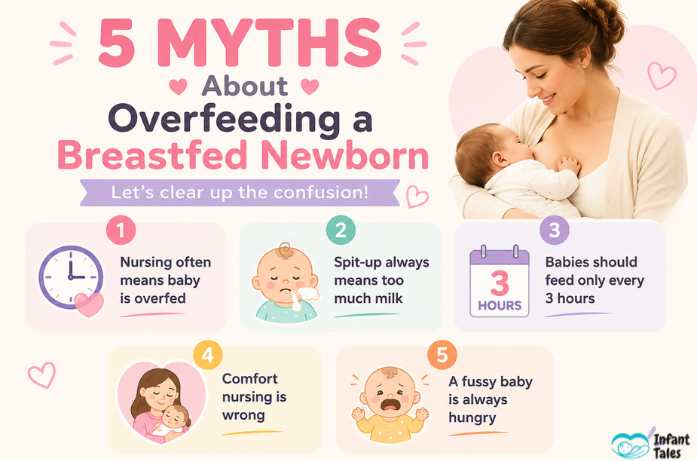
Myths About Overfeeding a Breastfed Newborn
There are many myths that make moms doubt themselves. Let’s clear up a few.
Myth 1: Nursing often means baby is overfed
Not true. Newborns naturally nurse often. Frequent feeding can be normal, especially during growth spurts.
Myth 2: Spit-up always means too much milk
Small spit-ups are common. They do not always mean baby had too much.
Myth 3: Babies should feed only every 3 hours
Some babies do, but many breastfed newborns feed more often. Responsive feeding is usually better than strict timing in the newborn stage.
Myth 4: Comfort nursing is wrong
Comfort nursing is normal. Your baby feels safe with you.
Myth 5: A fussy baby is always hungry
Sometimes baby is fussy because they are tired, gassy, overstimulated, cold, warm, or needing to be held.
How to Know Breastfeeding Is Going Well
A single fussy feed does not tell the whole story. Look at your baby’s overall pattern.
Breastfeeding is usually going well if your baby:
- has enough wet diapers
- is gaining weight as expected
- wakes for feeds
- has some calm and alert moments
- seems satisfied after some feeds
- has healthy skin color
- is swallowing during active nursing
If these things are happening, your baby is likely getting what they need.
The early weeks can still feel messy. Some days baby feeds constantly. Some days they sleep more. Some evenings feel harder than others. That does not mean you are failing.

What to Do If Baby Seems Uncomfortable After Feeding
If your baby often seems uncomfortable after breastfeeding, try a few gentle changes.
Burp your baby gently
Some breastfed babies swallow air, especially during a fast letdown. Burping during and after feeds may help.
Hold baby upright
Keep your baby upright against your chest for 10 to 20 minutes after nursing. This may help with spit-up and tummy discomfort.
Try laid-back nursing
Leaning back while breastfeeding can help slow a strong milk flow and give your baby more control.
Let baby finish one side
Allow your baby to finish the first breast before offering the second. This can help them get a fuller, more balanced feed.
Watch baby’s cues
If your baby turns away, relaxes, or refuses the breast, do not force another feed. Trust that they may be full.
When to Call a Doctor or Lactation Consultant
Most feeding worries are normal, but sometimes you should get extra support.
Talk to your doctor or lactation consultant if:
- your baby is not gaining weight well
- your baby has fewer wet diapers
- spit-up is forceful or very frequent
- baby seems distressed during most feeds
- baby often coughs or chokes while nursing
- nursing is very painful for you
- baby is too sleepy to wake for feeds
- you see blood in vomit or stool
You are not overreacting by asking for help. Sometimes one small change in latch, position, or feeding rhythm can make a big difference.
Final Thoughts
So, can you overfeed a breastfed newborn? In most cases, no. When nursing directly at the breast, babies usually take what they need and stop when they are full.
Frequent nursing, cluster feeding, comfort sucking, and small spit-ups are often normal parts of newborn life. What matters most is your baby’s weight gain, diaper output, comfort, and overall health.
If your baby is growing well and having enough wet diapers, you are likely doing just fine.
And mama, please remember this: breastfeeding is not about being perfect. It is about learning your baby one feed at a time. You are doing loving, important work, even on the messy days.
FAQs About Overfeeding a Breastfed Newborn
1. Can you overfeed a breastfed newborn?
Usually no. Most breastfed newborns stop nursing when they are full.
2. Why does my baby want to breastfeed all the time?
Your baby may be hungry, cluster feeding, growing, tired, or comfort nursing.
3. Is spit-up a sign of overfeeding?
Not always. Small spit-ups are common in newborns.
4. Can expressed breast milk in a bottle cause overfeeding?
It can happen more easily with bottles if milk flows too fast. Paced bottle feeding can help.
5. When should I worry after breastfeeding?
Call your doctor if baby is not gaining weight, has fewer wet diapers, chokes often, or seems very uncomfortable after most feeds.
Disclaimer: This article is for informational purposes only and is not a substitute for medical advice, diagnosis, or treatment. Every baby is different, so if you are worried about your newborn’s feeding, weight gain, spit-up, or overall health, please speak with your pediatrician or a certified lactation consultant.
Have you been wondering whether your breastfed newborn is feeding too often? Share this article with another new mom who might need a little reassurance today, and explore more breastfeeding tips on Infant Tales for gentle, practical support through every stage of motherhood.