
By a caring mom at Infant Tales
As moms, we spend so much time making sure our children eat well, sleep enough, and grow happily. But sometimes, even with homemade meals and healthy snacks, our little ones may not get enough calcium for strong bones and healthy growth. That’s where a good children’s calcium supplement can gently help fill the gap.
If you’ve ever wondered whether your child really needs extra calcium, which supplement is safest, or how to choose the best option without getting overwhelmed by labels, you’re not alone. Many parents quietly worry about picky eating, weak immunity, slow growth, or kids refusing milk altogether.
In this caring guide from a mom at Infant Tales, we’ll walk through everything you need to know about calcium for kids in a simple, warm, and practical way without fear, confusion, or complicated medical language.
Why Calcium Matters So Much for Growing Children
Childhood is the most important stage for bone development. In fact, most bone strength is built during the early years and teenage years. Calcium helps children develop strong bones, healthy teeth, proper muscle function, and even supports nerve health.
When kids don’t get enough calcium regularly, their growing bodies may struggle to build strong bone density. Over time, this can lead to weak bones, delayed growth, dental issues, or frequent tiredness.
Many parents assume that one glass of milk a day is enough. But real life looks different.
Some kids:
- Refuse dairy completely
- Are extremely picky eaters
- Have lactose intolerance
- Prefer junk food over balanced meals
- Go through phases of eating very little
And honestly, many moms end up worrying quietly about whether their child is truly getting enough nutrition.
That’s why kids calcium vitamins can sometimes be a helpful support not as a replacement for food, but as a gentle nutritional backup.
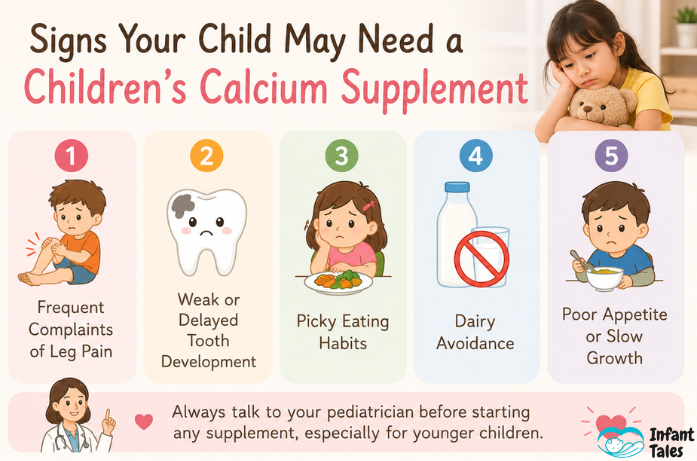
Signs Your Child May Need a Children’s Calcium Supplement
Every child is different, and not every kid needs supplementation. But there are some common signs that may suggest your child isn’t getting enough calcium naturally.
1. Frequent Complaints of Leg Pain
Many children complain about leg pain, especially at night. While growing pains are common, persistent discomfort can sometimes be linked to nutritional gaps.
2. Weak or Delayed Tooth Development
If cavities appear early or teeth seem weaker than expected, calcium intake may need attention.
3. Picky Eating Habits
Some children survive on bread, snacks, noodles, or a handful of favorite foods for months. Moms know how exhausting this stage can feel.
4. Dairy Avoidance
Children with lactose intolerance or milk allergies often struggle to get enough natural calcium.
5. Poor Appetite or Slow Growth
If your child eats very little consistently, their body may miss important nutrients, including calcium.
Of course, it’s always best to speak with your pediatrician before starting any supplement, especially for younger children.
Best Food Sources of Calcium for Kids
Before reaching for supplements, it’s important to focus on calcium-rich foods first, and also understand foods to avoid when breastfeeding a baby.
Some kid-friendly calcium foods include:
- Milk
- Yogurt
- Cheese
- Paneer
- Almonds
- Sesame seeds
- Tofu
- Green leafy vegetables
- Ragi
- Fortified cereals
One small mom trick that works beautifully: instead of forcing “healthy food,” try making it fun.
For example:
- Add sesame powder to chapati dough
- Blend yogurt into fruit smoothies
- Make homemade cheese sandwiches
- Use colorful smoothie bowls
Sometimes kids eat better when meals feel playful instead of pressured.
How Much Calcium Do Kids Actually Need?
One of the biggest parenting questions is dosage. Too little calcium may not help, but too much isn’t ideal either.
Here’s a simple general guideline:
Toddlers (1–3 years)
Need around 700 mg daily
Children (4–8 years)
Need around 1,000 mg daily
Older Kids (9–18 years)
Need around 1,300 mg daily
Remember, this includes calcium from both food and supplements combined.
A caring reminder for parents: more is not always better. Over-supplementing can sometimes lead to constipation or interfere with the absorption of other minerals like iron.
That’s why choosing the right dosage matters more than choosing the fanciest bottle.
If you want to learn more about how calcium supports growing bones and overall child development, the American Academy of Pediatrics guide on calcium for kids and teens shares helpful information for parents in a simple and trustworthy way.
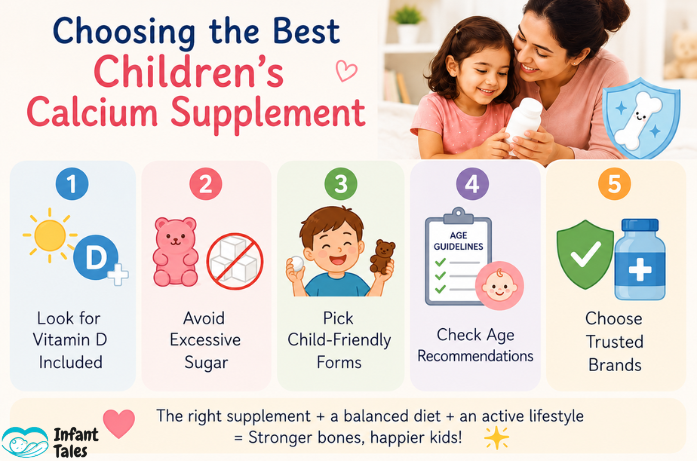
Choosing the Best Children’s Calcium Supplement
Walking into a pharmacy or browsing online can feel overwhelming. There are syrups, chewables, powders, gummies, and endless claims about “stronger bones” and “faster growth.”
As moms, we just want something safe, gentle, and effective.
Here are a few things to look for when choosing the best calcium supplement for children.
1. Look for Vitamin D Included
Calcium needs vitamin D for proper absorption. Without it, the body may not use calcium effectively.
Many good supplements combine both nutrients together.
2. Avoid Excessive Sugar
Some supplements, especially flavored gummies, can contain too much sugar. Always check labels carefully.
3. Pick Child-Friendly Forms
Some kids hate swallowing tablets. Others love chewables. Choose a form your child will actually take consistently.
4. Check Age Recommendations
Not all supplements are suitable for toddlers or younger children. Always follow age guidelines.
5. Choose Trusted Brands
You don’t need the most expensive product. But choosing reliable, pediatrician-recommended brands can give parents peace of mind.
Are Calcium Gummies for Kids a Good Idea?
Let’s be honest, many kids absolutely love gummies.
And for some families, calcium gummies for kids make daily supplementation much easier and less stressful.
But there are a few things moms should know.
The Good Side of Gummies
- Easy for picky kids
- Taste pleasant
- No swallowing struggles
- Convenient for busy mornings
Things to Watch Out For
Some gummies contain:
- Added sugars
- Artificial colors
- Lower calcium amounts than expected
Also, children may mistake gummies for candy, so storage matters.
If you choose gummies, keep them out of reach and follow the recommended serving size carefully.
Personally, many moms find gummies helpful during difficult eating phases, especially when kids refuse milk completely.
Parents can also explore this easy-to-understand resource from Kids Health about calcium for children to better understand daily calcium needs, food sources, and healthy growth support for kids.
Common Mistakes Parents Make With Calcium Supplements
Parenting comes with enough guilt already, so this section is not about blame. Most moms are simply doing their best with the information they have.
Still, these small mistakes are very common.
Giving Supplements Without Checking Diet First
Sometimes children already get enough calcium through food.
Supplements should support a healthy diet not replace it.
Ignoring Vitamin D
Without enough sunlight or vitamin D intake, calcium absorption may stay low.
Encouraging outdoor play can help naturally.
Overusing Multiple Vitamins Together
Some parents unknowingly combine several supplements that all contain calcium, leading to excess intake.
Always read labels carefully.
Expecting Instant Results
Supplements support gradual health over time. They’re not magic solutions for height growth overnight.
Healthy growth depends on:
- Genetics
- Sleep
- Nutrition
- Physical activity
- Emotional wellbeing
Natural Ways to Support Strong Bones Alongside Supplements
A children’s calcium supplement works best when combined with healthy daily habits.
Encourage outdoor play and healthy routines that support growth, along with simple preschool learning activities that improve overall development.
Sunlight naturally supports vitamin D production.
Even 20–30 minutes of outdoor activity can help.
Prioritize Sleep
Growth hormones are released during sleep. Kids truly grow while resting.
Include Protein in Meals
Protein supports overall growth and bone health.
Simple options include:
- Eggs
- Dal
- Paneer
- Chicken
- Nut butters
Reduce Excess Soda and Junk Food
Too much processed food may affect nutrient balance over time.
Balance matters more than perfection.
When Should Parents Talk to a Pediatrician?
Sometimes, moms instinctively feel when something seems “off.” Trusting that instinct matters.
You should consider medical guidance if your child has chronic nutritional deficiencies or symptoms that may overlap with illnesses like baby flu.
- Has severe picky eating
- Shows poor growth patterns
- Complains of persistent bone pain
- Has repeated fractures
- Avoids dairy completely
- Has chronic nutritional deficiencies
A pediatrician may recommend blood tests or suggest the right kids calcium vitamins based on your child’s age and needs.
A Gentle Reminder for Moms
Modern parenting can feel overwhelming, especially when social media makes it look like every child eats perfectly all the time. But real life is different, and some days kids simply eat better than others. That does not make you a bad mom.
Using a children’s calcium supplement when needed is not failing. Sometimes it’s simply a caring way to support your child’s healthy growth during busy and imperfect parenting days.
Best Tips for Giving Calcium Supplements to Kids Easily
If your child refuses supplements, these gentle tricks may help:
Pair It With Routine
Give supplements at the same time daily, like after breakfast.
Don’t Force
Pressure often creates resistance.
A calm, positive approach works better long term.
Use Fun Language
For younger kids, playful phrases like “strong bone vitamins” can help.
Keep Expectations Realistic
Some children take weeks to adjust to new routines. That’s normal.
Final Thoughts on Children’s Calcium Supplements
Choosing the right children’s calcium supplement can feel confusing at first, especially with so many products and parenting opinions everywhere. But at the heart of it, most moms simply want reassurance that their child is growing healthy and strong.
The good news is that small, consistent habits matter far more than perfection.
Balanced meals, active play, good sleep, emotional support, and the right nutrition together create the strongest foundation for growing kids. And when needed, supplements can gently help fill nutritional gaps without stress or guilt.
So if your little one is going through a picky eating stage, refuses milk, or simply needs extra support, take a deep breath, mama. You are not alone in this journey.
At Infant Tales, we truly believe parenting is not about doing everything perfectly, it’s about showing up with love, care, patience, and trust in yourself every single day.
FAQs
1. Do all kids need a calcium supplement?
No, not every child needs one. Many kids get enough calcium through a balanced diet, but picky eaters or dairy-free children may sometimes need extra support.
2. What is the best time to give calcium supplements to kids?
Most calcium supplements are best given with meals for better absorption and to avoid stomach discomfort.
3. Are calcium gummies for kids safe?
Yes, calcium gummies for kids can be safe when given in the recommended amount and stored properly out of children’s reach.
4. Can too much calcium be harmful for children?
Yes, excessive calcium intake may cause constipation or affect the absorption of other nutrients. Always follow the recommended dosage.
5. Which foods are naturally rich in calcium for kids?
Milk, yogurt, cheese, paneer, ragi, tofu, almonds, and leafy greens are some healthy natural calcium sources for children.
Disclaimer: This article is for informational purposes only and should not replace professional medical advice. Always consult your pediatrician before starting any children’s calcium supplement or making changes to your child’s diet or nutrition routine.