
If you’re reading this at 2 a.m. with a crying baby in your arms, eyes half-open, heart racing, and silently asking yourself why is my baby so fussy, please pause for a moment and take a deep breath. You’re not alone in this moment, even if it feels that way right now. This is one of the most common questions new parents ask, sometimes once a day, sometimes every single hour.
Baby fussiness can feel confusing, overwhelming, and emotionally draining. You may have already fed your baby, changed their diaper, rocked them gently, walked the room ten times, and still… the crying continues. It’s exhausting, and it can make even the most loving parent doubt themselves.
At Infant Pamper, we want you to know something important right away: fussiness is not a sign that you’re failing. It’s simply your baby’s way of communicating. Babies don’t cry to upset us or make life difficult, they cry because something in their small, developing world doesn’t feel quite right yet. This article is written to gently guide you through the most common reasons babies become fussy, help you understand what’s normal, what may need attention, and how to respond with confidence, patience, and calm.
Why Is My Baby So Fussy?
This question sits at the heart of early parenthood, and the honest answer is this: there is rarely just one clear reason. Baby fussiness is usually a mix of physical discomfort, emotional needs, developmental changes, and simple exhaustion. Babies are adjusting to life outside the womb, a world that is louder, brighter, colder, and far less predictable than where they came from. That adjustment can be messy and noisy.
Some babies are naturally more sensitive and expressive. Others go through phases where fussiness peaks and then fades. What matters most is learning to observe patterns instead of searching for a single perfect solution. Over time, you’ll begin to recognize what your baby’s cries and behaviors are trying to tell you.
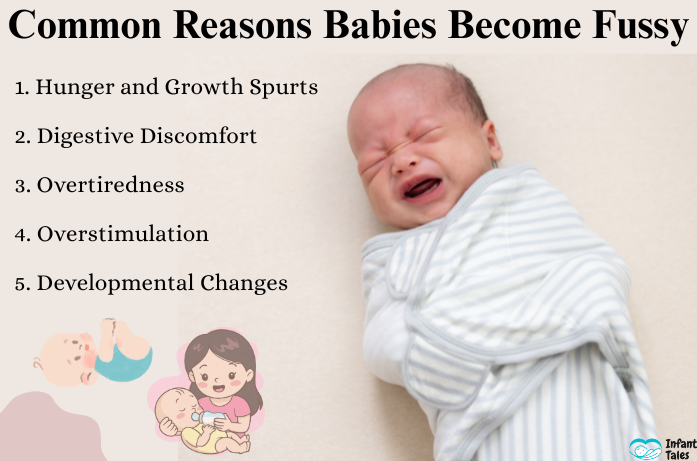
Common Reasons Babies Become Fussy
1. Hunger and Growth Spurts
Babies grow incredibly fast, especially in the first few months of life. During growth spurts, they often need to feed more frequently and may become irritable if their hunger isn’t met quickly. Hunger cries tend to escalate fast and can feel urgent.
You might notice rooting, lip-smacking, sucking on hands, or turning their head toward your chest or bottle. Even if your baby fed not long ago, it’s okay to offer another feed. Feeding patterns change constantly in infancy, and flexibility helps.
2. Digestive Discomfort
A baby’s digestive system is still immature, and this alone can lead to fussiness. Gas, bloating, or mild reflux can cause discomfort that’s hard for babies to process. This often shows up as squirming, arching the back, pulling legs toward the belly, or crying shortly after feeds.
Swallowing air during feeding is common, especially in young infants. Gentle burping, holding your baby upright after feeds, and slow, relaxed feeding sessions can sometimes make a big difference.
3. Overtiredness
Ironically, babies often get fussiest when they’re exhausted. Sleep cues, like red eyelids, slower movements, or zoning out, can be subtle and easy to miss. When babies stay awake too long, their bodies release stress hormones that make settling down even harder.
An overtired baby may fight sleep fiercely, cry intensely, and seem impossible to calm, even though sleep is exactly what they need.
4. Overstimulation
The world is overwhelming for babies. Bright lights, loud sounds, visitors, constant handling, or busy environments can overstimulate their developing nervous systems. What feels like normal daily activity to adults can feel like sensory overload to an infant.
When overstimulated, babies may turn their head away, stiffen their body, clench their fists, or cry suddenly after being calm.
5. Developmental Changes
Babies grow not just physically, but mentally and emotionally too. Their brains are constantly forming new connections. During developmental leaps, fussiness often increases. Sleep may become disrupted, feeds may feel harder, and your baby may seem needier than usual.
These phases can be challenging, but they’re also signs that your baby is growing and learning.
Fussy Baby at Night: Why Evenings Feel Harder
If your baby seems relatively calm during the day but becomes unsettled in the evening, you’re not imagining things. A fussy baby at night is extremely common and usually normal.
Evenings tend to be when fatigue, digestion, and overstimulation all collide. Babies may release built-up tension from the day during the late afternoon and evening hours. Many infants cry more between 6 p.m. and midnight, even when they’ve been fed, changed, and cuddled.
Creating a gentle evening routine, dim lights, reduced noise, fewer visitors, and slow, calming movements, can help. Still, some amount of evening fussiness is simply part of normal infant behavior and often improves with time.

Baby Fussiness and Feeding Challenges
Feeding is meant to be comforting, but for many families, it becomes a source of stress and confusion.
A baby fussy after eating may be dealing with gas, reflux, or discomfort from swallowed air. Crying after feeds doesn’t automatically mean your baby is still hungry. Taking time to burp thoroughly and keeping your baby upright for a short period after feeding may ease discomfort.
Some parents notice their baby fussy after breastfeeding. This can happen for several reasons, including fast milk flow, sensitivity to certain foods in the mother’s diet, or difficulty latching comfortably. Looking for patterns over several days can be more helpful than focusing on one difficult feed.
A baby fussy during feeding bottle may struggle with nipple flow, feeding position, or taking in too much air. Feeding should feel calm and unhurried. If feeding sessions feel tense or rushed, both baby and caregiver can become frustrated.
Is My Baby Sick or Just Fussy?
One of the hardest questions for new parents is is my baby sick or just fussy. It’s completely natural to worry, especially when crying feels intense or constant.
Most fussiness is normal. However, you should seek medical advice if fussiness is accompanied by:
- Fever
- Persistent vomiting
- Poor feeding or inadequate weight gain
- Lethargy or unusual sleepiness
- Crying that sounds sharp, high-pitched, or painful
Trust your instincts. If something feels off, it’s always okay to ask for professional guidance. Reputable sources like the American Academy of Pediatrics offer medically reviewed information that many parents find reassuring.
When Fussiness Peaks: Around Five Weeks
Many parents are surprised by how intense fussiness can feel around the one-month mark. A 5 week old baby fussy and not sleeping is incredibly common. Around this age, babies become more alert to their surroundings while still lacking the ability to self-soothe.
Sleep patterns are immature, and frequent waking is normal. Crying may peak around this time and gradually improve over the following weeks. While this stage can feel endless when you’re in it, it truly is temporary.
What Actually Helps a Fussy Baby
There is no single solution that works every time, but these gentle approaches often help:
- Physical closeness: Holding your baby, babywearing, or skin-to-skin contact helps regulate their nervous system and provides reassurance.
- Rhythmic motion: Rocking, walking, or gentle bouncing mimics the movement babies experienced before birth.
- Calm environment: Soft lighting, reduced noise, and a slower pace help overstimulated babies reset.
- Consistency: Simple routines create predictability, which babies find deeply comforting.
Sometimes the goal isn’t to stop the crying completely. Sometimes it’s about helping your baby feel safe and supported while they work through their discomfort.
Important Comfort Tips to Remember
Babies cry to communicate, not manipulate: Fussiness is how babies express discomfort, fatigue, or the need for closeness. Responding builds trust and emotional security.
Patterns matter more than moments: One difficult day doesn’t define your baby’s health or temperament. Look for repeated behaviors over time.
Your calm matters: Babies sense stress. Even when nothing seems to work, your steady presence and gentle breathing help regulate them.
Taking Care of Yourself Matters Too
Persistent baby fussiness can leave parents exhausted, emotional, and questioning themselves. It’s okay to place your baby down safely for a few minutes if you need to regroup. Stepping away briefly does not mean you’re giving up, it means you’re protecting both yourself and your baby.
Asking for help is a sign of strength, not failure. You are learning, just like your baby is learning.
Final Thoughts from Infant Pamper
Fussiness is a season, not a verdict on your parenting. With time, observation, and gentle support, you’ll begin to understand your baby’s cues more clearly. Some days will still be hard, but they won’t always feel this intense.
At Infant Tales, our mission is to guide and support new parents with honest, compassionate, and trustworthy information. You are not alone on this journey, and you are doing better than you think.
FAQs
1. Why is my baby so fussy?
Babies become fussy due to hunger, tiredness, gas, overstimulation, or the need for comfort.
2. Is a fussy baby at night normal?
Yes, evening and nighttime fussiness is very common in young babies and usually improves with age.
3. Why is my baby fussy after eating?
Gas, reflux, or swallowing air during feeds can cause discomfort after eating.
4. Why is my baby fussy after breastfeeding?
Fast milk flow, trapped gas, or temporary digestive sensitivity may lead to fussiness.
5. Why is my baby fussy during feeding bottle?
Nipple flow, feeding position, or excess air intake can make bottle feeding uncomfortable.
Medical Disclaimer: This article is for informational purposes only and does not replace professional medical advice. Always consult a qualified healthcare provider for concerns about your baby’s health, feeding, or development.