Authored by: A Caring Mom at Infant Tales
Pregnancy can bring many unexpected changes, including changes to your skin. You may notice rosier cheeks, a brighter complexion, or a natural shine that makes people say, “You’re glowing!”
So, what is pregnancy glow? It’s the brighter, more radiant look some women develop during pregnancy, often linked to hormonal changes, increased blood flow, and changes in skin oil. But not every mom experiences it acne, dryness, sensitivity, and dark patches are common too.
In this guide, we’ll explore why pregnancy glow happens, when it may start, common pregnancy face changes, and simple ways to care for your skin throughout pregnancy.
What Is Pregnancy Glow?
The pregnancy glow, which refers to the healthy, bright or rosy appearance of the face, is one of the features observed by some pregnant women. Pregnancy glow is not a condition; however, certain physical processes taking place in the body might serve as an explanation for the phenomenon.
With the progress of pregnancy, the blood volume of the woman increases and serves as an additional source of nutrition and oxygen. The enhanced circulation can cause more blood in the vessels lying close to the surface of the skin, causing facial cheeks to flush.
Increased production of oil is another possible change associated with the pregnancy due to the action of hormones. Some pregnant women report that hormones make the skin softer and brighter, which is perceived as pregnancy glow.
According to Cleveland Clinic, increased blood flow and higher hormone levels are two possible reasons behind pregnancy glow.
However, every woman responds to these changes differently. While pregnancy glow might work for some women, others might develop oily skin or get more breakouts.
Why Do Pregnant Women Glow?
There isn’t just one reason pregnant women glow. A mix of increased blood flow, pregnancy hormones, and changes in natural skin oils can make your complexion look brighter than usual.
1. Increased Blood Flow
Your blood volume increases during pregnancy to support your growing baby and placenta. More blood flowing near the skin’s surface can give your cheeks a naturally warm, rosy look.
2. Hormonal Changes
Rising pregnancy hormones can affect how your skin looks and feels. You may notice changes in oiliness, pigmentation, or sensitivity, and your skin may behave differently from one trimester to another.
3. More Natural Skin Oil
Pregnancy hormones may also increase oil production. A little extra oil can give your face that soft, dewy shine associated with pregnancy glow. For some moms, though, the extra oil can lead to clogged pores and breakouts instead.
When Does Pregnancy Glow Start?
There is no fixed period when the pregnancy glow kicks in. The glow in some women starts showing up in the first trimester, while in others, it appears later in the second trimester.
The skin can undergo changes as your pregnancy progresses. Sometimes, the skin may become oily, and sometimes dry. If you do not get pregnancy glow at all, that’s perfectly alright as well.
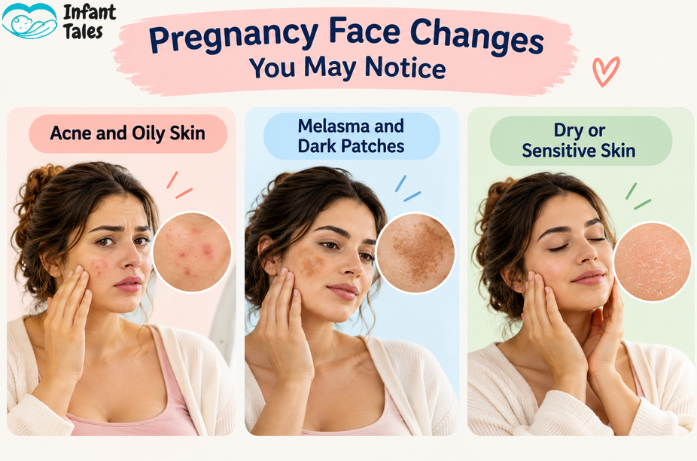
Pregnancy Face Changes You May Notice
We hear a lot about the famous pregnancy glow, but your skin may have a few other surprises waiting for you. Some pregnancy face changes are lovely, while others can be a little frustrating especially when your usual skincare routine suddenly stops working.
Here are some common changes you may notice and simple ways to care for your skin.
Acne and Oily Skin
Suddenly getting pimples again? You’re definitely not the only mom-to-be dealing with this. Pregnancy hormones can increase oil production, which may clog pores and trigger breakouts.
Keep your routine gentle rather than trying to scrub the spots away. Wash with a mild cleanser, avoid picking pimples, and be careful with acne treatments. Some ingredients aren’t recommended during pregnancy, so it’s worth checking with your doctor or dermatologist before trying something new.
Melasma and Dark Patches
You may notice darker patches appearing across your cheeks, forehead, nose, or upper lip. This is called melasma, and it’s so common during pregnancy that you may also hear it called the “mask of pregnancy.”
The American College of Obstetricians and Gynecologists (ACOG) explains that hormonal changes can cause certain areas of skin to become darker during pregnancy. Sun exposure can make these patches more noticeable.
A broad-spectrum sunscreen, a hat, and a little extra shade can help protect your skin. Melasma often becomes lighter after pregnancy, although fading can take some time.
Dry or Sensitive Skin
Pregnancy doesn’t always mean extra oil. Your face may suddenly feel dry, tight, itchy, or more sensitive than usual. Even a cleanser or moisturizer you’ve loved for years might start irritating your skin.
If this happens, keep things simple. Choose a gentle cleanser, moisturize regularly, and consider fragrance-free products if your skin is easily irritated. Pregnancy isn’t the time when your skincare routine needs to be complicated sometimes your skin just needs a little extra gentleness.
What If I Don’t Have Pregnancy Glow?
If you’re still waiting for that famous pregnancy glow, don’t worry. Not every mom-to-be experiences it, and that’s completely normal.
Pregnancy can affect everyone’s skin differently. Instead of rosy cheeks and a dewy complexion, you may notice breakouts, dark patches, dryness, or simply look more tired than usual especially after a few restless nights.
Seeing photos of a pregnant woman glowing can make it easy to compare, but glowing skin isn’t a sign of a healthier pregnancy. Your skin is simply responding to hormonal and physical changes in its own way.
So, whether your face is glowing or you’re dealing with a few unexpected skin changes, be gentle with yourself. Your body has much more important work happening behind the scenes.
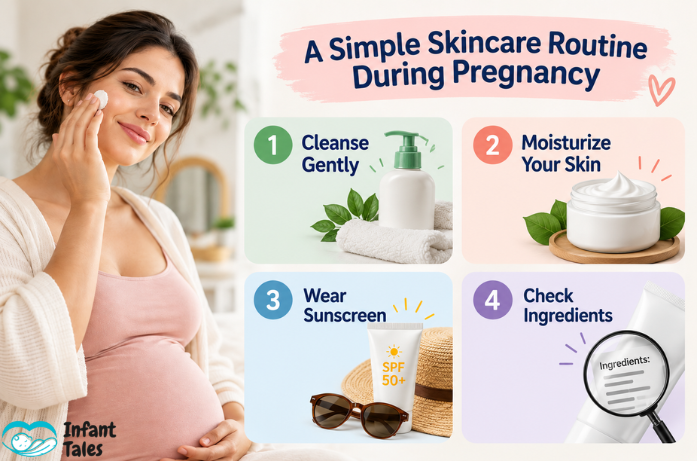
A Simple Skincare Routine During Pregnancy
Pregnancy can make your skin feel different almost overnight, but that doesn’t mean you need a shelf full of new products. A few gentle basics are often enough to keep your skin comfortable and cared for.
1. Cleanse Gently
Wash your face with a mild cleanser to remove oil, sweat, and makeup without stripping your skin. Skip harsh scrubs, especially if your face feels dry or sensitive. If your skin feels tight after washing, try switching to a gentler cleanser.
2. Keep Your Skin Moisturized
Choose your moisturizer based on how your skin feels now, not how it behaved before pregnancy. A lightweight moisturizer may work well for oily skin, while dry or tight skin may need something richer.
3. Make Sunscreen a Daily Habit
Pregnancy can make pigmentation such as melasma more noticeable, and sunlight may darken these patches. Use a broad-spectrum sunscreen when you are outdoors, and add a hat or seek shade when you’ll be in the sun for longer.
The American Academy of Dermatology (AAD) also recommends sun protection as an important part of pregnancy skincare.
4. Check Active Ingredients
Pregnancy is a good time to take another look at what’s inside your skincare products. The American Academy of Dermatology recommends avoiding retinoids during pregnancy, and some other treatments may need your doctor’s guidance too.
If you’re unsure about an acne cream, serum, or other active product, check with your OB-GYN or dermatologist before using it. A simple, pregnancy-safe routine is usually better than experimenting with lots of new products at once.
Can You Naturally Improve Pregnancy Glow?
There isn’t a special food, drink, or skincare product that can guarantee pregnancy glow. Your skin’s appearance is largely influenced by hormones, circulation, genetics, and how your body responds to pregnancy.
Still, simple habits can help you care for your skin. Eat a balanced pregnancy diet, stay hydrated, use sunscreen, moisturize when needed, and get as much rest as you comfortably can.
Be careful with supplements, herbal remedies, or beauty products that promise glowing pregnancy skin. Even products labeled “natural” aren’t automatically safe during pregnancy, so check with your healthcare provider before trying something new.
Rather than chasing the perfect glow, focus on keeping your skin healthy and comfortable as your body changes.
Does Pregnancy Glow Mean You are Having a Boy?
You may have heard the old pregnancy myth that glowing skin means you’re having a boy, while acne means you’re carrying a girl.
It’s a fun guessing game, but your skin can’t tell you your baby’s sex. Pregnancy glow, breakouts, and other pregnancy face changes are more closely connected to hormones, increased circulation, oil production, and your individual skin type.
So if relatives want to make their predictions based on your glowing cheeks, enjoy the fun, but don’t take it as a reliable clue about whether you’re having a boy or girl.
Does Pregnancy Glow Go Away After Birth?
For most moms, pregnancy glow doesn’t last forever. After delivery, hormone levels and circulation begin changing again, so that extra rosiness, shine, or oiliness may gradually fade.
Other pregnancy skin changes may need more time. Melasma can slowly become lighter after birth, while postpartum hormone shifts may bring temporary dryness, sensitivity, or breakouts.
Don’t expect your skin to look exactly as it did before pregnancy right away. Your body has been through a huge transition, and postpartum recovery takes time. Keep your skincare gentle and give your skin a chance to adjust.
When Should You Talk to Your Doctor About Skin Changes?
Most skin changes during pregnancy are common and harmless. Still, it’s worth paying attention when something feels very different from your usual pregnancy skin changes.
Contact your healthcare provider if you develop a severe or quickly spreading rash, blisters, painful skin changes, significant swelling, or another symptom that concerns you.
One symptom that’s especially important to mention is intense itching, particularly on the palms of your hands or soles of your feet, even when you don’t see a rash. The American College of Obstetricians and Gynecologists (ACOG) explains that severe itching can be a symptom of intrahepatic cholestasis of pregnancy (ICP), a liver condition that occurs during pregnancy.
Most itching during pregnancy doesn’t mean you have ICP. But if the itching is severe or persistent, it’s better to call your maternity care provider and let them decide whether you need to be checked.
FAQs About Pregnancy Glow
1. Is pregnancy glow real?
Yes. Hormonal changes, increased circulation, and changes in skin oil can make some pregnant women’s complexions appear brighter or more radiant.
2. What month does pregnancy glow start?
There’s no exact month. Some moms notice it in the first trimester, while it may become more noticeable during the second trimester for others.
3. Does every pregnant woman glow?
No. Some women glow while others experience acne, dryness, pigmentation, sensitivity, or very little change at all.
4. Is pregnancy glow a sign of a healthy pregnancy?
No. Pregnancy glow isn’t used to judge the health of a pregnancy. Not having it doesn’t mean anything is wrong.
5. Can pregnancy glow tell my baby’s gender?
No. Glowing skin or pregnancy acne can’t reliably tell you whether you’re having a boy or girl.
Final Thoughts
Pregnancy changes your skin in its own way. You may enjoy brighter, rosy-looking skin, or you may find yourself dealing with breakouts, dryness, sensitivity, or dark patches along the way.
Rather than trying to achieve perfect skin, focus on keeping it comfortable and healthy. A gentle routine, daily sun protection, and pregnancy-safe products can make caring for changing skin much easier.
And remember, your reflection doesn’t need to look picture-perfect during pregnancy. Your body is working hard every day to nurture your growing baby, so give yourself the same patience, kindness, and care you would give another mom.
Every pregnancy brings new questions. Explore more helpful pregnancy and motherhood guides on Infant Tales for simple, caring information to support you along the way.
Medical Disclaimer
This Infant Tales article is for general educational purposes and isn’t a substitute for professional medical advice, diagnosis, or treatment. Always speak with your OB-GYN, midwife, dermatologist, or another qualified healthcare professional about concerning symptoms or before starting or stopping medications or skincare treatments during pregnancy.