Written by a caring mom at Infant Tales
Sugar water for babies is not something parents should give at home unless it has been recommended by a healthcare professional. While doctors sometimes use a special sugar solution in hospitals to help reduce pain during certain medical procedures, plain sugar water is not a substitute for breast milk, formula, or proper medical care. If your baby seems unwell or isn’t feeding properly, it’s always safest to speak with your pediatrician.
When you become a parent, everyone seems to have advice. One person tells you to give gripe water, another suggests herbal remedies, and someone else might recommend sugar water to calm a crying baby. As a first-time mom, I remember hearing this advice from well-meaning relatives and wondering if it was really safe.
If you’ve heard similar suggestions, you’re not alone. Many parents search for information about sugar water for babies because they want to do what’s best for their little one. In this guide, we’ll explain when sugar water is actually used, when it should be avoided, and what every parent should know before offering it to their baby.
What Is Sugar Water for Babies?
Sugar water for babies is simply a mixture of sugar dissolved in water. Years ago, some families believed it could calm a fussy baby, relieve constipation, or even stop hiccups.
Today, doctors know much more about infant nutrition and health. Because of this, sugar water is not recommended as a regular drink for babies.
The only time sugar water is commonly used is in hospitals, where healthcare providers may give a carefully measured sugar solution before certain minor medical procedures, such as a heel prick or blood test. This medical solution is prepared under strict guidelines and should never be confused with homemade sugar water.
Is Sugar Water Safe for Babies?
For most healthy babies, sugar water should not be given at home without medical advice.
Newborns have very small stomachs that need nutrient-rich feedings. Every sip they drink should provide the nutrition and hydration they need to grow.
Sugar water contains calories but almost no important nutrients. If a baby drinks too much of it, they may take less breast milk or formula, which can affect healthy growth.
This is why pediatricians recommend breast milk or infant formula as the only drinks most babies need during the first six months of life.
Why Do Doctors Sometimes Use Sugar Water?
This is where many parents become confused.
If sugar water isn’t recommended at home, why do hospitals sometimes use it?
The answer is simple.
Doctors sometimes give a very small amount of a special medical sugar solution before short procedures like:
- Heel prick blood tests
- Blood sample collection
- Vaccinations in some cases
- Minor newborn procedures
According to research published by the National Library of Medicine (PMC), a small amount of a medical sugar solution may help reduce pain during short procedures such as heel pricks or blood tests in newborns. However, this should only be used under medical supervision.
The important thing to remember is that this is not the same as making sugar water in your kitchen. Hospitals use carefully measured solutions and only when medically appropriate.
Can Sugar Water Help a Crying Baby?
Many grandparents and older family members genuinely believe sugar water can calm a crying baby because it was commonly suggested years ago.
The truth is that crying is your baby’s way of communicating.
Your little one may be crying because they are:
- Hungry
- Tired
- Too hot or too cold
- Need a diaper change
- Want to be cuddled
- Have gas or discomfort
- Feel overstimulated
Giving sugar water does not solve these underlying needs, so it is better to understand why your baby may be so fussy and respond to the real cause.
Instead, it may delay feeding or make it harder to understand why your baby is upset in the first place.
Can Sugar Water Help With Constipation?
One of the biggest myths parents hear is that sugar water helps babies poop.
In reality, doctors do not usually recommend sugar water for constipation.
Constipation in babies can happen for different reasons depending on their age and whether they are breastfed or formula-fed.
If your baby seems constipated, it’s always better to speak with your pediatrician before trying home remedies.
Simple changes in feeding or other doctor-recommended treatments are usually much safer than giving sugar water.
Can Sugar Water Help Jaundice?
Years ago, some parents believed sugar water could help babies with newborn jaundice.
We now know that this isn’t true.
The best treatment for mild newborn jaundice is frequent feeding because breast milk or formula helps babies pass bilirubin through their stools.
Some babies may also need phototherapy, which uses special blue lights under medical supervision.
Sugar water does not treat jaundice and should never replace proper feeding.
Can Sugar Water Replace Breast Milk or Formula?
The answer is no.
Breast milk and infant formula contain protein, healthy fats, vitamins, minerals, and everything a growing baby needs. Parents who are worried about feeding amounts may also find our guide on whether you can overfeed a breastfed newborn helpful.
Sugar water contains none of these important nutrients.
If babies drink sugar water instead of milk, they may become full without getting the nutrition their bodies need.
According to the Centers for Disease Control and Prevention (CDC), babies younger than 12 months should avoid drinks with added sugars because they do not provide the nutrients needed for healthy growth and development.
How to Make Sugar Water for Babies
The sugar solution used in hospitals is specially prepared by healthcare professionals under strict medical supervision and is not something parents should make at home. It is only used in certain medical situations, such as helping reduce pain during some newborn procedures.
Because homemade mixtures may not have the correct amount of sugar and water, they can be unsafe for babies. Unless your pediatrician specifically recommends it for a medical reason, it’s best not to prepare or give it at home. Breast milk or infant formula is the safest and healthiest choice for your baby.
Risks of Giving Sugar Water to Babies
Although a small amount may not seem harmful, giving sugar water without medical advice can have some risks.
It may:
- Reduce your baby’s appetite for breast milk or formula.
- Provide calories without important nutrients.
- Delay proper treatment if your baby is crying because of illness.
- Increase the risk of feeding problems in newborns.
- Affect healthy nutrition if used regularly.
Kids Health also recommends avoiding unnecessary added sugars for babies and young children, as healthy feeding habits from the beginning support proper growth and overall health.
What If Someone Recommends Sugar Water?
As a new parent, you may hear many well-meaning suggestions from grandparents, relatives, or friends. Some of these tips have been passed down for generations, including giving sugar water for crying, hiccups, or constipation.
Thank them for caring, but remember that baby care recommendations have changed over the years. Today, doctors encourage parents to follow evidence-based advice that supports a baby’s nutrition and safety.
If you’re ever unsure about a home remedy, it’s always okay to ask your pediatrician before trying it.
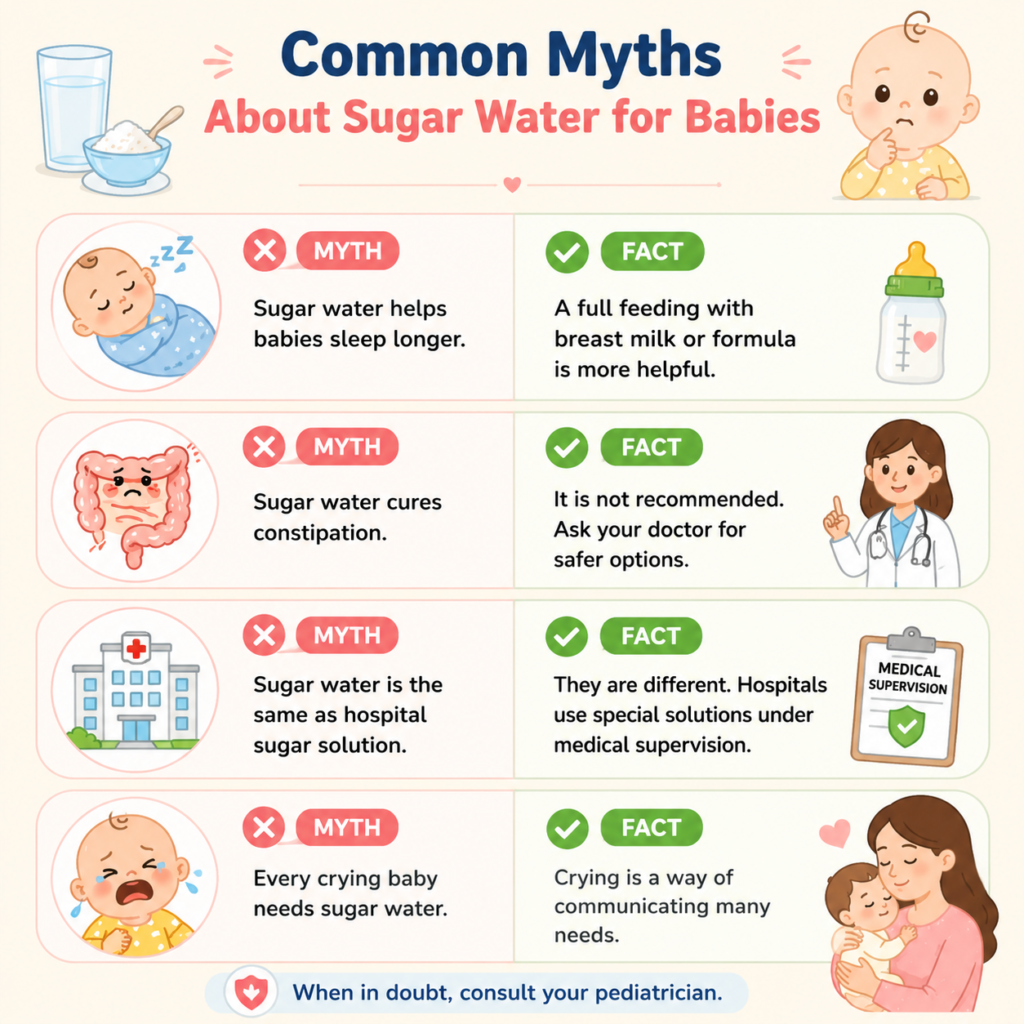
Common Myths About Sugar Water for Babies
There are many myths about sugar water, and it’s easy to become confused. Let’s separate fact from fiction.
Myth: Sugar water helps babies sleep longer.
Fact: Sugar water does not improve sleep. A full feeding with breast milk or formula is much more helpful for a baby’s comfort and growth.
Myth: Sugar water cures constipation.
Fact: Sugar water is not a recommended treatment for constipation. Your baby’s doctor can suggest safer options based on your baby’s age.
Myth: Sugar water is the same as hospital sugar solution.
Fact: They are completely different. Hospitals use carefully prepared medical sugar solutions in specific situations under professional supervision.
Myth: Every crying baby needs sugar water.
Fact: Crying is your baby’s way of communicating. Hunger, tiredness, gas, discomfort, or simply wanting to be held are much more common reasons.
When Should You Call a Doctor?
Most crying is completely normal, but sometimes your baby may need medical care.
Contact your pediatrician if your baby:
- Refuses several feedings in a row.
- Has a fever if they are younger than 3 months.
- Seems unusually sleepy or difficult to wake.
- Has trouble breathing.
- Cries for long periods and cannot be comforted.
- Shows signs of dehydration, such as fewer wet diapers or a dry mouth.
If you are ever worried about your baby’s health, trust your instincts and seek medical advice.
Tips to Comfort a Fussy Baby
When your little one won’t stop crying, it’s natural to feel helpless. The good news is that many babies settle with simple, gentle care.
You can try:
- Feeding your baby if they seem hungry.
- Burping them after each feeding.
- Rocking or walking while holding them.
- Swaddling your newborn safely if they enjoy it.
- Playing soft white noise.
- Offering a pacifier if your baby likes one and following these safe pacifier sleep tips for newborns
- Holding your baby skin-to-skin.
Not every method works every time, and that’s okay. Sometimes it takes a little patience to discover what comforts your baby most.
What Should Babies Drink Instead?
For babies younger than six months, breast milk or infant formula provides all the nutrition and fluids they need.
As your baby grows and starts solid foods, your pediatrician will guide you on when to introduce small amounts of water.
Unless your healthcare provider specifically recommends it, sugar water should not be part of your baby’s regular diet.
Frequently Asked Questions About Sugar Water
Final Thoughts
Sugar water is not recommended for healthy babies at home unless your pediatrician specifically advises it. Breast milk or infant formula provides all the nutrition your baby needs, and it’s always the safest choice for your little one.
As a parent, it’s normal to have questions and hear different advice from others. Trust your instincts, follow your baby’s needs, and don’t hesitate to speak with your pediatrician if you’re ever unsure. Your love, care, and attention are the greatest gifts you can give your baby.
If you found this guide helpful, explore more newborn care, baby feeding, and parenting tips on Infant Tales. We’re here to support you through every precious stage of your parenting journey.
Disclaimer: This article is for informational purposes only and is based on guidance from trusted health organizations. It should not replace professional medical advice, diagnosis, or treatment. Always consult your pediatrician or healthcare provider before giving your baby any home remedy or if you have concerns about your baby’s health or feeding.