By a Caring Mom at Infant Tales
Pregnancy is an exciting and transformative time, but it also brings about significant changes to your body, including your skin. Safe skincare during pregnancy is essential to help manage the skin transformations that occur due to fluctuating hormones. From pregnancy-related acne to dry patches and the coveted “pregnancy glow,” your skin may react in different ways.
As your body changes, so should your skincare routine. It’s crucial to choose products that are not only effective but also safe for both you and your growing baby. In this guide, we’ll dive deep into the best skincare practices, safe ingredients, and must-have products to keep your skin healthy and radiant during this special time.
Understanding Skin Changes During Pregnancy
Pregnancy is a time of incredible change, not just inside your body, but on the outside as well. From an increased blood volume to the stress of new hormones, it’s no surprise your skin may undergo some significant changes. The most common ones include:
If you’re concerned about how your skin is changing, the U.S. Food and Drug Administration (FDA) provides guidance on how to navigate skincare during pregnancy to ensure the safety of both you and your baby.
- Pregnancy Glow: This is often due to increased blood flow and oil production in the skin.
- Acne: Hormonal changes can trigger breakouts, especially in the first and second trimesters.
- Stretch Marks: As your body grows, your skin stretches, which can lead to the appearance of stretch marks.
- Dry Skin: Some women experience extreme dryness, especially around the belly, breasts, and face.
No matter what changes you’re experiencing, your skincare routine should prioritize gentle, safe products that won’t harm your baby or aggravate skin issues.
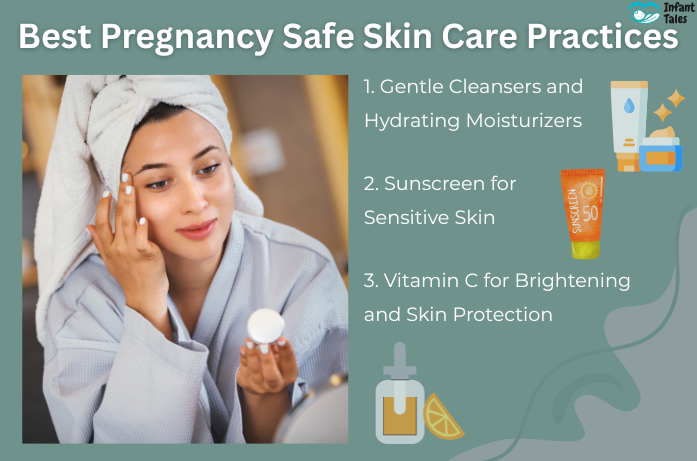
Best Pregnancy Safe Skin Care Practices
When it comes to pregnancy safe skincare, it’s essential to choose products that won’t cause harm to you or your baby. Here’s what you need to look out for:
1. Gentle Cleansers and Hydrating Moisturizers
The foundation of any good skincare routine is gentle cleansing and moisturizing. Opt for pregnancy safe face wash products that are free of harsh chemicals like parabens and sulfates. Look for products that contain calming ingredients such as aloe vera or chamomile to soothe sensitive skin. A gentle, hydrating pregnancy safe face moisturizer will help lock in moisture and prevent dry, flaky skin during pregnancy. You can also consider using a pregnancy safe body lotion that contains natural oils like coconut oil, shea butter, or almond oil to nourish your skin without clogging your pores.
The American Academy of Dermatology (AAD) offers excellent advice on building a safe skincare routine during pregnancy.
2. Sunscreen for Sensitive Skin
During pregnancy, your skin may become more sensitive to the sun, and many women experience pigmentation changes like melasma (also known as the “mask of pregnancy”). It’s crucial to wear pregnancy safe sunscreen with an SPF of at least 30 to protect against harmful UV rays.
The National Institutes of Health (NIH) recommends using mineral-based sunscreens containing zinc oxide or titanium dioxide, which sit on top of the skin and block UV rays without being absorbed into the bloodstream.
3. Vitamin C for Brightening and Skin Protection
One of the most beneficial ingredients you can incorporate into your routine during pregnancy is pregnancy safe vitamin C serum. Vitamin C is a powerful antioxidant that helps brighten your skin, reduce dark spots, and protect against free radicals caused by sun exposure. It’s especially helpful for reducing pigmentation changes, such as melasma, which can occur due to hormonal changes during pregnancy.
Make sure to choose a pregnancy safe vitamin C serum that is gentle and free of synthetic fragrances or harsh chemicals, as these can irritate sensitive skin.
Ingredients to Avoid in Pregnancy Skincare Products
While some ingredients are safe and beneficial during pregnancy, others can pose a risk to you and your baby. Here are some ingredients you should avoid:
1. Retinoids (Vitamin A)
Retinoids, commonly used in acne treatments and anti-aging products, should be completely avoided during pregnancy. These include retinol, tretinoin, and adapalene. Retinoids can cause birth defects and are absorbed into the bloodstream, which is why they are not considered safe for use while pregnant.
2. Salicylic Acid
Although salicylic acid is commonly found in acne treatments, high doses of this ingredient can be harmful during pregnancy. It’s best to limit its use or choose products that contain lower concentrations (less than 2%). Look for alternatives such as glycolic acid, which is considered safer.
3. Phthalates and Parabens
Phthalates and parabens are synthetic chemicals often used as preservatives or to enhance product texture. These chemicals have been linked to hormonal disruptions, so it’s best to choose products labeled as paraben-free and phthalate-free.
Creating a Pregnancy Safe Skincare Routine
Creating a pregnancy safe skincare routine doesn’t have to be complicated. Here’s a simple guide to help you get started:
Morning Routine:
Pregnancy Safe Face Wash: Start your day by cleansing with a gentle, hydrating face wash.
Vitamin C Serum: Apply a pregnancy safe vitamin C serum to brighten your skin and protect it from environmental stressors.
Moisturizer: Follow up with a lightweight, hydrating moisturizer that suits your skin type.
Sunscreen: Always finish with pregnancy safe sunscreen to protect against harmful UV rays.
Evening Routine:
Gentle Cleanser: Use a mild cleanser to wash away makeup and impurities.
Pregnancy Safe Face Moisturizer: Use a thicker, more hydrating face cream at night to keep your skin nourished while you sleep.
Stretch Mark Prevention: Massage a pregnancy safe body lotion or oil into your skin to prevent stretch marks and keep your skin smooth and hydrated.
Common Pregnancy Skincare Concerns
1. Acne During Pregnancy
Acne is a common skincare issue for many women during pregnancy, especially in the first and second trimesters. This is due to hormonal changes that increase oil production. Using a gentle pregnancy safe face wash and pregnancy safe skincare products can help control acne. You may also want to consult your healthcare provider about using salicylic acid or other acne treatments in moderation.
2. Dry Skin and Stretch Marks
Dry skin is common during pregnancy, especially as your belly grows. Hydration is key to preventing both dryness and stretch marks. Use a rich pregnancy safe body lotion or oil to keep your skin moisturized and flexible. Products containing shea butter or coconut oil are great for locking in moisture.
3. Pigmentation Changes
Melasma or the “mask of pregnancy” can occur due to hormonal changes. To prevent pigmentation, use pregnancy safe sunscreen daily, and consider using a pregnancy safe vitamin C serum to brighten dark spots and even out your skin tone.

Best Foods for a Healthy Pregnancy Glow
A balanced diet is key to supporting both your skin and your baby’s development during pregnancy. Eating nutrient-rich foods not only promotes overall health but can also help maintain healthy, radiant skin. Incorporate plenty of fresh fruits and vegetables, which are rich in antioxidants, vitamins, and minerals that protect your skin from damage. Omega-3 fatty acids found in fatty fish like salmon or walnuts can help maintain skin elasticity and hydration.
Additionally, foods high in vitamin C, such as citrus fruits, bell peppers, and strawberries, can brighten your complexion and reduce pigmentation. Whole grains, lean proteins, and plenty of water are also essential to keep your skin nourished and glowing throughout your pregnancy.
The Pregnancy, Birth, and Baby resource provides detailed advice on how food impacts skin health during pregnancy and how to incorporate these nutrients into your diet.
Conclusion: Embrace Safe Skincare During Pregnancy
Taking care of your skin during pregnancy is crucial not only for your own well-being but also for the health of your baby. By incorporating safe skincare during pregnancy into your daily routine such as using pregnancy safe body wash, pregnancy safe face wash, and pregnancy safe beauty products, you can maintain a healthy, glowing complexion while minimizing potential risks. It’s important to select skincare products that are gentle, natural, and free from harmful chemicals like parabens, retinoids, and salicylic acid.
Always consult your healthcare provider before introducing new skincare products, especially if you’re dealing with specific skin concerns like acne, dryness, or pigmentation changes. Remember, your skin’s needs can change during pregnancy, so adapting your routine to meet those changes with safe, effective products is key to feeling and looking your best.
Frequently Asked Questions (FAQs)
1. Can I use my regular skincare products during pregnancy?
Check labels for harmful ingredients like retinoids, salicylic acid, or parabens. Choose gentle, natural products and consult your doctor if unsure.
2. Is it safe to get facials during pregnancy?
Yes, but ensure the salon uses pregnancy-safe products and avoid harsh treatments like chemical peels.
3. How can I prevent stretch marks during pregnancy?
Use a pregnancy-safe body lotion with shea or cocoa butter to keep skin hydrated and elastic.
4. Can I use makeup during pregnancy?
Yes, just choose pregnancy-safe makeup free of parabens and harmful chemicals.
5. What are the best skincare products for pregnancy?
Look for pregnancy-safe skincare, such as gentle cleansers, vitamin C serum, hydrating moisturizers, and sunscreen.
For more expert tips on pregnancy skincare, baby care, and parenting, visit Infant Tales, your trusted resource for informed, caring guidance throughout your parenting journey.