Authored by: A Caring Mom at Infant Tales
You thought potty training was finally behind you. Your toddler was using the toilet, accidents were becoming rare, and then suddenly the wet pants started again. It can be confusing, but this kind of setback is actually something many families experience.
Potty Regression in toddlers who were using the toilet successfully starts when they have regular accidents or resist the potty again. It can happen after changes such as starting daycare, welcoming a new sibling, feeling stressed, dealing with constipation or illness, or simply getting too distracted during play.
The good news is that a few potty accidents don’t erase everything your toddler has learned. Instead of starting potty training from zero, it often helps to look for what has changed, keep your response calm, and gently guide your child back into their usual bathroom routine.
Table of Contents
What Is Potty Regression in Toddlers?
Potty regression happens when a child who was previously using the toilet fairly consistently begins having frequent accidents, refusing the potty, holding pee or poop, or asking for diapers again.
One accident during an exciting playdate doesn’t necessarily mean regression.
Toddlers are still learning to recognize body signals, stop what they’re doing, reach the bathroom, manage their clothes, and use the toilet independently.
However, when potty training accidents suddenly become a pattern after a period of success, it’s worth looking at what might be happening.
Cleveland Clinic also explains in its guidance on potty training regression that an occasional accident isn’t necessarily a regression, but repeated accidents or a clear pattern may signal a setback.
Why Does Potty Regression Happen?
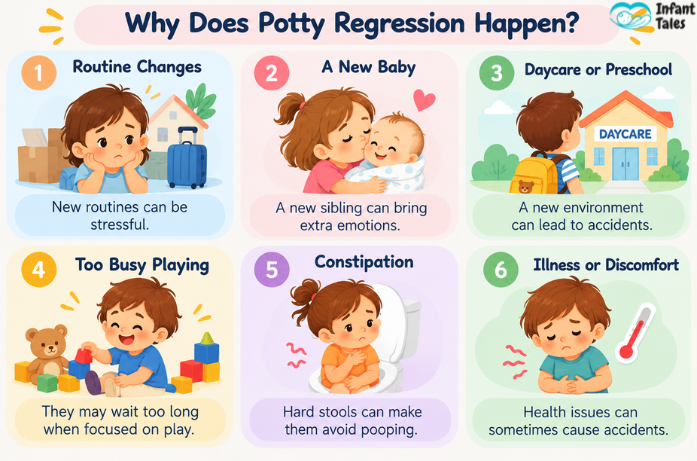
There isn’t always one clear reason for potty regression. Toddlers are dealing with new routines, big feelings, growing independence, and changing body awareness all at once. Sometimes a change in toilet habits is simply one way those adjustments show up.
1. A Change in Their Usual Routine
Toddlers love knowing what comes next. Moving to a new home, traveling, changing caregivers, starting preschool, or even having a different daily schedule can throw things off for a while.
Your child may not be able to explain that they’re feeling unsettled. Instead, you might notice more clinginess, trouble sleeping, tantrums, or new potty accidents. Think about what changed around the time the accidents started it may give you an important clue.
The American Academy of Pediatrics resource on potty training regression also explains that changes in a child’s environment, stress, constipation, and some medical concerns can contribute to potty setbacks.
2. Welcoming a New Baby
A new sibling brings a lot of changes for a toddler. Suddenly, the baby is getting fed, cuddled, carried, and having plenty of diaper changes throughout the day.
Your toddler may start asking for a diaper again or want help with things they could previously do alone. This doesn’t always mean they’re trying to get attention in a negative way. They may simply need reassurance that they still have plenty of your love and attention too.
A few extra cuddles, a bedtime story together, or even ten minutes of one-on-one play can make this transition feel easier.
3. Starting Daycare or Preschool
A child who happily uses the toilet at home may suddenly start having accidents at daycare or preschool.
The bathroom may feel unfamiliar, the toilet may seem too big or loud, or your toddler might feel nervous about asking a teacher for help. Some children also become so involved in playing that they wait too long.
Talk with your child’s caregiver about when the accidents happen. Using similar potty routines and reminders at home and daycare can help your toddler feel more comfortable and confident.
4. They’re Having Too Much Fun to Stop
Sometimes the reason is surprisingly simple your toddler doesn’t want to stop playing.
Young children can become so focused on blocks, toys, cartoons, or outdoor play that they ignore the first signs of a full bladder. By the time they realize they really need to go, getting to the bathroom in time may be difficult.
Instead of constantly asking, “Do you need to pee?” offer gentle potty breaks at natural times, such as before going outside, leaving the house, or starting another activity.
5. Constipation or Holding in Poop
A painful bowel movement can make a toddler nervous about pooping again. They may begin holding it in because they remember that it hurt last time.
You might notice your child hiding, crossing their legs, standing stiffly, clenching their bottom, or doing what looks like a little potty dance. Sometimes these behaviors actually mean they’re trying not to poop.
Holding stool can make it harder and more uncomfortable to pass, which may continue the cycle. If your toddler often has hard or painful stools, avoids pooping, or has repeated stool marks in their underwear, talk with their pediatrician.
6. Illness or Physical Discomfort
Not every sudden increase in potty training accidents is related to behavior or emotions. Sometimes your toddler may be uncomfortable or unwell.
Pay attention to other changes, especially pain or burning while peeing, fever, abdominal discomfort, unusually frequent urination, increased thirst, blood in the urine or stool, or ongoing constipation.
If accidents appear suddenly along with these symptoms or something simply doesn’t seem right for your child check with your pediatrician to rule out a medical cause.
Daytime Accidents and Nighttime Wetting Are Different
If your toddler stays dry during the day but still wakes up with a wet diaper or training pants, it doesn’t necessarily mean potty regression.
Daytime and nighttime toilet control don’t always develop at the same time. During the day, your toddler is awake and can notice a full bladder, stop what they’re doing, and go to the bathroom. Staying dry while sleeping can take longer because your child needs to recognize bladder signals and wake up when they need to pee.
So, try not to compare nighttime dryness with daytime potty success. Instead, watch for a change in your child’s usual pattern. If a toddler who was regularly dry during the day suddenly starts having frequent daytime accidents, it’s more useful to look for possible triggers such as routine changes, stress, constipation, or illness.
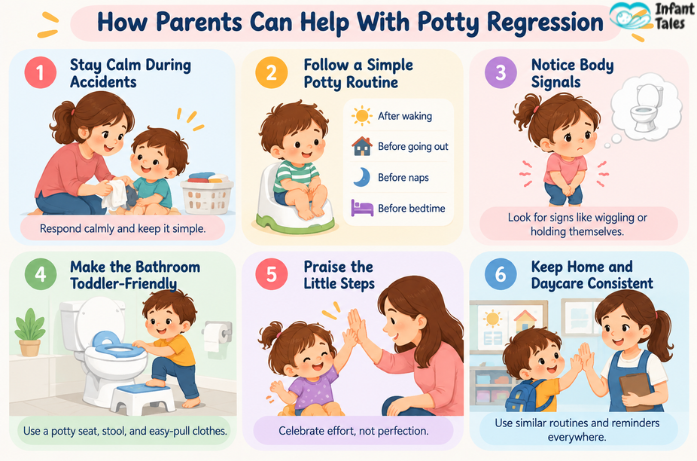
How Parents Can Help With Potty Regression
When potty regression happens, your toddler usually doesn’t need to start potty training all over again. A calm, familiar routine and a little extra support may be enough to help them regain confidence.
1. Stay Calm When Accidents Happen
How you respond can shape how your toddler feels about using the toilet. Avoid scolding, showing disappointment, or making the accident feel like a big mistake.
Keep things simple: “Your pants are wet. Let’s get cleaned up.” Help your child change, remind them that pee and poop go in the potty, and then move on with the day.
2. Return to a Simple Potty Routine
Regular bathroom opportunities can help your toddler get back into the habit. Try the potty after waking, before leaving the house, before naps, and before bedtime.
You don’t need to remind them constantly. Too many reminders can start to feel like pressure. Instead, connect potty breaks with familiar parts of the day.
3. Help Them Recognize Body Signals
Toddlers are still learning what a full bladder or the urge to poop feels like. Watch for signs such as wiggling, crossing their legs, holding themselves, suddenly becoming quiet, or hiding.
When you notice these signals, gently point them out: “It looks like your body is telling you it’s potty time.” This can help your child gradually recognize when they need to go on their own.
4. Make the Bathroom Easy to Use
Sometimes small practical problems can lead to accidents. Make sure your toddler can reach the toilet comfortably and get their clothes down quickly.
Easy-pull pants, a secure potty seat, and a stool for foot support can make bathroom trips easier. If your child is afraid of flushing or an unfamiliar toilet, give them time to become comfortable instead of forcing them.
5. Praise the Little Steps
Focus on effort rather than expecting perfectly dry days. Praise your toddler for telling you they need to go, trying the potty, managing their clothes, or remembering without a reminder.
Simple encouragement such as “You listened to your body!” can build confidence without making potty training feel like a performance.
6. Keep Home and Daycare Consistent
If most potty accidents happen at daycare, talk with your child’s caregiver. Ask when accidents usually occur and whether your toddler avoids the bathroom or gets distracted during activities.
Using similar potty routines and simple reminders at home and daycare can make expectations easier for your toddler to understand.
Try a Simple 3-Day Accident Check
If you’re not sure what’s causing the accidents, try tracking them for three days. A few quick notes can help you spot patterns that are easy to miss during a busy day.
Write down:
- what time the accident happened
- whether it was pee or poop
- what your toddler was doing just before it
- when they last used the toilet
- whether bowel movements were hard or painful
- any recent changes in sleep, daycare, routine, or mood
The goal isn’t to count mistakes. It’s simply to understand when and why the accidents are happening.
You may notice that potty accidents mostly happen during playtime, at daycare, or when your toddler is constipated. Once you spot a pattern, it becomes easier to make small changes that may help.
What Should Parents Avoid?
Potty accidents can be frustrating, especially when your toddler was doing well before. But try not to punish, shame, tease, or compare your child with other children.
Avoid comments like, “You’re a big kid, you should know better.” Your toddler may already feel upset or embarrassed about the accident, and added pressure can make potty time more stressful.
Instead, keep your response calm and simple. Help them get cleaned up, gently remind them to use the potty next time, and move on without making the accident a big issue.
The American Academy of Pediatrics guidance on emotional issues and potty training also encourages parents to respond calmly, understand what may be upsetting their child, and avoid criticism or punishment after accidents.
Should You Go Back to Diapers?
A few potty training accidents usually aren’t a reason to immediately bring diapers back. If your toddler is still willing to use the toilet, keep offering gentle reminders and stick with a familiar potty routine.
If your child becomes very anxious, strongly resists the toilet, or potty time turns into a daily struggle, it may help to reduce the pressure and speak with your pediatrician for guidance. Most importantly, don’t use diapers as a punishment or make your toddler feel they’ve failed.
How Long Does Potty Regression Last?
Potty regression can last anywhere from a few days to several weeks, depending on what’s causing it and how your child is adjusting. Progress may also be uneven your toddler might have several accidents one day and do much better the next.
Focus on gradual improvement rather than perfect, accident-free days. If accidents continue for several weeks without improvement, suddenly become more frequent, or are accompanied by concerning symptoms, check with your child’s healthcare provider.
When Should You Talk to Your Pediatrician?
Many potty setbacks can be managed with patience and routine, but frequent accidents can occasionally have a medical cause.
Contact your child’s healthcare provider if you notice:
- pain or burning while peeing
- fever or your child appearing unwell
- blood in urine or stool
- persistent or painful constipation
- repeated poop leakage
- significant abdominal pain
- unusually frequent urination or increased thirst
- sudden accidents without an obvious explanation
You don’t need to wait until symptoms become severe. If your toddler’s bathroom habits suddenly change and something doesn’t seem right, asking your pediatrician is reasonable.
Frequently Asked Questions
Final Thoughts
Potty regression can be frustrating, but it doesn’t mean your toddler has forgotten everything they’ve learned. Changes in routine, stress, constipation, illness, or simply being too busy playing can all lead to temporary accidents.
Stay calm, keep bathroom routines consistent, and look for patterns that may explain what’s happening. Avoid punishment and focus on encouraging small steps forward.
If accidents are frequent or happen along with pain, fever, persistent constipation, or other unusual symptoms, talk with your child’s pediatrician. With patience and gentle support, most toddlers can gradually regain their potty confidence.
Every toddler grows and learns at their own pace. Explore more practical toddler tips and gentle parenting guidance at Infant Tales to make these little stages feel a bit easier.
Disclaimer
This article is for general informational purposes only and is not a substitute for professional medical advice. If you have concerns about your toddler’s potty habits, constipation, or health, please speak with your pediatrician.
About the Author
Geeta Yogi is a parenting writer who shares practical guidance about toddler development, potty training, everyday routines, and common parenting challenges. Her writing focuses on helping parents respond calmly to developmental changes and support young children with simple, realistic strategies.