
As moms, we quietly carry so many questions in our hearts, “Is this the right time?” is one of the biggest. And when it comes to sleep changes, that question feels even heavier. If you’ve been wondering when to transition to a toddler bed, you’re not alone. I’ve stood there too, watching my little one peek over the crib rail, half proud, half panicked, wondering if this was the moment everything would change.
The truth is, moving from a crib to a toddler bed isn’t just a milestone, it’s a shift in your child’s independence, sleep habits, and even your daily rhythm. But don’t worry, mama. With the right timing, a little preparation, and a lot of love, this transition can be smoother than you imagine.
Let’s walk through this together, with practical, modern tips that actually work for today’s parents.
When to Transition to a Toddler Bed (What Really Matters Today)
Most experts say toddlers are ready between 18 months and 3 years, but modern parenting has taught us something important: age is just a guideline, not a rule.
The real answer to when to transition to toddler bed depends on your child’s behavior, personality, and development. Some toddlers crave independence early, while others feel safer staying in their crib longer, and both are completely okay.
According to sleep experts, many children make the transition successfully when safety becomes a concern or when they begin showing readiness signs (Sleep Foundation).
Today, many parents are choosing a child-led approach, meaning they wait for clear readiness signs instead of rushing based on age alone. This reduces sleep struggles and helps toddlers feel secure during the change.
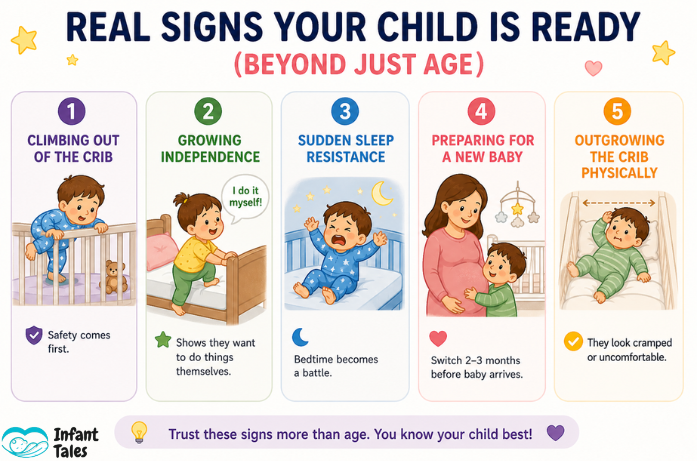
Real Signs Your Child Is Ready (Beyond Just Age)
Instead of focusing only on age, look for these meaningful signs. These are the moments when your child is gently telling you, “I’m ready.”
1. Climbing Out of the Crib (Safety Comes First)
If your toddler is attempting to climb out, even once, it’s time to act. This is the clearest sign when parents ask when do you transition to a toddler bed.
Pediatric guidance also highlights climbing as a key safety reason to move your child sooner rather than later (Healthy Children )
Modern parenting tip: Many moms now skip waiting and move immediately for safety, even if the child is younger than expected.
2. Growing Independence
You’ll notice phrases like “I do it myself” becoming common. Your toddler may try to climb into bed or resist being placed in the crib.
This independence is a strong signal when thinking about when to transition baby to toddler bed.
3. Sudden Sleep Resistance
If bedtime suddenly becomes a battle, it might not just be a phase. Sometimes toddlers feel restricted in a crib and crave more freedom.
4. Preparing for a New Baby
If another baby is on the way, you might wonder when to transition from crib to toddler bed. Try to make the switch 2–3 months before the baby arrives, so your toddler doesn’t feel replaced.
5. Outgrowing the Crib Physically
If your child looks cramped or uncomfortable, that’s your cue. Sleep quality matters more than sticking to the crib longer.
When Do You Transition to a Toddler Bed Without Causing Stress?
Timing can make or break this transition. The best answer to when do you transition to toddler bed is: during a calm, stable period in your child’s life.
Avoid transitions during:
- Potty training
- Starting daycare
- Illness or sleep regression
- Big family changes
Modern parenting insight: Today, many parents focus on emotional readiness, not just physical signs. If your child feels secure, they adapt faster.
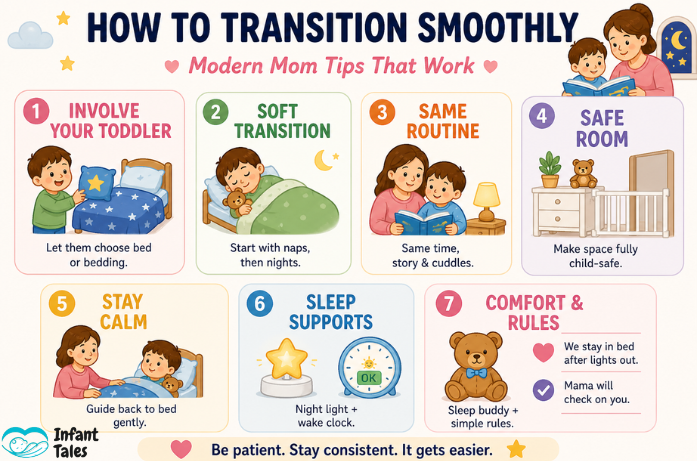
How to Transition Smoothly (Modern, Real-Life Strategies That Work)
Let’s talk about what actually helps, not just theory, but real-life mom-tested methods.
1. Involve Your Toddler in the Process
Take your toddler along when choosing their new bed or bedsheets, even if it’s just browsing online together. Let them pick a color, a cartoon character, or even a small pillow they love. When they feel included, they feel important.
This simple step builds excitement instead of fear. Your child starts to see the new bed as their special space, not something being forced on them. It gives them a sense of control, which toddlers naturally crave at this stage.
2. Try a “Soft Transition” First
Modern parents are moving away from sudden changes and choosing a gentler approach. You can start by letting your child take naps in the toddler bed while keeping nighttime sleep in the crib for a few days.
Slowly, as they get comfortable, shift bedtime sleep too. This gradual method helps reduce anxiety and gives your child time to adjust emotionally, not just physically.
3. Keep the Bedtime Routine Exactly the Same
Consistency is your biggest strength during this transition. Keep your bedtime routine exactly as it was, same time, same story, same cuddles, same comforting words.
When everything else feels familiar, your child feels safe. The only thing changing should be the bed, not the emotional connection or routine they rely on. This predictability helps them settle faster and sleep better.
4. Make the Room Safe, Not Just the Bed
Once your toddler can get out of bed, the entire room becomes their space. That’s why safety matters more than ever. Think beyond the bed and look at the room from your child’s perspective.
Secure furniture to the walls, cover electrical outlets, and remove anything unsafe. Many moms also use baby gates or door knob covers. The goal is to create a space where your child can explore safely, almost like a “big crib.”
5. Expect Night Wakings (And Stay Calm)
Here’s something every mom should know, your toddler will test boundaries. They might get out of bed multiple times, call for you more often, or even wander around their room.
Instead of reacting with frustration, stay calm and consistent, especially if your baby fussy during sleep transitions. Gently guide them back to bed each time without turning it into a long conversation. It may take a few nights, but this phase will pass. Your calm response teaches them what to expect.
6. Use Simple Modern Sleep Supports
Today’s parents are using small, helpful tools to make bedtime smoother. A soft night light can make your toddler feel safe and reduce fear of the dark, especially in a new sleeping space.
You can also try an “OK-to-wake” clock. These clocks gently teach toddlers when it’s okay to get out of bed, which is especially helpful for early risers. It creates clear expectations in a fun, visual way.
7. Create Comfort and Gentle Boundaries
Let your child choose a special stuffed toy or “sleep buddy” that stays with them every night. This builds a sense of comfort and routine, making bedtime feel familiar and secure.
At the same time, set kind but clear boundaries like, “We stay in bed after lights out” or “Mama will check on you, but you sleep in your bed.” Consistency in these small rules helps your child feel safe because they know what to expect.
When to Transition from Crib to Toddler Bed Without Sleep Struggles
One thing I learned the hard way? The transition isn’t just physical, it’s emotional.
When thinking about when to transition from crib to toddler bed, prepare your child mentally:
- Talk about the change during the day
- Read bedtime books about “big kid beds”
- Celebrate the milestone (without pressure)
Modern parenting tip: Many moms now use storytelling, creating excitement like “Your new bed is for big dream adventures!”
Experts also note that comfort and space play a big role in sleep quality as toddlers grow (Cleveland Clinic).
Gentle Sleep Training During the Transition
If sleep becomes difficult, don’t panic. You don’t need strict training methods, gentle guidance works beautifully.
Try this approach:
- Sit beside the bed until they fall asleep
- Gradually move farther away each night
- Offer reassurance without picking them up every time
This builds independence while keeping emotional security intact, which later supports stronger reading skills and learning confidence.
Common Concerns
“What if my toddler keeps leaving the bed?”
This is completely normal. Stay calm, consistent, and boring (yes, boring works!).
No long conversations. No frustration. Just gently guide them back.
“Will this affect their sleep long-term?”
Short-term disruptions are common, but most toddlers adjust within 1–3 weeks.
“Am I transitioning too early or too late?”
If you’re noticing readiness signs, you’re on the right track. There’s no perfect age, only the right moment for your child.
Final Thoughts: Trust Your Timing, Trust Your Child
Deciding when to transition to toddler bed can feel emotional and a little overwhelming, especially when your baby suddenly seems not so little anymore. But the truth is, you don’t need perfect timing or perfect nights. What truly matters is your patience, your consistency, and the love you show through every bedtime cuddle and reassurance. Your child will adjust, slowly and surely, in their own time.
At Infant Tales, we believe these small transitions are part of a much bigger, beautiful journey of growing together. If you’re here, reading, learning, and trying your best, you are already doing an amazing job. Trust yourself, mama. Your child feels your love, and that’s what helps them sleep peacefully, wherever they are.
Frequently Asked Questions (FAQs)
1. What is the best age for when to transition to toddler bed?
Most toddlers are ready between 18 months and 3 years, but it really depends on your child’s readiness. Look for signs like climbing out of the crib or showing independence rather than focusing only on age.
2. How do I know when to transition from crib to toddler bed?
If your child is trying to climb out, resisting the crib, or seems uncomfortable, these are strong signs. Safety and your child’s behavior are the biggest indicators.
3. What if my toddler keeps getting out of bed?
This is very normal during the transition. Stay calm and gently guide them back to bed each time without long conversations. Consistency will help them learn the routine.
4. Can transitioning to a toddler bed affect sleep?
Yes, there may be a few days or weeks of adjustment. But with a consistent bedtime routine and patience, most toddlers settle into their new bed quickly.
5. When to transition baby to toddler bed if a new sibling is coming?
It’s best to make the transition at least 2–3 months before the baby arrives. This helps your toddler adjust without feeling like they’re being replaced
.