By a caring mom at Infant Tales
Becoming new parents means suddenly paying attention to little things you never thought would matter, especially what’s inside that diaper. The color, the texture, the smell, the timing… everything seems important. The most common concern I’ve heard from new mothers (and one I experienced myself) is seeing an unusual color and immediately assuming something is wrong. If you’re here because you searched “newborn poop green color,” take a moment and breathe deeply. In most cases, this color is completely normal, temporary, and harmless.
This article is written to guide and reassure you. You will explore why newborn poop changes so much, what green poop actually means, how to interpret different colors, and when it’s time to consult a pediatrician. Our goal isn’t to overwhelm you with medical jargon, but to make you feel confident and supported as you care for your baby.
Why Newborn Poop Changes So Often
Newborn digestion is brand new, literally. Your baby’s body is adjusting to life outside the womb, learning how to digest milk, absorb nutrients, and move waste through a tiny, developing system. Because of this, stool color, consistency, and frequency can change often, sometimes even within the same day. Pediatric guidance from (American Academy of Pediatrics) explains that frequent color changes are a normal part of early digestive development.
One diaper might look mustard yellow, the next greenish, and another darker than expected. This constant change is usually a sign that your baby’s digestive system is learning and adapting.
It’s important to remember that color alone doesn’t define health. What matters is the full picture: how your baby feeds, sleeps, grows, and behaves overall. A content baby who feeds well and has normal wet diapers is usually doing just fine, even if the poop looks unusual.
Newborn Poop Green Color: What Parents Should Know
Seeing green in your baby’s diaper can feel alarming at first. Many parents immediately worry about infection, allergy, or digestive problems. The good news is that in most healthy babies, green stool is not a sign of illness. Pregnancy and infant health experts at American Pregnancy Association confirm that green baby poop is often harmless and linked to digestion speed or feeding patterns.
Green poop often means that food moved through the intestines a bit faster than usual. When this happens, bile, a green digestive fluid produced by the liver, doesn’t have time to change color before exiting the body. This explanation is also supported by clinical research on infant digestion published in medical literature.
Both breastfed and formula-fed babies can have green poop at different stages, and in the absence of other symptoms, it’s rarely a cause for concern.
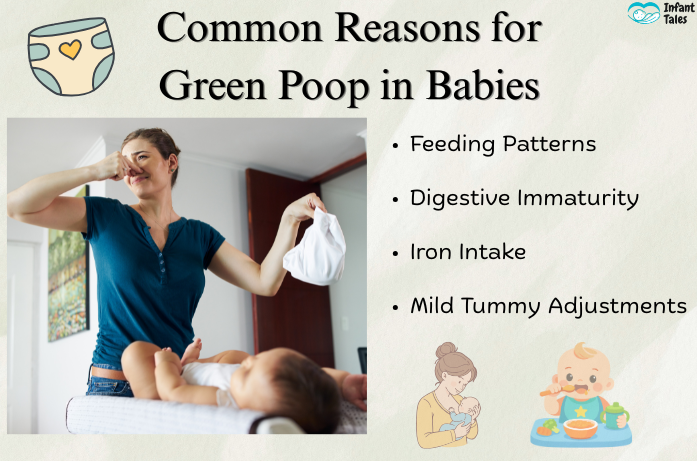
Common Reasons for Green Poop in Babies
Understanding why green stool happens can ease a lot of anxiety. Here are some of the most common and harmless causes.
Feeding Patterns
Changes in feeding routines, such as cluster feeding, longer gaps between feeds, or quicker digestion, can affect stool color. Even a slight shift in how much milk your baby takes in can temporarily change what you see in the diaper, as outlined in baby poo guides from Pregnancy, Birth and Baby (Australia).
Digestive Immaturity
A newborn’s digestive system is still developing. Early on, it doesn’t always process bile efficiently. As the gut matures over the first few months, stool color usually stabilizes on its own.
Iron Intake
Iron plays a huge role in infant nutrition, especially for brain development. Whether it comes from formula or supplements, iron often darkens stool or gives it a green tint. This is expected and not harmful.
Mild Tummy Adjustments
Just like adults, babies can have short-lived digestive adjustments. These minor changes can briefly affect stool color without meaning anything serious.
When we talk about green poop in newborn, it’s important to remember that color changes alone rarely signal danger.
Newborn Stool Color Meaning (A Parent-Friendly Explanation)
Understanding newborn stool color meaning can take a lot of fear out of diaper changes. Each shade usually tells a simple story about digestion rather than disease, a concept reinforced in infant stool education from Children’s Hospital Colorado.
- Black (first days of life): This is meconium, the thick, sticky stool newborns pass shortly after birth. Completely normal in the first days.
- Dark green: Transitional stool as your baby moves from meconium to milk digestion.
- Yellow: A healthy and common color, especially in milk-fed babies.
- Green: Often linked to digestion speed or iron intake.
- Brown: Common and normal, especially in formula-fed infants.
- White or red: Not normal and should always be checked by a doctor.
The goal isn’t perfection, it’s awareness. Knowing what’s normal helps you recognize when something truly needs attention.
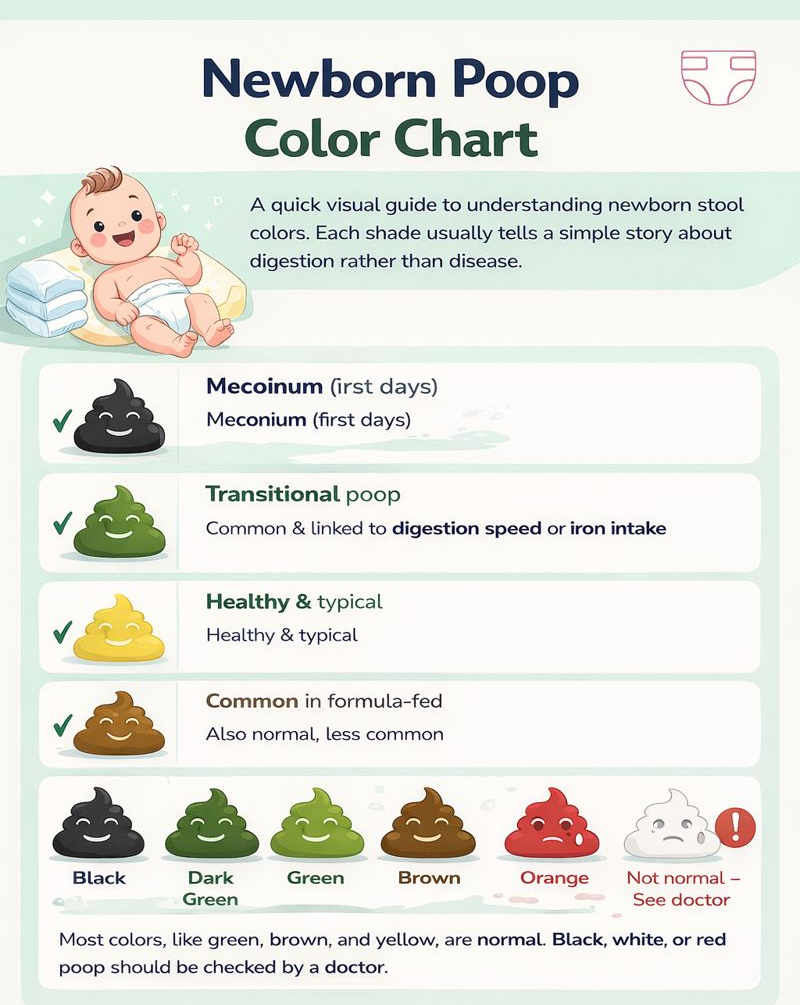
Newborn Poop Color Chart: A Quick Visual Guide
Many parents find comfort in a visual newborn poop color chart. Seeing examples side by side makes it easier to understand that there’s a wide range of normal. Keeping a chart saved on your phone can be surprisingly reassuring during late-night diaper changes when worries feel bigger than they really are.
Breastfed Babies and Poop Color Changes
Breastfed babies often show more variation in stool color and texture than formula-fed babies. Their poop is usually loose, soft, and sometimes seedy in appearance. Colors can range from bright yellow to green depending on feeding balance and digestion.
When discussing newborn poop color breastfed, green stool can sometimes occur when a baby takes in more foremilk, the lighter milk that comes at the beginning of a feed. This usually resolves naturally as feeding patterns settle.
Some parents find reassurance in using a newborn poop chart breastfed, especially during the early weeks of breastfeeding when everything feels new and uncertain.
Texture Matters More Than Color
While color gets the most attention, texture often gives more useful clues about your baby’s digestive health.
Usually normal textures include:
- Soft and seedy
- Creamy or paste-like
- Slightly runny, particularly in breastfed babies
Call your pediatrician if you notice:
- Very watery stools occurring many times a day
- Hard, pellet-like stools that suggest constipation
- Thick mucus appearing consistently
Texture changes combined with discomfort or feeding issues deserve closer attention.
How Often Should Newborns Poop?
There’s a wide range of what’s considered normal:
- Some babies poop after almost every feeding
- Others may go once a day
- Breastfed babies may occasionally skip a day
As long as your baby is feeding well, gaining weight, producing wet diapers, and seems comfortable, differences in frequency are usually nothing to worry about.
When to Call the Pediatrician
While most poop changes are harmless, reach out to your baby’s doctor if:
- Green stool continues alongside poor feeding or discomfort
- You notice blood, white stool, or persistent black stool
- Your baby seems unusually lethargic or unresponsive
- There is fever, vomiting, or signs of dehydration
Trust your instincts, you know your baby better than anyone else.
Final Thoughts & A Gentle Reminder for New Parents
It’s perfectly normal to overthink every diaper in the early weeks, especially when everything about your baby seems new and delicate. Changes in poop are one of the most common sources of parental anxiety, yet it’s also one of the most misunderstood aspects of newborn care. In most cases, green poop is simply a sign that your baby’s digestive system is learning, growing, and doing exactly what it should be doing.
At Infant Tales, we believe that parenting information should bring you peace of mind, not increase your anxiety. Understanding your baby’s poop colors, including green, can help you replace worry with confidence and uncertainty with reassurance. Parenting isn’t about doing everything perfectly; it’s about observing, learning, and responding with care and love.
Remember, every diaper tells a little story about your baby’s development, and most of those stories are perfectly normal. You’re doing a great job, even on the days when a diaper surprises you or leaves you with questions.
FAQs
1. Is Green Poop a Sign of Infection in Newborns?
Green poop alone is rarely a sign of infection. However, if it appears along with fever, vomiting, poor feeding, or extreme fussiness, it’s important to contact a pediatrician for evaluation.
2. Can Formula Cause Green Poop in Newborns?
Yes, formula can cause green or greenish-brown stool. Most infant formulas contain iron, which commonly changes poop color. This is normal and not a reason to stop or switch formula without medical advice.
3. Does Teething Cause Green Poop in Newborns?
Teething usually does not affect newborns, as it starts later. In very young babies, green poop is more often related to digestion or feeding rather than teething.
4. When Should I Be Concerned About Green Poop?
You should be concerned if green poop is persistent and paired with symptoms like dehydration, blood in stool, poor weight gain, or behavioral changes. In these cases, a pediatric check-up is recommended.
5. Can Breastfed Babies Have Green Poop?
Yes, breastfed babies can have green poop. It may happen due to feeding balance, digestion speed, or normal variation. In most cases, it resolves naturally without intervention.
6. Why Is My Newborn’s Poop Green?
Green poop in newborns usually happens when stool moves quickly through the digestive system. This prevents bile from fully changing color. It can also be linked to feeding patterns, iron intake, or a developing digestive system and is usually harmless.
Looking for more gentle, trustworthy guidance on newborn care? Explore more expert-backed parenting articles at Infant Tales and feel supported every step of the way.
Medical Disclaimer: This article is intended for educational purposes only and does not replace professional medical advice. Always consult a qualified healthcare provider with concerns about your baby’s health or development.