
By a Caring Mom at Infant Tales
Dizziness can be one of those early pregnancy symptoms that fully catches you off guard. One moment you are fine, and the coming you are grabbing a president or pressing your hand to the wall because everything feels light or afloat. numerous women wonder, Is dizziness an early sign of pregnancy? And the honest answer is, yes, occasionally it is. Hormonal changes, blood pressure shifts, and increased blood inflow all begin veritably beforehand, indeed before a missed period.
But dizziness also shows up when life is excited missing refections, sleeping inadequately, or not drinking enough water can all spark flightiness. So dizziness alone does not confirm gestation, but it can surely be one of the first suggestions when paired with other early symptoms.
This guide explains why dizziness happens, when it’s normal, when it is not, and how to manage it, all in a warm, informative guide.
Is Dizziness an Early Sign of Pregnancy?
Yes, dizziness can appear in the earliest weeks of pregnancy, occasionally around the time of implantation. This happens long ahead numerous women get a positive test, and it can feel like unforeseen flightiness, a surge of feebleness, or a moment where your vision slightly dims.
Early- pregnancy dizziness frequently appears because your blood vessels relax under the influence of rising progesterone. This lowers blood pressure. numerous also witness dips in blood sugar, especially if you are squeamish, skipping refections, or waking up too tired to eat. These same shifts continue into after stages, causing dizziness in pregnancy 12 weeks, or indeed through the alternate trimester when your blood volume dramatically increases
While dizziness can be normal, it becomes further suspicious if it shows up alongside other early symptoms like fatigue, bone tender heartedness, nausea, and increased urination.
Why Does Dizziness Happen During Early Pregnancy?
Dizziness comes from a blend of hormonal and circulatory changes. The body begins creating further blood, expanding blood vessels, and turning major energy toward the growing embryo. According to the American Pregnancy Association, these shifts make dizziness a very common pregnancy symptom. You may also experience dizzy and headache during pregnancy, especially on days when hydration or sleep is low.
The increase in blood volume is huge during the first trimester. Meanwhile, progesterone softens blood vessel walls, making it easier to feel shuddery when you stand too snappily.
Morning sickness can spark dehydration. And low blood sugar from skipped refections can bring feebleness at any time of day. Combined, these factors make dizziness extremely common.
Some women indeed report that simple diurnal tasks, raining, cooking, bending down, make them feel faint. This is especially conspicuous for anyone dealing with extreme prostration or minding for another child.
Key Causes of Pregnancy Dizziness
- Circulatory changes: Your heart pumps harder as early as Week 4. This increased workload, paired with lower blood pressure, frequently leads to short occurrences of dizziness. numerous women notice it most in warm apartments or when standing up. These changes can extend into the alternate trimester, which explains why dizzy pregnancy 2nd trimester occurrences are so common.
- Blood sugar drops and dehydration: Indeed slight blood sugar dips can beget dizziness in early pregnancy. This is especially true when nausea affects appetite. Vomiting leads to dehumidification, which affects blood volume and can make dizziness stronger. latterly on, dehumidification can contribute to dizziness in pregnancy 36 weeks, because the body works harder as the baby grows.
What Does Pregnancy Dizziness Feel Like?
utmost pregnant women describe dizziness as brief swells of feebleness. occasionally it feels like a slow head rush when standing up. Other times, it feels like the room is darkening around the edges.
Some also notice blurred vision, mild nausea, warmth spreading through the body, or unforeseen weakness. These gests frequently lap with normal first- trimester discomforts, especially fatigue or headaches.
still, which frequently happens if you have a toddler who wakes at night, dizziness might feel more frequent or more violent, If you are formerly low on sleep.

Dizziness in the Second and Late Stages of Pregnancy
Dizziness is not just an early- pregnancy symptom. It continues into the middle and after months for several reasons. According to the American Heart Association, dizziness throughout pregnancy is common but should always be monitored for any concerning patterns.
During the alternate trimester, blood volume rises again. This is why numerous women witness dizziness in pregnancy 2nd trimester indeed when morning sickness has eased. Your cardiovascular system is simply conforming to the larger blood force.
latterly in pregnancy, especially around 36 weeks, dizziness may be because the baby’s weight puts pressure on major modes. When lying flat, some women feel faint because blood inflow briefly reduces. Rolling onto the left side generally helps incontinently.
However, dizziness during late pregnancy should always be covered nearly, especially if it’s paired with swelling, severe headaches, or vision disturbances, because these can be early signs of high blood pressure issues.
When Is Pregnancy Dizziness Normal?
- Normal dizziness is mild and short-lived. It improves when sitting or hydrating and is frequently related to low blood sugar, heat exposure, rising hormone situations, or standing too snappily. This type of dizziness happens with no other intimidating symptoms and frequently appears during routine tasks.
- Normal dizziness improves with lifestyle adjustments. Eating small refections, drinking further water, and resting help significantly. This is true whether you are dealing with early- pregnancy dizziness, dizziness in pregnancy 12 weeks, or dizziness that reappears in the alternate trimester. As long as dizziness improves with tone- care, it’s generally inoffensive.
When Is Dizziness a Warning Sign?
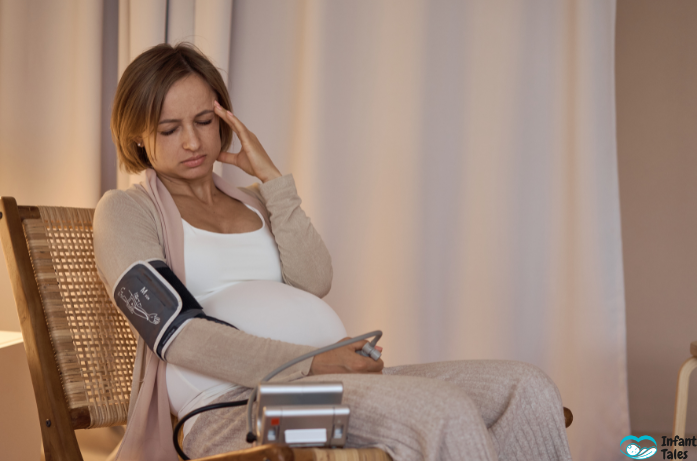
Dizziness becomes concerning when it occurs with casket pain, heavy bleeding, severe headaches, conking, or sharp abdominal pain. This combination may gesture commodity more serious similar as dehumidification, anemia, or in rare cases, an ectopic pregnancy.
If dizziness persists all day, worsens over time, or appears with swelling or visual changes, patient dizziness during late pregnancy is especially worth mentioning to your provider because it can be linked to blood pressure enterprises.
And if you ever faint, indeed formerly, you should check in with a doctor immediately.
Managing Dizziness Safely During Pregnancy
Eating small, balanced refections throughout the day is one of the simplest ways to keep blood sugar steady during pregnancy. Since your metabolism pets over, long gaps between refections can spark glucose dips a common cause of dizziness. Pairing snacks with protein, healthy fats, or fruits helps give steady, lasting energy.
Hydration also plays a major part. Your body uses far further fluids to support the placenta, amniotic fluid, and the increased blood volume demanded for your growing baby. Indeed mild dehumidification can lead to dizziness, headaches, or fatigue, so belting water throughout the day can help symptoms before they start.
It also helps to move gently when standing, avoid hot or stuffy surroundings, and rest whenever your body asks for it. In late pregnancy, lying on your left side improves blood inflow and can reduce dizziness that appears at night or early morning. Small diurnal habits like these make a conspicuous difference in how your body feels.
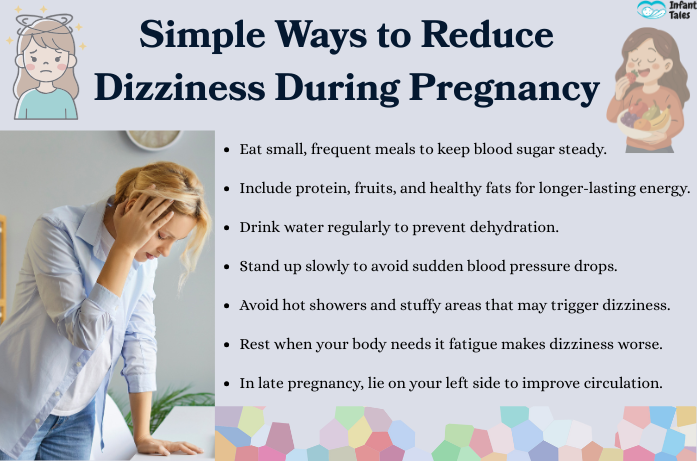
Simple Ways to Reduce Dizziness During Pregnancy
- Choose small, frequent meals to stabilize blood sugar and prevent sudden dips.
- Add protein, fruits, and healthy fats to snacks for steady, long- continuing energy.
- Sip water throughout the day to prevent dehydration and support adding blood volume.
- Stand up slowly after sitting or lying down to avoid sudden drops in blood pressure.
- Limit hot showers, crowded areas, or stuffy apartments that can spark dizziness.
- Sleep and rest when your body asks for it fatigue makes dizziness worse.
- In late pregnancy, lie on your left side to ameliorate rotation and reduce symptoms overnight.
Final Thoughts
Dizziness can feel unsettling, especially when it comes without warning. But in utmost gravidity, it’s simply a sign that the body is conforming to the inconceivable work of creating a new life. The important thing is harkening to your body, and reaching out for help if anything feels unusual or patient.
Your pregnancy trip does not need to be confusing or shocking. With mindfulness, care, and good support, dizziness becomes just another temporary symptom, not commodity to sweat.
Want more supportive, science-backed pregnancy tips? Explore more helpful guides on Infant Tales and feel confident through every stage of your journey.
FAQs
1. Is dizziness in early pregnancy normal?
Yes, mild early- pregnancy dizziness is common and generally caused by hormonal shifts, lower blood pressure, and increased blood volume.
2. Why do I feel dizzy and headache during pregnancy?
Headaches and dizziness frequently come from dehydration, low blood sugar, fatigue, or hormonal changes.
3. Is dizziness in pregnancy 12 weeks common?
veritably common. Around 10 – 12 weeks, blood volume increases fleetly, making dizziness more conspicuous.
4. Why does dizziness in pregnancy 2nd trimester happen?
The circulatory system is conforming to redundant blood volume. Lower birth blood pressure can also spark more dizziness.
5. Is dizziness during late pregnancy dangerous?
utmost of the time it’s normal, but if it’s paired with swelling, headaches, or visual issues, you should communicate your healthcare provider.
6. Why do I feel dizziness in pregnancy 36 weeks?
frequently because the baby’s weight presses on major modes or because hydration requirements are advanced.
Medical Disclaimer: This composition is for educational purposes only and does not replace medical advice. Always consult your healthcare provider regarding your symptoms.
Explore more pregnancy resources to stay informed and confident:
Cryptic Pregnancy: Symptoms and Early Signs
How Many Ultrasounds During Pregnancy?
Foods to Avoid During Pregnancy